Out of Brisbane

Along Quart Pot Creek, upstream from Heritage Park, the wattle trees are flowering.
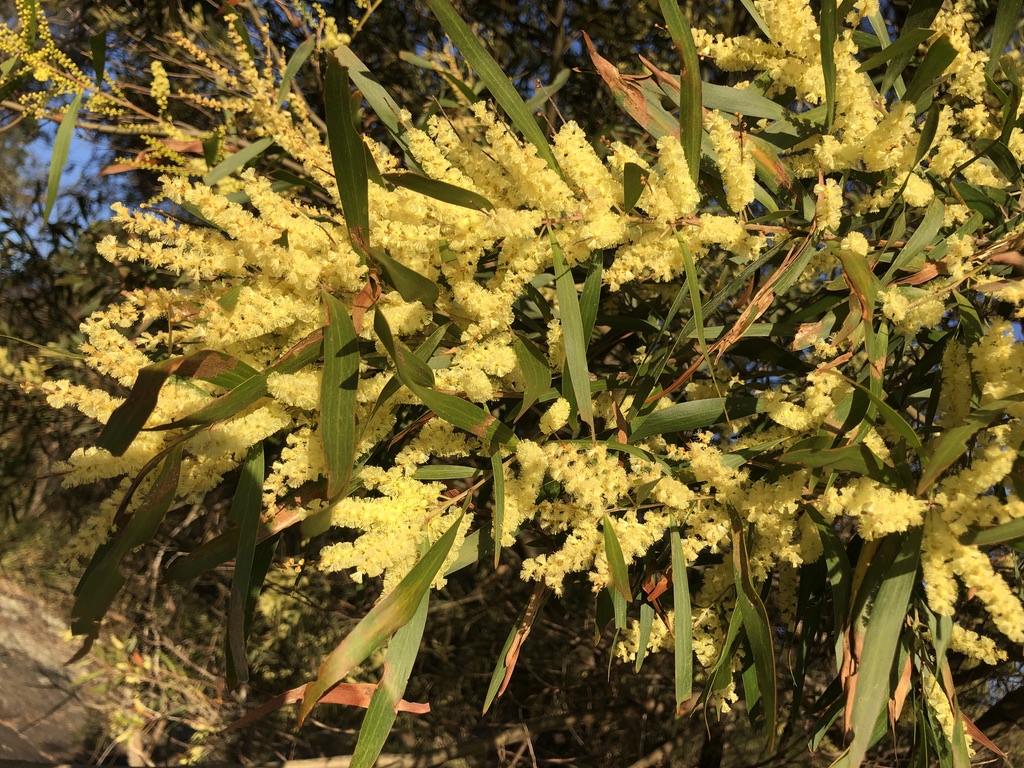
Stanthorpe wattle

The path winds above the creek and under the railway bridge, across sloping granite to the creek and beyond. On the bank near the narrow footbridge, fairy wrens flit among the bushes.
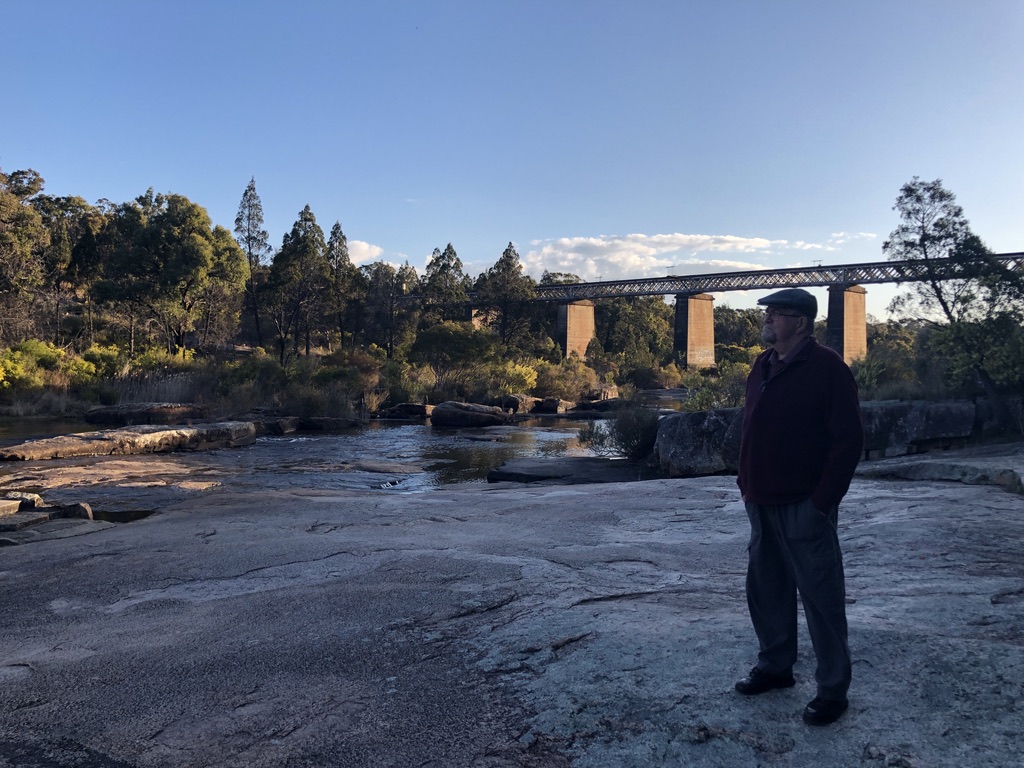
Along Quart Pot Creek

In Stanthorpe this Spring when we visit, the water is cold. Not tempting. Perhaps in summer families come here to lie in the shallow pools and sunbake on the warm granite.

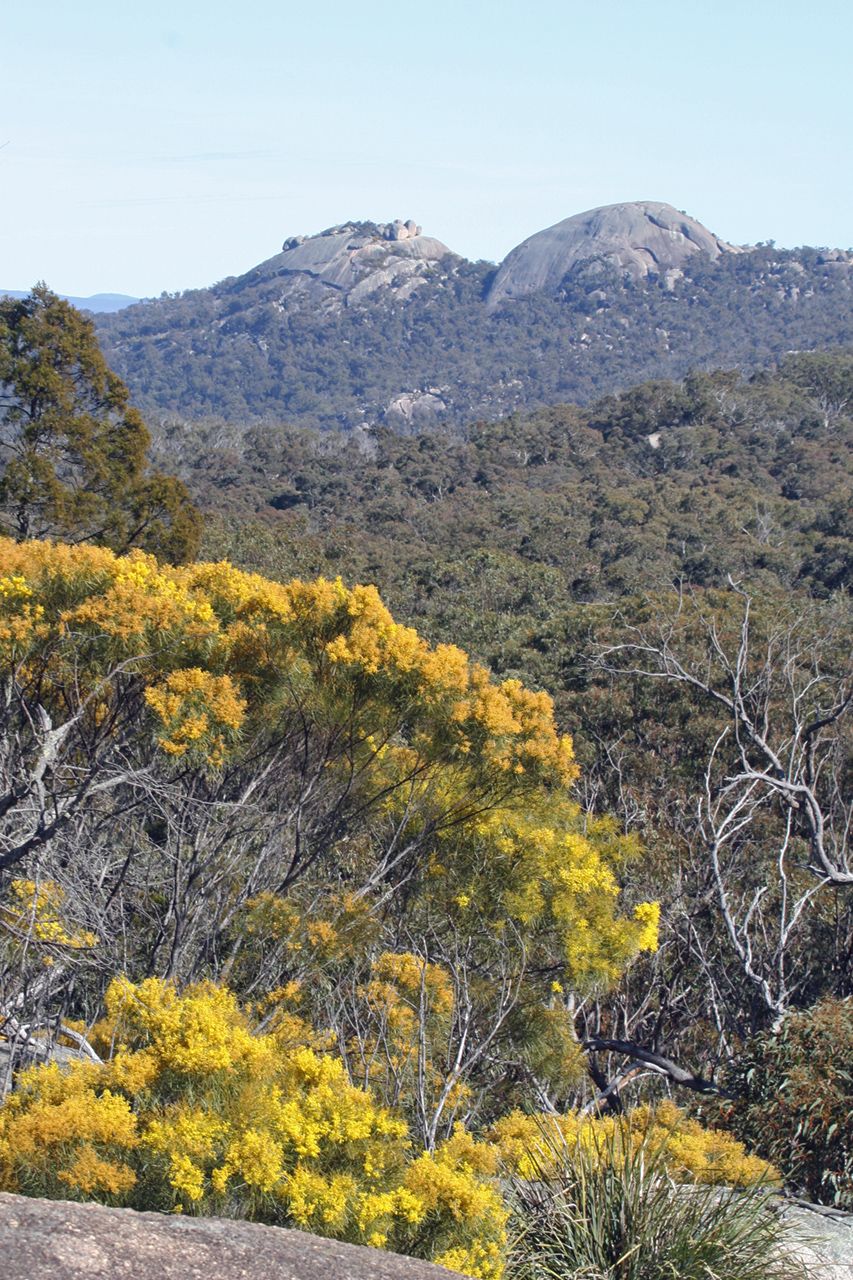
On this short trip out of Brisbane we are counting wattles. Leaving Stanthorpe, we drive over the New South Wales border to Bald Rock and then back home via the Bruxner Highway and Summerland Way, counting many varieties of wattles in bloom along the way. Green and gold everywhere.
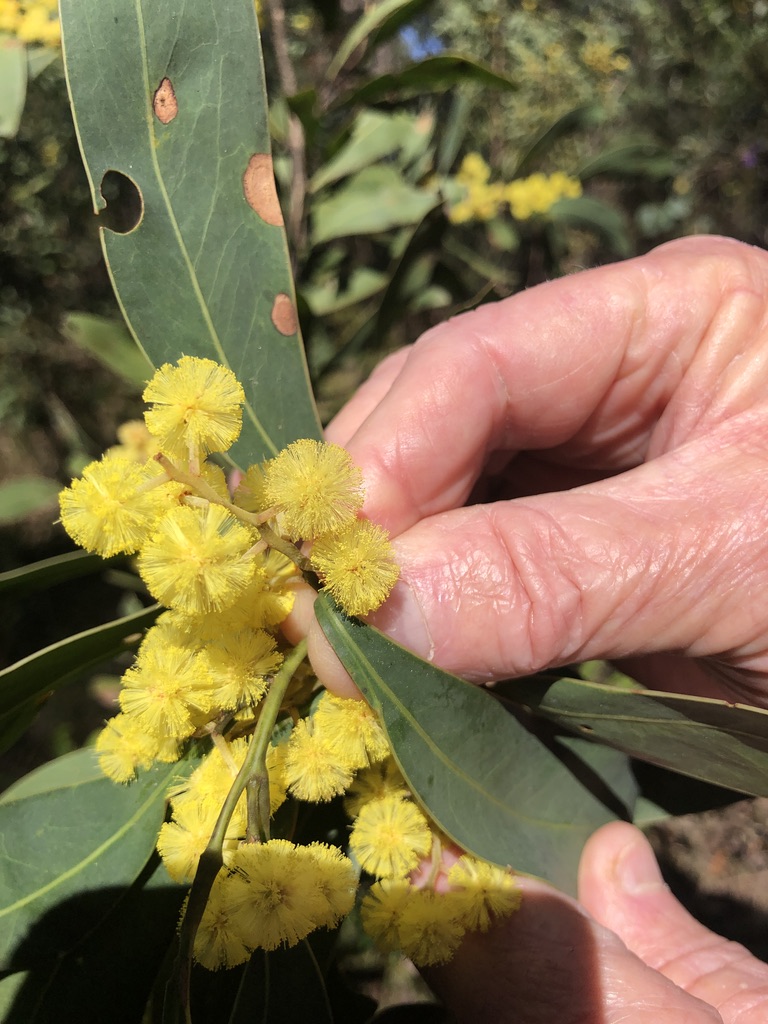
Bald Rock wattle

In April 2023, I planned a fine road trip. It was the right time: the rivers were full but not flooding. The countryside was green. There was no threat of bushfires.

We would follow the inland rivers, from the Warrego at Cunnamulla, down the Darling to Burke and Menindee, to meet the Murray River near its mouth, at Gawler in South Australia. We would then trace the Murray upstream to where it meets the Darling at Wentworth in Victoria, then further east to Balranald, near where the Murray meets the Murrumbidgee. Following the Murrumbidgee to Wagga Wagga, we would then head north to the Lachlan River at Forbes; join the Newell Highway and cross the Macintyre back into Queensland at Goondiwindi.

We’d meet the Condamine River at Warwick, then drive east to Queen Mary Falls where the river drops forty metres down from the ranges. Past towering Mount Superbus, the tallest mountain in south Queensland and the head of the Condamine catchment.
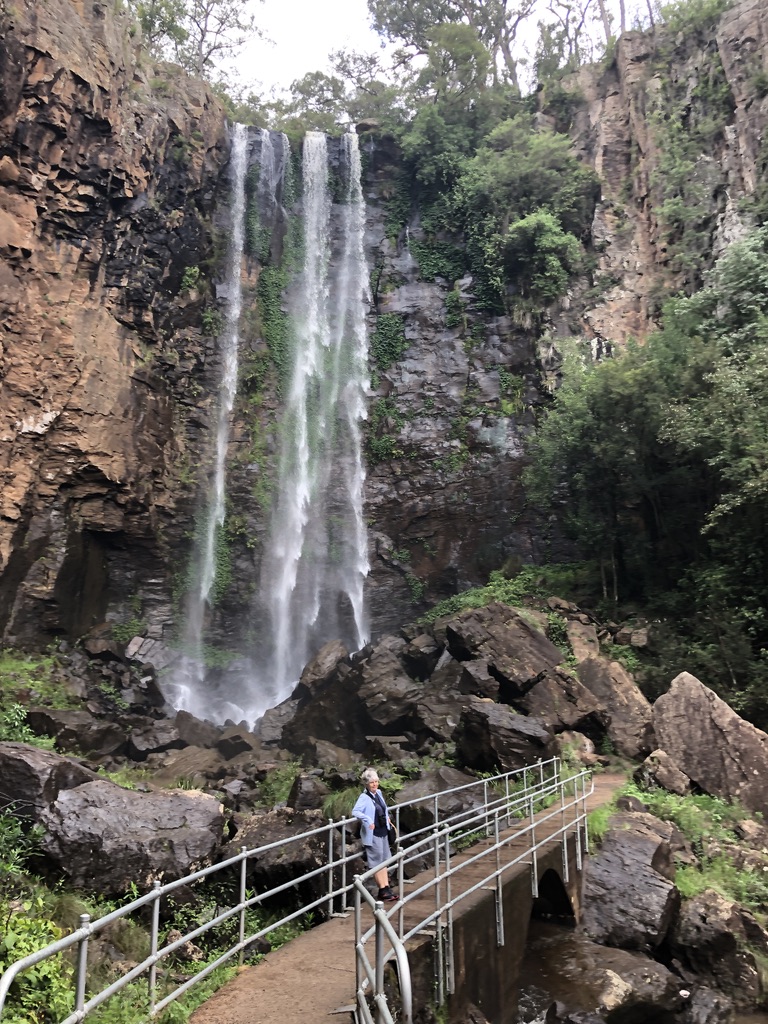
At Queen Mary Falls

In the right season, with plenty of rain and flow through the rivers, the water that plummets over Queen Mary Falls flows down the Darling and eventually ends up in the Southern Ocean at the mouth of the Murray, at the Coorong in South Australia.

What a neat trip that would have been. But life and illness got in the way, and we cancelled just days before we were due to leave.

That left us in Brisbane; but from Brisbane there are many interesting places to go for short trips. That is what we’ve been doing ever since.

In October last year we took a three-day trip to mainly new territory. A night in Dalby and a walk along Myall Creek in the middle of town, then up the Bunya Highway through Bell and Kingaroy to Murgon.

In Murgon there is a small but well set up Fossil Experience Museum called “55 Million Years Ago”. Local businesses, towns and shires seek for something that will encourage travellers to linger and spend. Federal, state and local governments support them. For places as widely spread as Murgon, Winton, Richmond, Hughenden, Eromanga, and even as far north as Chillagoe, Queensland’s finds of fossils and dinosaur bones attract visitors. Families plan holiday road trips to visit dinosaur sites.

From Murgon we drove through Goomeri, stopping at the elegant Wimberley & Co Bookstore, then turned south to spend the night at Highfields, north of Toowoomba.
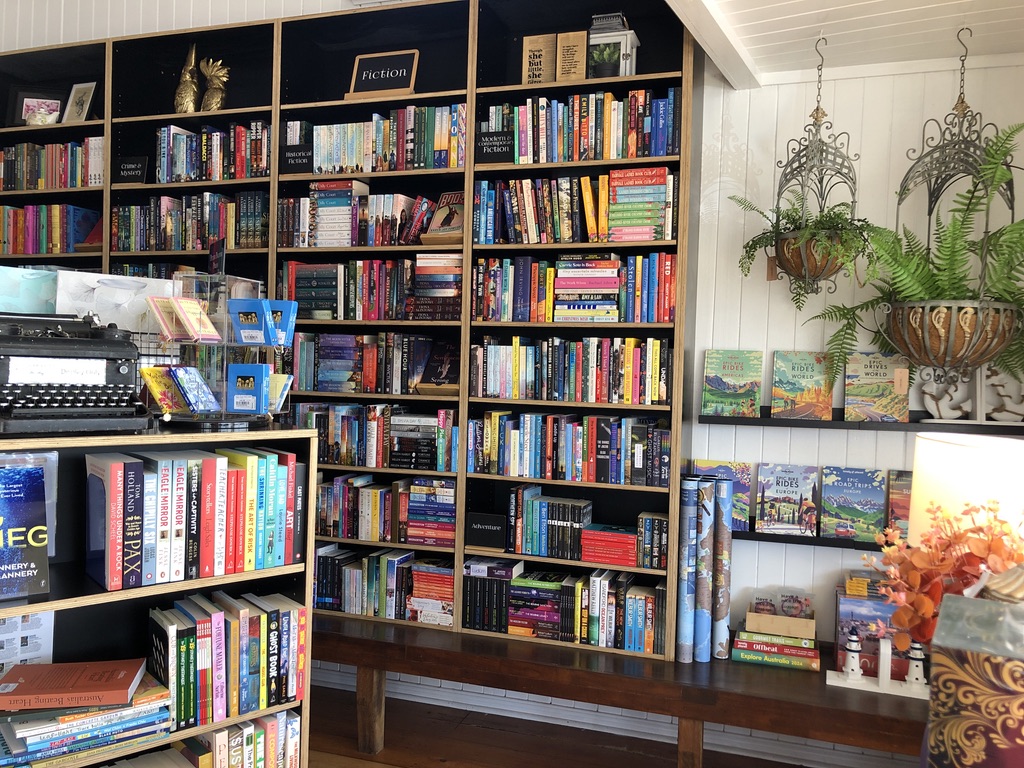
Wimberley & Co Bookstore, Goomeri

Highfields has a wonderful park – the 4.7-hectare Peacehaven Botanic Park. In 2004 local dairy farmer Stan Kuhl donated the land for a public park to promote peace.
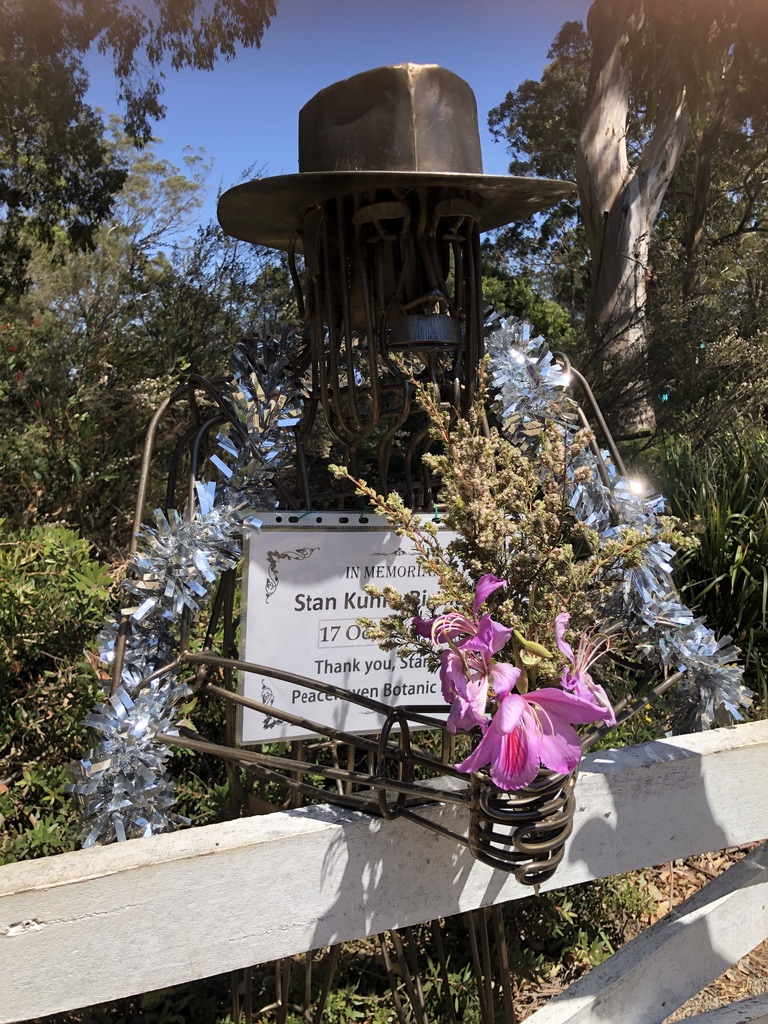
Memorial to Stan Kuhl

The world is as far from peace as ever; but wandering these paths and plantings, watching parrots in the fine old eucalypts, with the Bunya Mountains in the distance, I appreciated old Stan’s intention.

In the heat of February 2024, we took a three-day trip around the Darling Downs and out as far as Goondiwindi. The first night, we stayed in the humble motel behind the Pittsworth Hotel, “Pittsworth’s favourite hotel”. The only hotel in town as far as we can see, but its walls show a collection of photos of the many grand establishments that once existed here, only to succumb to fires, like so many old country hotels.
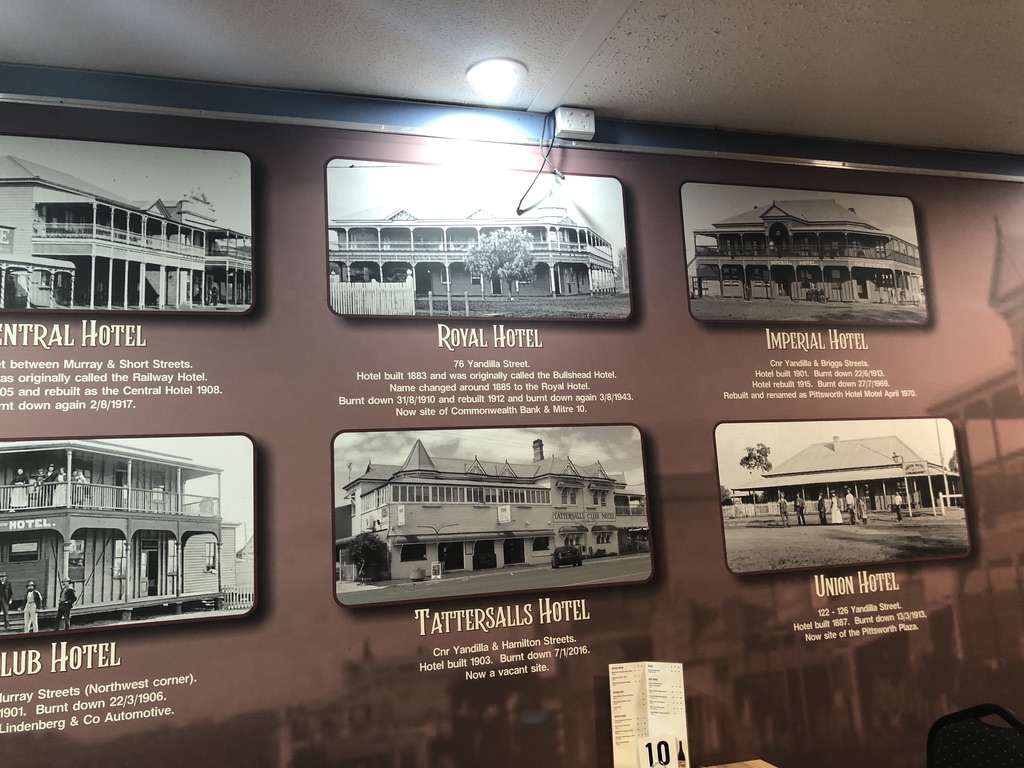
In the Pittsworth Hotel

Country towns celebrate their sports stars, from Rod Laver, the “Rockhampton Rocket”, to Laura Geitz, medal winner and former captain of the Australian netball team, celebrated in a bronze statue in her hometown of Allora.

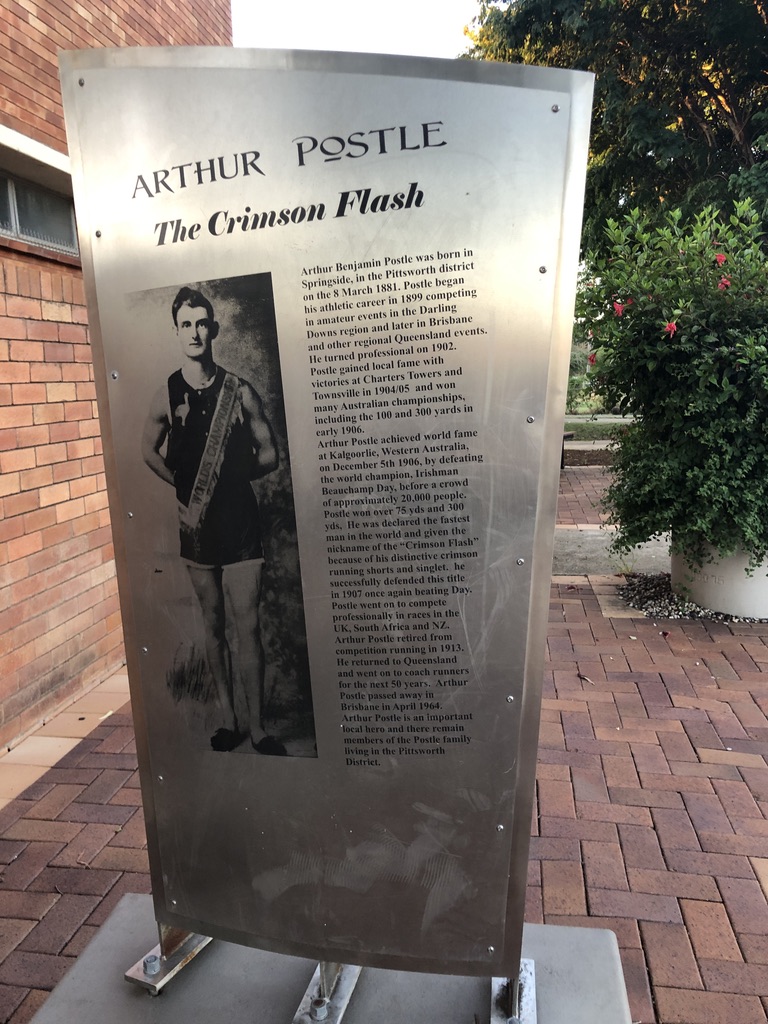
In Pittsworth, there is a memorial to Arthur Postle, the “Crimson Flash” – a local professional sprinter who won many Australian championships in the early twentieth century, even defeating a world champion.
On this trip we were exploring parts of the Darling Downs we hadn’t visited before, so I could look for old churches. My g-g-grandfather, James Matthews, was the Church of England Rector of Warwick between 1875 and 1886. In small farming settlements around the Downs, services in those days were held in inns or private houses; and James earned a name as a church builder. Perhaps he had the naming of them too, because at least one is dedicated to St James, and another to St Matthew.

It was hot in Pratten, a tiny town west of Warwick and north of the Cunningham Highway. St James’s Church is a small wooden building on a hilltop, with a simple bell tower beside it.
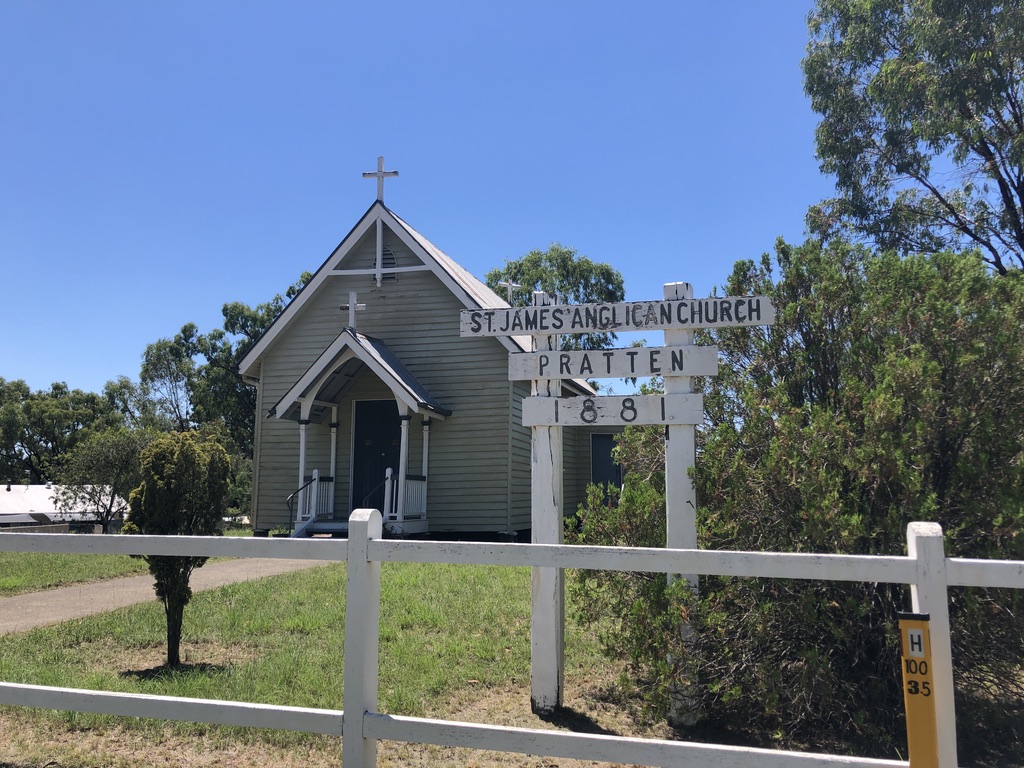
The town lay still and silent under the sun, until Con pulled the rope and the church bell rang out.

Still, nothing moved.

At the nearby town of Leyburn is another church visited by James Matthews. This attractive building was designed by architect Richard Suter, who designed Jimbour House, among many now heritage-listed buildings.
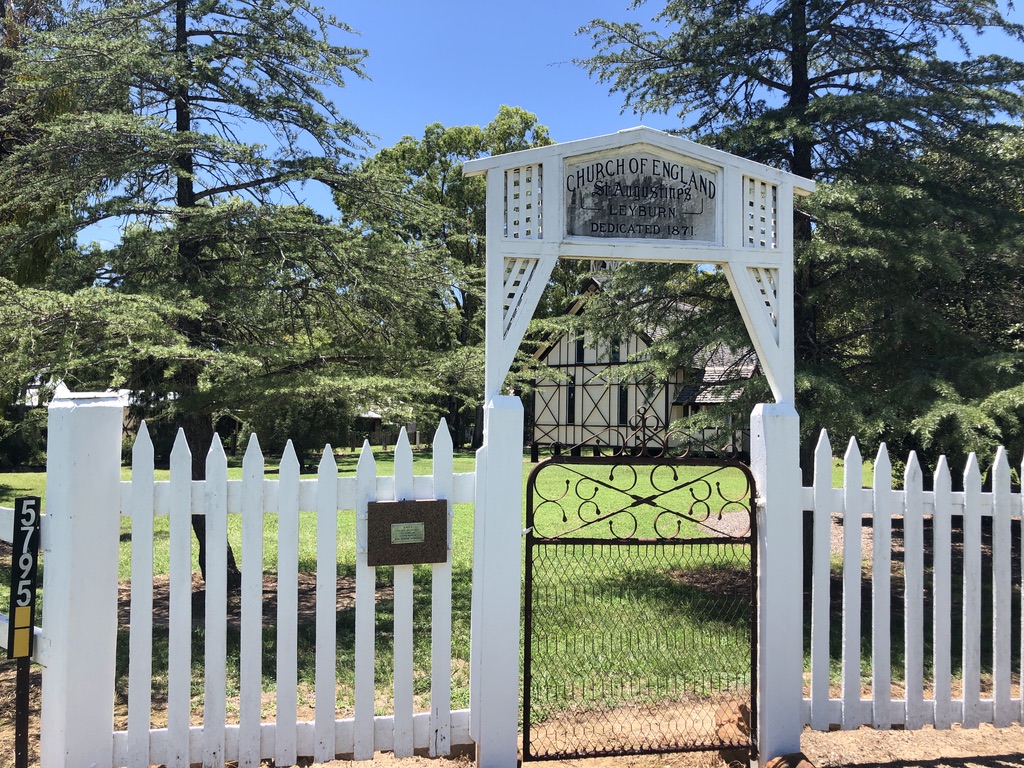
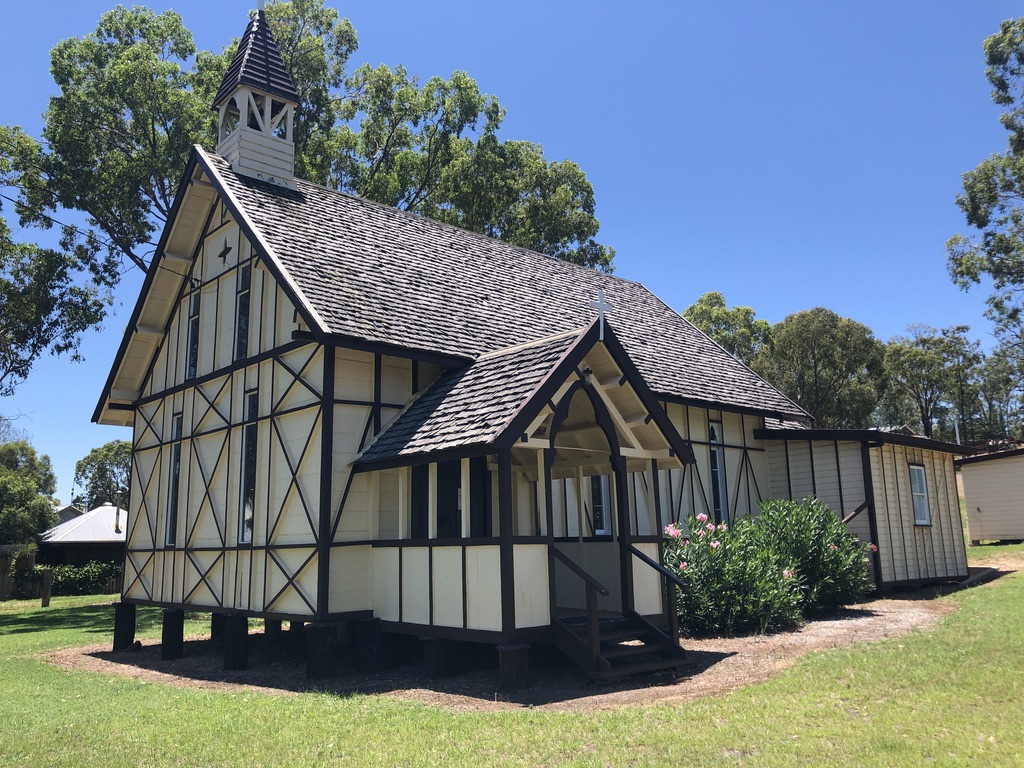
St Augustine’s Church, Leyburn

Leyburn has a pleasant pub, the Royal Hotel.  Along with the Grand View at Cleveland, it claims to be the oldest continuously licenced hotel in the state.  We were relieved to have our lunch in its air-conditioning.

Leyburn is known for motor racing. In 1949, seventy-five years ago this year, the Australian Grand Prix was held at here, attracting 30,000 visitors. The event has been recreated in the last few years as the Historic Leyburn Sprints, the main feature of a heritage festival with a motoring theme. The Sprints are held on a 137km route through the surrounding area, including Pratten. You wouldn’t have been able to hear the church bell ringing when the Sprint was running through town.

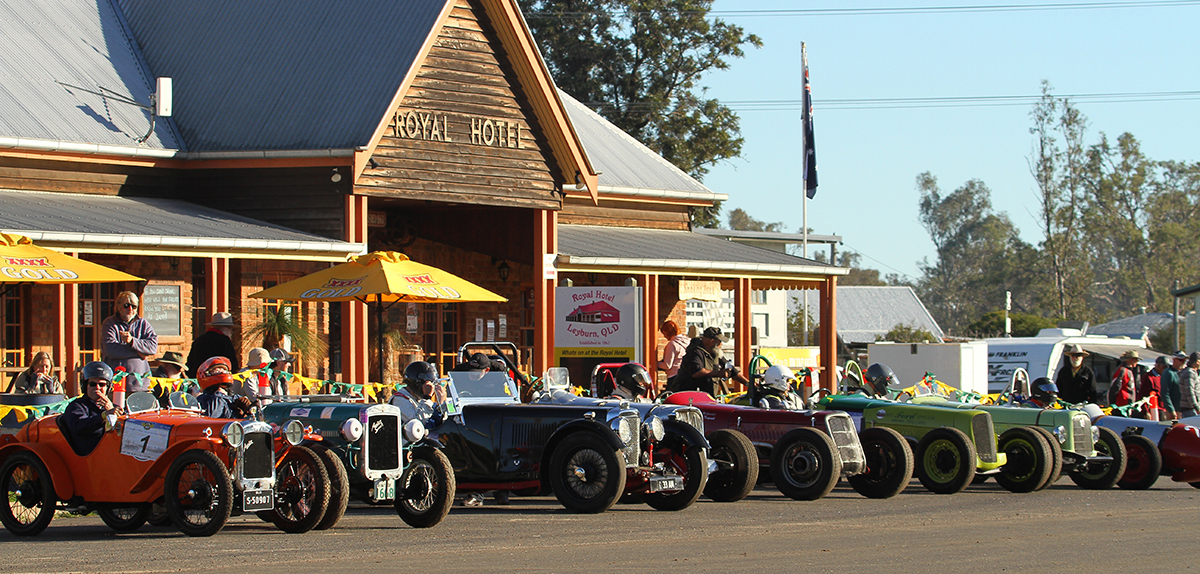
Royal Hotel, Leyburn, during the Historic Sprints festival

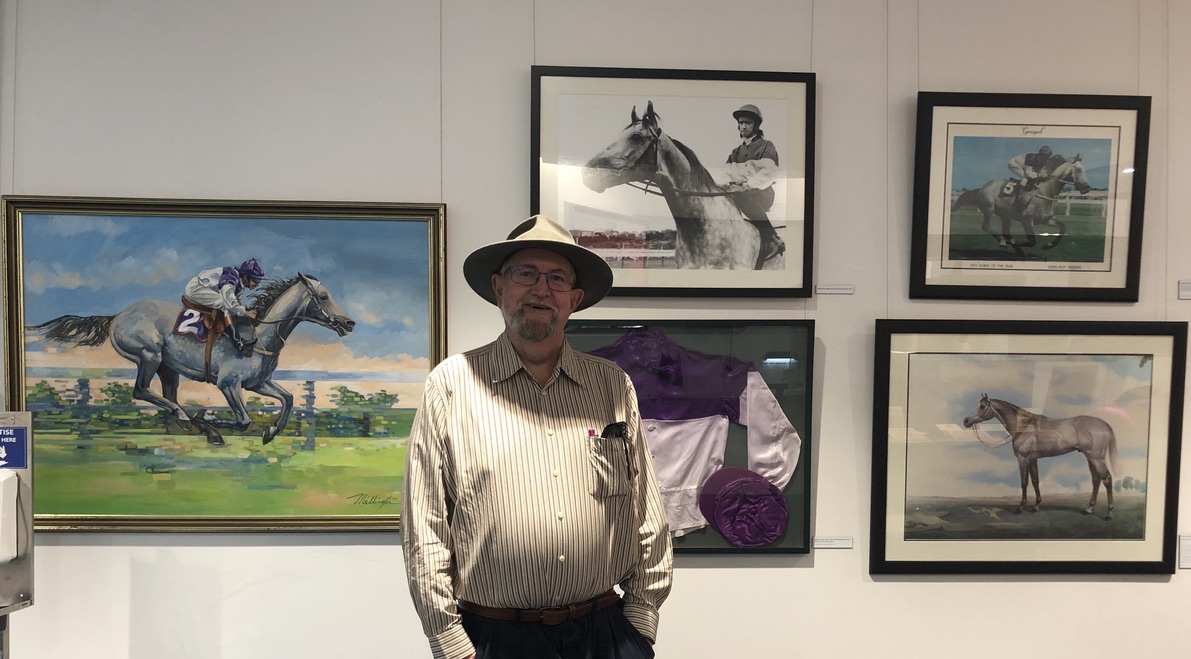
From Leyburn we headed to Goondiwindi to visit the Gunsynd Museum situated in the town’s elegant art deco council chambers. Another regional sporting hero, loved by Con.
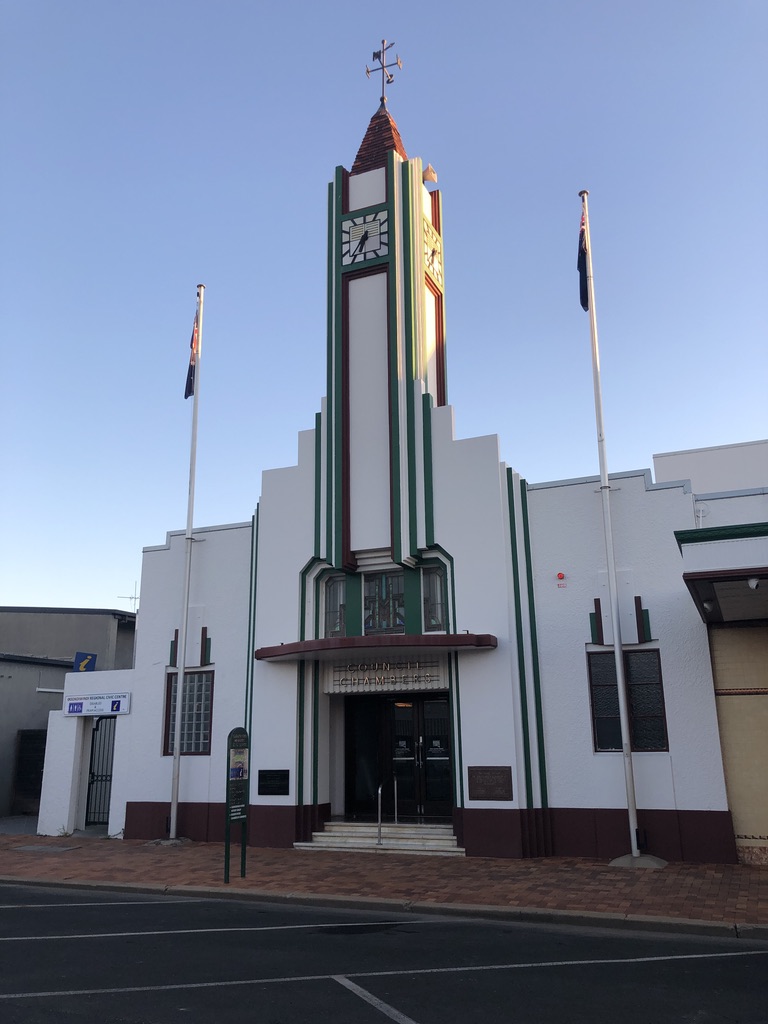
Goondiwindi Council Chambers
In the Gunsynd Museum

Last May, for my birthday, we spent three nights on Minjerribah North Stradbroke Island. This place is a treasure; and so close to Brisbane. White sand beaches, clear water, gorgeous freshwater lakes and swamps (so fresh that Island water is pumped to the other Bay islands and the mainland); birdlife, headland views, and small town life, as well as a strong Indigenous cultural presence.
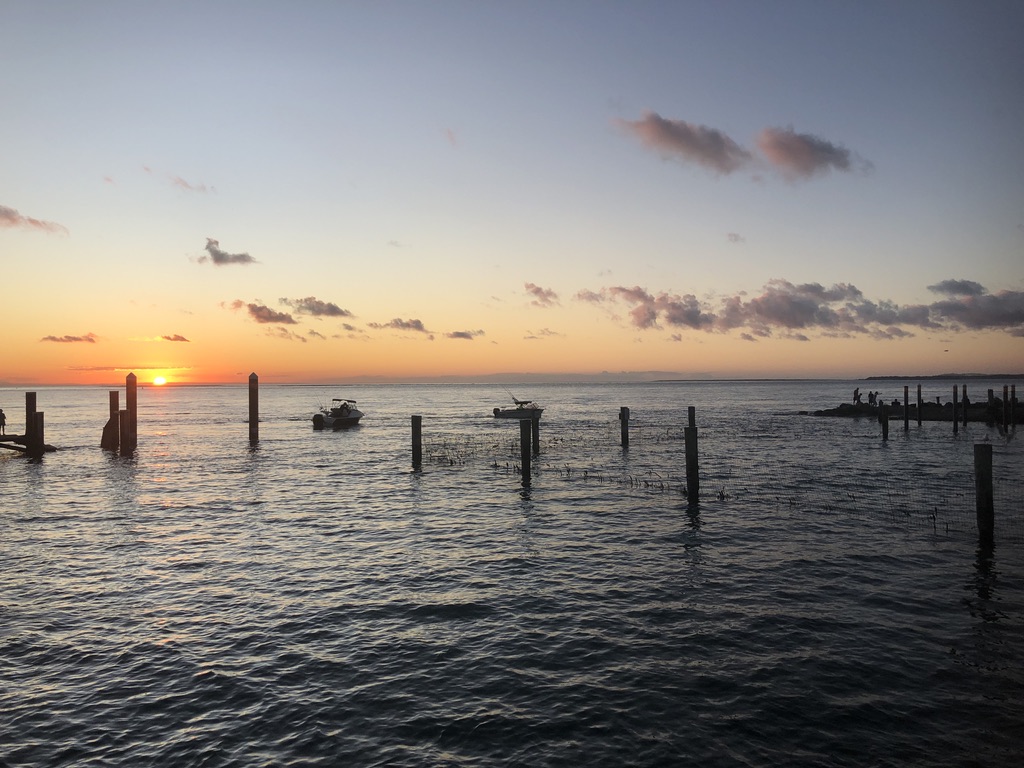
Sunset at Amity Point, Stradbroke Island

At the Point Lookout Hotel, perched above Cylinder Beach, I ate my birthday dinner accompanied by a beach stone-curlew that wandered among the terrace diners, searching for scraps with its huge, spooky eyes.
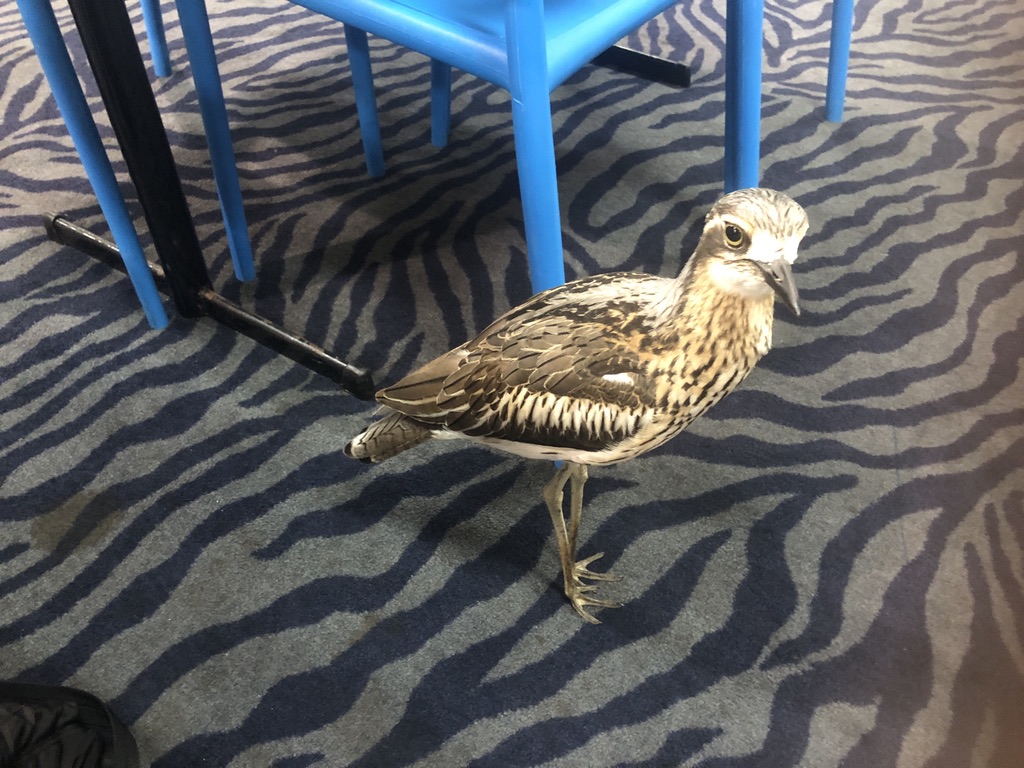
Straddie curlew

I’ve seen stone-curlews’ motionless forms and heard their haunting night-time cries from the suburbs of Brisbane to the tropics. Con tells me that on his first night at boarding school in Cairns he heard them and thought someone was being murdered.

We’ve made other out of town trips since our big trip was cancelled. Short trips to Grafton, Murwillumbah, Maryborough, Coolum, Toowoomba and Warwick.
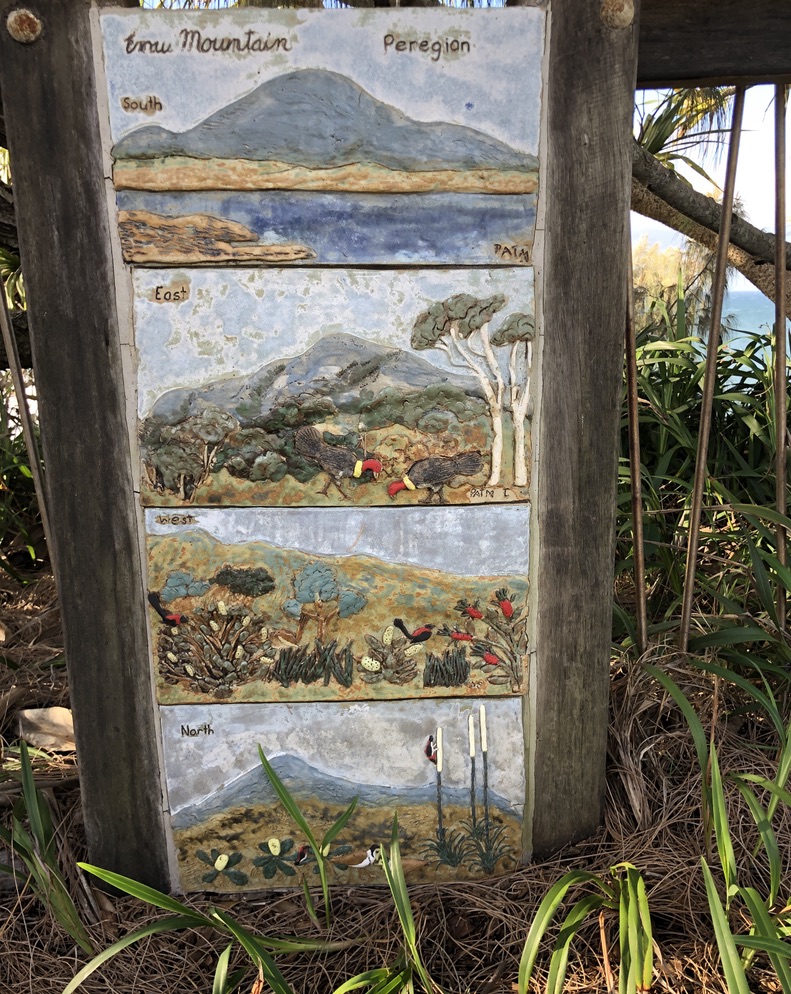
Attractive ceramic art work at Coolum

We also went to Currumbin to enjoy the Swell Sculpture Festival.
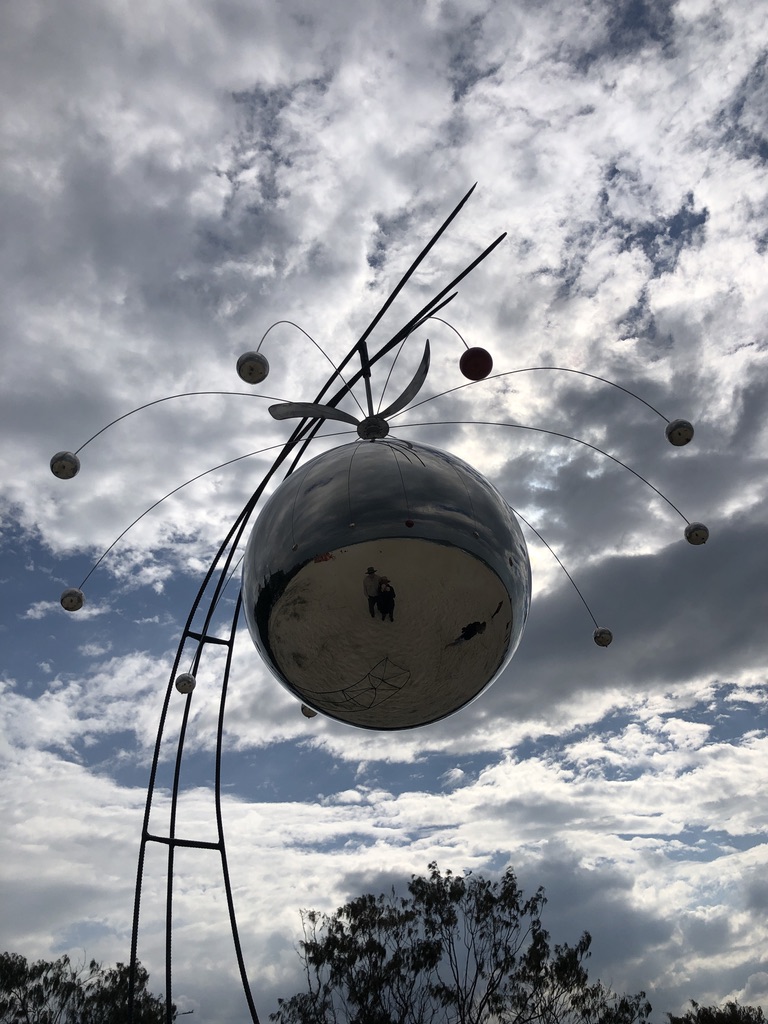
Us reflected, at Currumbin Swell

What next? Out to Glenmorgan, to pay a return visit to the Myall Park Botanic Garden? The wattles and wildflowers out there would be beautiful in Spring.

And maybe, next April, we’ll set off on that fine rivers road trip. Unless the rivers are flooding, or the countryside is burning…

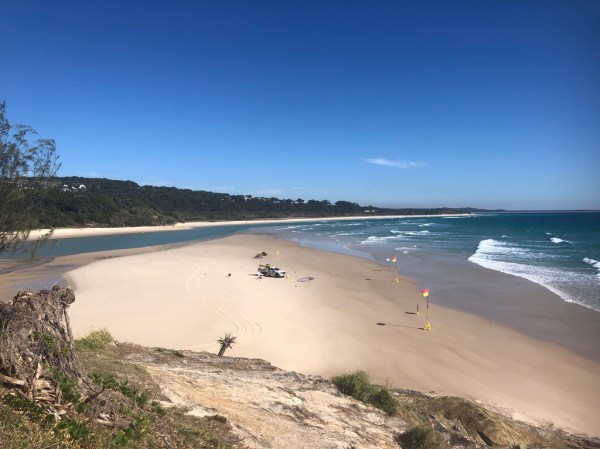
Main photo: Cylinder Beach, Minjerribah Stradbroke Island

Going to the Melbourne Cup

We’d parked our camper-trailer under wattle trees in full bloom, at Girraween National Park, on the Granite Belt.

camper girraween wattle pininterest.co.uk Girraween wattle pininterest.co.uk

The tiny Coleman camper held two double beds, plus a single when we dropped the table down. It had a small fridge and gas stove, a sink with a pump tap, a hard roof and sturdy canvas walls with zip-down, screened plastic windows.

After spending the day walking with our three kids among the spring-time wild-flowers of one of Queensland’s most beautiful and popular national parks, we were lying in bed in the dark, telling jokes and laughing.

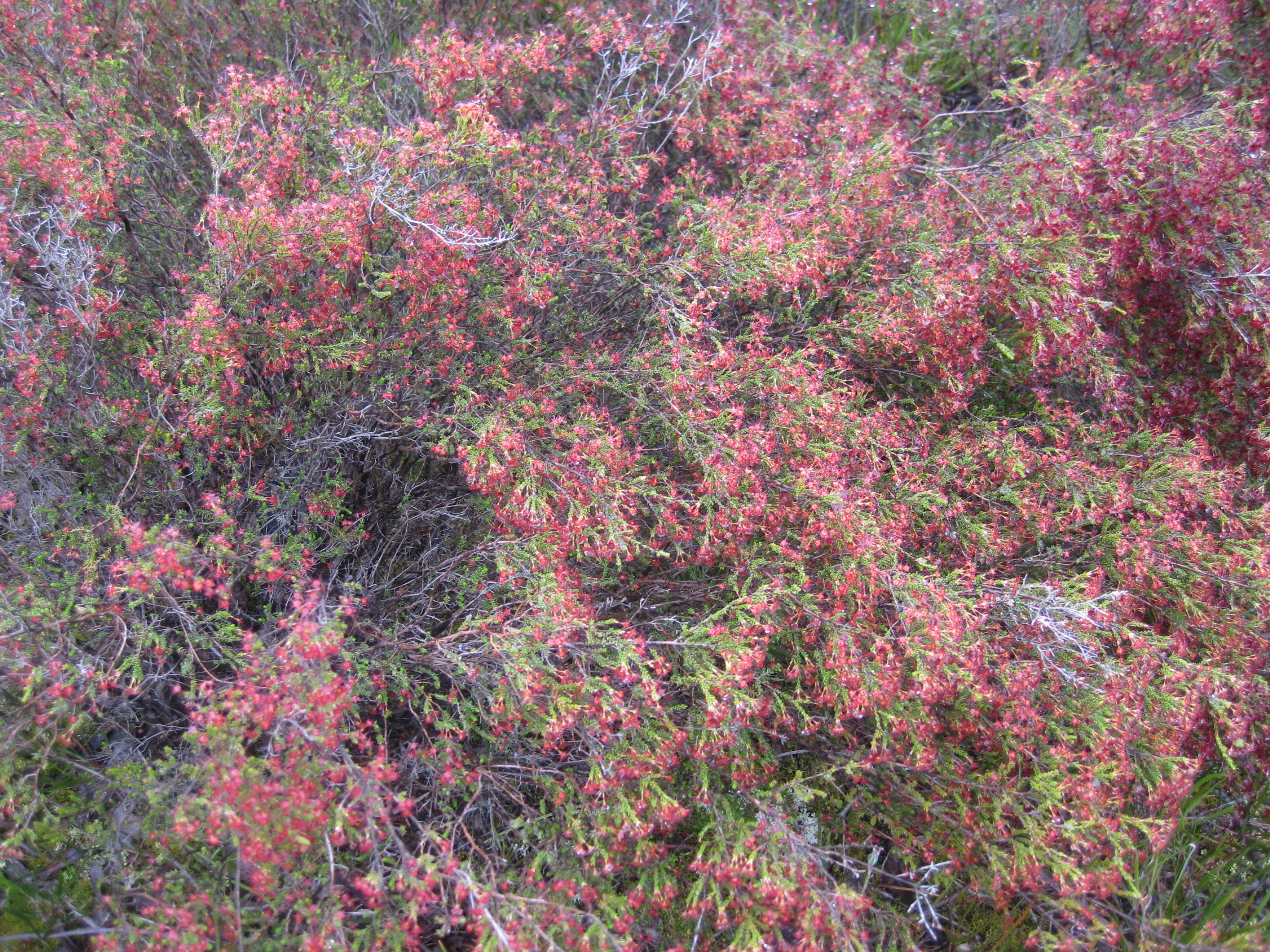
DC5F6A51-E21B-4121-B73E-AF5E0BE20DE8 Wildflowers at Girraween National Park

Suddenly there was the sound of a long, musical fart. “Who farted?” said Con, indignantly. Ironic, coming from the family’s master of flatulence.

“That wasn’t a fart”, said one of the kids. “That was a Girraween Giggle.”

That set everyone off with real giggles, and I happily put my hand on Con’s leg, under the doona.

Con was immediately distracted from farts, and we concentrated instead on a problem that all parents face when they share a camper with their children.

Tents are different. A tent might be the same size as a camper-trailer, but it doesn’t jiggle or squeak. Even with its jacks wound down tight under all four corners, a camper does. It’s not unusual, when walking through a caravan park or camping area, to pass a jiggling, squeaking camper.

From our home in Lowood, in the Brisbane Valley, we were now on our way south to go to the Melbourne Cup. We’d bought the lightest of camper-trailers, weighing just five hundred and fifty kilograms, because we didn’t know how to reverse a trailer and didn’t want to learn. For that whole trip, we pushed it into position by hand in every new caravan park.

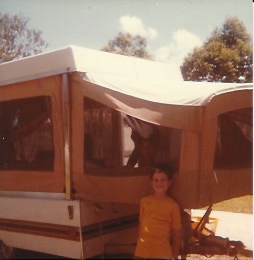
909736BE-2351-45DE-9F31-A4791CC61E40_4_5005_c Our camper-trailer

We were driving the Golden Holden, the Kingswood we’d bought to replace the old blue and white HR Holden.

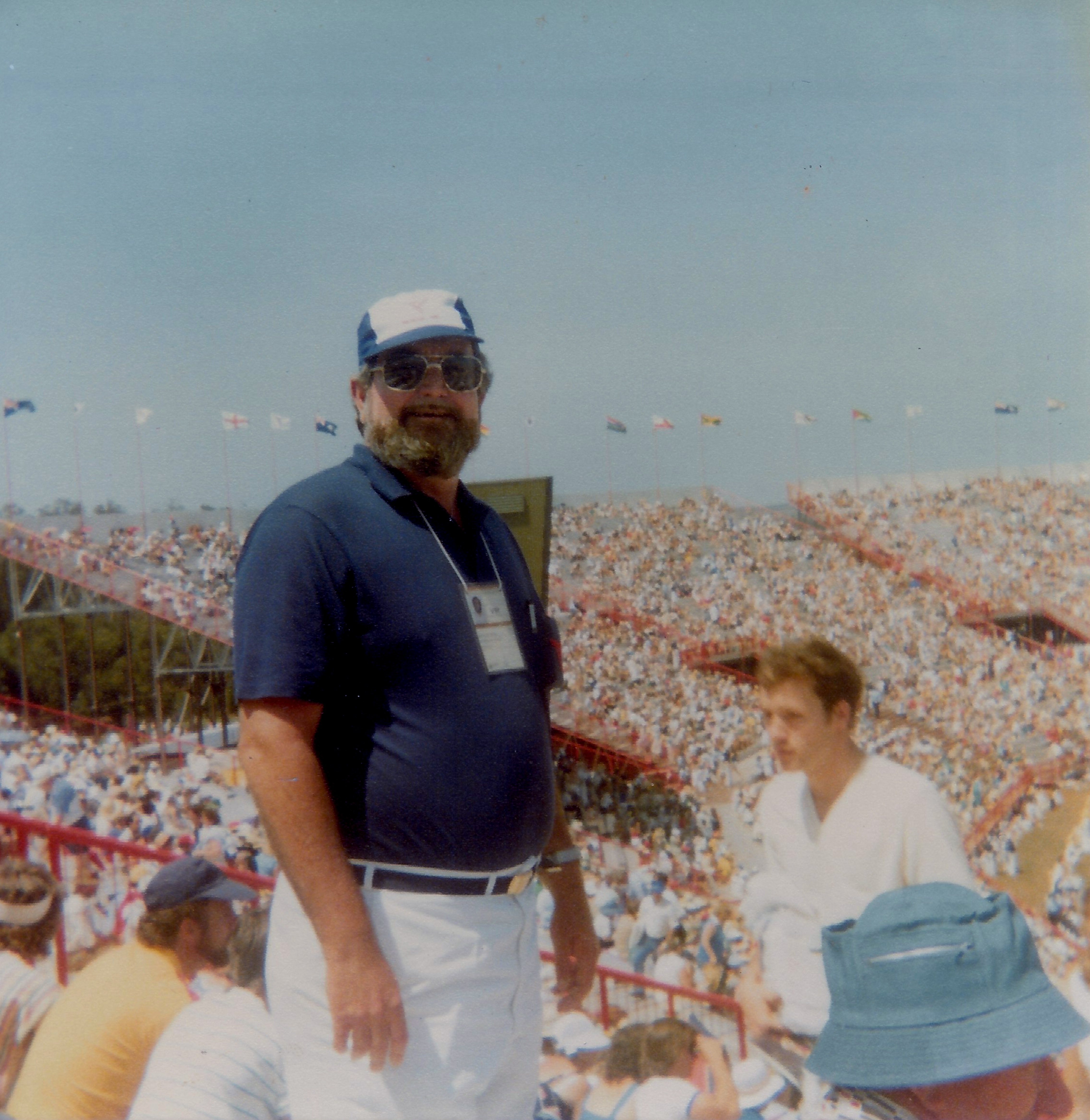
Con had just completed his duties as a volunteer at the 1982 Brisbane Commonwealth Games.

con c'wealth games 1982 Con on duty as a volunteer at the 1982 Commonwealth Games, Brisbane

At the closing party, only two days earlier, his wallet had been stolen, and so we were travelling under a handicap. In those days, he received a salary, I worked casually, and we had little in the bank – only a Christmas Club account into which I put money occasionally. We lived from pay to pay, with a credit card (Bankcard) for emergencies.

Now the Bankcard had been stolen, plus Con’s driver’s license, his only form of identification. Both our Bankcards had been cancelled. New cards and license had yet to be issued.

In 1982, shopping for groceries or fuel on credit involved a phone call from the business owner to a Sydney number for verification of our Bankcard balance. It seems primitive now, but in those days it was an amazing service. And just as we were about to begin an extensive interstate road trip, this service was closed to us, because we had no card.

Con was on long service leave, and so fortnightly deposits would continue to be made into his savings account. He’d sent his signature to a bank in Richmond, Sydney, where we were going to visit family friends; but he would have no form of identification to enable us to withdraw funds before then.

We banked with the National Bank – now NAB. In those days there was a branch of the National Bank in almost every Queensland town, because the National Bank had taken over the old Queensland National Bank and its many branches throughout the state. In New South Wales they were less common.

Con visited the Lowood bank manager and told him of our predicament – we would be travelling interstate with no means of withdrawing money – and he gave Con a card with his signature on it to show along the way. Off we went.

On the long haul up to the Granite belt, at Braeside, south of Warwick on the New England Highway, the engine of the Golden Holden blew up.

When I first went to Stanthorpe, the road from Warwick was largely gravel, a winding, narrow road up the range where overtaking was impossible, and accidents were common. By 1982 that road was gone, replaced by a long, smooth ascent. Too long for the Holden with a camper-trailer in tow.

We were broken-down beside the road, with steam rising off a seized-up engine, three kids and a camper and very little money.

The RACQ towed us to Stanthorpe, and we arranged to have a new engine installed. Then we went to the bank. Contacted by the Stanthorpe branch, the manager at Lowood opened my Christmas Fund account and forwarded the funds. It was enough to pay for the new engine.

Two days later we were in Armidale. No National Bank there. I made rissoles for dinner out of the cheapest meat I could buy: sausage mince. Con put fifty cents on Kingston Town for the Cox Plate, and another fifty cents on Triumphal Arch in the Moonee Valley Gold Cup, and took the daily double.

In the caravan park we listened to the races on his little radio. First Kingston Town won. “He’ll win the Melbourne Cup!” said Con, with great excitement, “and we’ll be there to see it!”

Next, Triumphal Arch came in first, and Con, with delight, picked up nine dollars from the TAB. It was enough to get us through to Muswellbrook.

Muswellbrook had a CBC bank, which was tied in with the National. Con produced the card he’d got from the bank manager at Lowood and withdrew fifty dollars, enough to see us through to Richmond. It was a high old time that night in the caravan park at nearby Lake Glenbawn.

camper lake glenbawn ezytrail Lake Glenbawn ezytrailscampertrailers.com.au

Con had some beers, and I drank a little bottle of Ben Ean. Ben Ean Moselle “Shorts” were popular in those days.

fcamper ben ean Advertisement for “Ben Ean Shorts” theconversation.com

A couple of days later, at Richmond National Bank, our holiday was saved. There was a call from Lowood bank while we were there – the manager offering us an overdraft. A few days later our replacement cards arrived, and our financial life had been restored to as much order as we ever managed to achieve. On we went, to Melbourne and the Cup.

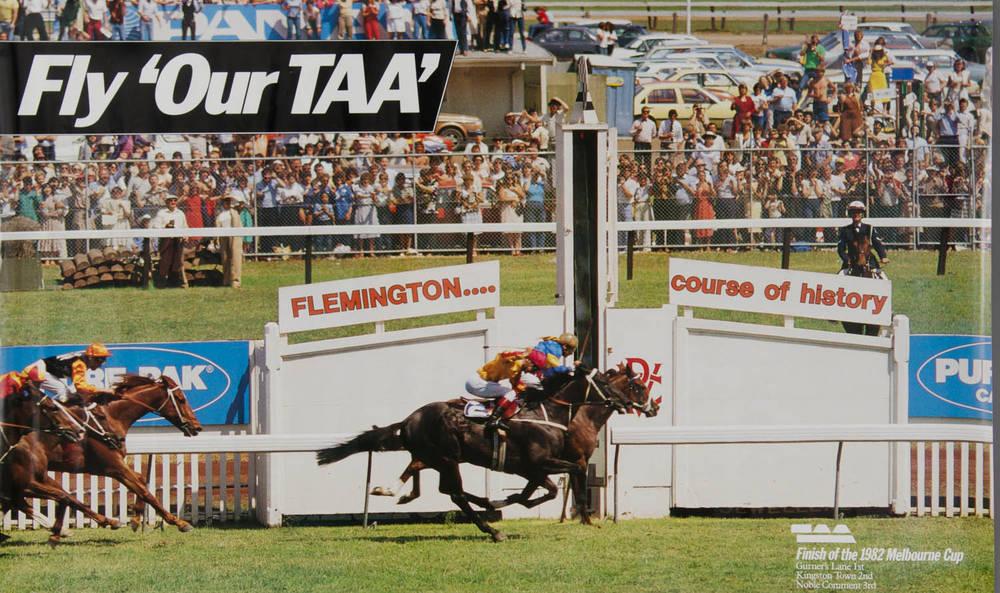
Kingston Town came second.

camper melb cup taa poster Old poster showing Kingston Town being beaten by Gurner’s Lane, Melbourne Cup 1982 leski.com.au

Our camper served us well on that trip, and for several more years. By then, the kids had grown. The trailer seemed too crowded, and its canvas showed signs of wear. When I went back to full-time work, we traded it in for a second car, although we were sorry to see it go.

We never forgot the Girraween Giggle.

DEE87E2C-5900-4320-B8CA-BD4A6DE9A956_4_5005_c The Golden Holden and the camper-trailer at Jerilderie, Vic.

Snake Stories

A red-bellied black snake was stretched along the pipe at the back of the laundry tubs, behind the taps. I could see its glossy colours.

I’d been washing up while little Matt played outside the back door. Hearing him bumping something down the three steps that led to the yard and the laundry shed of the old house, I dried my hands and went to see what he was up to.

Matt had dragged a chair over to the concrete laundry tubs and climbed up on it, and he was reaching out, laughing, to the snake.

snake red-bellied
Red-bellied black snake

We were living in the school residence at Rosevale, south-west of Ipswich. Local farmers had warned us that the Rosevale valley was notorious for snakes – both brown and red-bellied black.

Trying not to startle either Matt or the snake, I called out, softly, “Come here, Matt. I’ve got a bikkie for you.”

He turned and climbed down. I grabbed him and ran back up the stairs and watched the snake slither away out of sight into the long grass behind the shed.

fullsizeoutput_453d
The old school residence, Rosevale. Laundry shed on left.

Another day Matt was playing in the yard with the cats. Suddenly they stood frozen, ears forward, staring at a patch of long grass, and the two deadly brown snakes sunning themselves there. Con ran to get the hoe.

Snakes are protected by law, and snake catchers will come to your house and take the snake away for release into the bush; but there are many who still consider that the only good snake is a dead snake, and delight in going into battle with sticks, hoes and mattocks or whatever is handy.

As children, my brothers and I entertained ourselves by leaving a rubber snake on the back landing where our father would be bound to find it.

He did. He grabbed a big stick and killed it.

Rubber snakes bounce in a most lifelike manner when hit with a stick. Dad heroically beat that rubber snake to death, and carefully lifted it on the stick to examine it. He said, “It’s a young brown. Dangerous things, those.” That was before he noticed us laughing.

He didn’t think it was funny.

I’ve played that trick on Con. He didn’t think it was funny either.

Most encounters with snakes happen in the bush. Walking down the zigzag track in the rainforest of the Palmerston, west of Innisfail, I met a large brown snake crossing the track. I met the same snake again on the next leg of the path down the hill. You don’t know how high you can jump until you almost put your foot on a snake.

All Australians have snake stories. They are a favourite topic of conversation, and we particularly love to tell them to foreigners. The English are best, and Americans. They respond with such horror.

An American visiting Brisbane asked a local, “Why are so many Brisbane house on stilts?”

“It’s because of the snakes. They can just slither straight under the house instead of coming inside.”

To white farmers and squatters of the nineteenth century, often living in primitive conditions in what was to them hostile bush, snakes were a deadly enemy. Henry Lawson wrote about it in his spare, atmospheric story “The Drover’s Wife”. Living in isolated bushland, alone with her young children in a slab hut, protected only by her kangaroo-dog Alligator, a woman sits up all night with the dog, her children bedded down on the rough kitchen table, waiting for a snake to re-emerge through cracks in the wall.

Alligator and the drover’s wife kill the snake between them, after a fierce struggle; and she lifts it on the point of her stick and throws it on the fire.

We have a love-hate relationship with snakes. They eat chooks, they kill dogs, and sometimes they kill people; but they’re part of our environment, a feature of legends and stories, from ancient Aboriginal culture to the Bible and modern literature and painting.

snake ayr
Giant carpet snake “Gubulla Munda”, Ayr, North Queensland

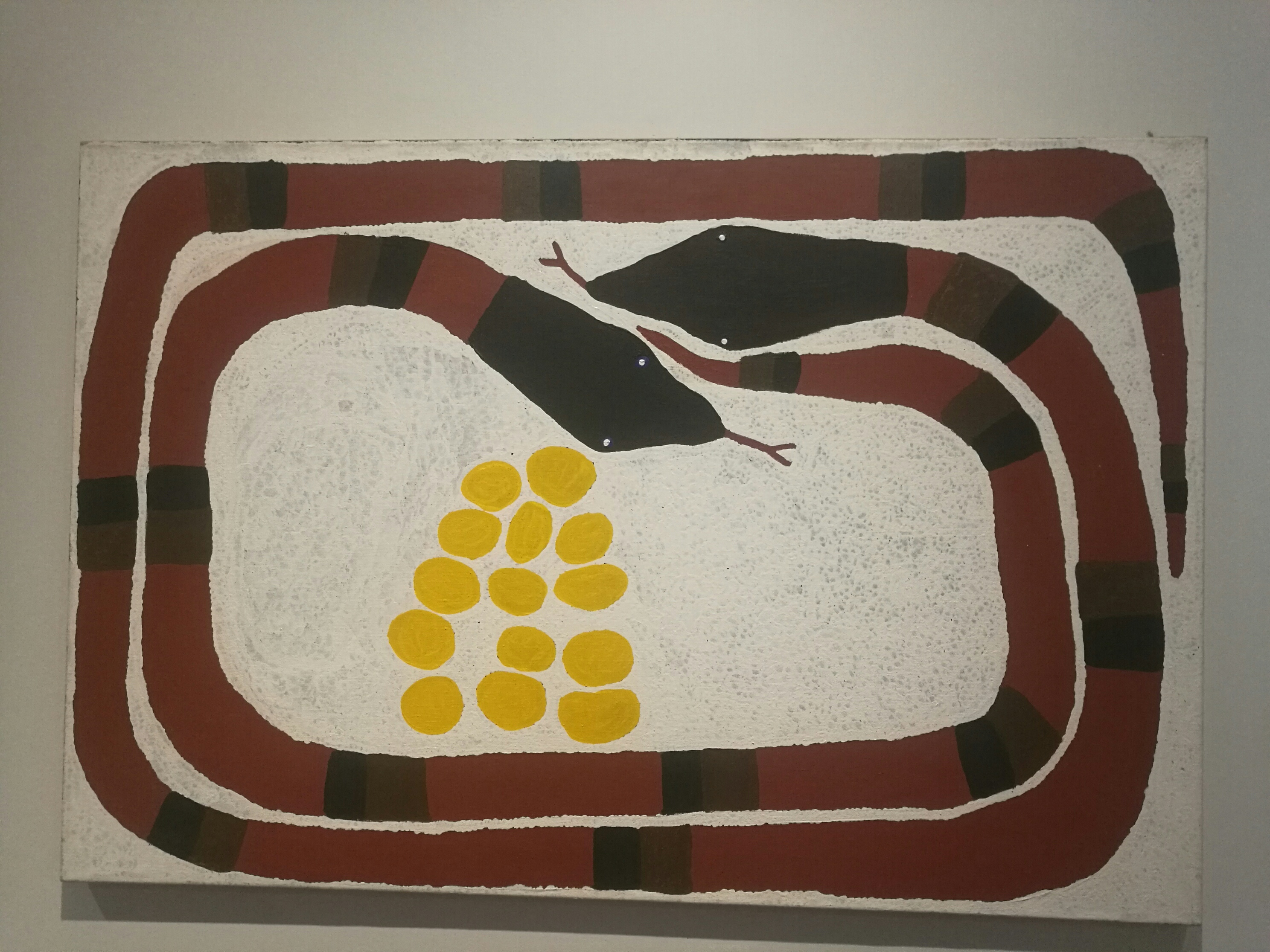
Rainbow serpent legends exist all over the country, and snakes are a common theme in Aboriginal art.

IMG_20190204_115256_resized_20190204_011100777
“Bloody Big Snake”, Shepparton Art Gallery, Victoria

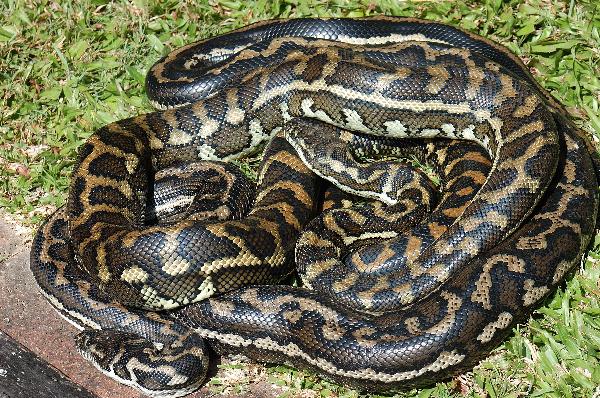
Some say the rainbow serpent is a carpet snake: the “Kabul” that gives its name to Caboolture.

A carpet snake once ate a litter of kittens under our house at Yarrabah, then coiled up on the front door mat to sleep off the feed. There are carpet snakes living in my Brisbane back yard, too. I know when there’s one about by the screeching of noisy miner birds, harassing a snake on a tree branch or curled up behind a staghorn fern. They’re beautiful creatures, and we like to have them around.

snakes carpet
Carpet snake

It’s best not to walk out on our verandah at night without shoes, though. Carpet snakes like to slither across the boards and into the wattle tree. Sometimes we see a long, patterned snakeskin hanging across its branches.

No wonder birds don’t visit the bird bath I hung there.

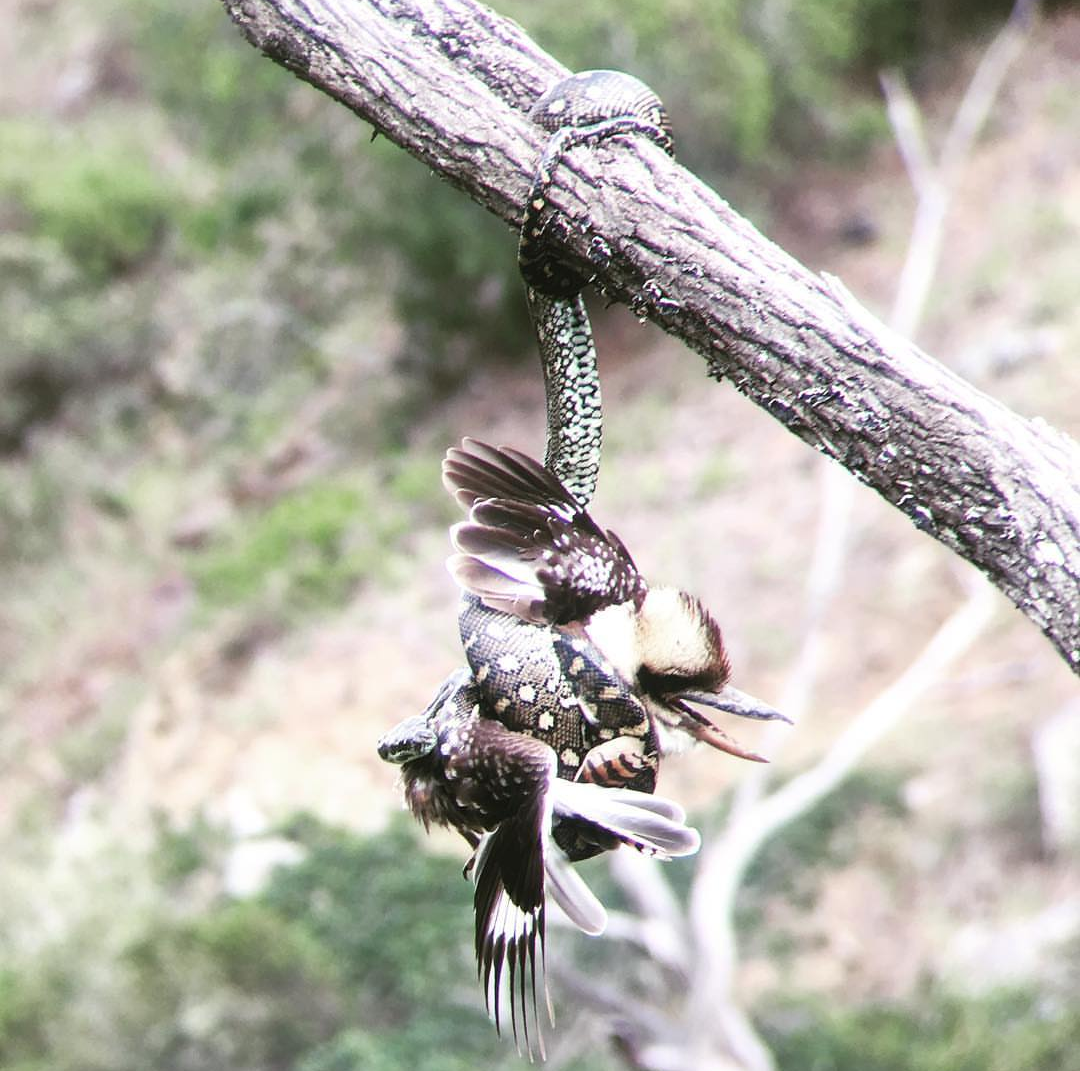
Not even a kookaburra can win against a carpet snake.

snake kookaburra

Blog at WordPress.com.

Up ↑