Toowoomba

On 10 January 2011, we took a train from Brisbane to Sydney, a trip of thirteen hours. All day we travelled through beautiful country, lush and green after a summer of plentiful rain. At our hotel in Woolloomooloo, we turned on the television.

On the screen was a vision of brown, surging floodwater pouring through streets, cars floating and tumbling and people clinging to trees waiting for swift water rescuers.

“Scenes of disaster in a flash flood in Toowoomba”, the commentary said.

“Toowoomba? That can’t be right. Toowoomba doesn’t have a river. It’s on top of a mountain range,” we said. That’s what everyone said.

Days of heavy rain had brought a wall of water rushing down through the Toowoomba CBD. Four people died. A YouTube video shot by a local shows the power of the flood. https://www.youtube.com/watch?v=iCEs0kpF1Z8

We’d driven through Toowoomba many times, down James Street and across East Creek, a minor creek running down a concrete channel through mown parkland. Now, a woman had been washed off that crossing in her car and drowned.
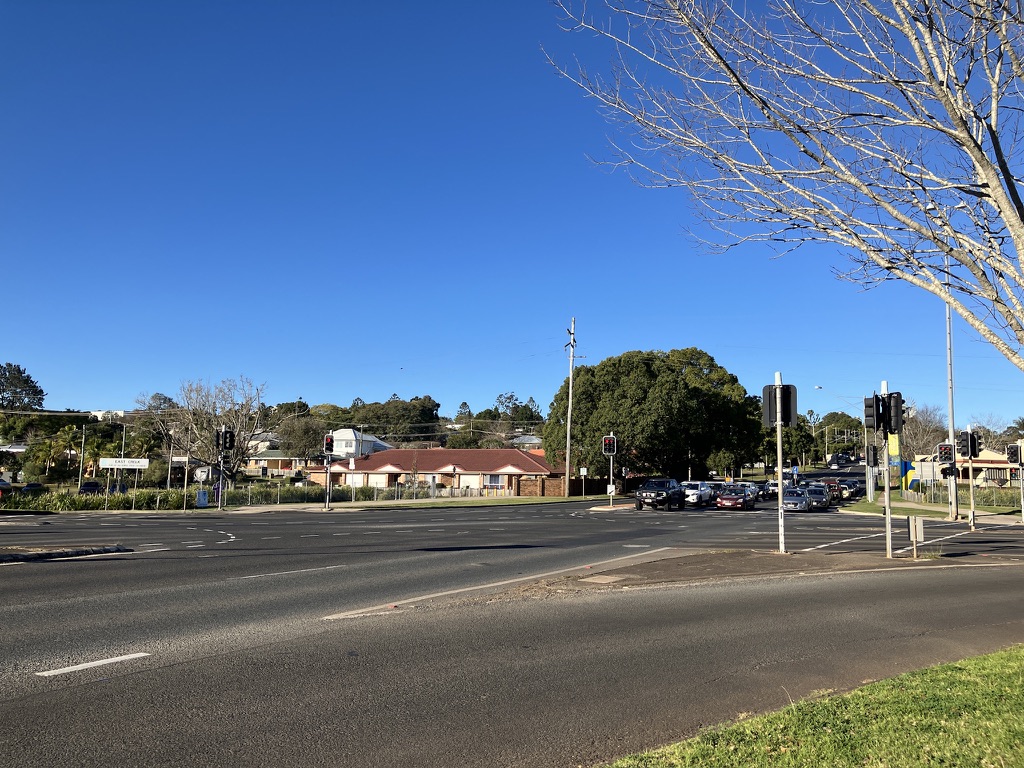
James St at East Creek, scene of the catastrophic 2011 flooding

Two creeks run through Toowoomba: East Creek and West Creek, converging in the central shopping area. For much of their length these creeks run through concrete channels and culverts, and it’s easy to forget that this was once swampland. The first town established here was not Toowoomba but Drayton, on higher ground to the southwest.
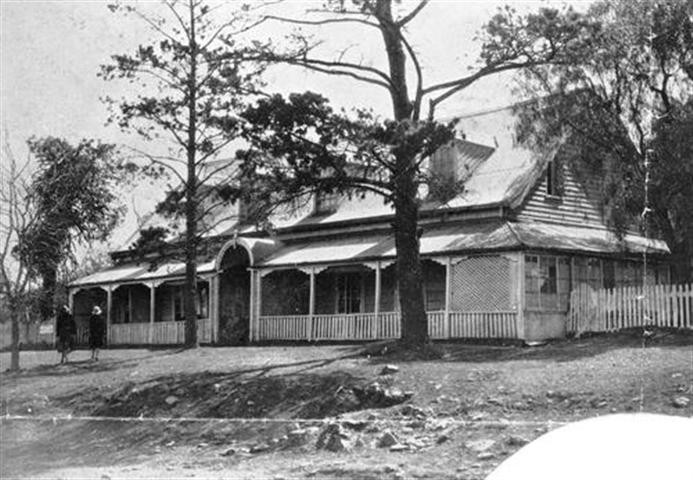
“Drayton Inn”, first established in 1847; now restored owned by the National Trust of Queensland Photo: State Library of Queensland

Toowoomba itself was originally called The Swamp.

Toowoomba, 130kms from Brisbane on the Warrego Highway, is where the West meets the Coast. It’s known rightly as the Garden City. People drive up from the humid coastal strip to enjoy the cool air and the beautiful temperate climate gardens.
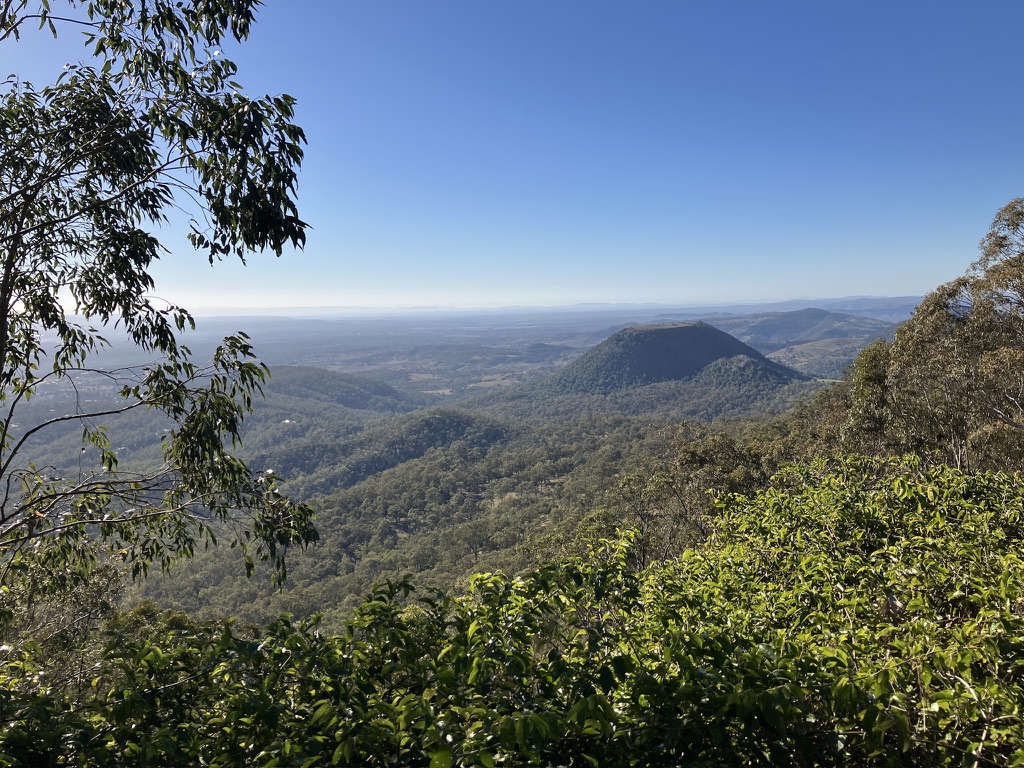
Looking east from Picnic Point across Table Top Mountain

When I was young you could buy cans of “Mountain Air” at Picnic Point, where the view down towards the coast is often obscured by a haze of humidity.
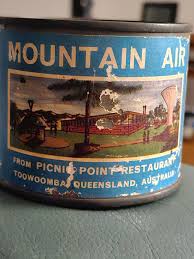
Cans of mountain air. Photo: Facebook: Remember Toowoomba When

Old Toowoomba streets are lined with camphor laurel trees bringing a distinctive charm.

The camphor laurel is an invasive species that has taken over Brisbane creeks and much of the Northern Rivers region of New South Wales. In Toowoomba, with its cooler, drier climate, these huge old trees are treasured.

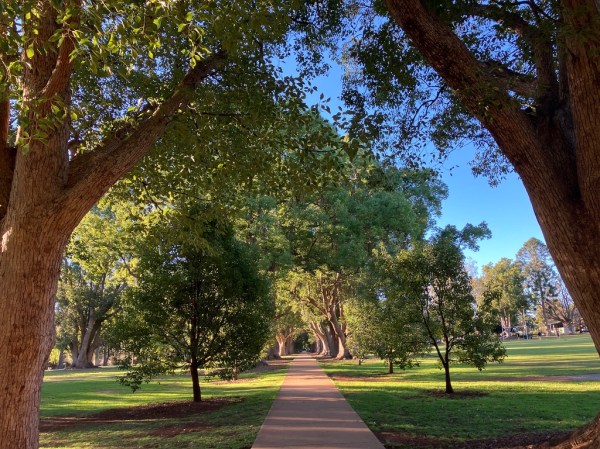
An avenue of camphor laurels runs through the middle of Queen’s Park towards the Botanic Garden, and when an old tree dies or is removed it’s replaced by a young one. There must be a nursery for camphor laurel trees here, specially raised for the purpose.

The camphor laurels of Queen’s Park

The famous formal floral displays of Queen’s Park Botanic Garden bring crowds every spring to the Carnival of Flowers.

 The Toowoomba district puts on a beautiful face for the Carnival of Flowers, including parks and private gardens and nearby villages and towns. The gardens of Spring Bluff Railway Station, fifteen kms from the city on Murphy’s Creek Road, are beautiful at any time of the year.
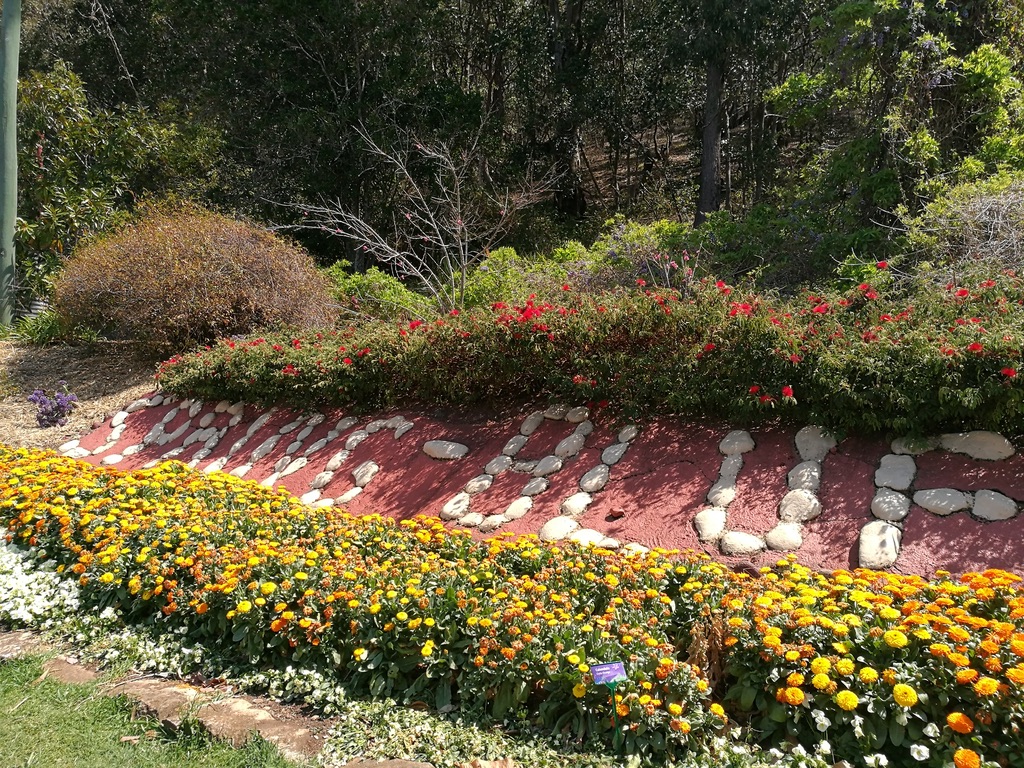
Spring Bluff Station gardens

At Spring Bluff, the Westlander train line from Brisbane to Charleville curves up the steep range and past the long-closed station. Flower beds surround the buildings, in full bloom during the Carnival of Flowers all the way up to the old station master’s house, now a café. Further up the hill is a lonely cricket field and a wonderful 1907 timber dance hall, unlit and open to the breezes.
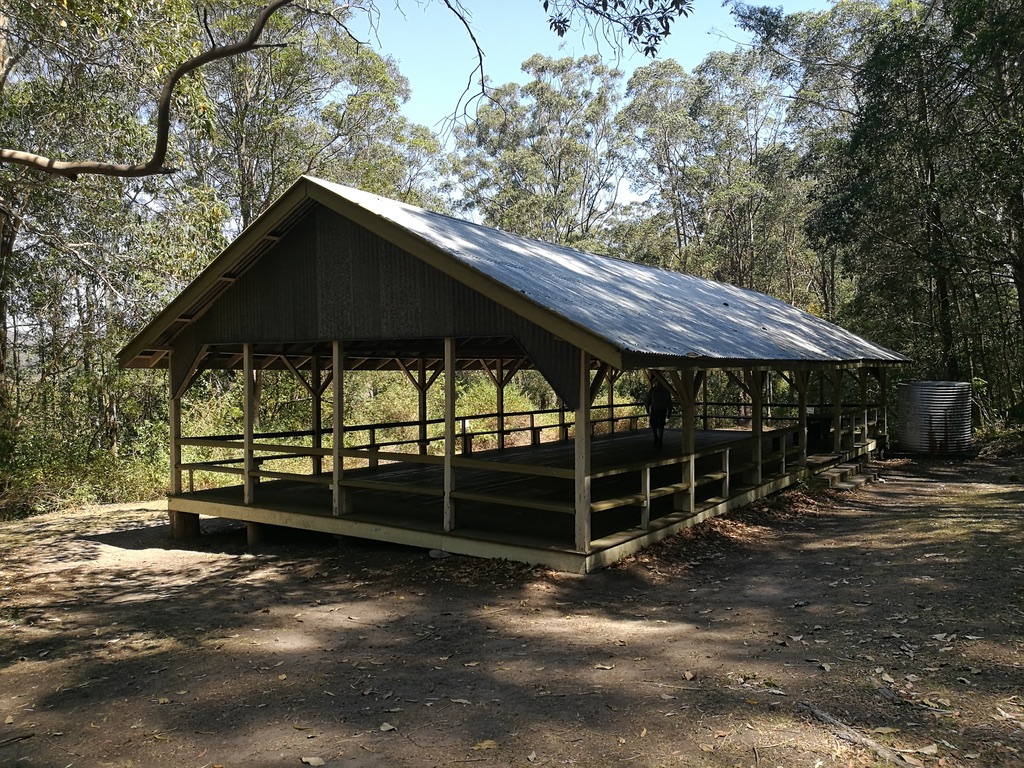
The old hall above Spring Bluff Station

This line also services the coal mines north and west of Toowoomba, and when you visit the station, you’ll likely hear a long coal train rumbling up the track with empty wagons or hauling a full load past the station and down towards Brisbane and the port.
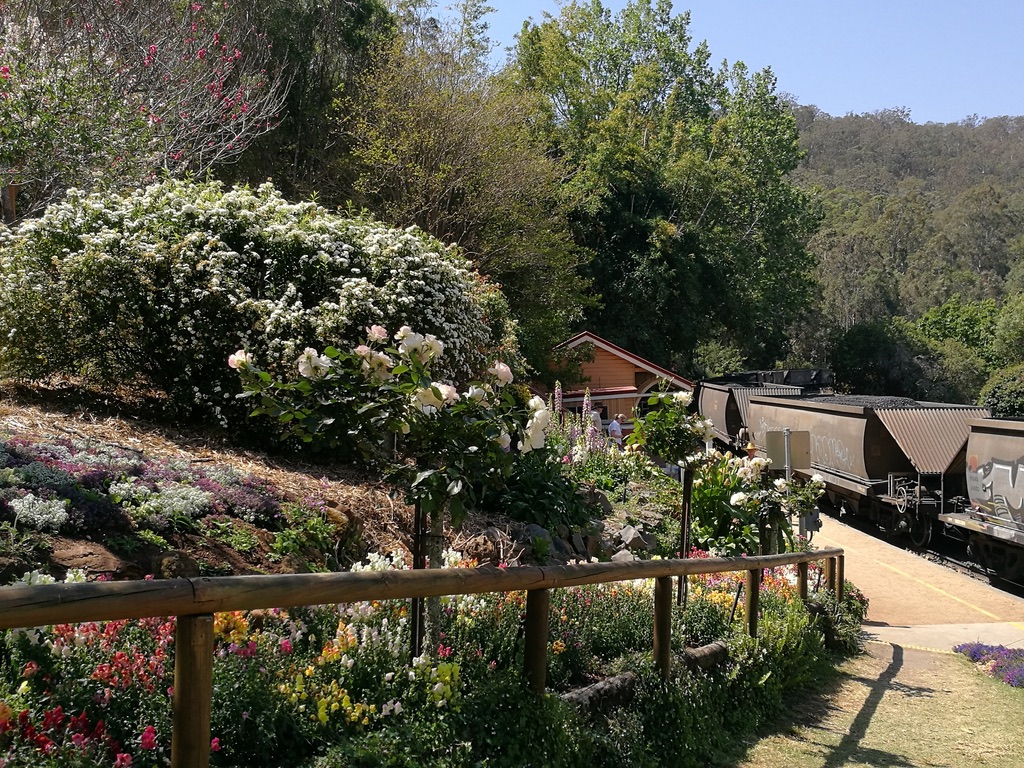
Coal train going down the range past Spring Bluff Station

Toowoomba sits on the rich farmlands of the Darling Downs, and expansion of open-cut coal mines across the farmlands causes endless controversy.

Queensland’s regional cities have always been places where western people come to retire. Here they can access facilities for which they have had to travel long distances in their earlier, working lives: shops, entertainment, social groups and health services.

For the farm and station children further west, primary schooling can be had at a local state school if they’re close enough to town; or at home via the School of Distant Education if there is a parent or employee to help them with their lessons.

When kids reach secondary school, many families choose boarding schools in Brisbane, or in the regions: Cairns, Townsville, Rockhampton, Yeppoon or Southport. Herberton, Charters Towers, Warwick and Toowoomba in particular are famous old boarding school towns, situated as they are in high country west of the coast.

The Glennie School, Toowoomba, ca.1925. One of the many long-established boarding schools of Toowoomba. Photo: State Library of Queensland

Toowoomba has more boarding schools than any other regional city: eight of them, according to my quick search.

The University of Southern Queensland, also in Toowoomba, provides online courses and residential colleges, and the city is a popular place for summer schools and conferences, drawing participants from many areas, cultures and climates.
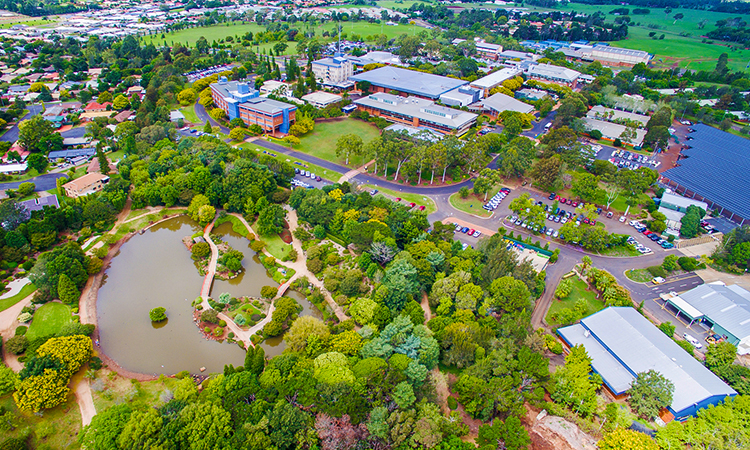
Campus of the University of Southern Queensland, Toowoomba, showing its beautiful Japanese Gardens. Photo: univerlist.com

I recently heard a story that says a lot about regional Queensland.

There was a woman from a cattle property at Morven, the small town between Mitchell and Charleville, 530kms west of Toowoomba along the Warrego Highway. At the time the country was in a severe drought. There had been no rain for many months.

Enrolled in an online course through UniSQ, this woman travelled to Toowoomba for a live-in seminar. It was school vacation time, and she was accommodated in the male boarding house at Downlands College.

She was woken up in the night to the sound of running water.

“It’s raining!” she thought with delight.

It wasn’t until morning that she realised that her room was next to the boys’ bathroom, and the rain she’d heard was actually the sound of the urinals running all night.

This old Queensland city of country people, conventional streetscapes and temperate climate parks has also been designated one of Australia’s many Refugee Welcome Zones. Local and federal government, volunteers and refugee leaders have supported thousands of new arrivals here, from South Sudan, Sudan and the Democratic Republic of Congo as well as Yazidi refugees from Iraq and Syria. The TAFE provides English language classes, and local organisations support these people dislocated from their homelands as they work at integrating into Australian society.

Recently we took a drive up to Toowoomba. The weather was bracing and sunny as we walked through Queen’s Park and admired the flourishing seedlings in the Botanic Gardens, timed for maximum flowering for the Festival in September.
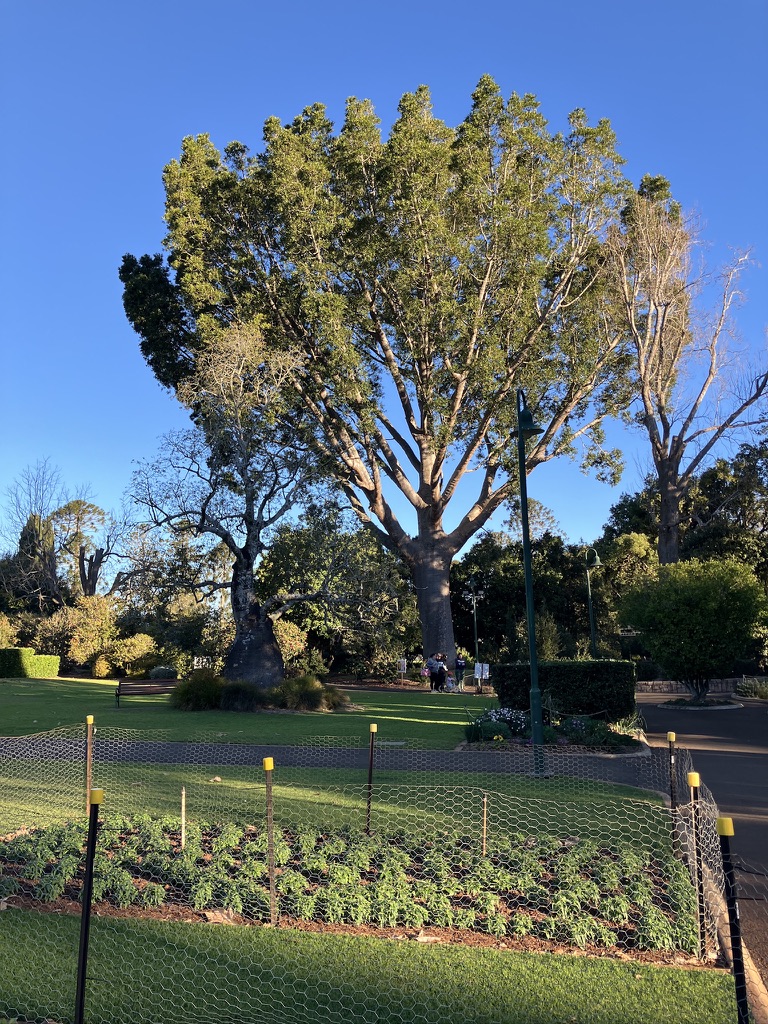
Flower beds in the Botanic Gardens, planted for the Carnival, with an old bottle and gigantic kauri in the background

We marvelled again at the old bunya pines and hoop pines, and the mighty kauri towering above them all, then went to cosy and welcoming Fitzy’s Hotel for dinner.
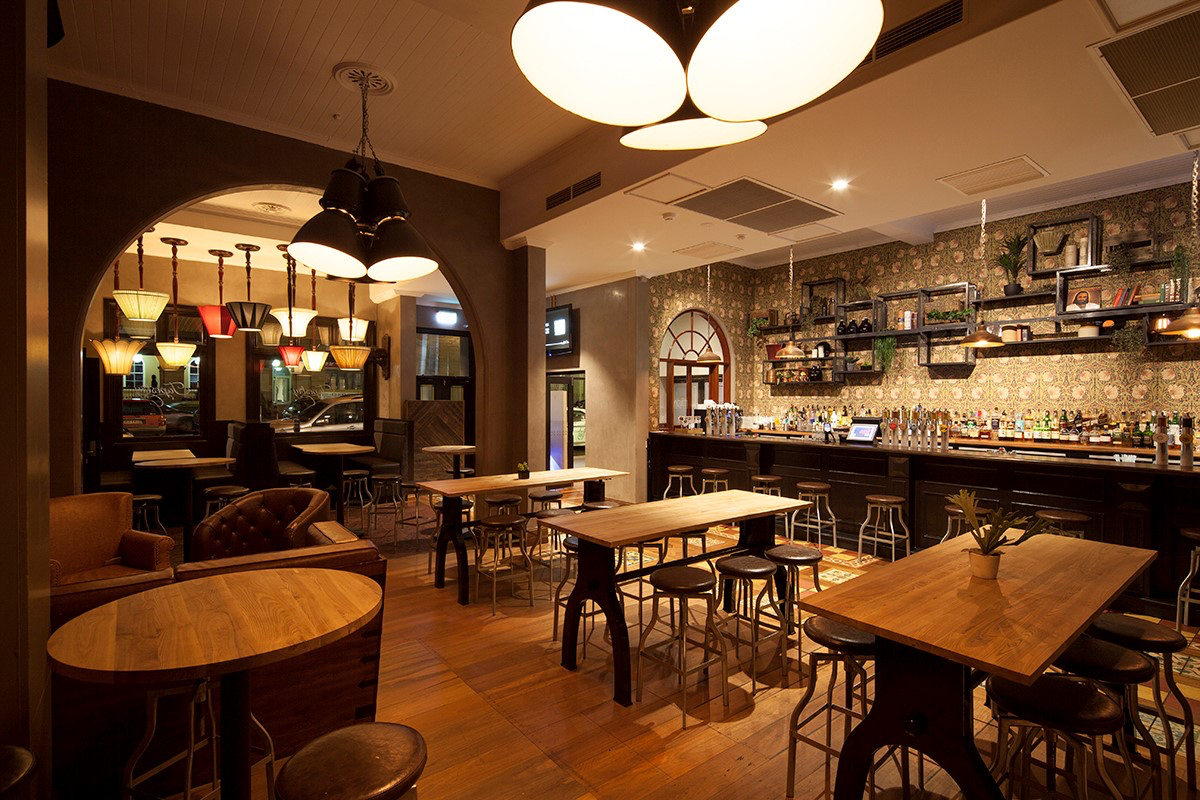
Cosy bar at Fitzy’s Hotel. Photo: https://www.fitzys.com

We ate breakfast at the Picnic Point Café, where I was a little disappointed that they no longer sell cans of mountain air; admired the view down towards the coast, then drove to Boyce Gardens, where the daffodils are flowering beneath towering tallow wood trees.
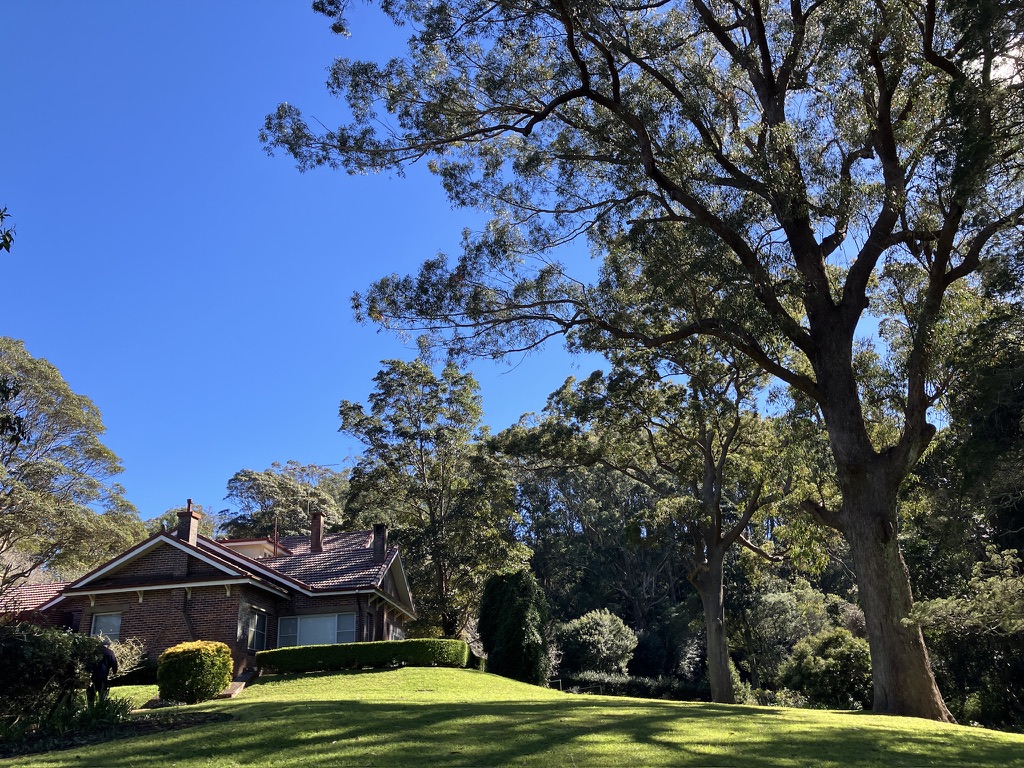
Boyce House in Boyce Gardens, with tallow wood trees and the rainforest gully

In the gully below, a rainforest is flourishing untouched, a rare remnant of the vegetation that once flourished in all the local gullies.

Not all of Toowoomba has native vegetation; and in some areas the non-native common myna bird dominates the streets and gardens: those destructive brown birds that lay their eggs in other birds’ nests.

The native birds are there too, though. Kookaburras, magpies, butcher birds, lorikeets and cockatoos can be heard in the tall eucalypts of Queen’s Park and the old tallow woods of Boyce Gardens; and whipbirds and bower birds in the forest gullies that sprawl down the range to the coastal plains.

With a population of just 113,000, Toowoomba doesn’t have all the facilities of a major city, but this is a beautiful part of Queensland, and it’s easy to understand why people come here: from the West, from the Coast, and from far, far away.
Ipswich

In 1972 we were living at Rosevale, 50 kilometres southwest of the city of Ipswich. We went to Ipswich to shop, but our nearest town was Rosewood. As in all regional areas, sport is strong around Ipswich, and Con played cricket on the Rosewood United team, in an Ipswich competition. One team member that he got to know, named Daryl, was a coal mine rescue worker. Daryl’s father was a miner, too.

At 2.47 a.m. on 31 July 1972, a mining disaster occurred in the Box Flat coal mine, a few kilometres southeast of the city. When a huge explosion occurred, seventeen miners and rescue workers were killed, with another dying later of his injuries. Daryl was one of the men killed; and so was his father.

No one underground at the time could have survived; the bodies could not be retrieved, and the difficult decision was made to permanently seal the mine.

The whole region grieved. Mining communities are close-knit, and it was said that everyone in the district knew someone who died that night.

A video from the Mine Safety institute of Australia covers the story of the disaster. https://youtu.be/m-dXzS5KanI

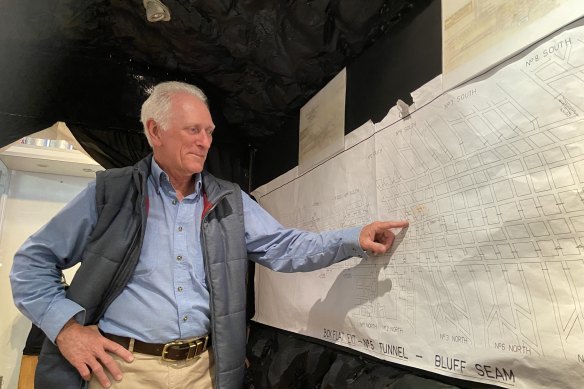
Ipswich Historical Society President Hugh Taylor points to the location of the fire in the 1972 Box Flat mine about 100 metres beneath the surface of the ground at Swanbank” Report brisbane times.com.au on the 50th anniversary. Photo Tony Moore

The sombre Box Flat Memorial was constructed at Swanbank, near the scene of the disaster.

The Box Flat Memorial, Swanbank Road, Swanbank

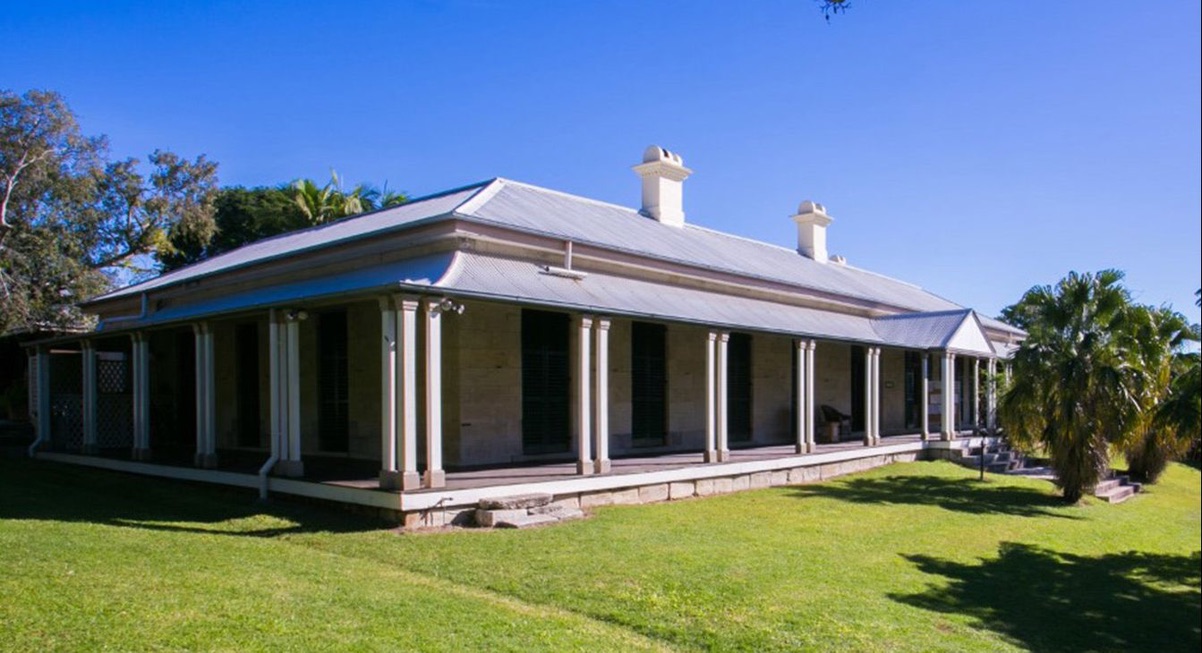
Last week I visited the Memorial, then drove to the site of the Cooneana Heritage Centre a few kilometres away for more information. This is the home of Ipswich Historical Society and of the original Cooneana Homestead, built in 1868 and lovingly preserved.

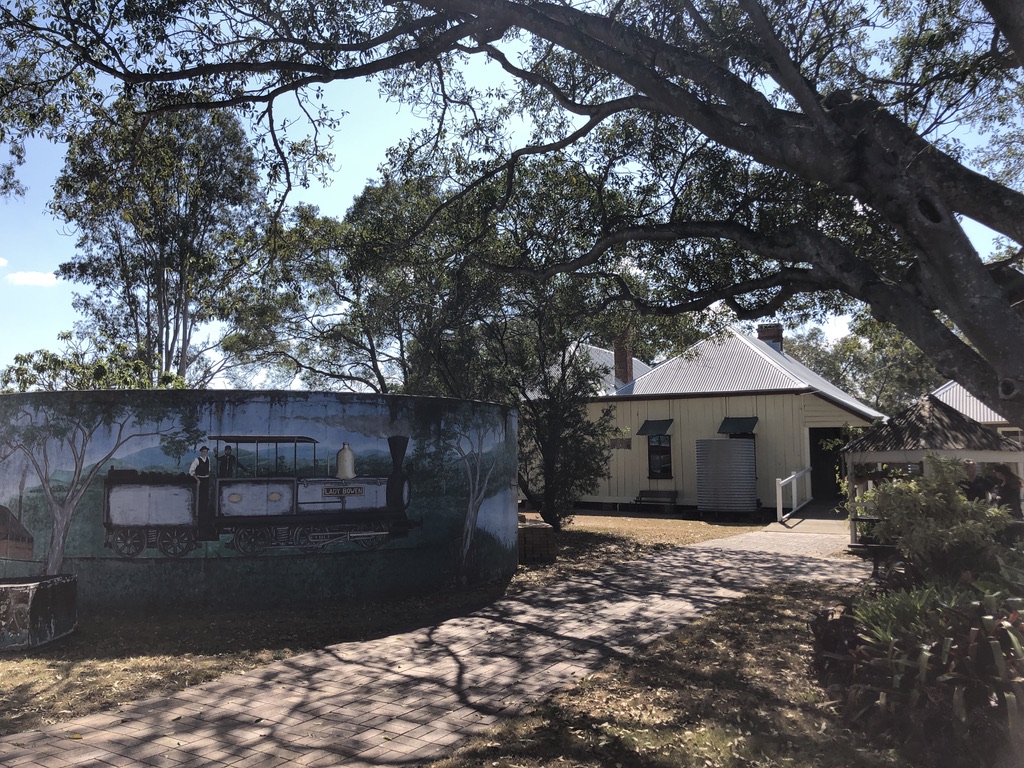
Water tank and Old Cooneana Homestead, Cooneana Heritage Centre, Redbank Plains Rd, New Chum

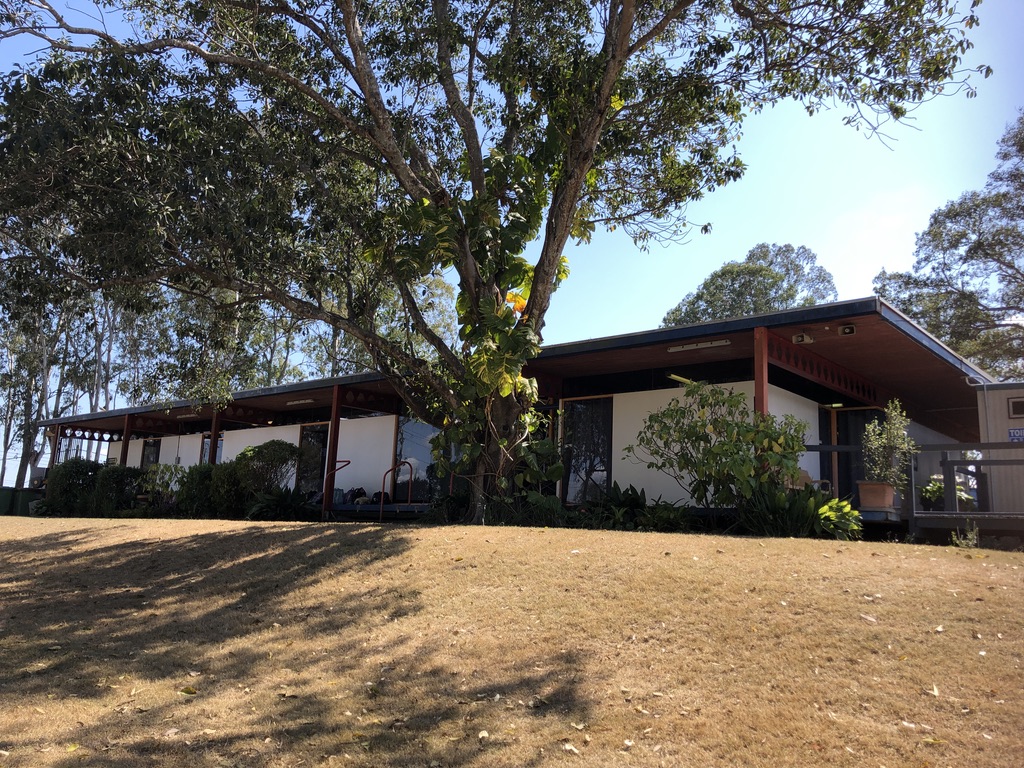
The Society’s headquarters and museum are housed in an attractive, award-winning Modernist building, constructed in 1976 as the offices of Rhondda Collieries and still in its original condition.[1]

Award-winning headquarters of the Ipswich Historical Society
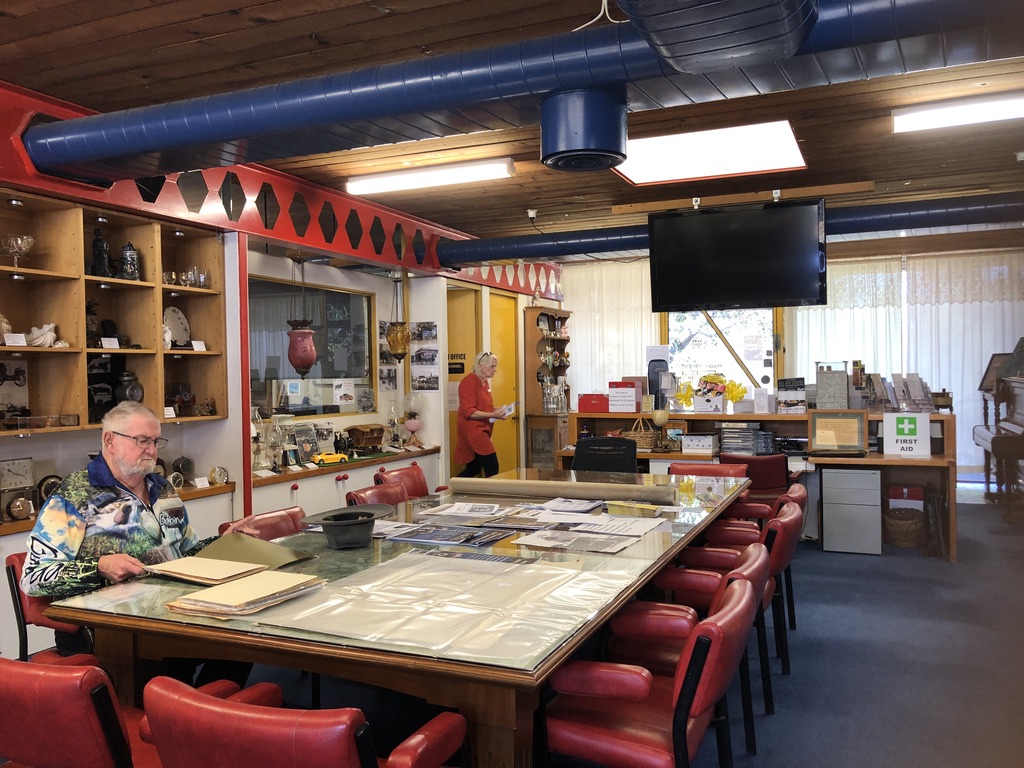
Interior of the IHS Museum
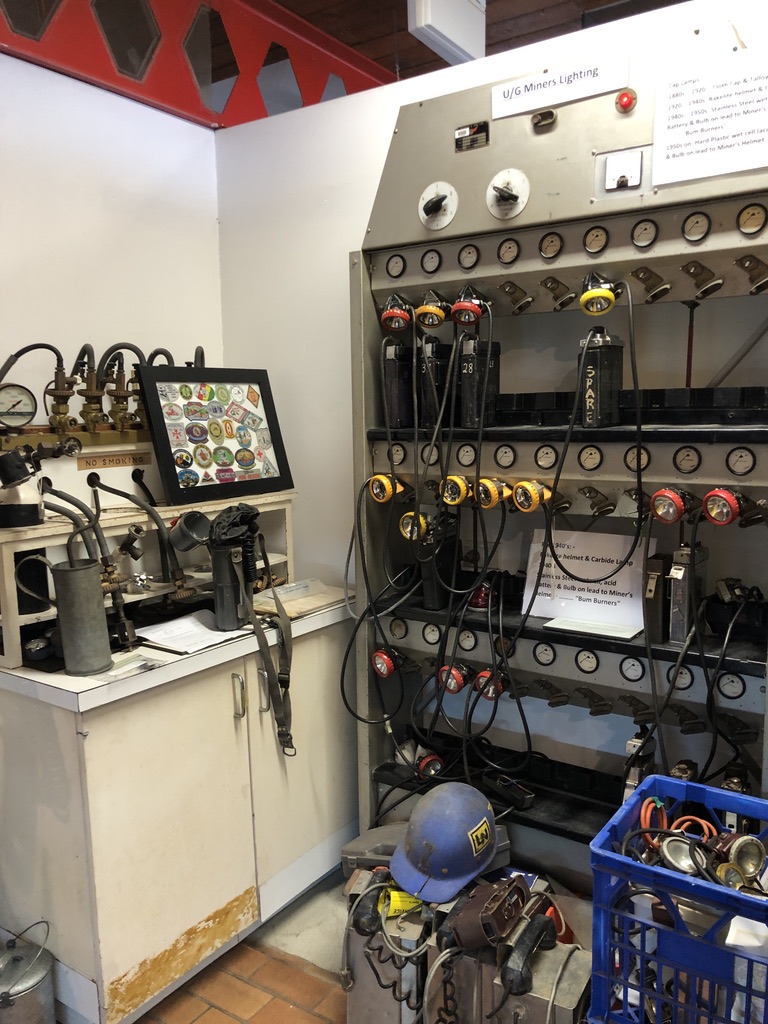
Displays of miners’ lamps in the IHS museum, most of them part of the original equipment of the building

Coal is why ipswich is where it is. Coal and limestone.

In the early, convict days of Brisbane when building was progressing, lime was needed for mortar. In 1827, Commandant Patrick Logan, energetic explorer of the Moreton Bay area, discovered limestone deposits on a hill above the Bremer River in what is now Ipswich. A small convict outpost called the Limestone Station was set up, with George Thorn as overseer, and lime burning kilns were constructed.

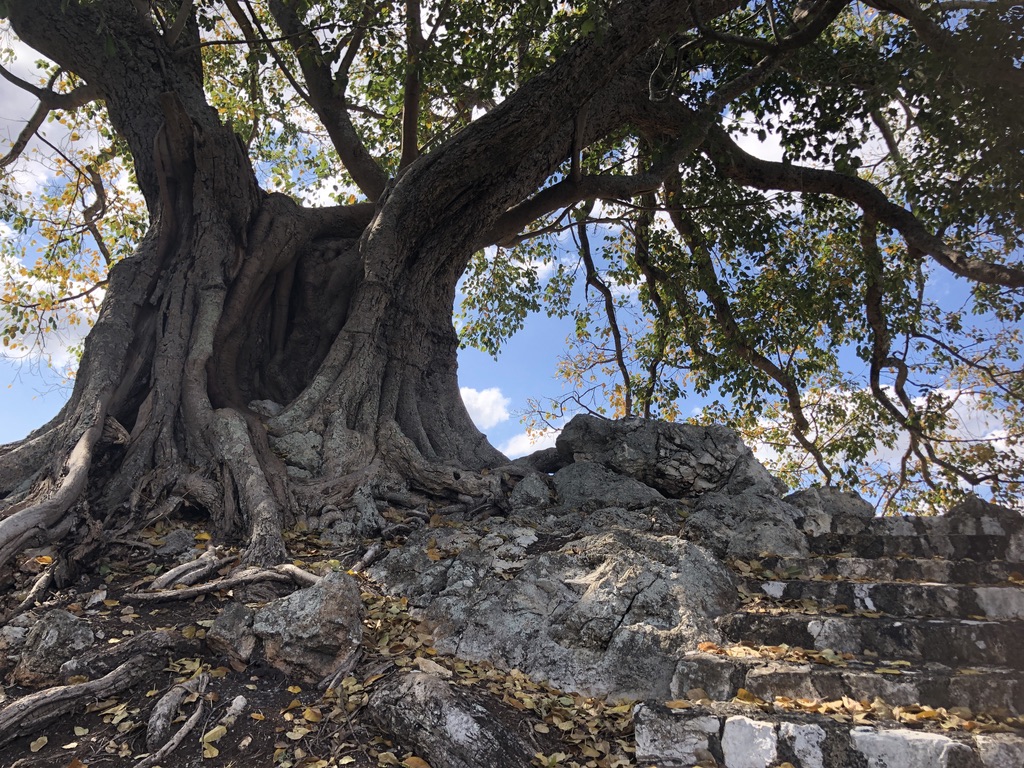
Cunningham’s Knoll on Limestone Hill is a spectacular pyramid of limestone terraces built in the 1930s as a Great Depression employment project. On top of the Knoll, old fig trees grasp blocks of raw limestone in their buttress roots.

Old fig tree on top of Cunningham’s Knoll

Little remains of the old kilns now except for a small mound of kiln residue behind the Knoll.

Mound of limestone burning residue as seen from the top of Cunningham’s Knoll

Patrick Logan also discovered coal reserves near Limestone Hill, and over time coal mines were opened all around the area, with miners coming from as far away as Wales. The suburb of Blackstone is still known locally as Welsh Town, and Rhondda Colliery and the suburb of Ebbw Vale were named after coal mining areas in Wales.

My own connections with Ipswich go back to 1861, when my great-great-grandfather James Matthews, fresh from England, spent a night there, enjoying the hospitality of the same George Thorn, probably in his hotel, the Queen’s Arms (soon to be re-named the Clarendon), on the corner of Brisbane and East Streets: Ipswich’s first licensed hotel.

James had come up the Bremer River by paddle steamer, with Archdeacon Benjamin Glennie, and the next morning they set off together to walk to Warwick. (See my story “Walking to Warwick” https://roseobrienwriter.blog/2018/07/27/walking-to-warwick/ )

George Thorn, like many colonial officials, businessmen and squatters, was an English ex-military man who did well out of being in the right place at the right time. He became a major landholder and a Parliamentarian, influential in the colony of Queensland, and regarded as the Father of Ipswich. “Claremont”, the house George Thorn bought at the river end of what is now Milford Street, is sometimes opened to the public for the Great Houses of Ipswich weekend. “Claremont” is just one example of Ipswich’s many magnificent old homes and its fine civic buildings.

“Claremont”, Ipswich. Designed 1857 nationaltrust.org.au

Ipswich became a steam railway centre, and in 1865 the first railway line in Queensland was opened, running to Bigge’s Camp/Grandchester, about thirty-four kilometres away; the first stage of a line to Toowoomba. The railway workshop established in North Ipswich, now home of the Workshops Railway Museum, became the state’s biggest employer, constructing over 200 steam locomotives in its time.

In the 1850s, as statehood for Queensland approached, there was an unsuccessful movement for Ipswich to be chosen as the new state Capital. The owners of the Ipswich paper, The Queensland Times, pushed for it. This fine old masthead continues today. However, once News Corp bought it, its print days were numbered, like so many of Queensland’s regional newspapers; and now The Queensland Times is only available online.

Losing a local print newspaper is a bad thing for communities. Local news is no longer covered in detail; and people without online access might not find out until a year after the funeral that someone they knew has died.

In the early 1980s, Con and I returned to the area, to the farming town of Lowood, 35 kms to the northwest. Again, Ipswich was our shopping town, and again I shopped at the iconic old department store of Cribb & Foote, then Reid’s, on Brisbane Street, just a block up the street from the site of George Thorn’s hotel.

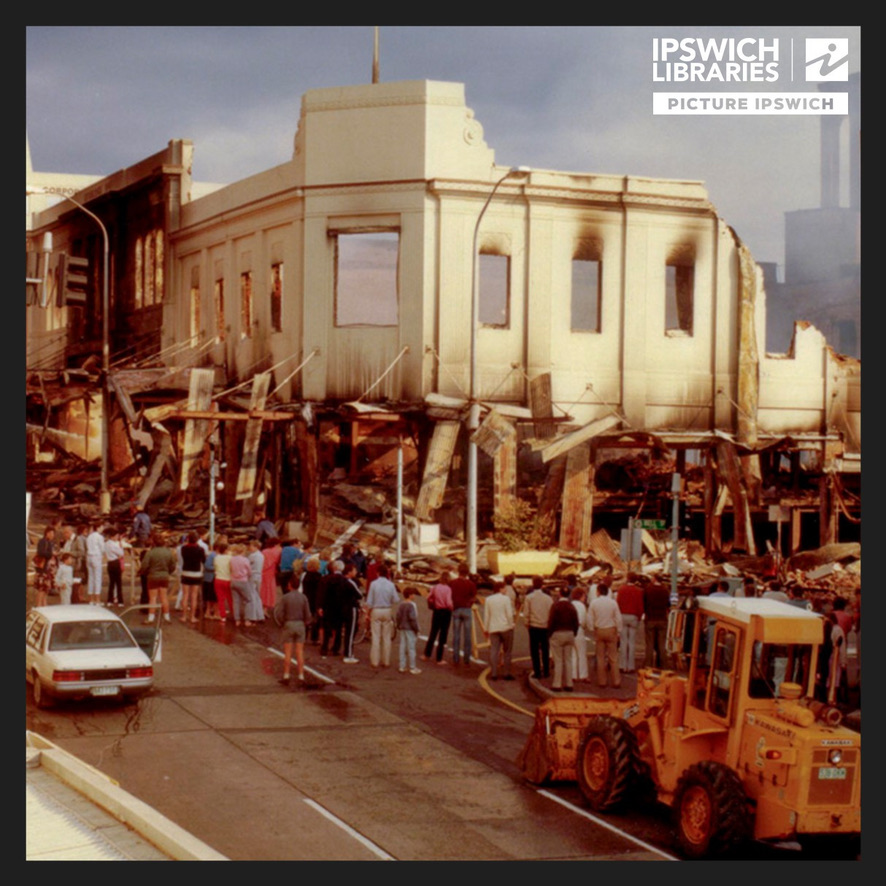
Thorn’s hotel had eventually been destroyed by fire. Shockingly, in 1985 Cribb & Foote also burned down, leaving a massive gap in the CBD.

Cribb & Foote after the fire

Ipswich is to Brisbane as Newcastle is to Sydney, or Geelong is to Melbourne: the tough industrial neighbour with a slightly grimy reputation. Each of these old cities has had to reinvent itself as local industry changed. The Ford car factory in Geelong has been closed for years. Newcastle no longer builds ships; and the last coal mine in Ipswich closed in 2019. In each case, the city has moved to meet the challenges.

New communities have grown up in the ex-mining and scrubland country of the western growth corridor between Brisbane and Ipswich. Ripley, with ambitions to become Australia’s largest planned community, is currently under development only a couple of kilometres from Swanbank, the site of the Box Flat disaster.

Highways are expanding to meet the challenge of increasing population, and busways and extensions of the railway network are under consideration.

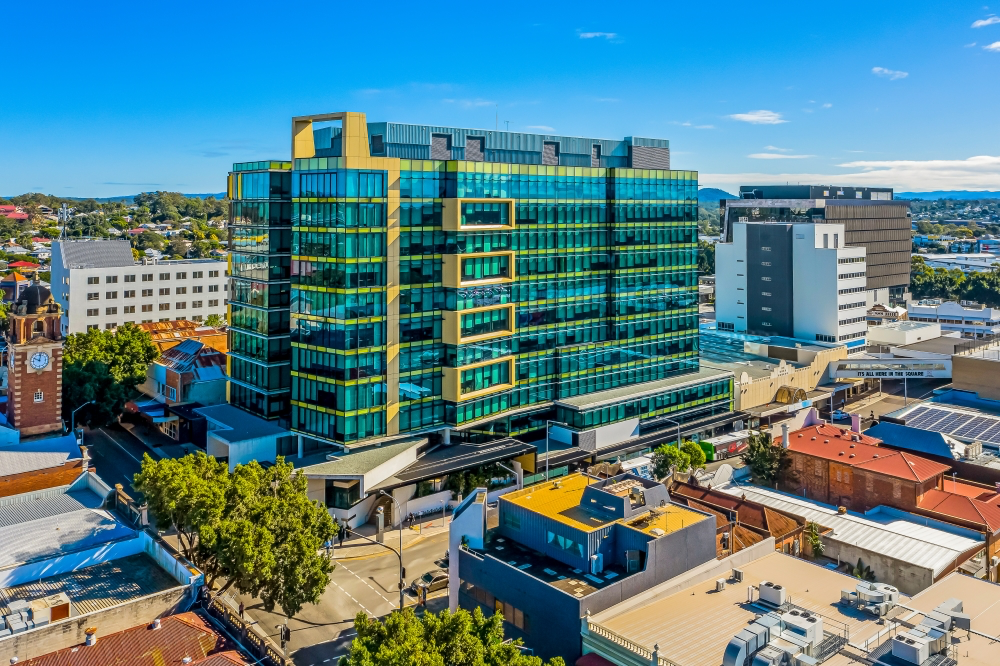
In 2013, an initiative to reverse some of the peak hour commuter traffic on the Ipswich Motorway to Brisbane and revitalise the CBD was completed. On the site where Cribb and Foote once stood, the Icon Tower was constructed, an office building occupied almost entirely by Queensland State Government departments, including, appropriately, the Department of Resources.

Icon Tower, Ipswich ipswichfirst.com.au

We live in Brisbane now, but we often take our grandchildren to the playground and Nature Centre in Queen’s Park, on the slopes of Limestone Hill; we visit Nerima Japanese Gardens, and the Ipswich Art Gallery, with its wall of coal. We visit cafes and the river walkways, restored after recent Bremer River floods. It’s a quiet river when we visit, and it’s hard to imagine the devastation it regularly causes through the low-lying areas of the city.

Below the old railway bridge, now a pedestrian bridge, is a commemoration of the resilience of Ipswich and its people in flood times

This is not soft country. The Ipswich area is hotter in summer and colder in winter than Brisbane. Living at Lowood, we sometimes scraped frost off the car windscreen at eight in the morning. At Rosevale in 1972, we suffered the hottest Christmas of our lives, with all-time record temperatures.

For the sad coal-mining families in the area, there would have been empty places at the table that Christmas.


[1] Thank you to Ipswich Historical Society President Hugh Taylor and other well-informed staff who generously helped with information and access to files when we visited Cooneana Heritage Centre.

Blog at WordPress.com.

Up ↑