Ipswich

In 1972 we were living at Rosevale, 50 kilometres southwest of the city of Ipswich. We went to Ipswich to shop, but our nearest town was Rosewood. As in all regional areas, sport is strong around Ipswich, and Con played cricket on the Rosewood United team, in an Ipswich competition. One team member that he got to know, named Daryl, was a coal mine rescue worker. Daryl’s father was a miner, too.

At 2.47 a.m. on 31 July 1972, a mining disaster occurred in the Box Flat coal mine, a few kilometres southeast of the city. When a huge explosion occurred, seventeen miners and rescue workers were killed, with another dying later of his injuries. Daryl was one of the men killed; and so was his father.

No one underground at the time could have survived; the bodies could not be retrieved, and the difficult decision was made to permanently seal the mine.

The whole region grieved. Mining communities are close-knit, and it was said that everyone in the district knew someone who died that night.

A video from the Mine Safety institute of Australia covers the story of the disaster. https://youtu.be/m-dXzS5KanI
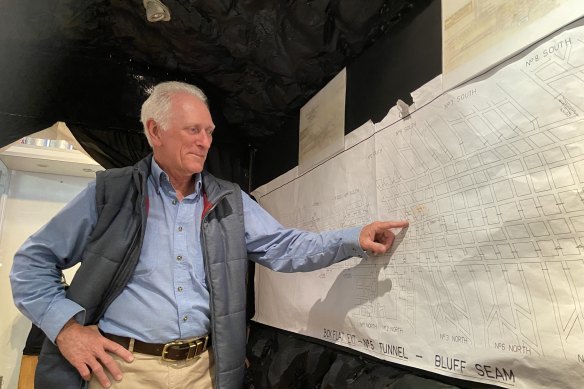
Ipswich Historical Society President Hugh Taylor points to the location of the fire in the 1972 Box Flat mine about 100 metres beneath the surface of the ground at Swanbank” Report brisbane times.com.au on the 50th anniversary. Photo Tony Moore

The sombre Box Flat Memorial was constructed at Swanbank, near the scene of the disaster.

The Box Flat Memorial, Swanbank Road, Swanbank

Last week I visited the Memorial, then drove to the site of the Cooneana Heritage Centre a few kilometres away for more information. This is the home of Ipswich Historical Society and of the original Cooneana Homestead, built in 1868 and lovingly preserved.
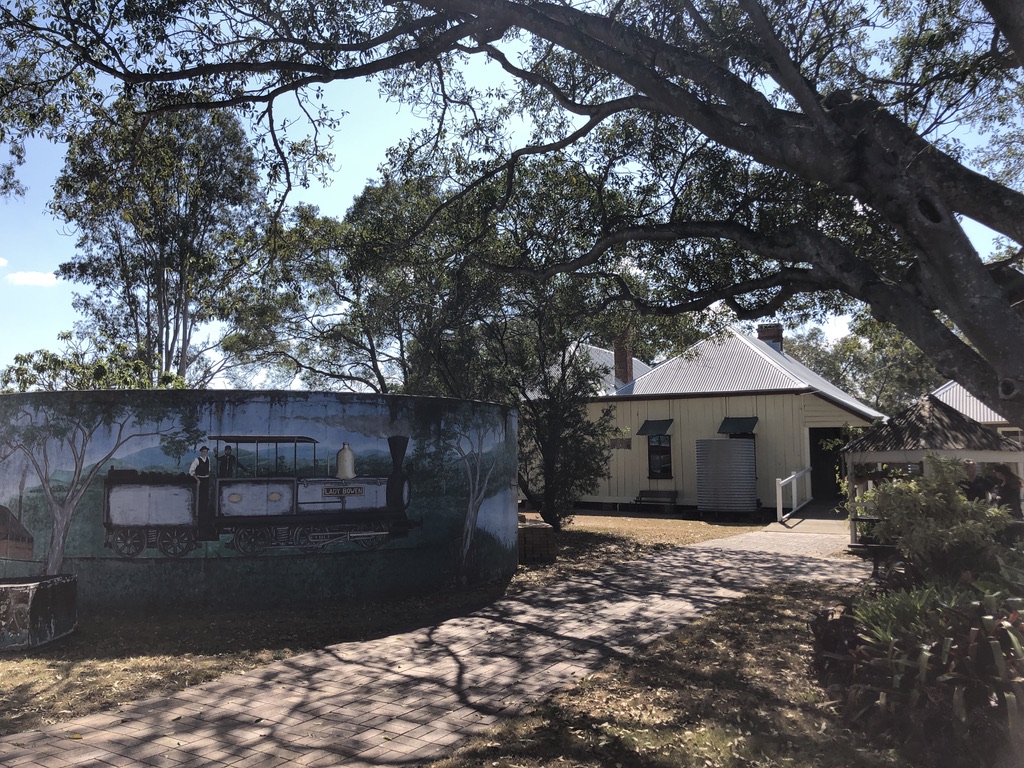
Water tank and Old Cooneana Homestead, Cooneana Heritage Centre, Redbank Plains Rd, New Chum

The Society’s headquarters and museum are housed in an attractive, award-winning Modernist building, constructed in 1976 as the offices of Rhondda Collieries and still in its original condition.[1]
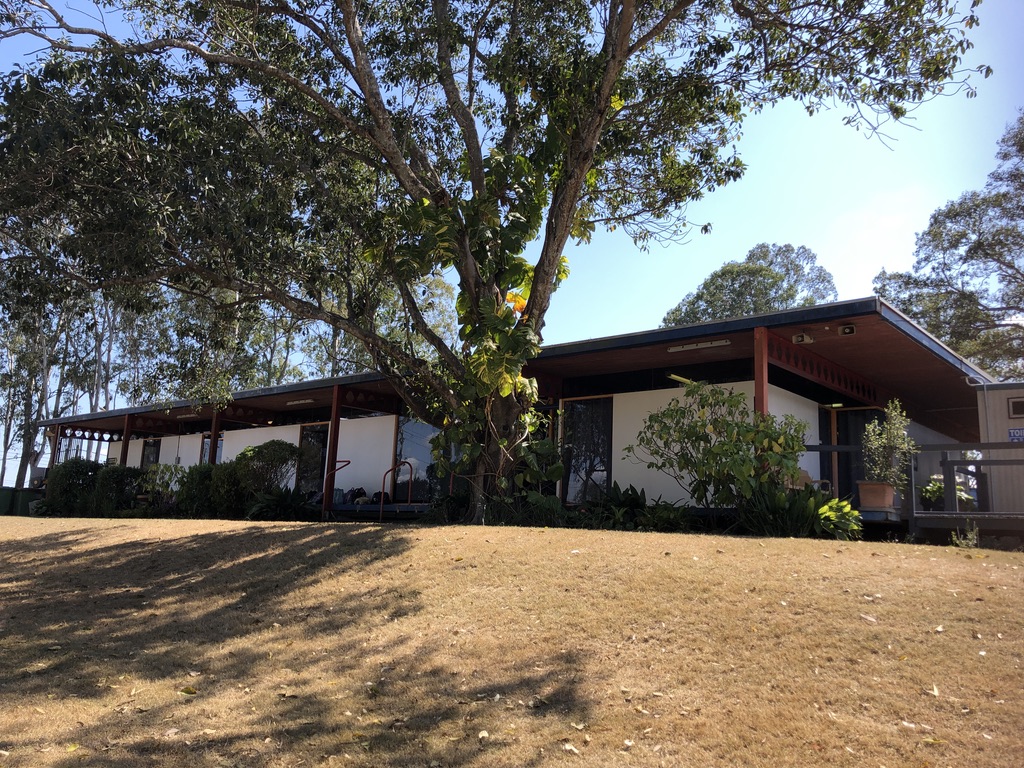
Award-winning headquarters of the Ipswich Historical Society
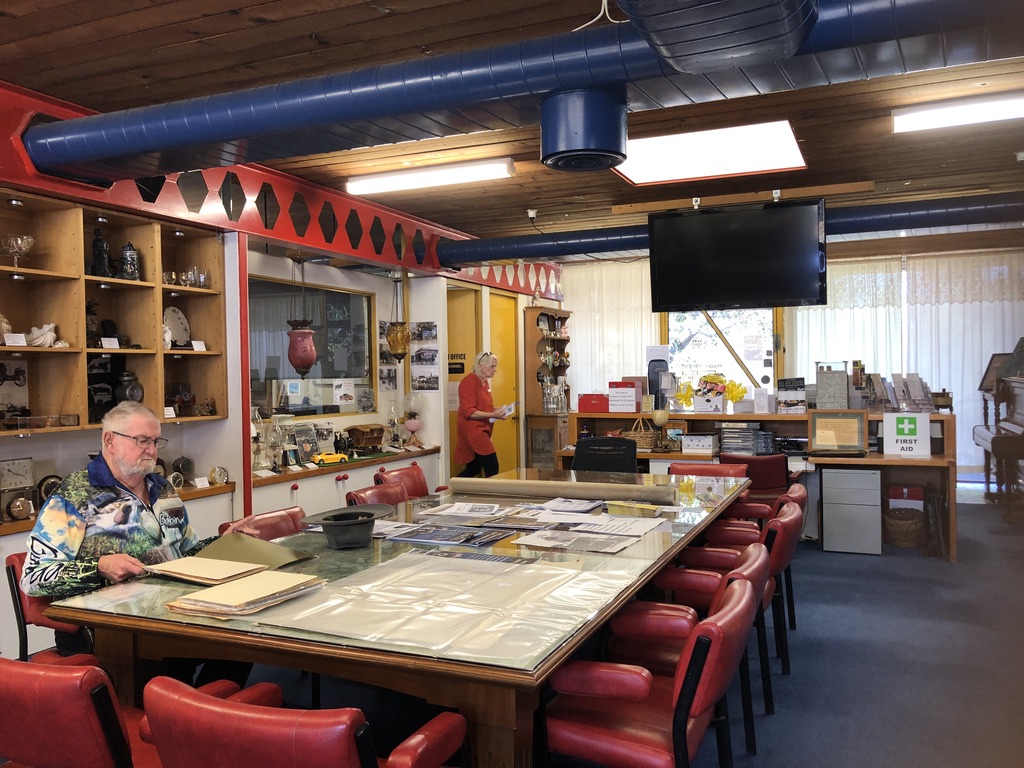
Interior of the IHS Museum
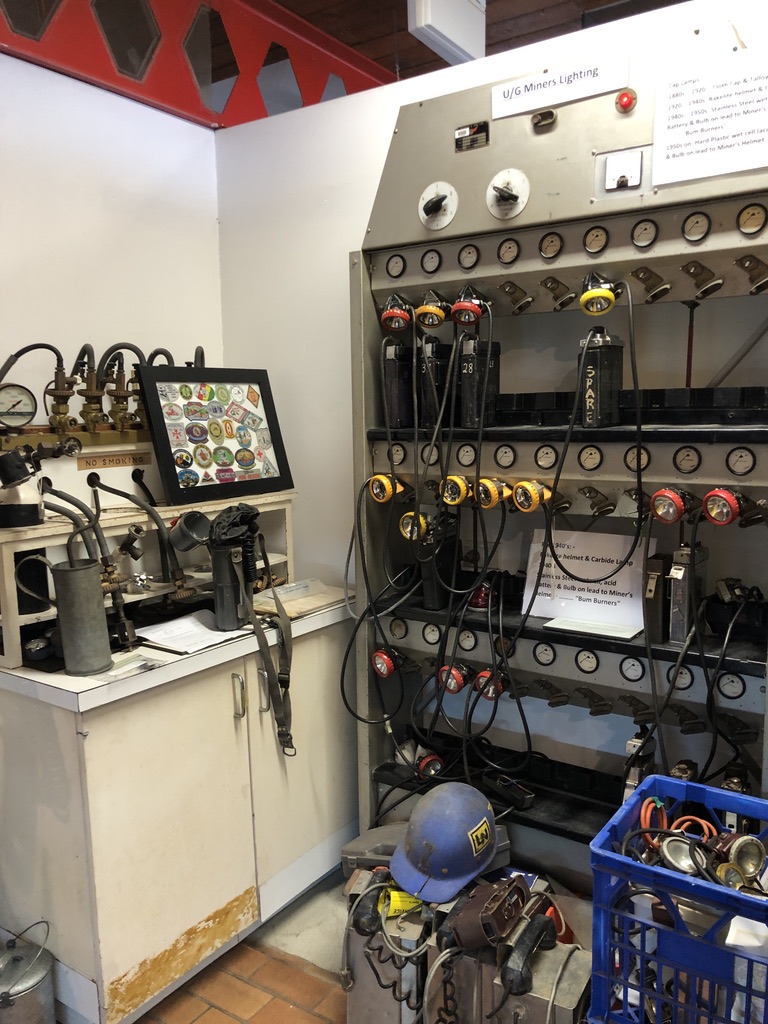
Displays of miners’ lamps in the IHS museum, most of them part of the original equipment of the building

Coal is why ipswich is where it is. Coal and limestone.

In the early, convict days of Brisbane when building was progressing, lime was needed for mortar. In 1827, Commandant Patrick Logan, energetic explorer of the Moreton Bay area, discovered limestone deposits on a hill above the Bremer River in what is now Ipswich. A small convict outpost called the Limestone Station was set up, with George Thorn as overseer, and lime burning kilns were constructed.

Cunningham’s Knoll on Limestone Hill is a spectacular pyramid of limestone terraces built in the 1930s as a Great Depression employment project. On top of the Knoll, old fig trees grasp blocks of raw limestone in their buttress roots.
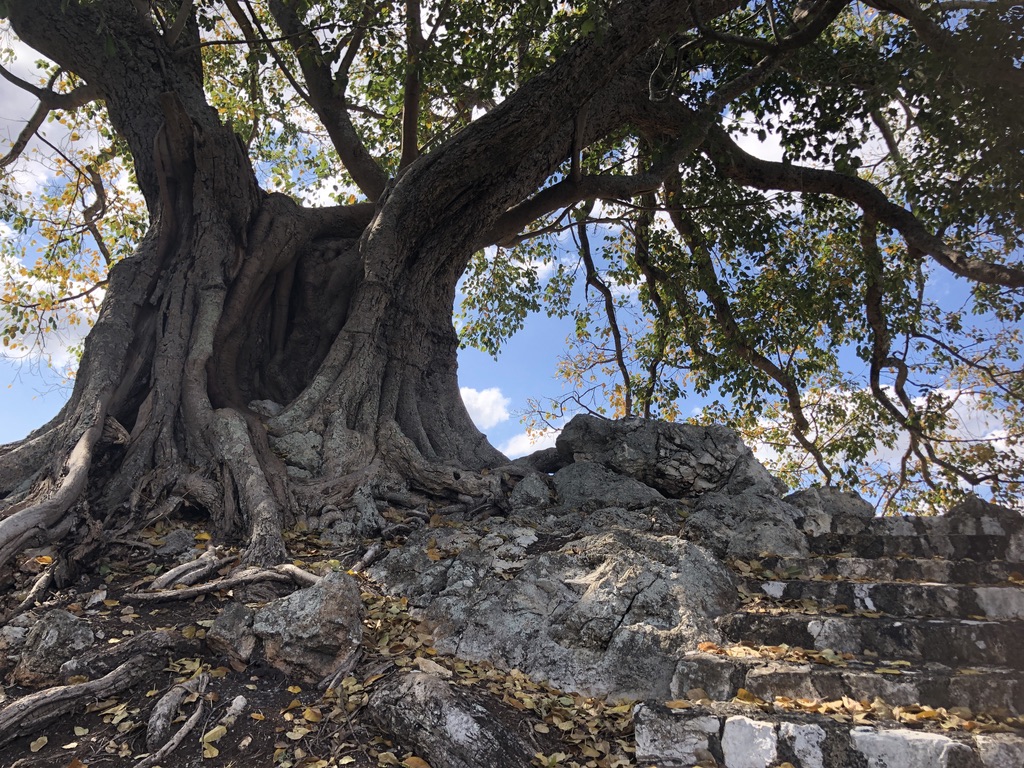
Old fig tree on top of Cunningham’s Knoll

Little remains of the old kilns now except for a small mound of kiln residue behind the Knoll.

Mound of limestone burning residue as seen from the top of Cunningham’s Knoll

Patrick Logan also discovered coal reserves near Limestone Hill, and over time coal mines were opened all around the area, with miners coming from as far away as Wales. The suburb of Blackstone is still known locally as Welsh Town, and Rhondda Colliery and the suburb of Ebbw Vale were named after coal mining areas in Wales.

My own connections with Ipswich go back to 1861, when my great-great-grandfather James Matthews, fresh from England, spent a night there, enjoying the hospitality of the same George Thorn, probably in his hotel, the Queen’s Arms (soon to be re-named the Clarendon), on the corner of Brisbane and East Streets: Ipswich’s first licensed hotel.

James had come up the Bremer River by paddle steamer, with Archdeacon Benjamin Glennie, and the next morning they set off together to walk to Warwick. (See my story “Walking to Warwick” https://roseobrienwriter.blog/2018/07/27/walking-to-warwick/ )

George Thorn, like many colonial officials, businessmen and squatters, was an English ex-military man who did well out of being in the right place at the right time. He became a major landholder and a Parliamentarian, influential in the colony of Queensland, and regarded as the Father of Ipswich. “Claremont”, the house George Thorn bought at the river end of what is now Milford Street, is sometimes opened to the public for the Great Houses of Ipswich weekend. “Claremont” is just one example of Ipswich’s many magnificent old homes and its fine civic buildings.
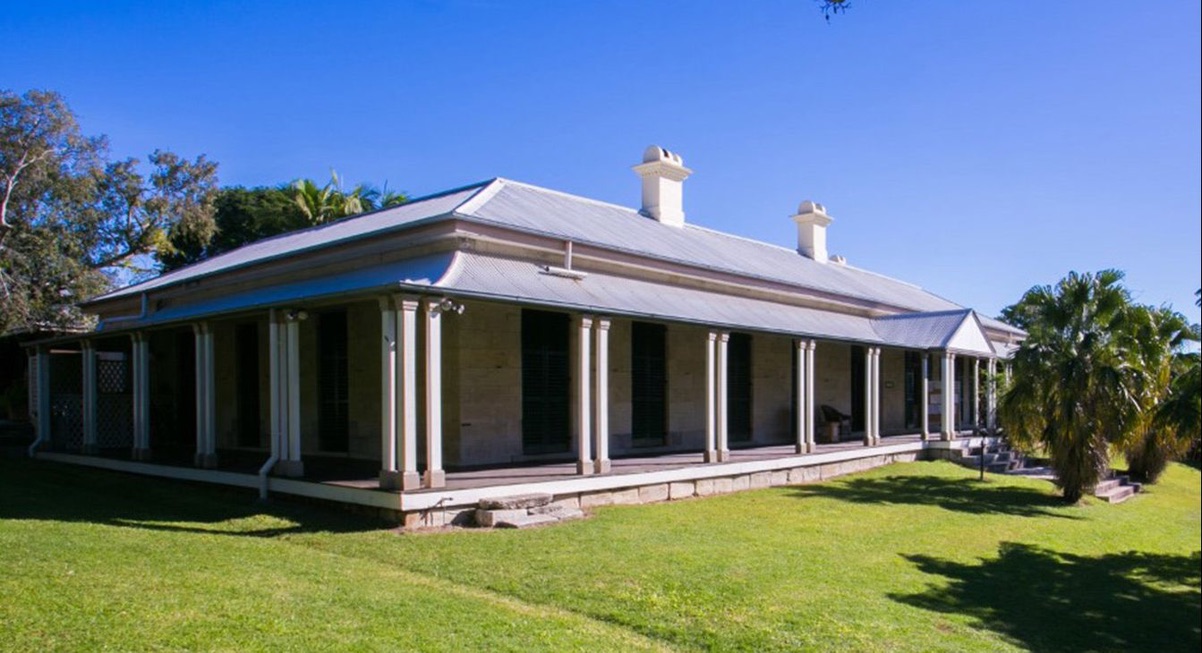
“Claremont”, Ipswich. Designed 1857 nationaltrust.org.au

Ipswich became a steam railway centre, and in 1865 the first railway line in Queensland was opened, running to Bigge’s Camp/Grandchester, about thirty-four kilometres away; the first stage of a line to Toowoomba. The railway workshop established in North Ipswich, now home of the Workshops Railway Museum, became the state’s biggest employer, constructing over 200 steam locomotives in its time.

In the 1850s, as statehood for Queensland approached, there was an unsuccessful movement for Ipswich to be chosen as the new state Capital. The owners of the Ipswich paper, The Queensland Times, pushed for it. This fine old masthead continues today. However, once News Corp bought it, its print days were numbered, like so many of Queensland’s regional newspapers; and now The Queensland Times is only available online.

Losing a local print newspaper is a bad thing for communities. Local news is no longer covered in detail; and people without online access might not find out until a year after the funeral that someone they knew has died.

In the early 1980s, Con and I returned to the area, to the farming town of Lowood, 35 kms to the northwest. Again, Ipswich was our shopping town, and again I shopped at the iconic old department store of Cribb & Foote, then Reid’s, on Brisbane Street, just a block up the street from the site of George Thorn’s hotel.

Thorn’s hotel had eventually been destroyed by fire. Shockingly, in 1985 Cribb & Foote also burned down, leaving a massive gap in the CBD.
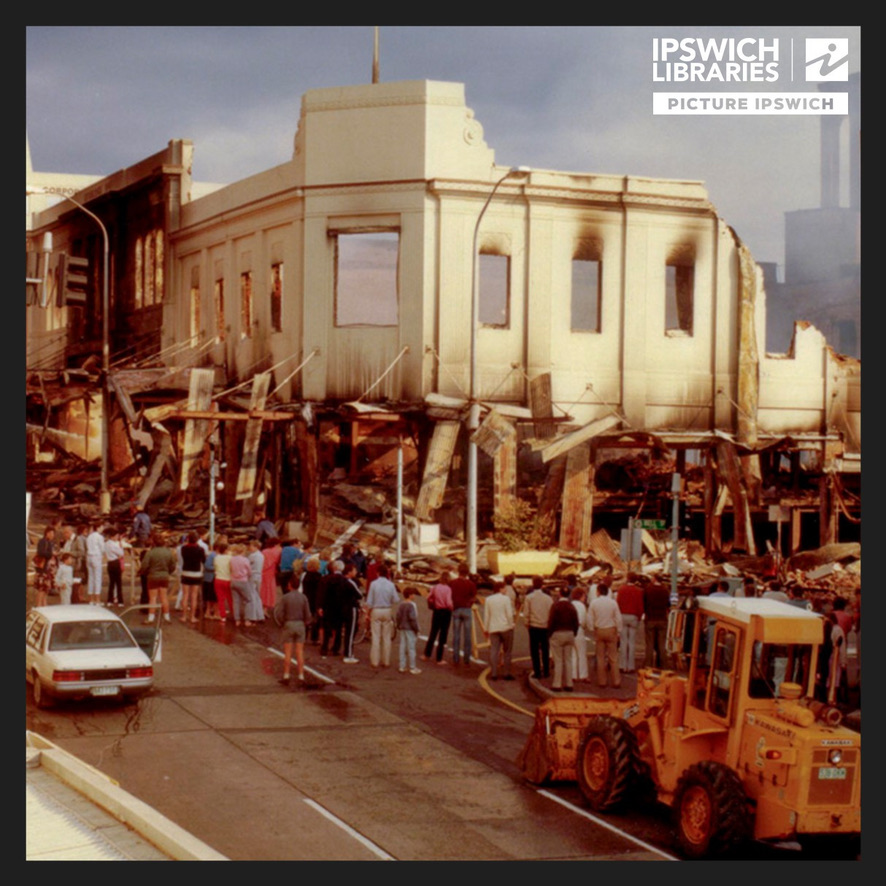
Cribb & Foote after the fire

Ipswich is to Brisbane as Newcastle is to Sydney, or Geelong is to Melbourne: the tough industrial neighbour with a slightly grimy reputation. Each of these old cities has had to reinvent itself as local industry changed. The Ford car factory in Geelong has been closed for years. Newcastle no longer builds ships; and the last coal mine in Ipswich closed in 2019. In each case, the city has moved to meet the challenges.

New communities have grown up in the ex-mining and scrubland country of the western growth corridor between Brisbane and Ipswich. Ripley, with ambitions to become Australia’s largest planned community, is currently under development only a couple of kilometres from Swanbank, the site of the Box Flat disaster.

Highways are expanding to meet the challenge of increasing population, and busways and extensions of the railway network are under consideration.

In 2013, an initiative to reverse some of the peak hour commuter traffic on the Ipswich Motorway to Brisbane and revitalise the CBD was completed. On the site where Cribb and Foote once stood, the Icon Tower was constructed, an office building occupied almost entirely by Queensland State Government departments, including, appropriately, the Department of Resources.
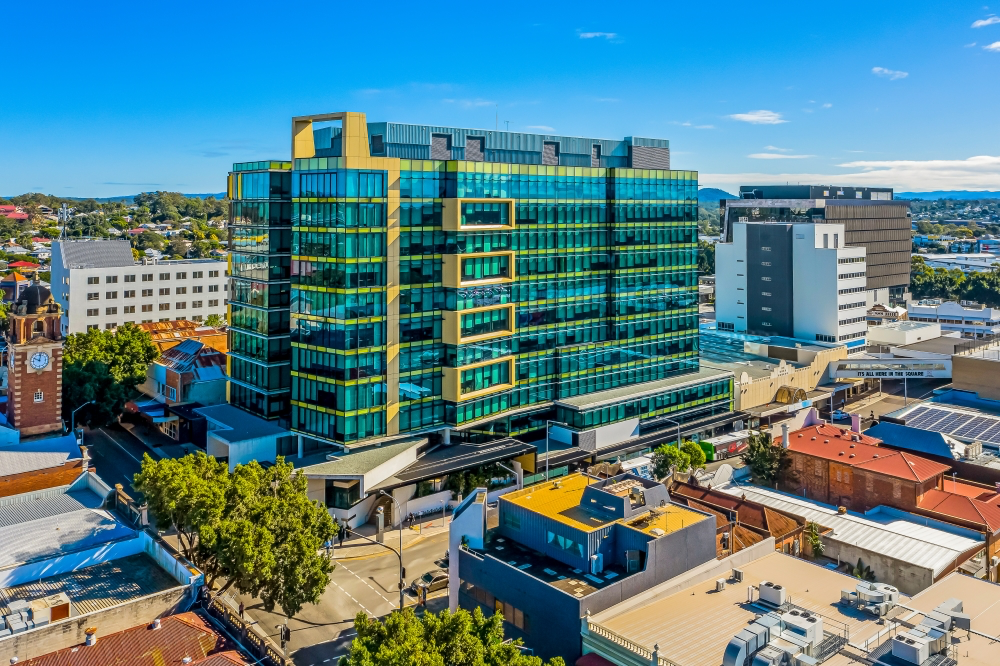
Icon Tower, Ipswich ipswichfirst.com.au

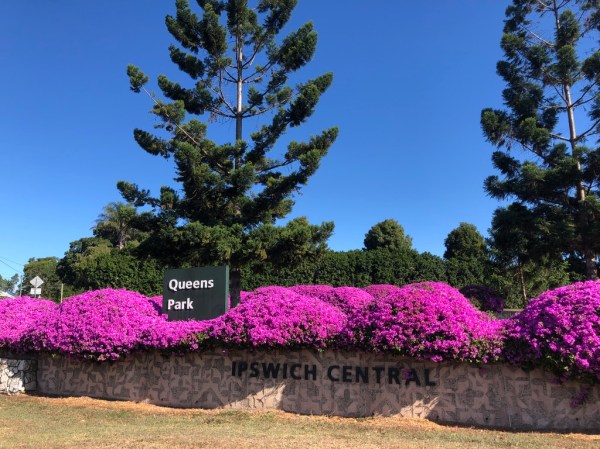
We live in Brisbane now, but we often take our grandchildren to the playground and Nature Centre in Queen’s Park, on the slopes of Limestone Hill; we visit Nerima Japanese Gardens, and the Ipswich Art Gallery, with its wall of coal. We visit cafes and the river walkways, restored after recent Bremer River floods. It’s a quiet river when we visit, and it’s hard to imagine the devastation it regularly causes through the low-lying areas of the city.
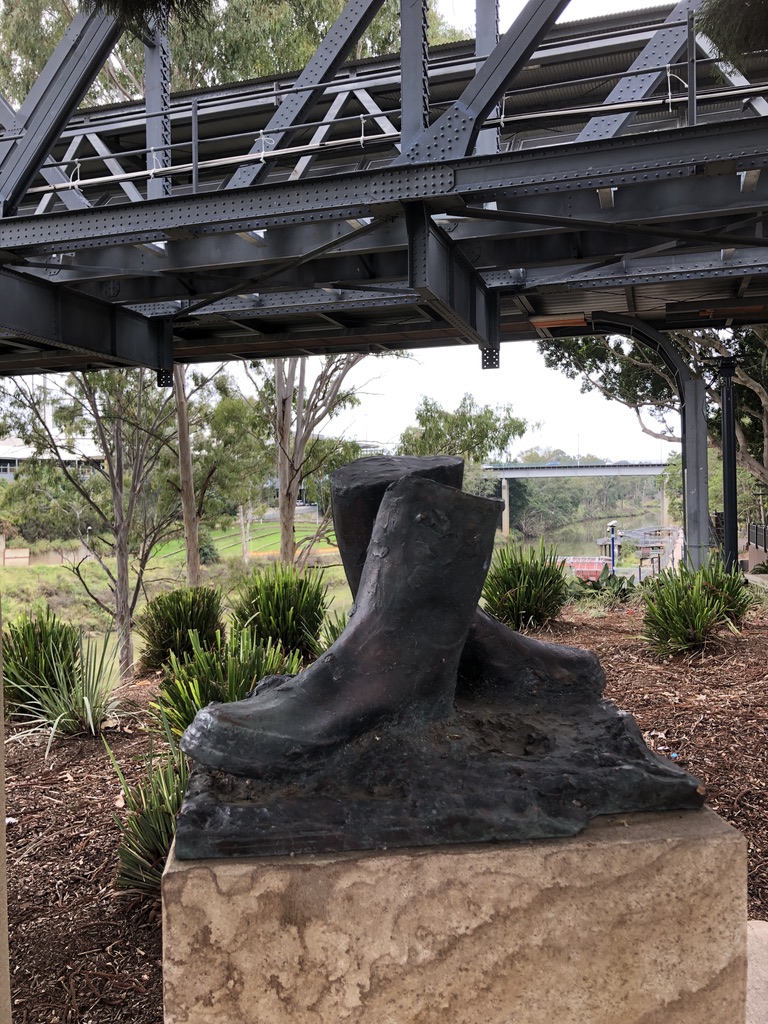
Below the old railway bridge, now a pedestrian bridge, is a commemoration of the resilience of Ipswich and its people in flood times

This is not soft country. The Ipswich area is hotter in summer and colder in winter than Brisbane. Living at Lowood, we sometimes scraped frost off the car windscreen at eight in the morning. At Rosevale in 1972, we suffered the hottest Christmas of our lives, with all-time record temperatures.

For the sad coal-mining families in the area, there would have been empty places at the table that Christmas.


[1] Thank you to Ipswich Historical Society President Hugh Taylor and other well-informed staff who generously helped with information and access to files when we visited Cooneana Heritage Centre.
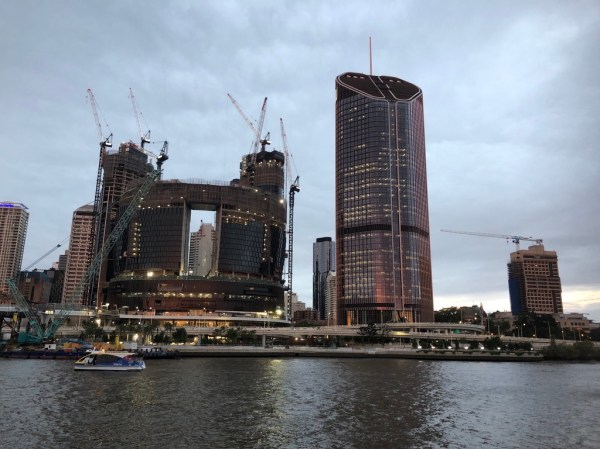
Captain Logan and Queen’s Wharf

“The settlement,” Cowper had told Clunie on the Isabella, “is mostly on one point of land. Penis-shaped, we shall say, backed by a high ridge we shall call the Line of Bollocks.”[1]

Jessica Anderson wrote a wise and interesting novel of convict Brisbane, “The Commandant”, published in 1975. It includes this pungent description of the site of the Moreton Bay Convict Station, in the words of the notoriously bitter, badly-behaved drunk, Henry Cowper, the convict station’s first medical officer. The site of the Moreton Bay Convict Settlement, established in 1826, runs along the ridge where William and George Streets run now.

Queensland’s government buildings still occupy this “penis-shaped” piece of high ground along the river.  

Henry Cowper was the medical officer for the Settlement from 1826 to 1832. He worked in primitive conditions in this isolated, under-funded and under-supplied outpost of the British Empire. Captain Patrick Logan was the commandant.

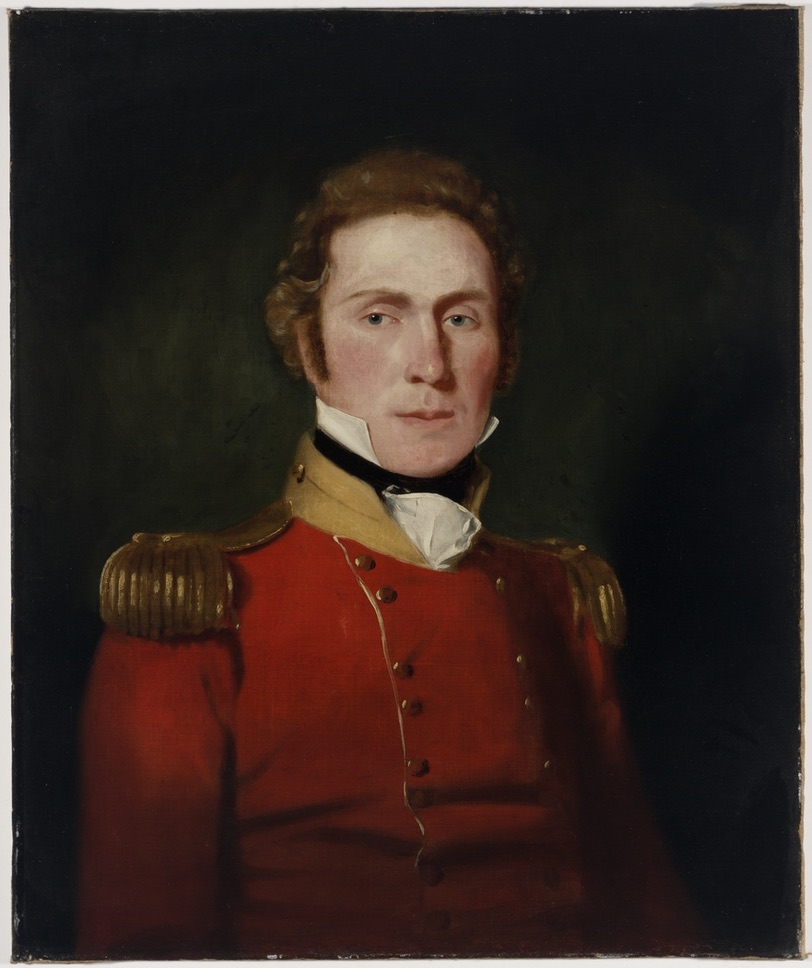
Captain Patrick Logan, 57th Foot Regiment, Commandant of Moreton Bay Convict Station 1826-1830 State Library of New South Wales

Jessica Anderson’s excellent novel was thoroughly researched, and conditions in the settlement, and many of the characters, are based on records of the time. The novel culminates in the sombre discovery and retrieval of the body of Captain Logan.

Captain Patrick Logan of the 57th Foot Regiment, a veteran of the Peninsula War against Napoleon, was commandant of the settlement from 1826 until his murder in 1830 at the age of just thirty-nine.

Many men who came to Australia in the early years of European occupation, to supervise convict stations and run governments, were veterans of the European wars of the early nineteenth century. Violence and flogging were not new to them. Logan was a notoriously harsh disciplinarian who followed the rules without mercy. The floggings Logan ordered for convicts would have provided Cowper with a stream of grievously injured patients.

Constant complaints about the treatment of Moreton Bay convicts were made to the government in Sydney. The famous old song “Moreton Bay” has a convict describe it:  

For three long years I was beastly treated 
And heavy irons on my legs I wore
My back from flogging was lacerated
And oft times painted with my crimson gore
And many a man from downright starvation
Lies mouldering now underneath the clay
And Captain Logan he had us mangled
All at the triangles of Moreton Bay

Like the Egyptians and ancient Hebrews
We were oppressed under Logan’s yoke
Till a native black lying there in ambush
Did deal this tyrant his mortal stroke
My fellow prisoners be exhilarated
That all such monsters such a death may find
And when from bondage we are liberated
Our former sufferings will fade from mind[2]

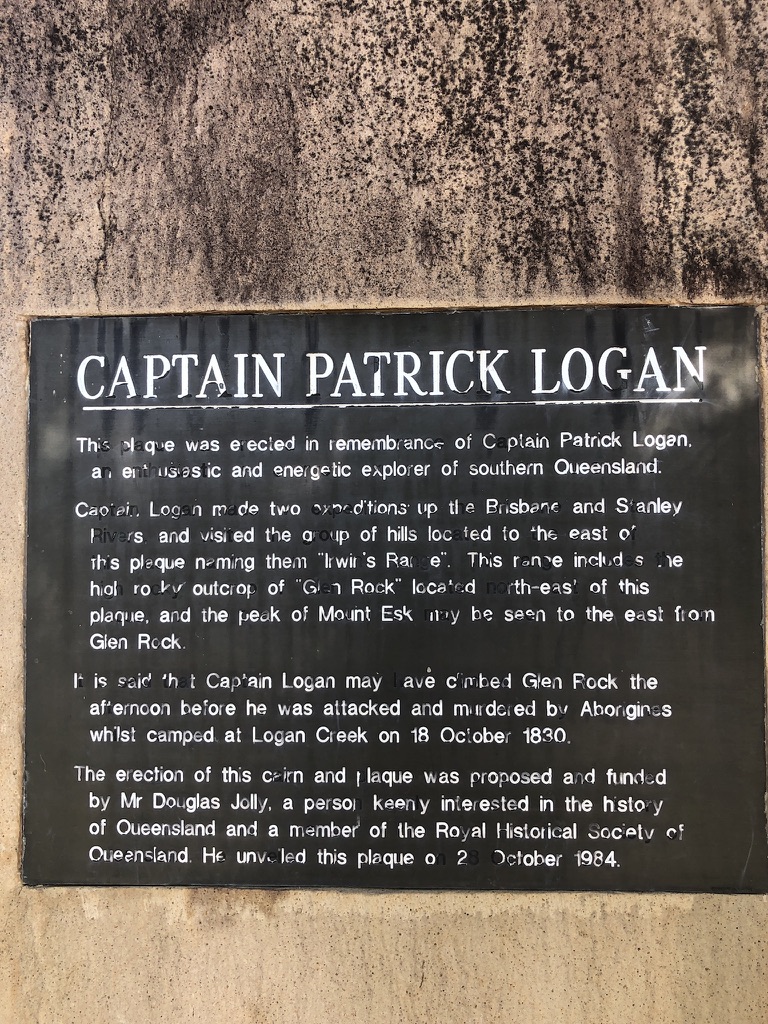
In Esk, in the Brisbane Valley, the Memorial Park has shady trees and picnic tables. We stopped there for lunch one day. Sandwich in hand, I wandered around the park, and found a rock with a plaque attached. The plaque describes Patrick Logan as “an enthusiastic and energetic explorer of Southern Queensland’, and provides the information that it was near here, on 18 October 1830, on his last exploratory trip before his term as commandant was over, that he was killed by an Aboriginal group.

Plaque on the monument in Esk Memorial Park

It may be true that escaped convicts were also involved in Logan’s murder; but there is always going to be violence when one group invades another’s traditional homelands and takes them for their own.

Patrick Logan made frequent exploratory expeditions and is credited with many “discoveries” in south-east Queensland. His name is on lookouts at Rathdowney and Mount French in the Scenic Rim. He is credited with discovering the Logan River, Dugulumbah to Yugumbeh people who had known it for thousands of years. Logan Road, the City of Logan, and many other plaques, streets and suburbs carry his name.

During Logan’s time as commandant, the first permanent buildings in what was to become Brisbane were erected. Two of them still stand: the windmill up on Wickham Terrace (on Cowper’s “Line of Bollocks”, in fact) and the Commissariat Store in William Street, the oldest inhabited building in Brisbane. The Commissariat Store building is now the Convict Museum and the headquarters of the Royal Historical Society of Queensland, and on its lower floor can be seen models of the Convict Station the way it looked at the time of Logan’s death.

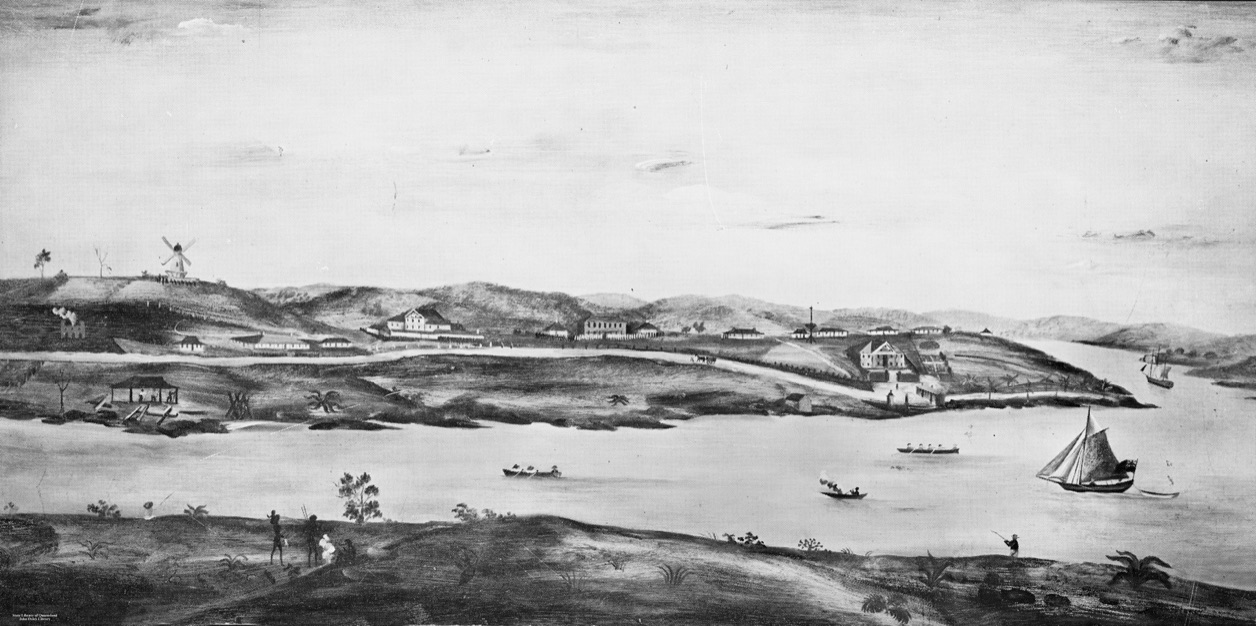
The Commissariat Store, in its original two story form, can be seen above the wharf towards the end of the point of land. The Commandant’s house is the last one on the right above the Store. The wharf was not called “Queen’s Wharf” in those days. George IV had recently died, and William IV was king. Queen Victoria did not gain the English throne until 1837. “Image of early Brisbane Town in convict days, ca. 1831. From a painting by Cedric Fowler.” collections.slq.gov.au

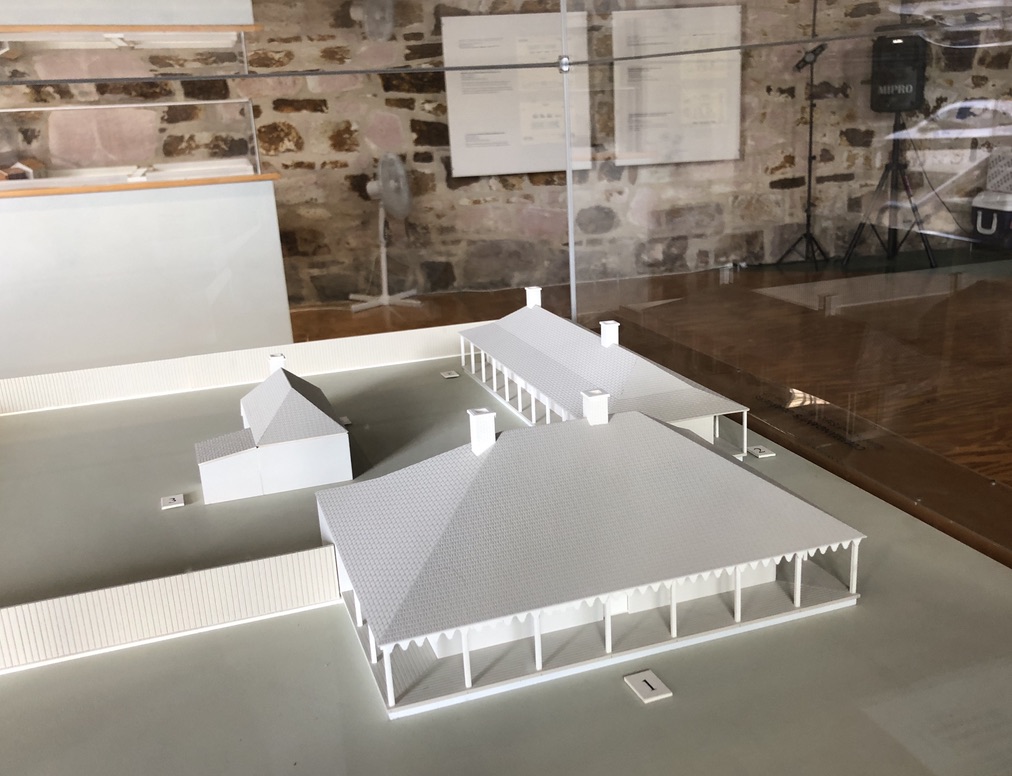
These include a model of the Commandant’s house, with a verandah in front.

Model of the Commandant’s house, in the Convict Museum, William Street, Brisbane

A museum volunteer tells me that the house, which features in Jessica Anderson’s novel, looked across William Street to the river, near the site where huge casino and hotel buildings are currently rising: the Queen’s Wharf Development Project.

The roof and top floor of the Commissariat Store, now headquarters of the Royal Historical Society of Queensland, William Street. Queen’s Wharf Development site in the background

According to the website, the finished Queen’s Wharf development will include a Sky Deck 100 metres above William Street, and fifty restaurants, bars and cafes.

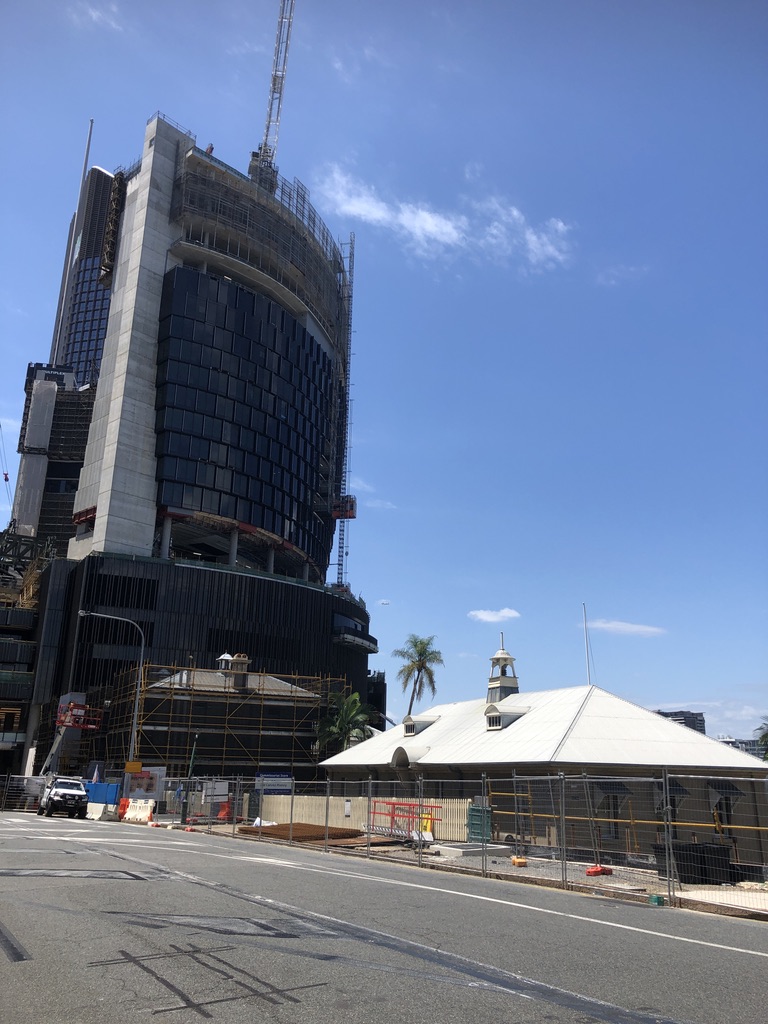
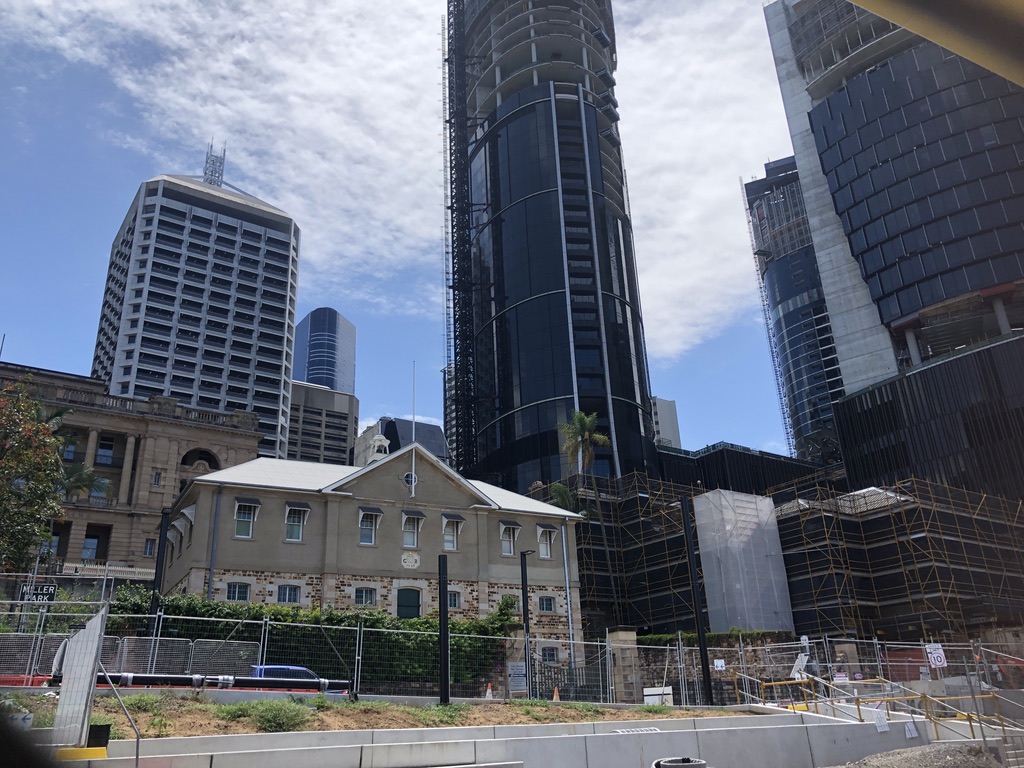
This whole area is a massive construction site; and in the midst of it sits, incongruously, the Commissariat Store.

Commissariat Store in the midst of construction site

I’m told the developers wanted to take over the convict-built Commissariat Store. It would have made a fine site for a restaurant and bar, this old stone building opening out on to the riverbank. But somehow the RHSQ managed to keep it.

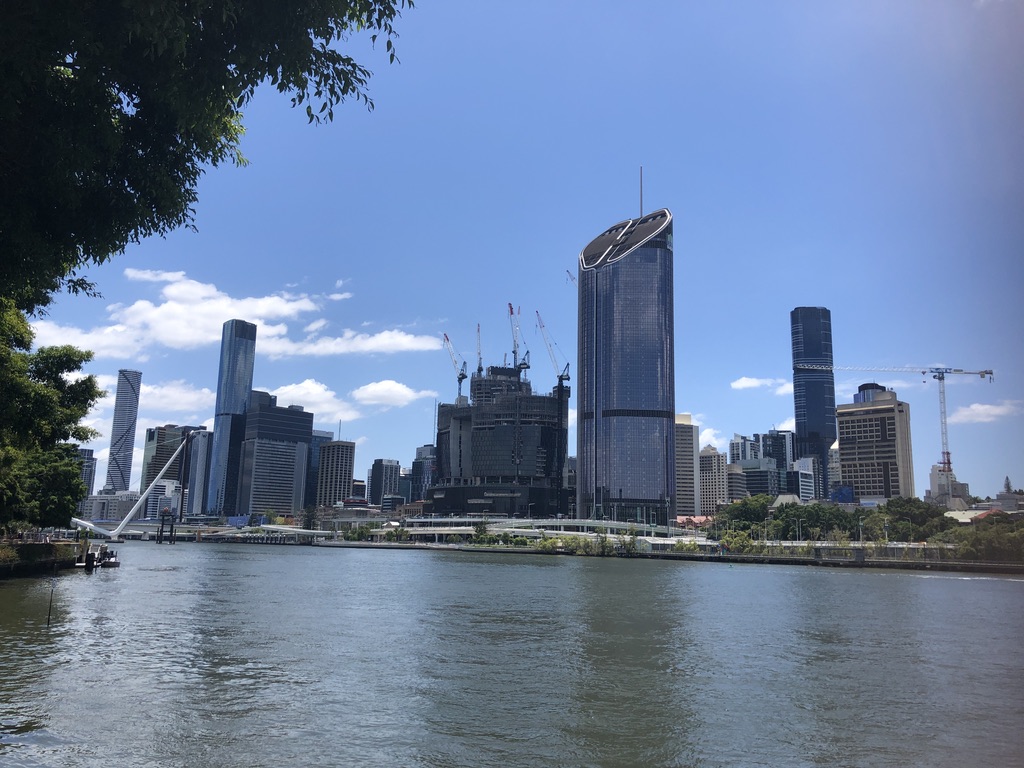
The white peaked roof of the Commissariat Store can just be seen behind the freeway overpass. The Commandant’s house would have been behind the building with the cranes

Other historical buildings within the William and George Street precinct are being protected and preserved, but it’s difficult now to imagine the environment of simple wooden buildings, dirt pathways and gardens that occupied this stretch of land two hundred years ago.

Today there’s a huge, powerful white snake rearing out of the Brisbane River, looking as if it’s about to strike.

Neville Bonner Bridge under construction

It’s the new Neville Bonner Bridge, startling in its design but destined to become a Brisbane icon. The last sections have been craned into place, and soon pedestrians will be able to cross from Southbank Parklands to take part in the promised glories of the new development.

The ridge above the river will never be the same again. Patrick Logan would not recognise it.

It’s to be hoped that enough well-off tourists come to spend their money there to pay for it all.


[1] “The Commandant”, Jessica Anderson. First published 1975. This edition: The Text Publishing Company, Australia. 2012. P. 74.

[2] folkstream.com

Queensland Songs

Song making is an ancient Queensland art. Songs have always been part of every Indigenous celebration and every mourning ceremony, and song lines were like maps guiding people across country.

By contrast, whitefeller Queensland songs range from nineteenth century convict times to the twenty-first century.

The best of those Queensland songs, the most evocative of its time and place, is the haunting Moreton Bay, about convict life in Brisbane in the late 1820s under the notorious commandant, Captain Patrick Logan.


convicts 2
Convict Brisbane


The first European settlement was built along what became William Street. Captain Logan’s house was here, and this part of Brisbane is still the home of government offices.

convicts best
Convict era Brisbane seen from south of the river. Image: State Library of Qld

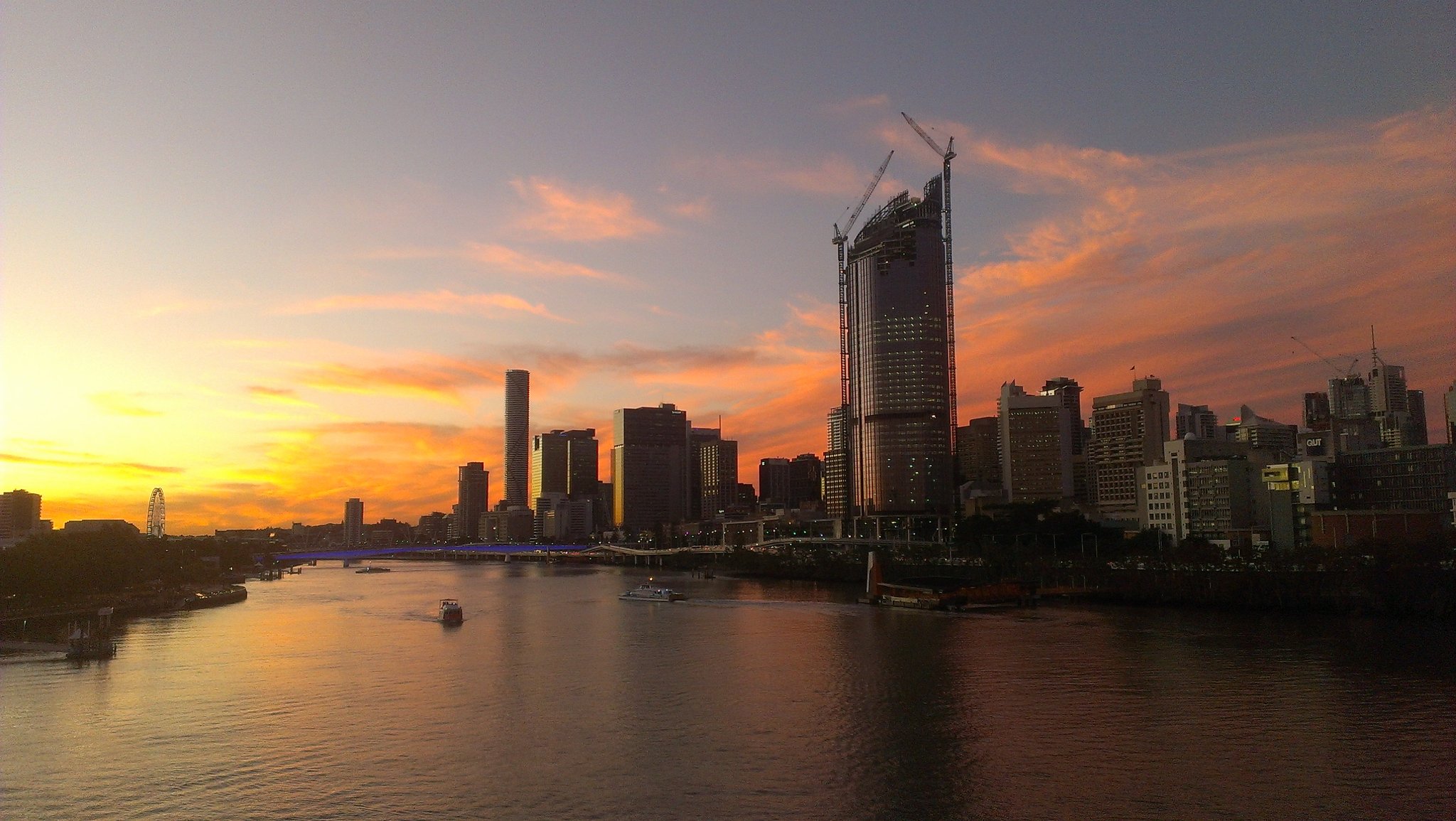
The huge state government building at 1 William Street is near the site of the commandant’s house.

CiKIvPWU4AEqDm-.jpg-large
Looking upstream towards 1 William Street as it was nearing completion

Now the Queens Wharf high-rise development is going up on William Street.

The flogging triangle was located in the convict barracks at the top of what is now Queen Street.

convicts 3
Convict life in Brisbane Image: Museum of Brisbane

The Brisbane River loops around this raised stretch of land, down past what is now the City Botanical Gardens, past the New Farm, and past Eagle Farm. Convicts worked on all these farms.

Moreton Bay

 One Sunday morning as I went walking
By Brisbane waters I chanced to stray
I heard a convict his fate bewailing
As on the sunny river bank I lay
I am a native from Erin’s island
But banished now from my native shore
They stole me from my aged parents
And from the maiden I do adore

I’ve been a prisoner at Port Macquarie
At Norfolk Island and Emu Plains
At Castle Hill and at cursed Toongabbie
At all these settlements I’ve been in chains
But of all places of condemnation
And penal stations in New South Wales
To Moreton Bay I have found no equal
Excessive tyranny each day prevails

For three long years I was beastly treated
And heavy irons on my legs I wore
My back from flogging was lacerated
And oft times painted with my crimson gore
And many a man from downright starvation
Lies mouldering now underneath the clay
And Captain Logan he had us mangled
All at the triangles of Moreton Bay

Like the Egyptians and ancient Hebrews
We were oppressed under Logan’s yoke
Till a native black lying there in ambush
Did deal this tyrant his mortal stroke
My fellow prisoners be exhilarated
That all such monsters such a death may find
And when from bondage we are liberated
Our former sufferings will fade from mind

Western Queensland has always been a tough place: even more so in the years of the Great Depression, when people, especially men, had to leave home and travel in harsh conditions to find work and collect rations. In Sergeant Small, a swaggie jumps a train in Mitchell, heading for Roma. When he arrives there, he is tricked by the local sergeant into revealing his hiding place, ends up in court and is sentenced to thirty days.

mitchell railway station
Passengers on Mitchell Railway Station Image: State Library of Qld


The “Weddings Parties Anything” version captures the spirit of the time.

Sergeant Small

I went broke in western Queensland in 1931,
Nobody would employ me so my swaggy days begun
I headed out to Charleville, out to the western towns,
I was on my way to Roma, destination Darling Downs

And my pants were getting ragged, my shoes were getting thin,
When we stopped in Mitchell, a goods train shunted in,
The engine blew her whistle, I was looking up to see,
She was on her way to Roma, that was very plain to me.

I wished that I was 16 stone and only seven foot tall,
I’d go back to western Queensland, and beat up Sergeant Small.

As I sat and watched her, inspiration seemed to grow,
And I remembered the government slogan, ‘It’s a railway that you own’
So by the time the sun was setting, and night was going nigh,
So I gathered my belongings and I caught her on the fly.

And as we came into Roma, I tucked my head down low,
And a voice said ‘any room mate?’ and I answered, ‘Plenty ‘bo’
Then at this tip this noble man, the voice of Sergeant Small,
Said, ‘I’ve trapped you very nicely, you’re headed for a fall’

I wished that I was 16 stone and only seven foot tall,
I’d go back to western Queensland, and beat up Sergeant Small.

The Judge was very kind to me, he gave me thirty days,
He said, ‘Maybe that would help to cure my rattler jumping ways’
So if your down and outback, let me tell you what I think,
Just stay off the Queensland railways, it’s a shortcut to the clink.

I wished that I was 16 stone and only seven foot tall,
I’d go back to western Queensland, and beat up Sergeant Small.


Songs that evoke a familiar place and atmosphere often find a lasting place in the culture.

Sounds of Then, better known as This is Australia, written by Mark Callaghan, was inspired by his memories of living with his family in the canefields east of Bundaberg. After its release in 1985 by the rock band Gang Gajang, it soon became an iconic Australian song. As Callaghan said in a 2002 interview with Debbie Kruger, “The song is actually about how smells and sounds and sensations can rekindle a memory – which is what music does so successfully for people.”

lighning over cane

From Sounds of Then (This is Australia)

…That certain texture, that certain smell,
Brings home the heavy days,
Brings home the night time swell,

Out on the patio we’d sit,
And the humidity we’d breathe,
We’d watch the lightning crack over canefields
Laugh and think, this is Australia.

The block is awkward – it faces west,
With long diagonals, sloping too.
And in the distance, through the heat haze,
In convoys of silence the cattle graze.
That certain texture, that certain beat,
Brings forth the night time heat.

Out on the patio we’d sit,
And the humidity we’d breathe,
We’d watch the lightning crack over canefields
Laugh and think that this is Australia.

To lie in sweat, on familiar sheets,
In brick veneer on financed beds.
In a room of silent hardiflex
That certain texture, that certain smell,
Brings forth the heavy days,
Brings forth the night time sweat
Out on the patio we’d sit,
And the humidity we’d breathe,
We’d watch the lightning crack over canefields
Laugh and think, this is Australia.
This is Australia…

Songwriters: Mark Callaghan / Graham Bidstrup / Chris Bailey / Geoff Stapleton / Robert James / Kay Bee

Sounds of Then (This is Australia) lyrics © Universal Music Publishing Group

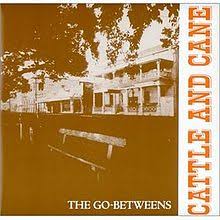
Cattle and Cane, from Brisbane band the Go-Betweens, 1983, has the same lovely, nostalgic Queensland feel:

cattle and cane

Cattle and Cane

I recall a schoolboy coming home
through fields of cane
to a house of tin and timber
and in the sky
a rain of falling cinders
from time to time
the waste memory-wastes
I recall a boy in bigger pants
like everyone
just waiting for a chance
his father’s watch
he left it in the showers
from time to time
the waste memory-wastes
I recall a bigger brighter world
a world of books
and silent times in thought
and then the railroad
the railroad takes him home
through fields of cattle
through fields of cane
from time to time
the waste memory-wastes
further, longer, higher, older

Songwriters: Robert Derwent Garth Forster / Grant William Mclennan

Cattle and Cane lyrics © Universal Music Publishing Group

For something contemporary, and a completely different view of Queensland as seen from south of the border, here is comedian Sammy J’s 2019 song, inspired by the result of this year’s Federal Election: Queensland, we’re breaking up with you.

Blog at WordPress.com.

Up ↑