Doing the Washing

When we lived in Jandowae, on the northern Darling Downs, our clothesline was held up with a notched wooden prop.

Previously, we’d lived in houses with that backyard icon of the time, a Hills Hoist. It was efficient. The height could be adjusted, it rotated and it had lots of hanging space.

The Jandowae clothesline, perhaps ten metres long, was height adjustable too, in that you could stand the long prop up at an angle. It was unpredictable, though. A sudden wind gust could fling the drying sheets across to the other side of the line or drop them in the dirt.

A sudden gust will just send a rotary clothesline into a fast spin. Sheets and towels will flap wildly, but they won’t fall in the dirt.

21st century Queensland backyards rarely have space for a Hills Hoist, or a prop line either, even though clothesline props are still being sold, in improved styles. The travelling clothes prop man is a thing of the distant past, and even rotating clothesline are becoming objects of nostalgia. Throughout the suburbs, and across the sprawling, grey roofed, close packed housing developments that surround so many country towns, there is scarcely room for plants.

Last Christmas, Con wrote his Christmas letter on a theme, as he does every year. This year the theme was “clotheslines”. He was searching for a subject more interesting than the usual screeds on family, travel, illnesses and renovations.

Replies to his letter were rich with humour and nostalgia.

One old friend has recently lost his wife of many years. He misses her. But there is a positive side, as he wrote, and it concerns how he hangs out the washing now she’s gone.

  • No more separate washing for whites and colours.
  • No more hanging tops from the bottom and bottoms from the top.
  • No more delicates.
  • No more taking pegs off the line and into the peg basket.
  • No more socks by the toes. No more pockets turned out.

Surely one of the small freedoms we can allow ourselves is to hang out the washing any way we  like. Leave the pegs on the line, or put them in the basket? Hang the socks in pairs, or randomly? Wooden pegs or plastic? One peg, or two? Please yourself.

From my verandah I can look across the next-door backyards with their rotary clotheslines and I notice how they hang out their washing. The young couple next door hangs clothes entirely randomly, and not always using pegs. Next yard across, the retired couple hangs theirs out according to a strict pattern. Six white knickers in a row, six black underpants, six singlets.
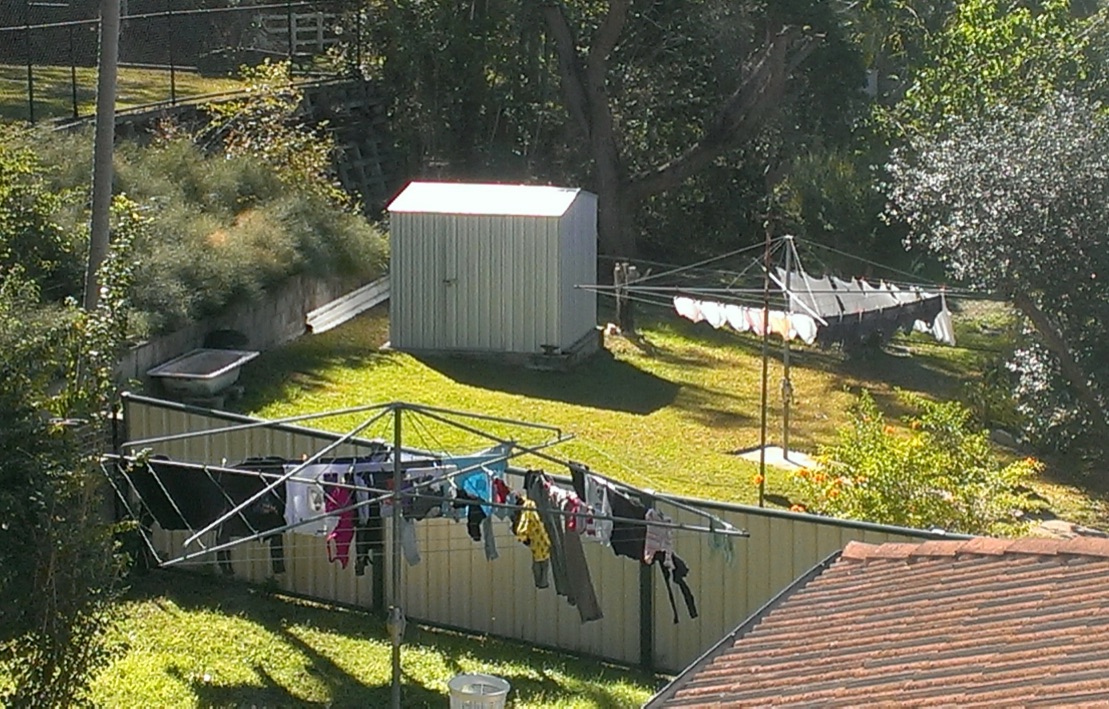
It seems they shop for underwear in an orderly way too.

Our friend in Chicago responded to Con’s letter wistfully. In the depths of winter and living in an apartment, she has no chance of drying her washing in a sunny, breezy garden.

Queensland climate varies dramatically across its huge area. When we lived in Burketown and Townsville, I had no problem drying the clothes either outdoors, or if it was raining, on lines strung under the house. However, Townsville, as they say, is a “dry old hole” most of the time; and Burketown is almost desert for a lot of the year. In Burketown, I would hang my washing under the house in the cool of the evening, and next morning everything would be dry.

Things changed when we moved to Yarrabah, on the coast near Cairns, with a ten-day old baby, and pouring rain and a cyclone predicted. Faced with the thought of managing wet cloth nappies, Con came home from the local store with a tumble drier.

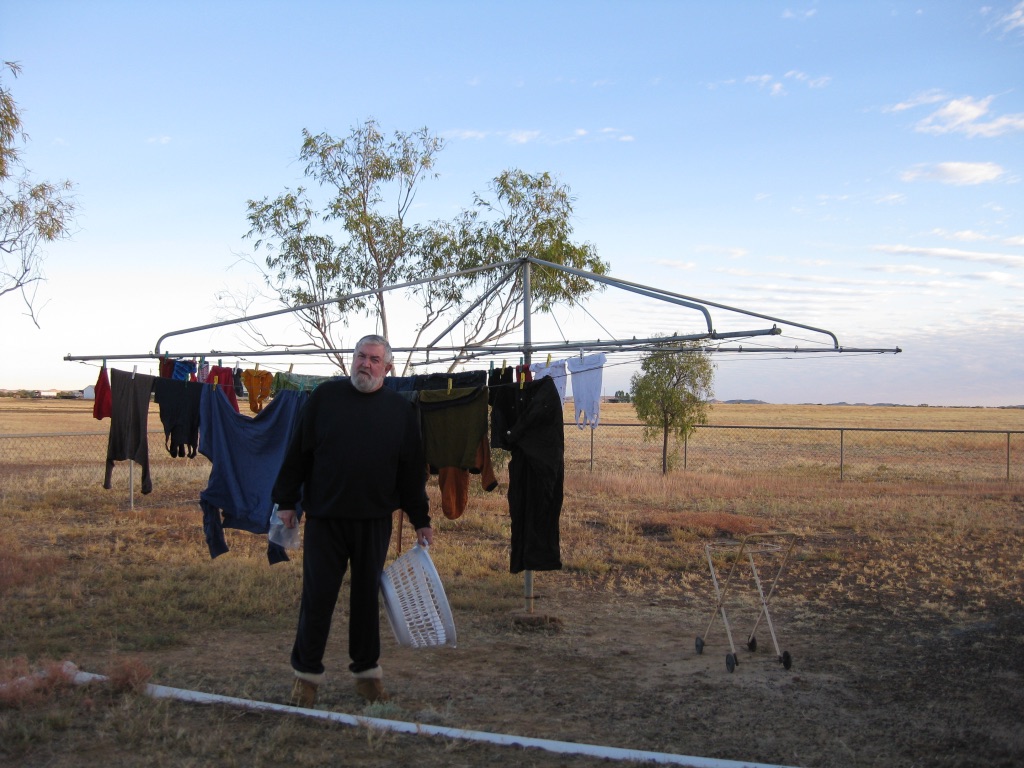
Con enjoys doing the washing. He has hung out clothes in Gulf Country heat at Karumba;
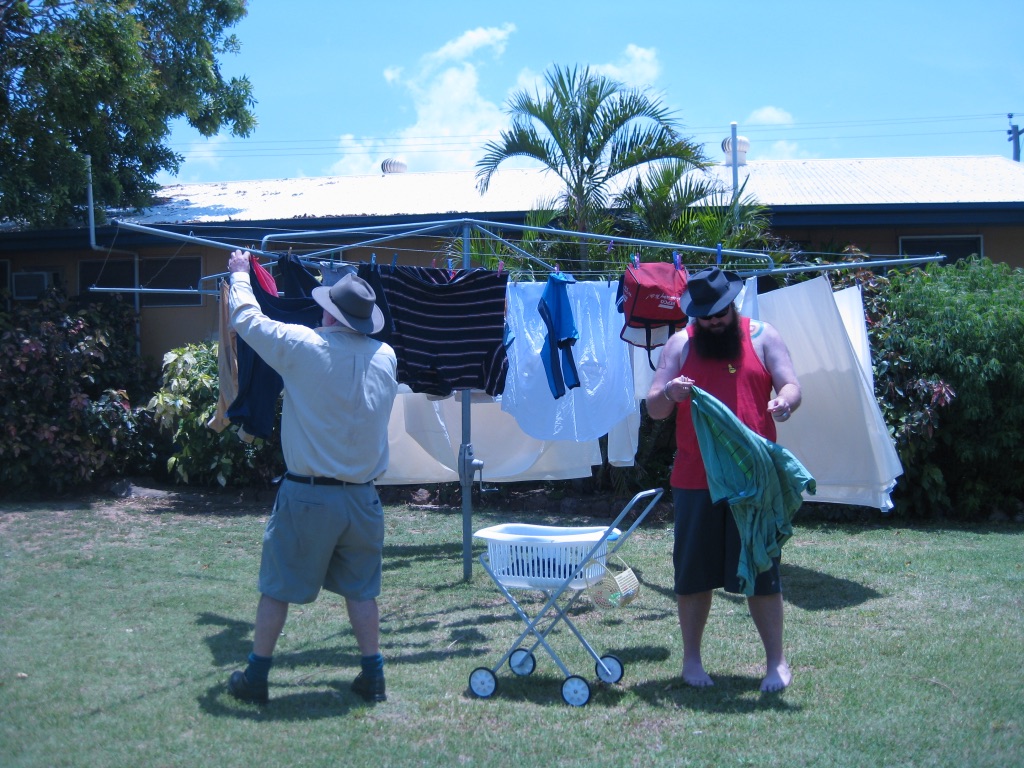
at the back of the old shearers’ quarters on Carisbrooke Station, west of Winton;
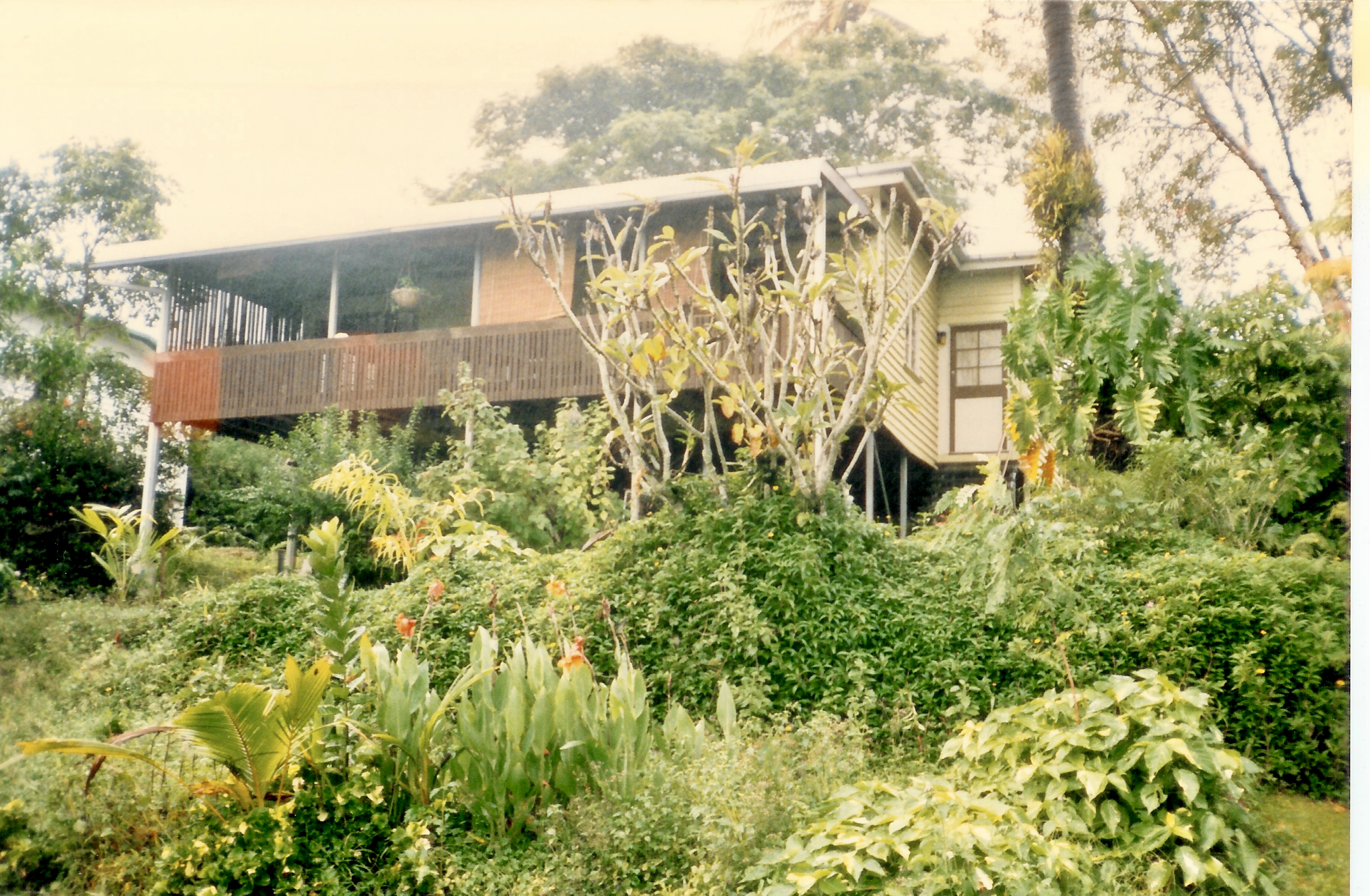
on the elevated clothesline behind a Silkwood farmhouse in Far North Queensland.
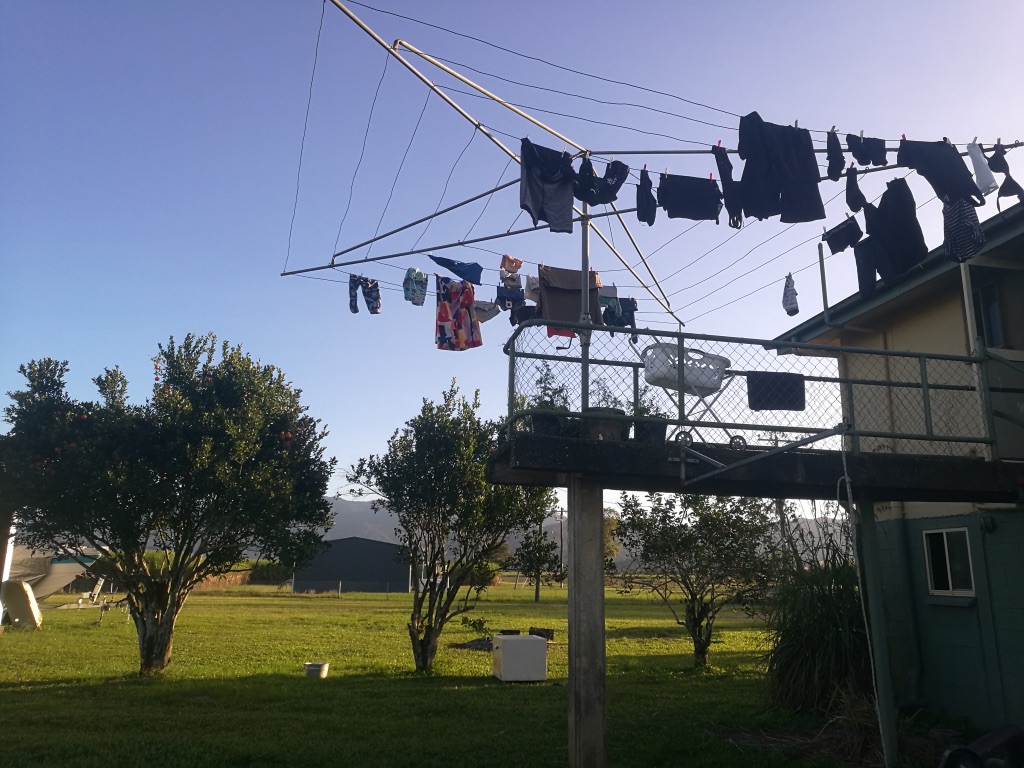
It’s a unique feature of elevated FNQ houses, a relic from the 1950s and ‘60s: a Hills Hoist mounted on the end of a concrete walkway leading from the back door.

Otherwise, hanging out washing in a wet, tropical climate is not easy. Taking advantage of the first good drying day following a week of downpour, you stand in rubber thongs in the mud, flinging towels and sheets across the line, hoping nothing drops or drags on the ground.

One North Queensland wet season we stayed with Con’s brother and sister-in-law at Balgal Beach, north of Townsville, for their wedding anniversary party.

On the party tables, Margaret had used all her beautiful old tablecloths. Next morning we washed them. The grass was still soaked from a downpour, and it was tricky, hanging out those gorgeous old cloths without trailing them in the wet grass and mud.
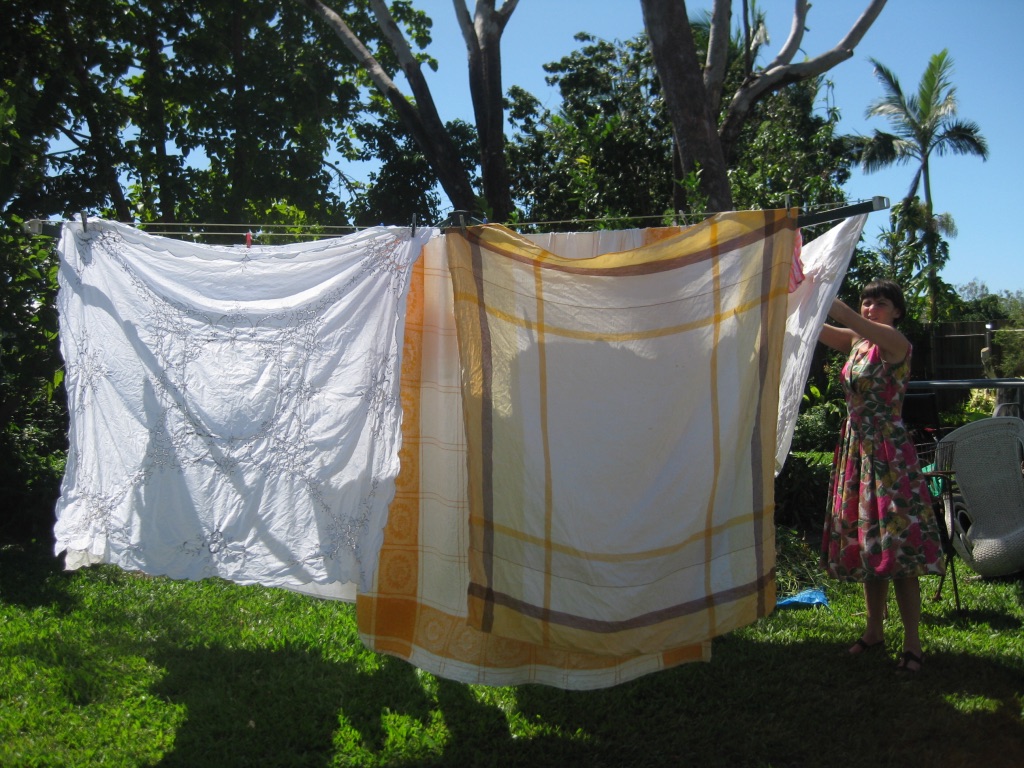
Hanging out those beautiful tableclothes

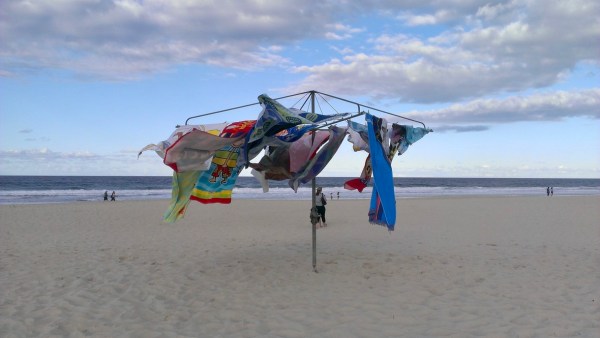
Washing moving in the breeze can be beautiful. It’s the fresh air and sunshine, the colours, patterns and fabrics. The sight has inspired many artists.

A feature of Queensland Art Gallery’s collection is “Washing Day at Éragny”, one of French Impressionist Camille Pissarro’s many beautiful paintings of women washing and drying clothes.
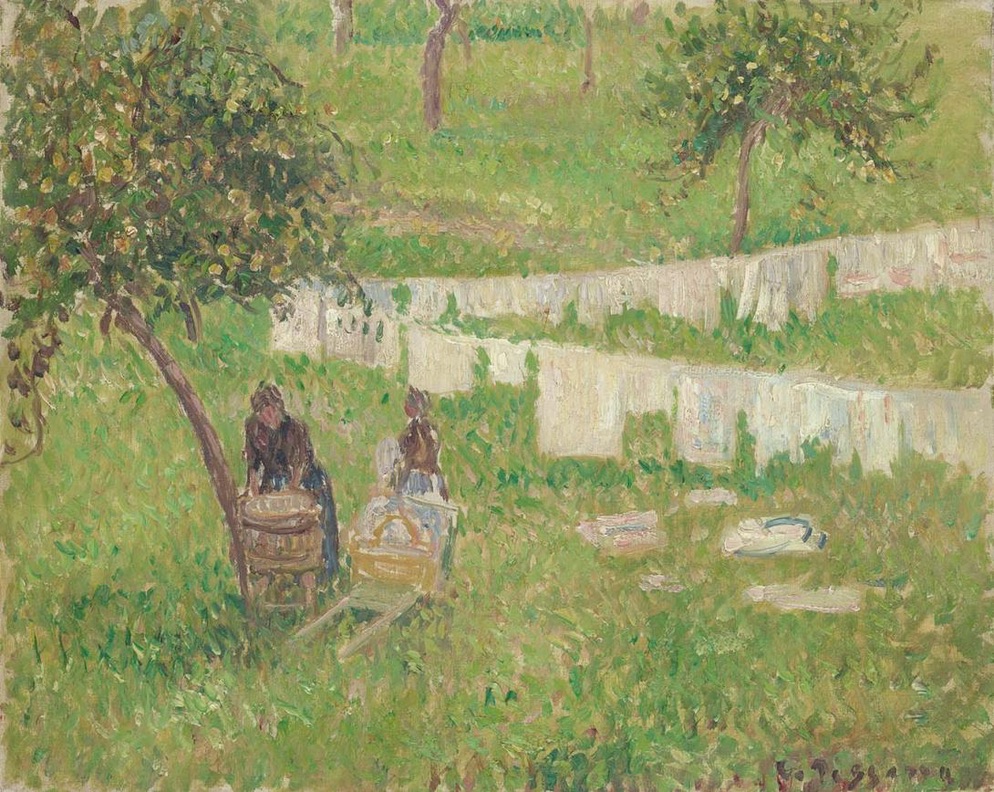
Washing Day at Éragny, Camille Pissarro. Queensland Art Gallery

Another of QAG’s treasured paintings, “Monday Morning” by local artist Vida Lahey, depicts a traditional washing day, with women scrubbing clothes, bending over the concrete laundry tubs that were once a feature of Queensland laundries and are now seen in the bathrooms of trendy pubs.
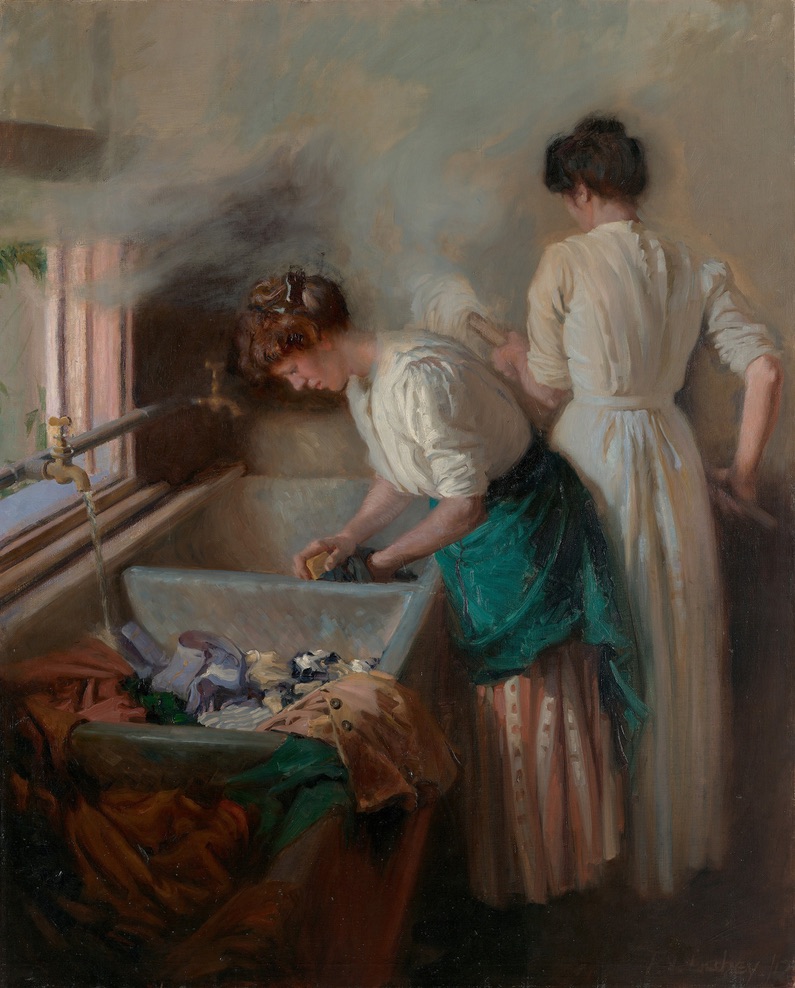
Monday Morning, Vida Lahey. Queensland Art Gallery

Another friend reminded us of the work that went on around those laundry tubs. I can still see my hard-working Mum dragging the boiled sheets out of the copper with the boiler stick, then on to the hand-turned wringer and out on to the propped up washing line, only to sometimes blow down into the mud!

My friend Marion, married to a vet, also responded to Con’s Christmas letter.

For the first time in my life I no longer have a washing line. For years I’ve joked that it was my daily exercise, carrying baskets of washing up and down stairs, bending and stretching to hang the washing in the open air.

My worst washing memories are of cleaning Malcolm’s overalls after he had done a messy calving case out in a muddy paddock somewhere. No washing machine, no hot water in the accommodation we were living in, in the dairy country of the Illawarra. Had to use the bath for a while until we bought a second-hand washing machine. The memory still lingers, particularly the smell of muck and blood. Lovely new calves came into the world though. Clever vet.

The harsh Queensland sun dries towels and sheets fresh and clean. The sun is a great purifier, a killer of germs and mould, although I had an aunt, a meticulous housekeeper, who told me darkly what she thought of this theory as applied to lazy laundry habits: “Some people leave far too much to the sun…”

I had a near-disaster one washing day.

Our cat had gone to sleep among the dirty clothes in the top-loading washing machine. Not noticing, I added powder, closed the lid and started the wash cycle. Seeing some clothes I’d missed I opened the lid again to put them in. The wet and terrified cat jumped out, disappeared out the door and was not seen again for hours.
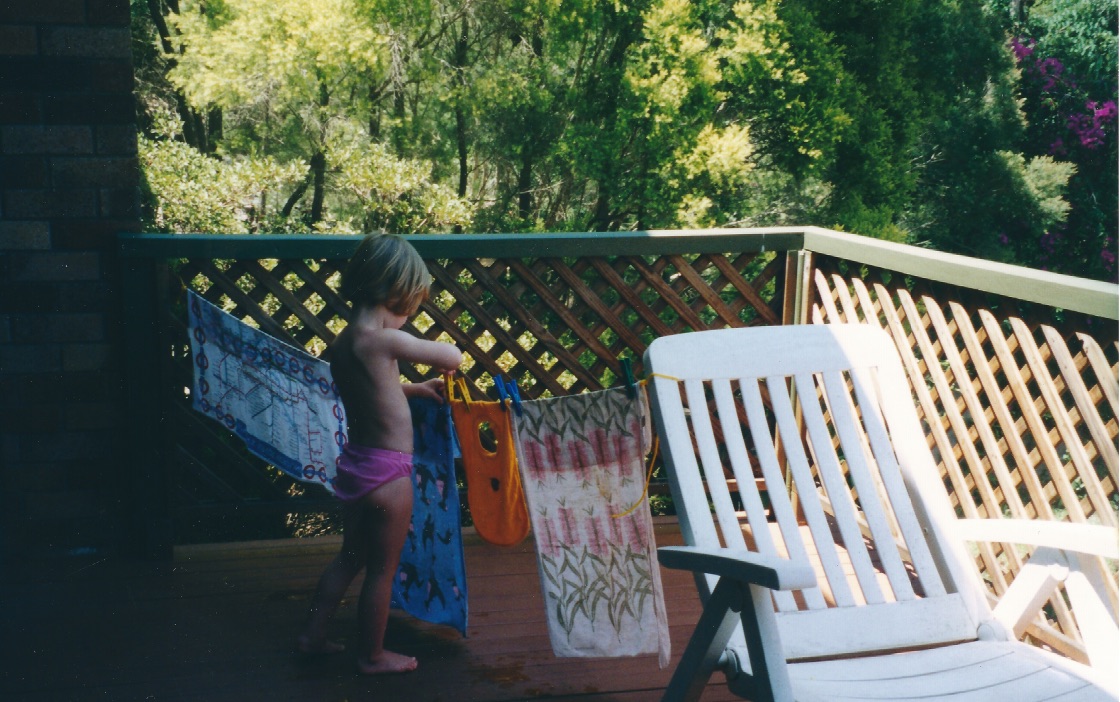
On my verandah

Main picture: Swell Sculpture Festival, Currumbin Beach, Queensland. 2015

Under the House

In the soft soil under his childhood house, Brisbane writer Matthew Condon built a little city with timber off-cuts, rocks and old plastic flowerpots. He dug a ditch for the river and filled it with tap water, watching the water soak away into the dirt.[1]

His house sat on a slope, and he was probably playing where the floor above was close above his head, not where there was space for the laundry and the car. He could hear footsteps and the television from the house above, which gave him a sense of security and belonging in this secret space that adults never visited.

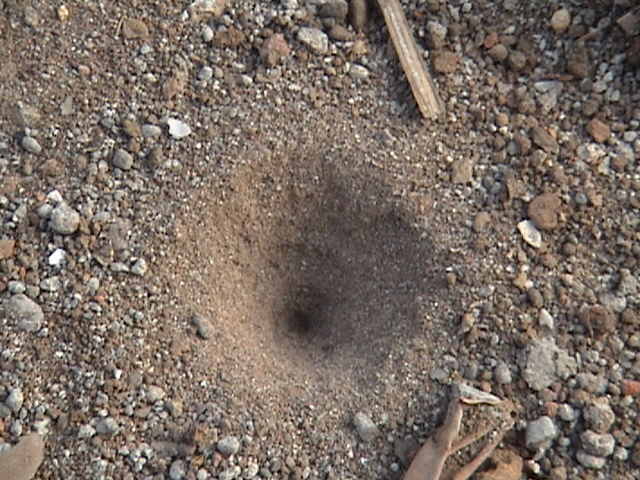
There was a space like that under my childhood house in Nambour, too, with little cone-shaped antlion traps in the dirt, designed to trap passing insects. You could drop a small ball of spit into the little trap and hope to lure out the antlion lurking underneath, or try to tease it out by tickling the soil softly with a twig.

Antlion trap en.wikipedia.org

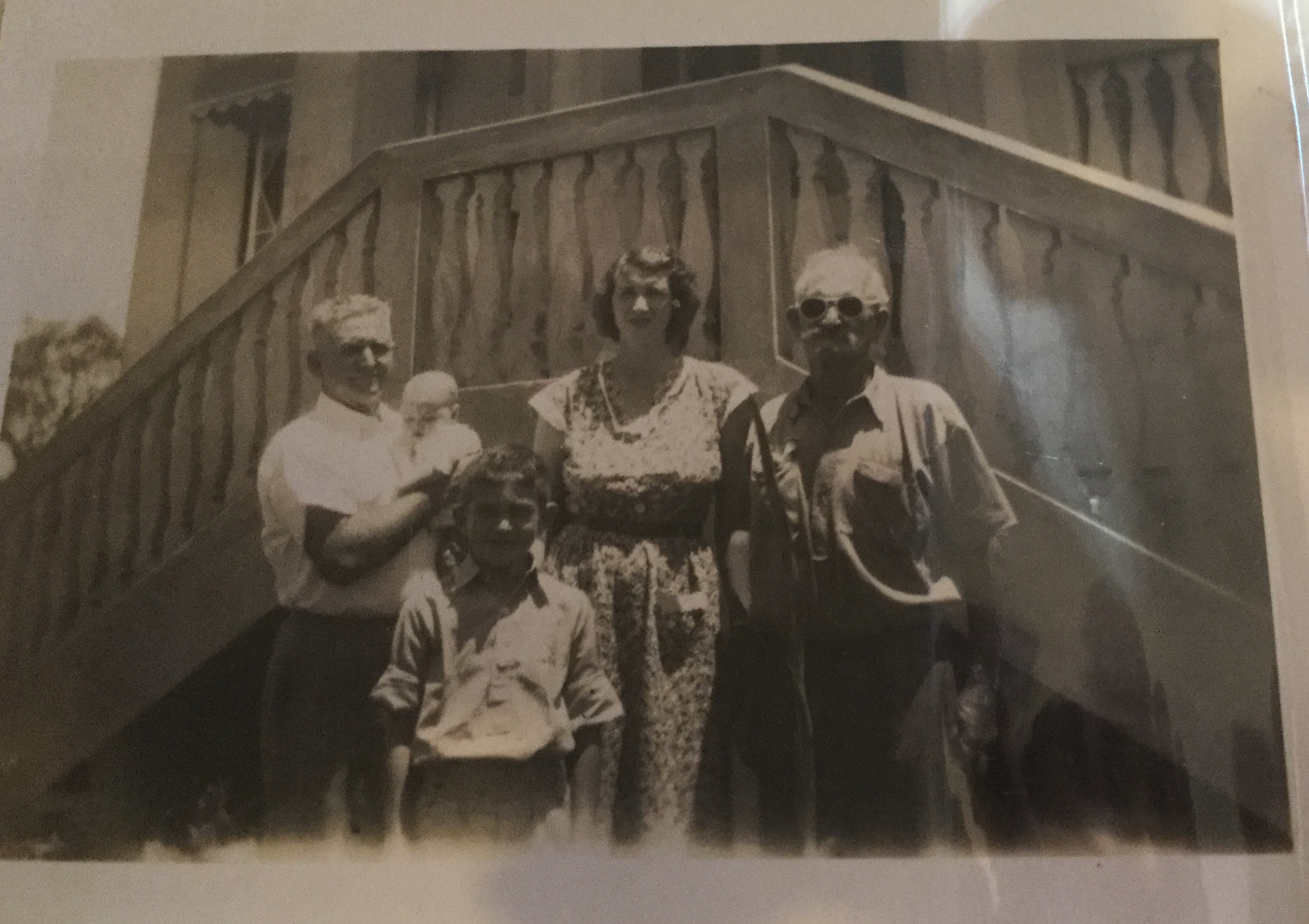
“Grandfather Noble lived under our house in Velution Street,” Con tells me. “The ground was mainly dirt there, too, but there was a concrete pad with his bed and a wardrobe.”

There would have been carpet snakes and cane toads as well as mosquitoes under that old Innisfail house. I hope Grandfather had a mozzie net.

“Grandfather always smoked a pipe, and he had a bone-handled knife for cutting up his tobacco. I wonder where it is now? He’d come upstairs for meals.

“Grandfather was kind to me. I was ten when he died, and I wish I could remember more about him.

Con a baby in arms, Grandfather Noble on the right, in front of the house at Velution St, Innisfail

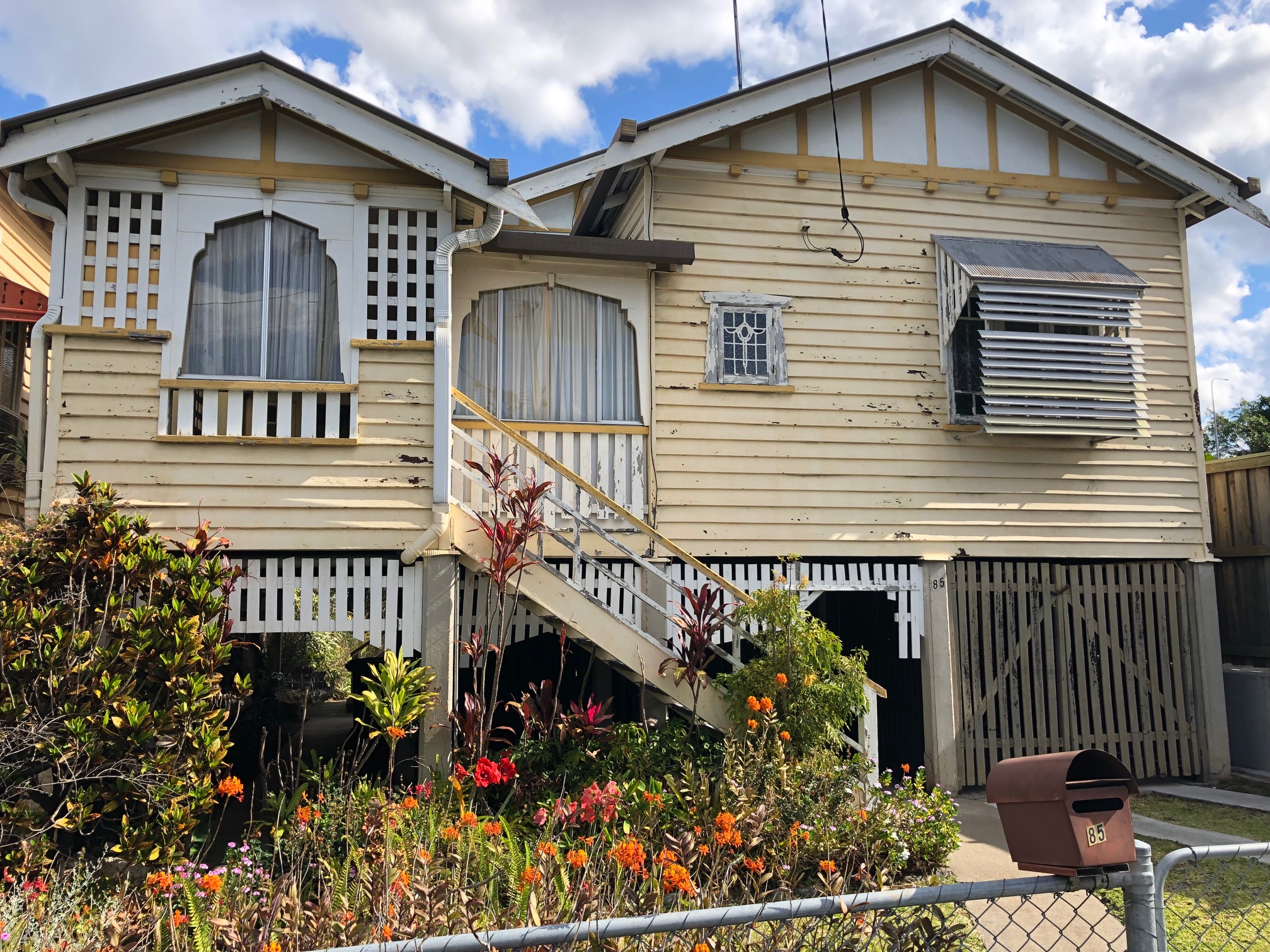
“And when we moved across to East Innisfail we played cards under the house. That’s where I learned to play crib. We’d play all day down there, my brother Jim, Old Con, Uncle George and I.”

The house in Coronation Drive, East Innisfail, today

“Under the house” is a Queensland concept, a tropical thing. There were many reasons for building these timber houses on stumps, with open space underneath. It made them easy to move from place to place and it provided some protection from pests. It kept the dwelling space above flood waters. If built high enough, it doubled the amount of usable shelter. There was more chance of catching a breeze.

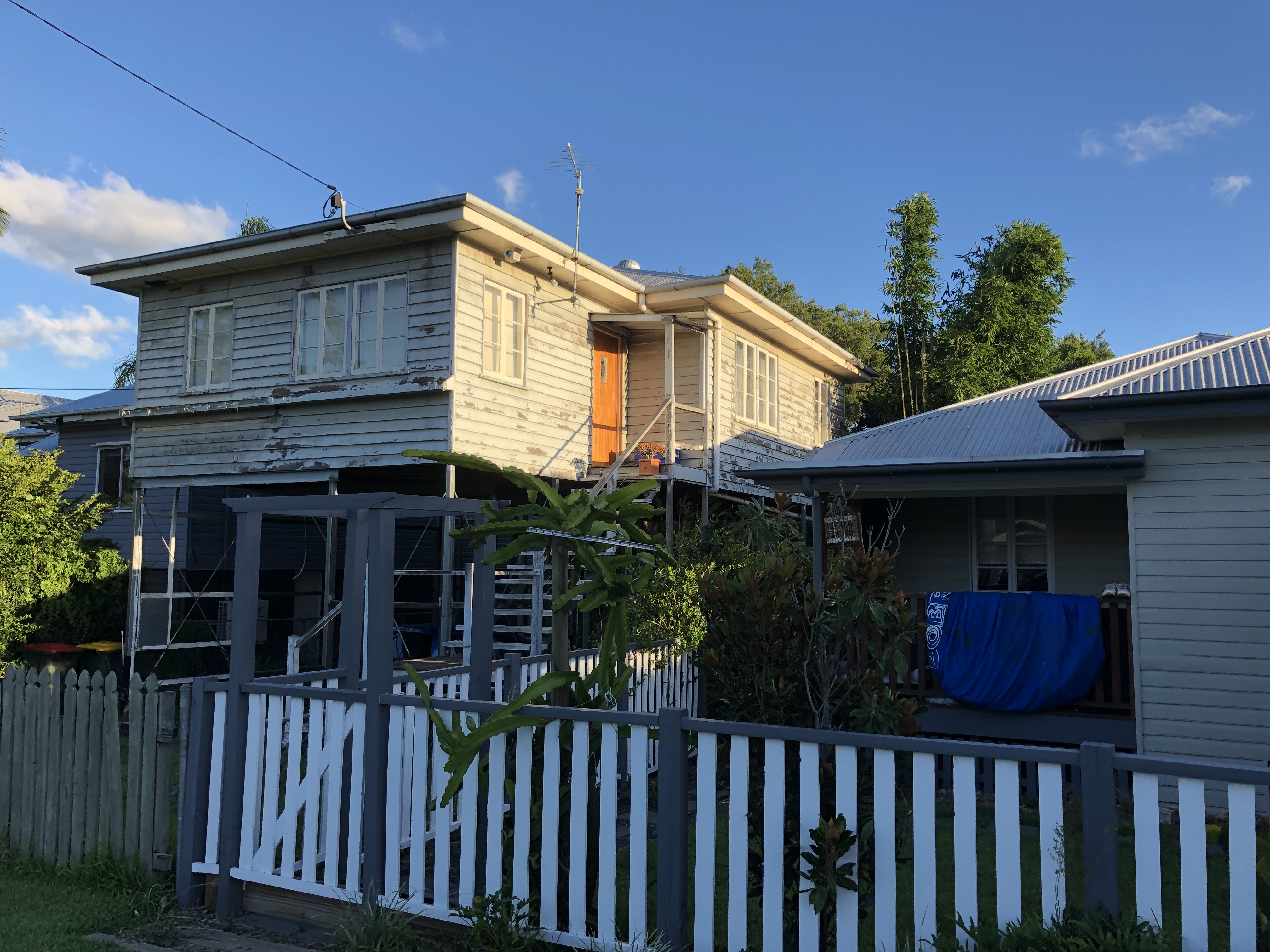
A typical un-altered Queensland house, at Woolloongabba

You might have to watch out, though, or you’d bump your head on the beams supporting the bare floorboards above. An under the house hazard.

Visitors – from Britain or the USA, for instance – might see the many houses up on stumps and ask why.

“It’s because of the snakes. If there’s a space under the house they’ll crawl right through and disappear. Otherwise, they’ll come inside.”

That’s a story to tease tourists with, but it has some truth in it. Rosevale, outside Ipswich, was notorious for snakes, and we lived there in an old timber house on low stumps. Out in the yard one day, toddler Matt saw our cat staring fixedly at a patch of long grass. He started over to see what she was looking at.

The cat suddenly reared back. Con snatched Matt up in his arms and then watched in horror as two long brown snakes slid out of the grass, across the concrete path, and disappeared into that low, dark space under the house.

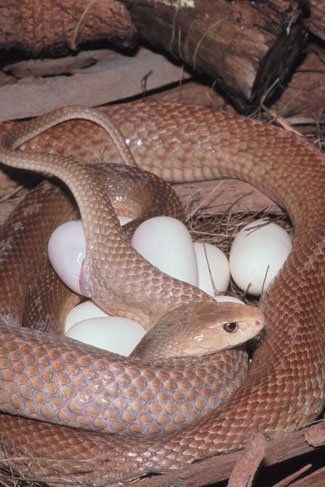
Our Joe went down one night, bare footed, to get a bottle of wine from the fridge under his North Queensland house, and glimpsed something scaly underneath the fridge. It turned out to be a deadly taipan sheltering in the warmth there, its belly full of eggs.

A coastal taipan, like the one under Joe’s house smuggled.com

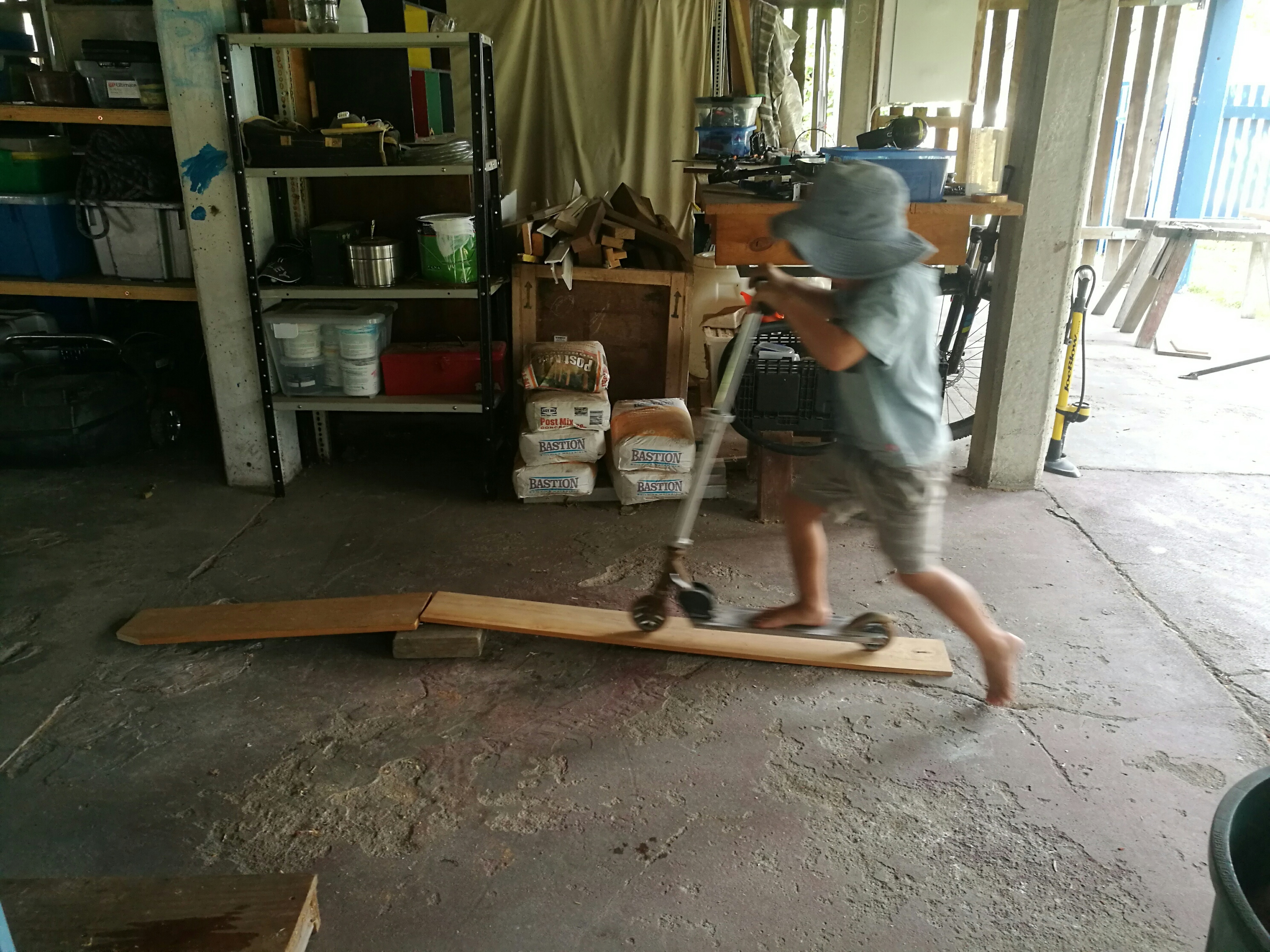
If the house is high enough the hot water system will be set up down there, and usually the laundry, too. It’s a place for storage, for drying the washing in wet weather, and for children to play – riding their scooters round the posts, drawing with chalk on the concrete, building roads and rivers in the dirt. You can park the car there, and the lawn mower. You can entertain friends there, or sit with a cold drink and a book, because under the house has one particularly fine feature: it’s always cooler than upstairs.

Playing under the house

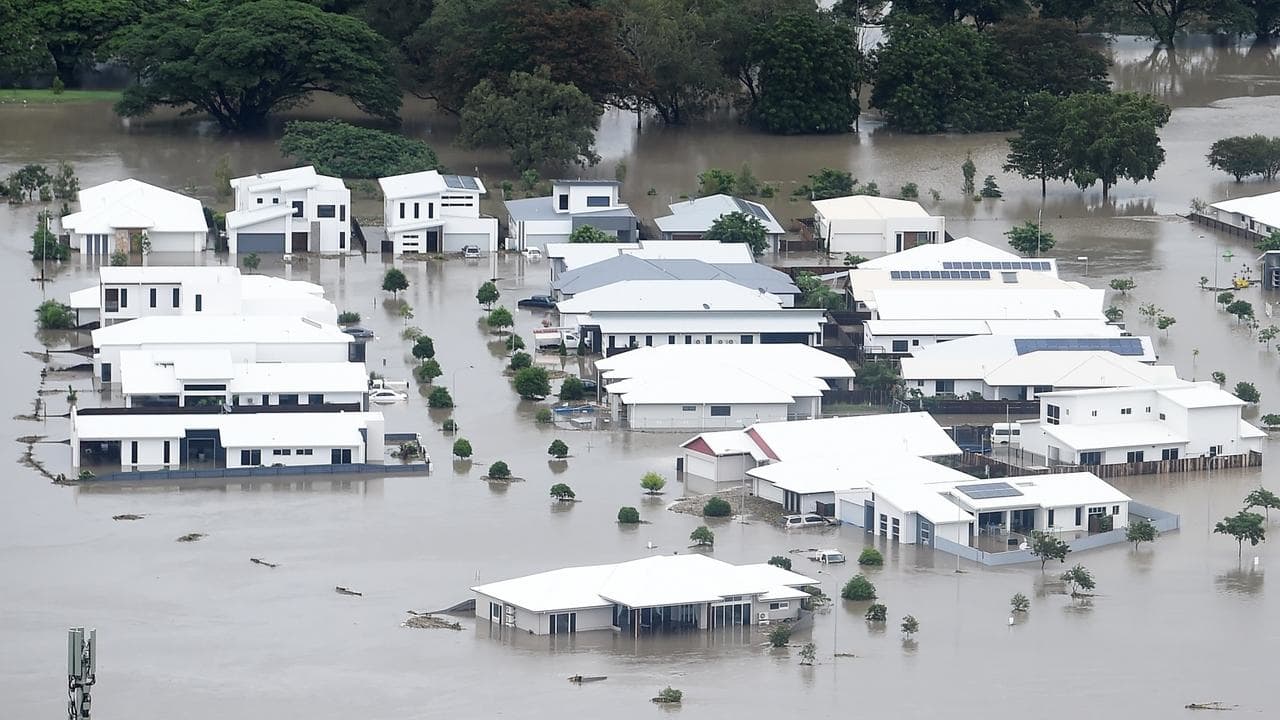
Many sprawling new housing developments consist of houses on concrete slabs, including in regional areas – Kingaroy, Atherton, Roma. Those houses are easy to air-condition, but people must miss having that extra space underneath; and sometimes new house slabs go under floods even before building begins.

In Townsville, since the construction of the Ross River Dam upstream, hundreds of new houses have been built on low land; and when extreme rainfall in early 2019 forced the release of water from the dam, many hundreds of them were flooded, to the despair of their owners.

New houses, Townsville, 2019 floods thenewdaily.com.au

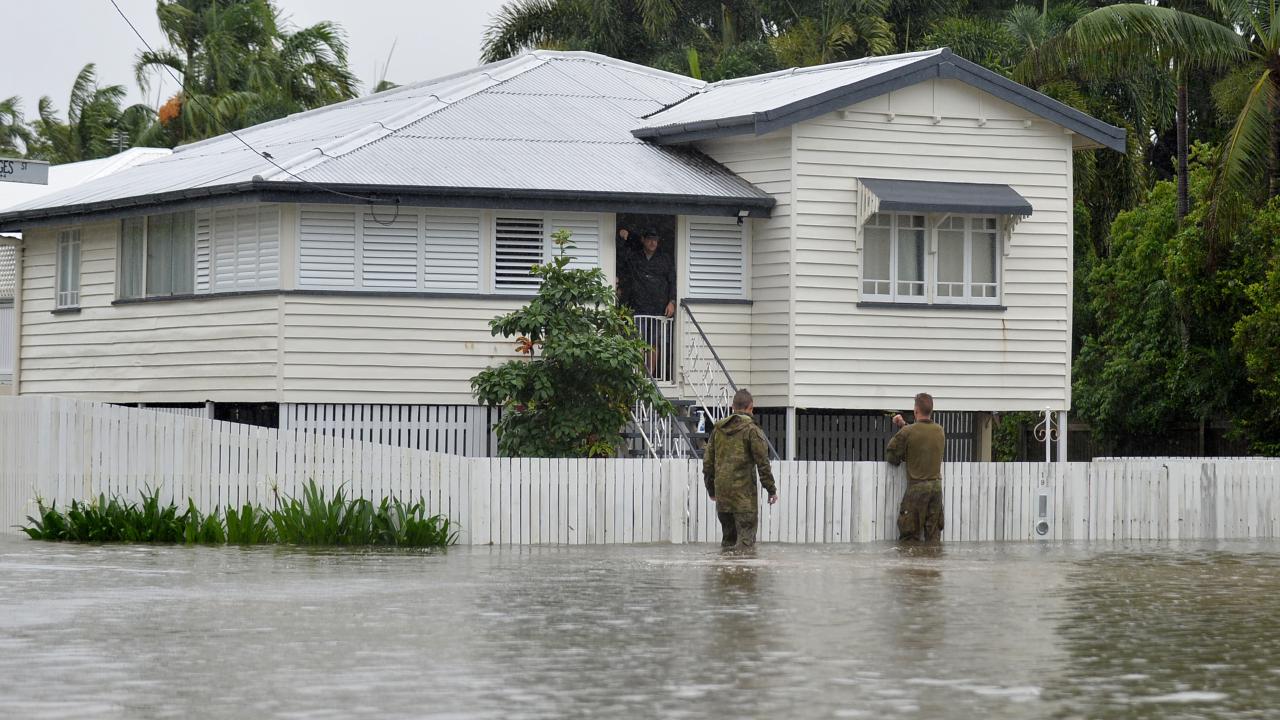
In the older houses on stumps anything under the house was wrecked, but the living areas were spared.

An older, high-set house, Townsville floods 2019 news-mail.com.au

Nowadays, people often decide to lift their houses up high and build in underneath. Perhaps you own an old house near the river and want to lift the living space above flood level, or you’ve bought a house in town and moved it out on to a block of land in the country. You’ll need to check the building regulations. If you want to build in under your house, you will need to allow 2100mm minimum ceiling height for utility rooms and hallways, and 2400mm for living spaces; and you’ll need to replace those old hardwood or concrete posts with steel.

Old houses that have been hoisted up high on steel posts look silly, like a long-legged lady with her skirts hitched up. That’s until they’ve been built in underneath, painted grey and white and turned into lush “Hamptons” style dwellings that look great on a real estate website.

A house at Tennyson, close to the flood-prone Brisbane River, lifted high and ready for renovation

I ask my grandson Jim if there is anything hazardous about being under his house, with its old concrete posts a little under regulation height. Maybe snakes or spiders?  

He puts his hand on a beam perfectly positioned for hitting your head.

“Just this,” he answers wryly.

Our Burketown house was a government-built dwelling, regulation height. Under the house was dirt and gravel, with a meat-ant nest in one corner, but there were clothes wires strung between the steel posts. Washing hung there at night would be dry by morning.

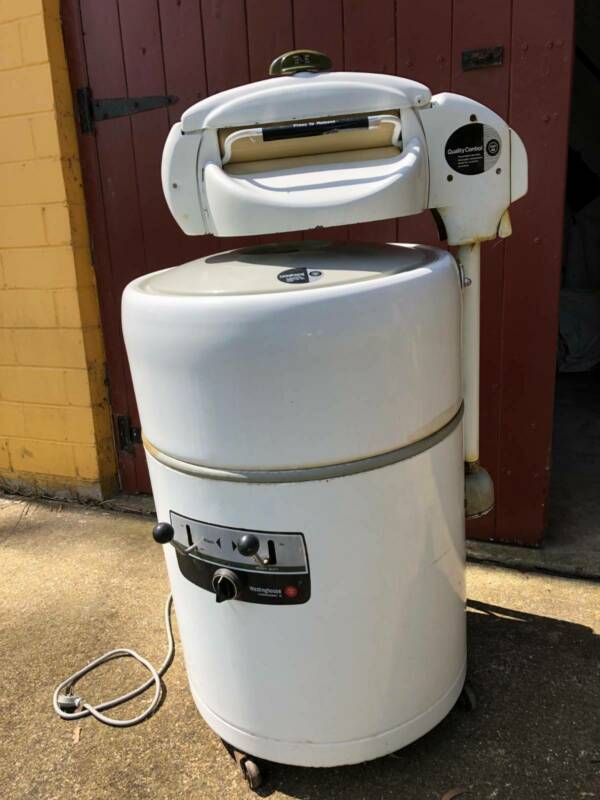
The concrete-floored laundry was down there, with concrete tubs and a gas-fired clothes boiler. It also held our 32-volt wringer-style washing machine, powered by a generator with storage batteries in a shed down the back.

A wringer-style washing machine, like ours

One night I left a load of sheets in the machine, soaking in the rinse water, and in the morning went down to put them through the wringer before hanging them out to dry.

During the night, a big green tree frog had hopped into the water. The first I knew of it was the sight and sound of that frog disappearing feet-first through the wringer rollers.

A frog being crushed in a wringer makes a horrible noise.

It had gone through before I had time to click the rollers apart.

I told Marg from down the road about it, sitting on the back steps with a mug of tea.

“That’s nothing,” said Marg, a typical frankly-spoken Gulf Country local.

“I heard of a woman who got her tits caught in a wringer.”

Not so difficult to imagine in the heat of the Tropics, where many a woman, reaching a certain age, decides that a bra is unnecessary torture. In the Gulf Country I heard so many bizarre and unbelievable stories that turned out to be true I decided I might as well just believe the lot; including this one.

Snakes, mozzies, cane toads, floods, concussion – and the wringer.

“Under the house” is a fine Queensland institution, but it has its hazards.


[1] “Brisbane”, Matthew Condon. 2010. UNSW Press, Sydney

Snake Stories

A red-bellied black snake was stretched along the pipe at the back of the laundry tubs, behind the taps. I could see its glossy colours.

I’d been washing up while little Matt played outside the back door. Hearing him bumping something down the three steps that led to the yard and the laundry shed of the old house, I dried my hands and went to see what he was up to.

Matt had dragged a chair over to the concrete laundry tubs and climbed up on it, and he was reaching out, laughing, to the snake.

snake red-bellied
Red-bellied black snake

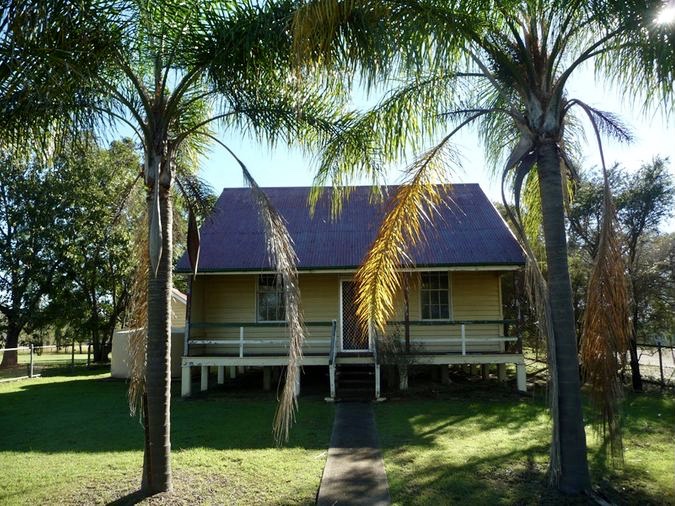
We were living in the school residence at Rosevale, south-west of Ipswich. Local farmers had warned us that the Rosevale valley was notorious for snakes – both brown and red-bellied black.

Trying not to startle either Matt or the snake, I called out, softly, “Come here, Matt. I’ve got a bikkie for you.”

He turned and climbed down. I grabbed him and ran back up the stairs and watched the snake slither away out of sight into the long grass behind the shed.

fullsizeoutput_453d
The old school residence, Rosevale. Laundry shed on left.

Another day Matt was playing in the yard with the cats. Suddenly they stood frozen, ears forward, staring at a patch of long grass, and the two deadly brown snakes sunning themselves there. Con ran to get the hoe.

Snakes are protected by law, and snake catchers will come to your house and take the snake away for release into the bush; but there are many who still consider that the only good snake is a dead snake, and delight in going into battle with sticks, hoes and mattocks or whatever is handy.

As children, my brothers and I entertained ourselves by leaving a rubber snake on the back landing where our father would be bound to find it.

He did. He grabbed a big stick and killed it.

Rubber snakes bounce in a most lifelike manner when hit with a stick. Dad heroically beat that rubber snake to death, and carefully lifted it on the stick to examine it. He said, “It’s a young brown. Dangerous things, those.” That was before he noticed us laughing.

He didn’t think it was funny.

I’ve played that trick on Con. He didn’t think it was funny either.

Most encounters with snakes happen in the bush. Walking down the zigzag track in the rainforest of the Palmerston, west of Innisfail, I met a large brown snake crossing the track. I met the same snake again on the next leg of the path down the hill. You don’t know how high you can jump until you almost put your foot on a snake.

All Australians have snake stories. They are a favourite topic of conversation, and we particularly love to tell them to foreigners. The English are best, and Americans. They respond with such horror.

An American visiting Brisbane asked a local, “Why are so many Brisbane house on stilts?”

“It’s because of the snakes. They can just slither straight under the house instead of coming inside.”

To white farmers and squatters of the nineteenth century, often living in primitive conditions in what was to them hostile bush, snakes were a deadly enemy. Henry Lawson wrote about it in his spare, atmospheric story “The Drover’s Wife”. Living in isolated bushland, alone with her young children in a slab hut, protected only by her kangaroo-dog Alligator, a woman sits up all night with the dog, her children bedded down on the rough kitchen table, waiting for a snake to re-emerge through cracks in the wall.

Alligator and the drover’s wife kill the snake between them, after a fierce struggle; and she lifts it on the point of her stick and throws it on the fire.

We have a love-hate relationship with snakes. They eat chooks, they kill dogs, and sometimes they kill people; but they’re part of our environment, a feature of legends and stories, from ancient Aboriginal culture to the Bible and modern literature and painting.

snake ayr
Giant carpet snake “Gubulla Munda”, Ayr, North Queensland

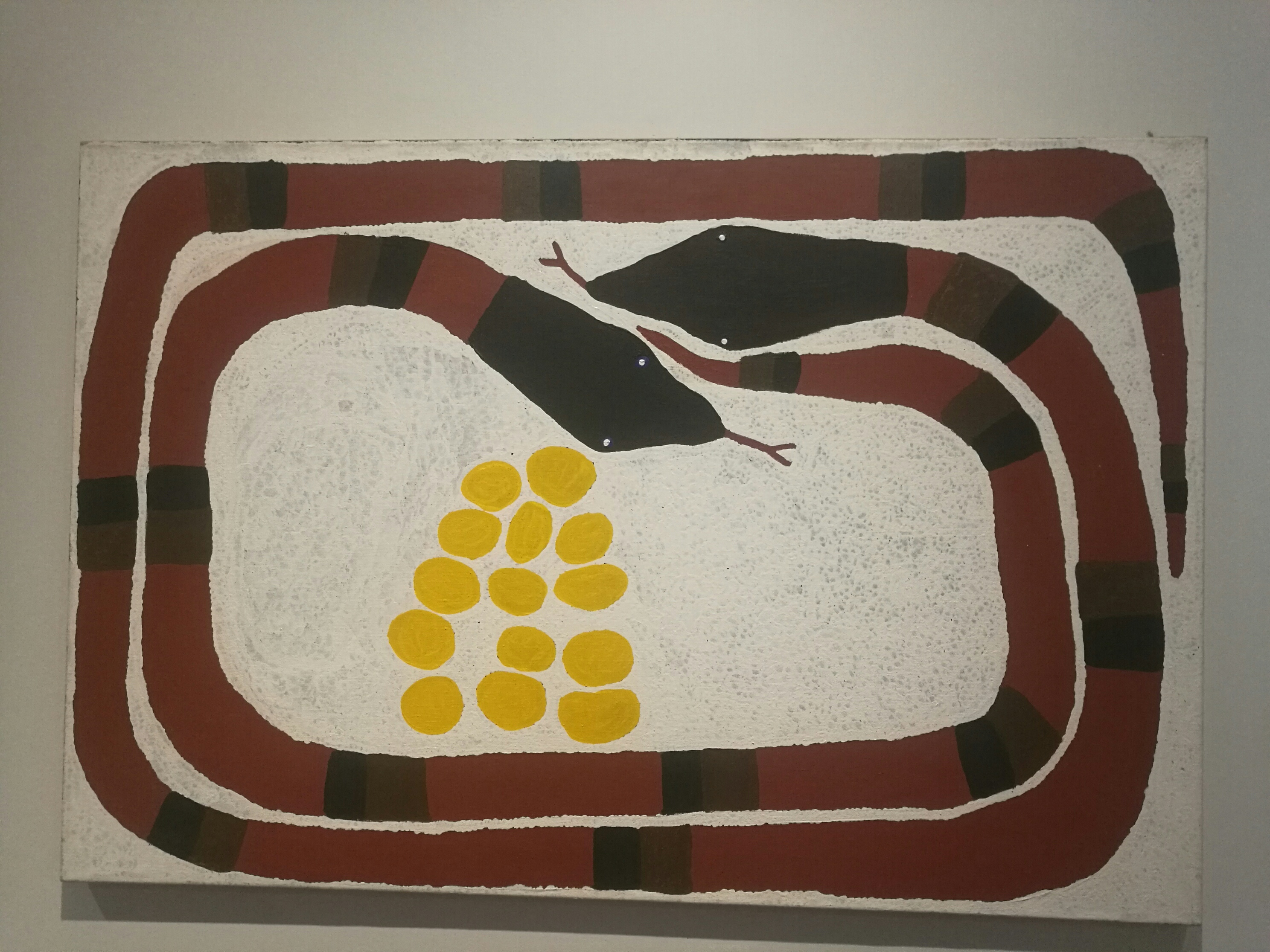
Rainbow serpent legends exist all over the country, and snakes are a common theme in Aboriginal art.

IMG_20190204_115256_resized_20190204_011100777
“Bloody Big Snake”, Shepparton Art Gallery, Victoria

Some say the rainbow serpent is a carpet snake: the “Kabul” that gives its name to Caboolture.

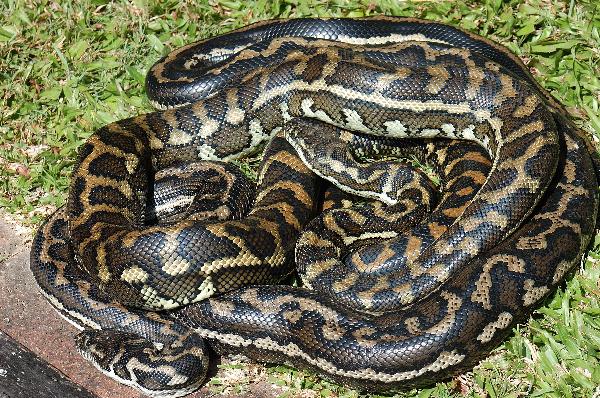
A carpet snake once ate a litter of kittens under our house at Yarrabah, then coiled up on the front door mat to sleep off the feed. There are carpet snakes living in my Brisbane back yard, too. I know when there’s one about by the screeching of noisy miner birds, harassing a snake on a tree branch or curled up behind a staghorn fern. They’re beautiful creatures, and we like to have them around.

snakes carpet
Carpet snake

It’s best not to walk out on our verandah at night without shoes, though. Carpet snakes like to slither across the boards and into the wattle tree. Sometimes we see a long, patterned snakeskin hanging across its branches.

No wonder birds don’t visit the bird bath I hung there.

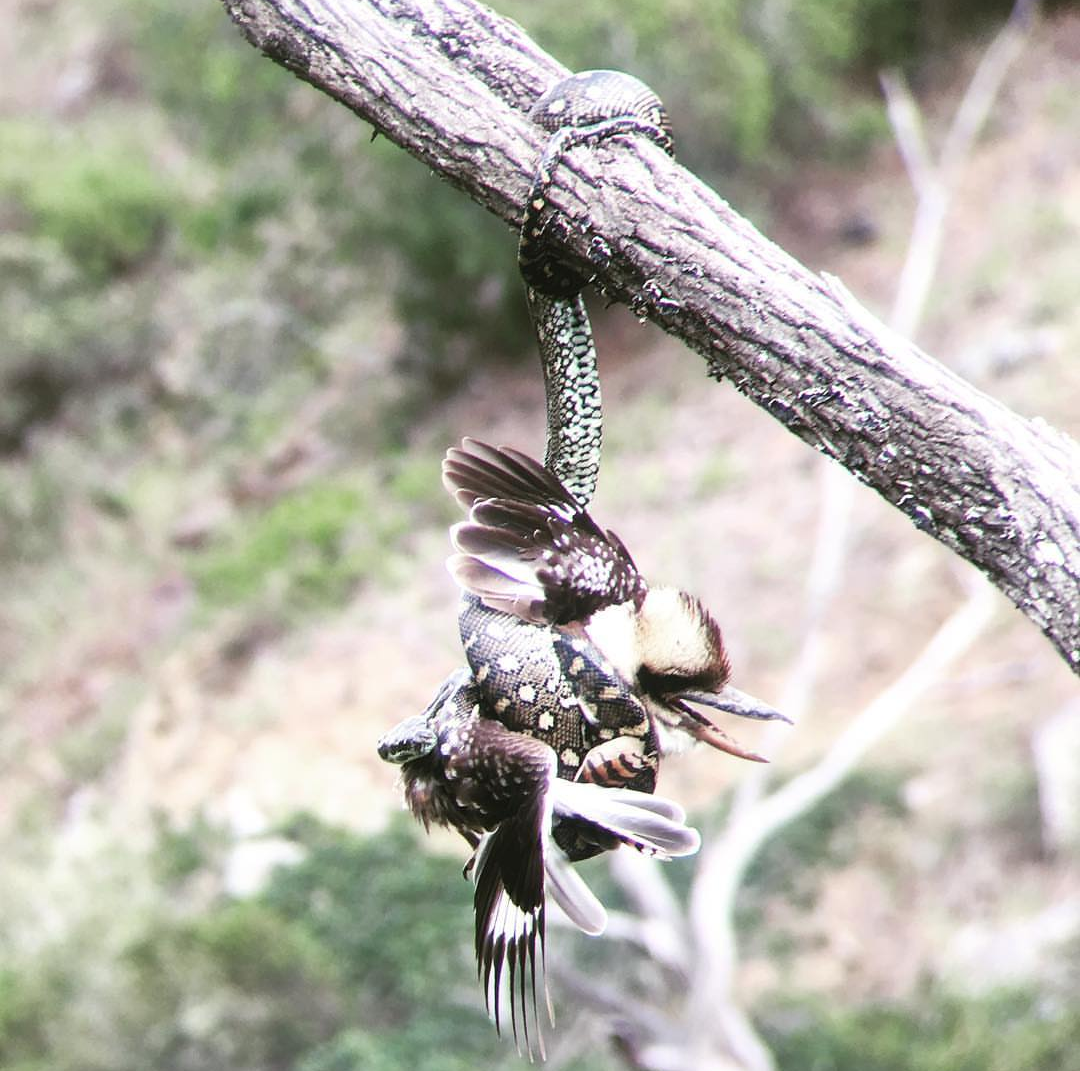
Not even a kookaburra can win against a carpet snake.

snake kookaburra

Blog at WordPress.com.

Up ↑