Speeding Tickets


We were on our way to Rockhampton in the old red Falcon. The Bruce Highway to Rocky was at last almost free of road works, after years of major upgrades. Constant speed limits still applied: one hundred kilometres per hour signs, then eighty, sixty, forty, and back up again. Construction had finished, but road marking was still going on, and so the speed zones were still in place.

North of Gympie, we failed to notice a forty kph sign. A police car appeared out of nowhere, and a handsome young policeman with a Welsh accent wrote Con a ticket for three points and two hundred and twenty dollars.

Considering that we are not tradies in a hurry, over-confident young drivers or hoons, Con and I have forfeited a lot of points over the years. We’ve both come close to losing our licenses at times, and it’s usually for going over the limit in a speed zone such as this.

We drove on, cautiously, and stopped for the night at Childers.

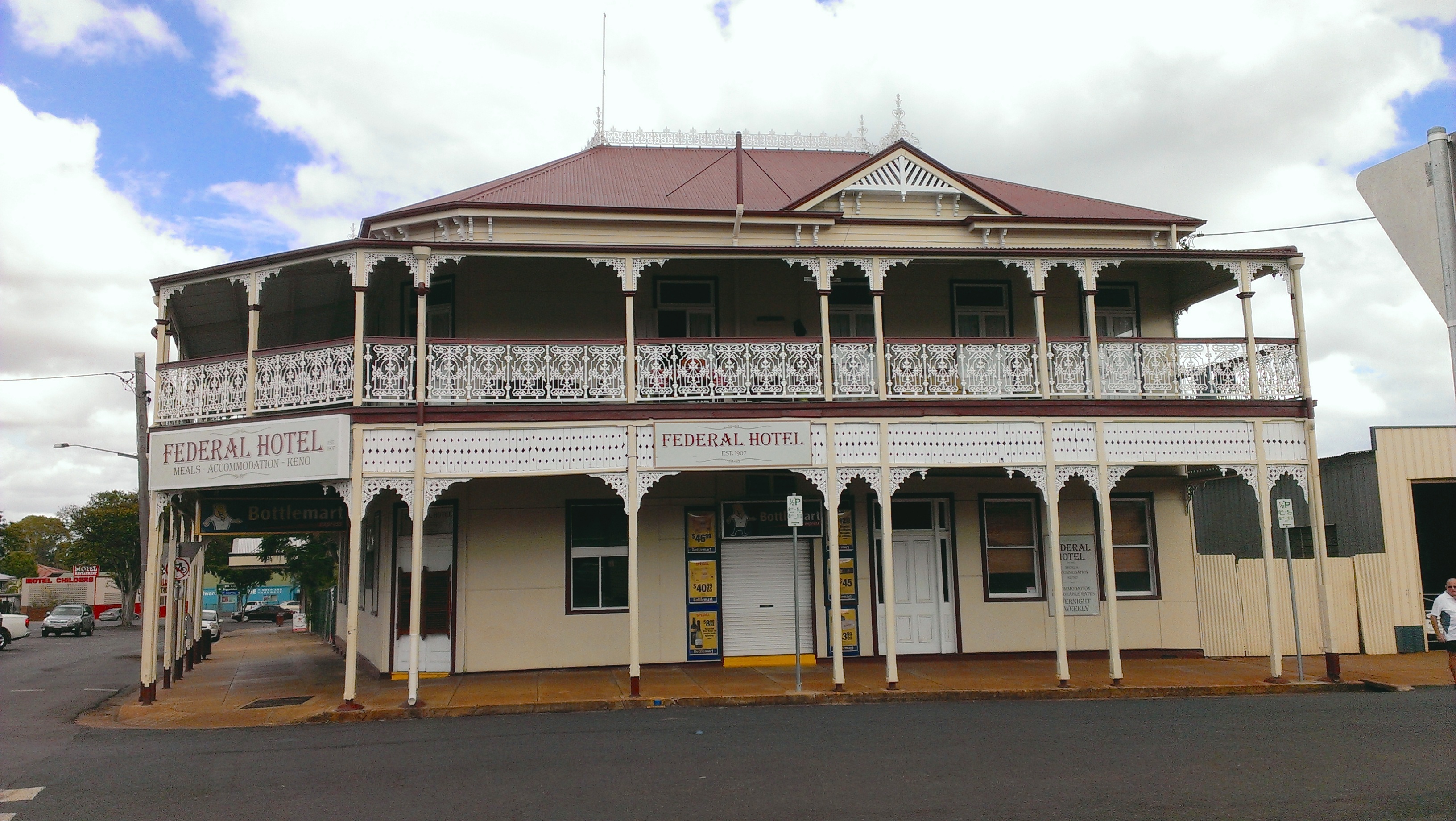
Childers has a quaint streetscape, with heritage buildings, trees, sculpture and mosaics, charming even with the Bruce Highway running through it. The traffic keeps the Childers pedestrians nimble, those pensioners, grey nomads, hippies and backpackers. We checked into a motel and dined at The Federal Hotel, a pretty, heritage listed building.

IMAG0560

Next morning, Con did the Walk of Shame, down to the Police Station to pay his speeding fine. He likes to get these things over with.

“Can you remember your first speeding fine?” I asked him, when we were back on the highway.

“Yes, I can!” he said, with bitterness. “It was May 1977, in the Golden Holden. Nothing but trouble, that car!”

The Golden Holden was the same colour as the foil in Con’s cigarette packets. He was a great smoker in those days.

“It was our first trip south in the new car – going to a wedding, do you remember?”

Over the years, Con and I have travelled Queensland, north to south or south to north, for four weddings and four funerals. We could make a movie of it.

“Between Marlborough and Yaamba, a policeman stepped out of the long grass and pulled me over. ‘You were clocked on radar at one hundred and thirty. That’s three points and one hundred and thirty dollars.’ Only one hundred and thirty dollars. Those were the days…

“Next ticket – 1998. First long trip in the Falcon, and I got caught twice. The first was at Kuttabul, north of Mackay – a speed camera. The other one was south of Rocky, on the way home. A cop in a patrol car waved his finger to me to stop. Three points each time!”

fullsizeoutput_2c75

“I remember. You were still down those six points when we started the round-Australia trip.”

“Yes. And just after we started, a few kilometres the other side of Cunningham’s Gap, I overtook a semi-trailer. I was going one hundred and twenty k’s when I came back over to the left. There was a white police van parked beside the road, and I knew I was done again.”

That would have meant that Con was nine points down before we’d even left the state. One more ticket, and I would have had to drive the whole way around Australia, so I said I was driving at the time, and took the points myself.

Back then Con did most of the long-distance driving because he has always been better at overtaking than me. I remember with pleasure, though, that I drove the straight stretch on the Nullarbor Plain, one hundred and forty-six kilometres without a curve; the longest straight stretch of sealed road in the country.

“Do you think I should overtake this truck?” I’d asked, about halfway along.

“If you can’t overtake here,” Con had responded dryly, “you won’t overtake anywhere.”

Now, on the way to Rockhampton, he continued to list his speeding tickets.

“It’s 2001, I’m going to Gympie for Uncle Frank’s funeral, and I get pinged for doing eighty-two in the eighty zone. I lost a point, and they sent me a form suggesting a driving counseling course. Ha!”

I’m pleased I didn’t get spotted last year, overtaking a semitrailer on the Marlborough stretch at one hundred and forty. No overtaking lanes on the Marlborough Stretch. Or the time I accidently set the cruise control to one hundred and twenty instead of one hundred and ten. That was a quick trip.


Kerbside Pickup


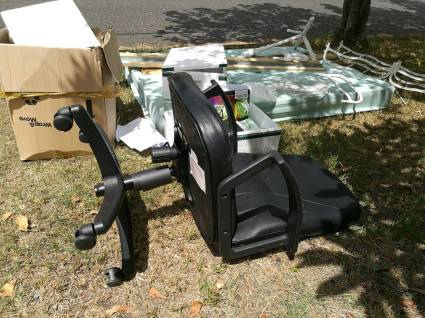
The office chairs look miserable. Their gas has gone. They’ve let their owners down, and they’ve been carted out here and left on the kerbside in the rain.

17039169_593389797513642_3683547453563264848_o

First thing in the morning come utes and trucks, driving slowly down every street, studying the piles of junk. They pick up all sorts of things: furniture, steel, building materials, fridges, swing sets.

During the day, the occasional car drives past, does a u-turn and comes back for a closer look. A woman gets out and glances around to see if anyone is watching, grabs a lamp stand, stows it in the boot and drives off.

It’s a popular neighbourhood sport, checking out the piles of stuff. If you see something you like, you’d better grab it. The good stuff goes fast.

No one takes the office chairs.

At night, people come with torches and go through the piles secretively, as though they’re doing something shameful. In fact, they’re taking part in a recycling activity that is both useful and entertaining.

Someone came by night to my kerbside pile and added their own rubbish to mine. What was that about? I don’t want their broken gym equipment and bags of old clothes mixing with my nice collection of discarded doors, broken fans and plant pots.

Not many huge, old-style television sets this year, for a change. Everyone must have finished upgrading to flat screen.

Barbecues, broken plastic toys, cardboard boxes.  Most hopeless are the worn-out mattresses and dodgy-looking couches. No one ever takes them up. Not even by stealth, in the dead of night.


IMG_20180313_114942_resized_20180313_055002737

Along with the office chairs, they wait in the rain for the garbage truck.

Brisbane Gardens


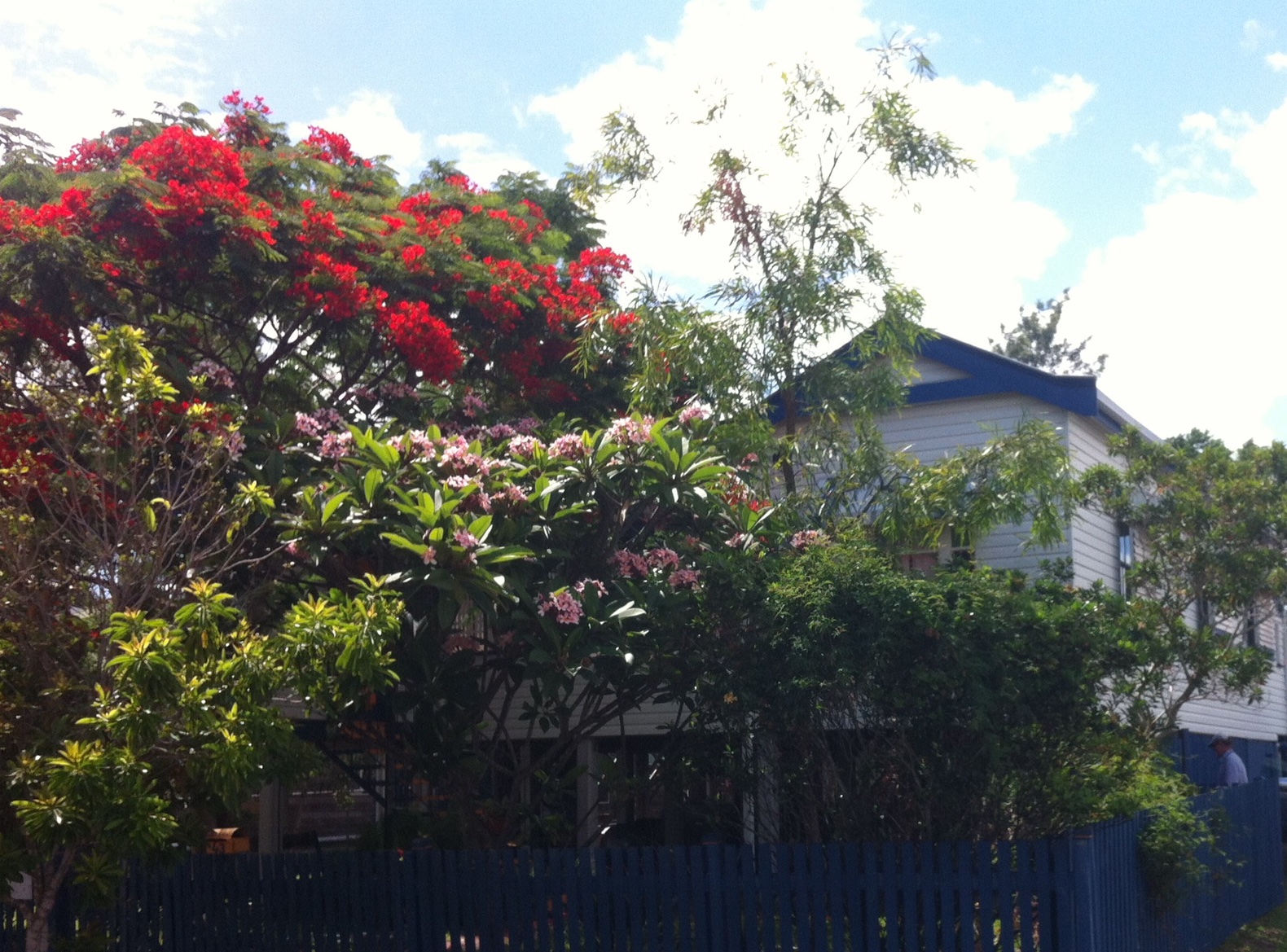
My neighbour has a Bali garden: outdoor rooms, statues, tropical vegetation.

Across the road, there’s a bare front yard: grass, a couple of shrubs. The old bloke living there digs weeds out of his lawn with a dinner fork, and he hates trees.

Lots of people hate trees. Dirty, dangerous things, trees.

Version 2

Up the street, there’s a place that’s been landscaped in the popular Tuscan style: clipped shrubs, citrus in pots, a lavender hedge of sorts. Lavender doesn’t flourish in a sub-tropical climate.

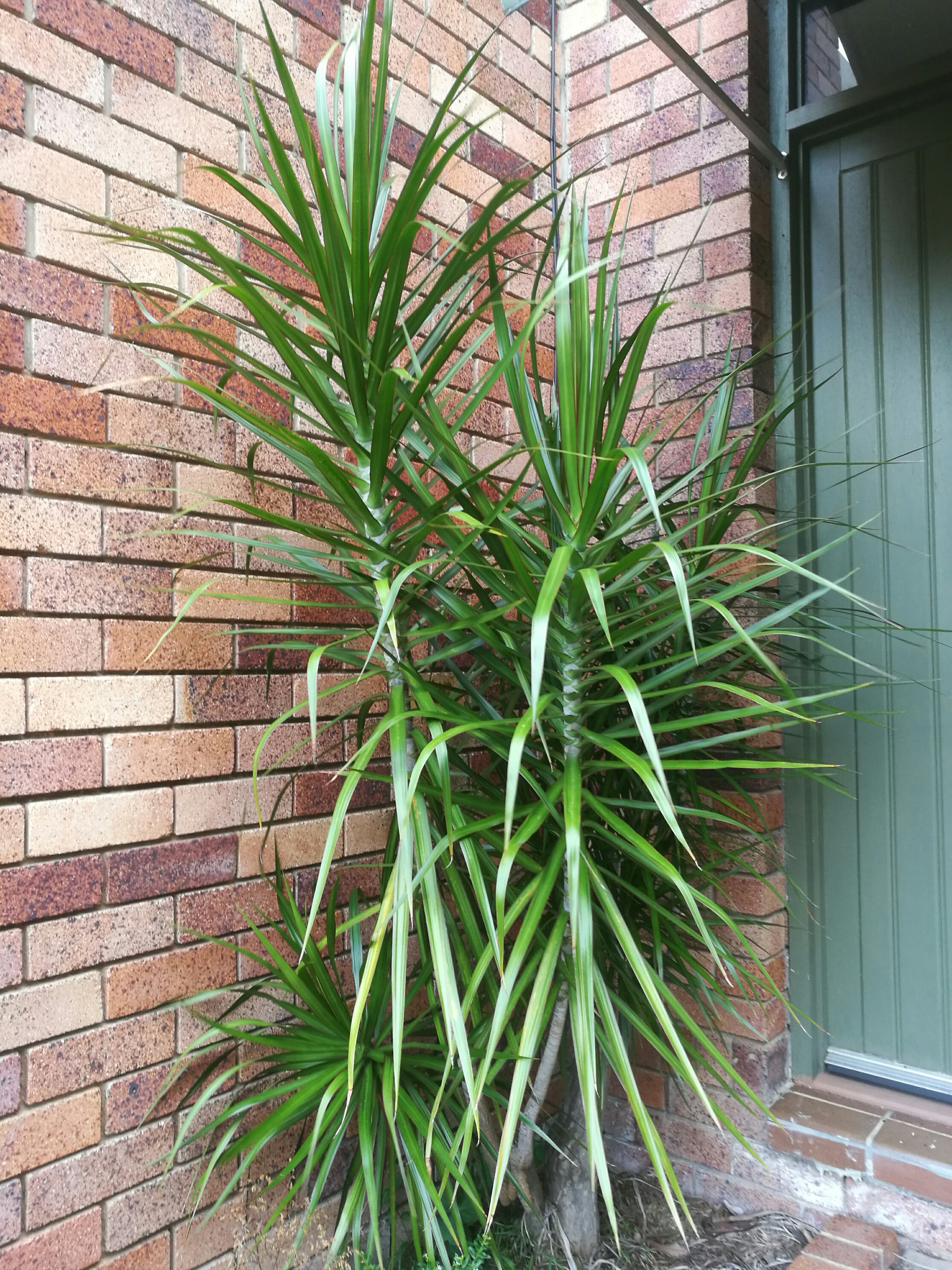
A new, box-shaped house in the next street has geometrical-leafed plants to suit its style: pointed mother-in-law’s tongues and spiky yukka. Is there any imported plant more ubiquitous than the yukka? It’s not only because it suits the geometrical look; it’s also because yukka thrives without any attention in dry conditions and severe heat. It’s the only plant that survives in the blazing sunlight reflected off brickwork outside my eastward-facing front door.

IMG_20180327_151010_resized_20180327_031121700

Myself, I have a mainly native garden, designed to attract birds and butterflies, with birdbaths and local plants: callistemon, wattle, banksia, native groundcovers. I live in a 1970s house, and this was the style of the time.


Gardens vary as fashions change. Gladioli were plants of the 1950s, when the post-war suburban delight in all things prosperous and showy brought about a flourishing on speciality plant and flower breeding.

I’ve never liked gladioli, with their lack of scent and lurid colouring. At a Barry Humphries show in the late 1960s, Edna Everage threw plastic gladioli into the audience and told us to hold them erect and make them quiver. They were for her a symbol of “refined” suburbia.

Before that period, during the Great Depression and the War and earlier, what I think of as “cuttings” gardens flourished in the spreading urban areas.  Up and down any street, the same varieties of geranium, coleus, bougainvillea, bromeliad and frangipani demonstrated that people were sharing their plants, not buying them in nurseries the way we do today. Garden design was an economical, amateur matter. Roma Street Parklands uses many of the plant types used in those old-fashioned Brisbane gardens.

IMG_6563

These days, busy modern home-owners like low-maintenance, landscape-designed gardens. Lawn is of a carefully-chosen, manageable variety, and nothing gets overgrown, which is a pity.

I walk the streets of Brisbane every week of the year, and what delights me most is to see a garden with a gnarled old frangipani tree dropping fragrant blooms over a battered picket fence, or purple bougainvillea scrambling high into a backyard tree. You can keep your tidy yukkas and clipped hedges. And especially, you can keep your mother-in-law’s tongues. I’m a mother-in-law, and I don’t like the implication.

Sugar Town


Narrow country roads, sugar cane fields, flecks of soot in the air. This was Nambour, in the Sunshine Coast Hinterland: my childhood home.

Now the sugar cane has gone from around here, replaced by housing estates and turf farms.

Back then, farmers burned the cane before harvesting. The cane fires blazed in the still evening air, spreading across the paddocks, and flecks of black fell out of the sky night and day. In crushing season, the smell of sugar filled the town, and narrow-gauge, coal-burning cane tram engines rumbled across the main street on their way out to the fields and back, whistles blowing in warning. Lengths of cane lay across long lines of flat cars towed to the mill yard, with a plume of purple cane flower sticking up out of the last truck as a flag.

fullsizeoutput_224a

We kids would pick up half-burned lengths of cane fallen from the trucks, and bend and crack them until the sugar juice ran out into our mouths and down our chins.

In Queensland, only the Railway Department call their rolling stock trains. The narrow-gauge sugar mill engines and trucks are referred to as trams. In North Queensland, brightly-painted, chunky diesel locomotives, known as locos, still drag long rows of cane bins to the mills, crossing the highway while tourists take photos.

Until the twenty-first century, sugar mills seemed to Queenslanders to be as permanent as mountains, indicators of employment and prosperity. Now, in Babinda, Far North Queensland, where until recent years a steam-belching mill stood alongside the Bruce Highway, there is nothing to see but long grass and concrete foundations; and at Mourilyan, south of Innisfail, only the old mill sheds still stand, roosting spaces for Indian mynah birds.

Moreton Central Sugar Mill in Nambour seemed enormous to us kids, with its chimneys, high corrugated iron roofs, towers and sheds, and the unloading deck for the cane trucks. We were taken on tours of its mysterious and noisy workings. I looked with horrid fascination into the pit where the trucks rolled over and tipped the cane into devouring steel crushers. The pleasant scent of sugar became a foul stink inside the mill.

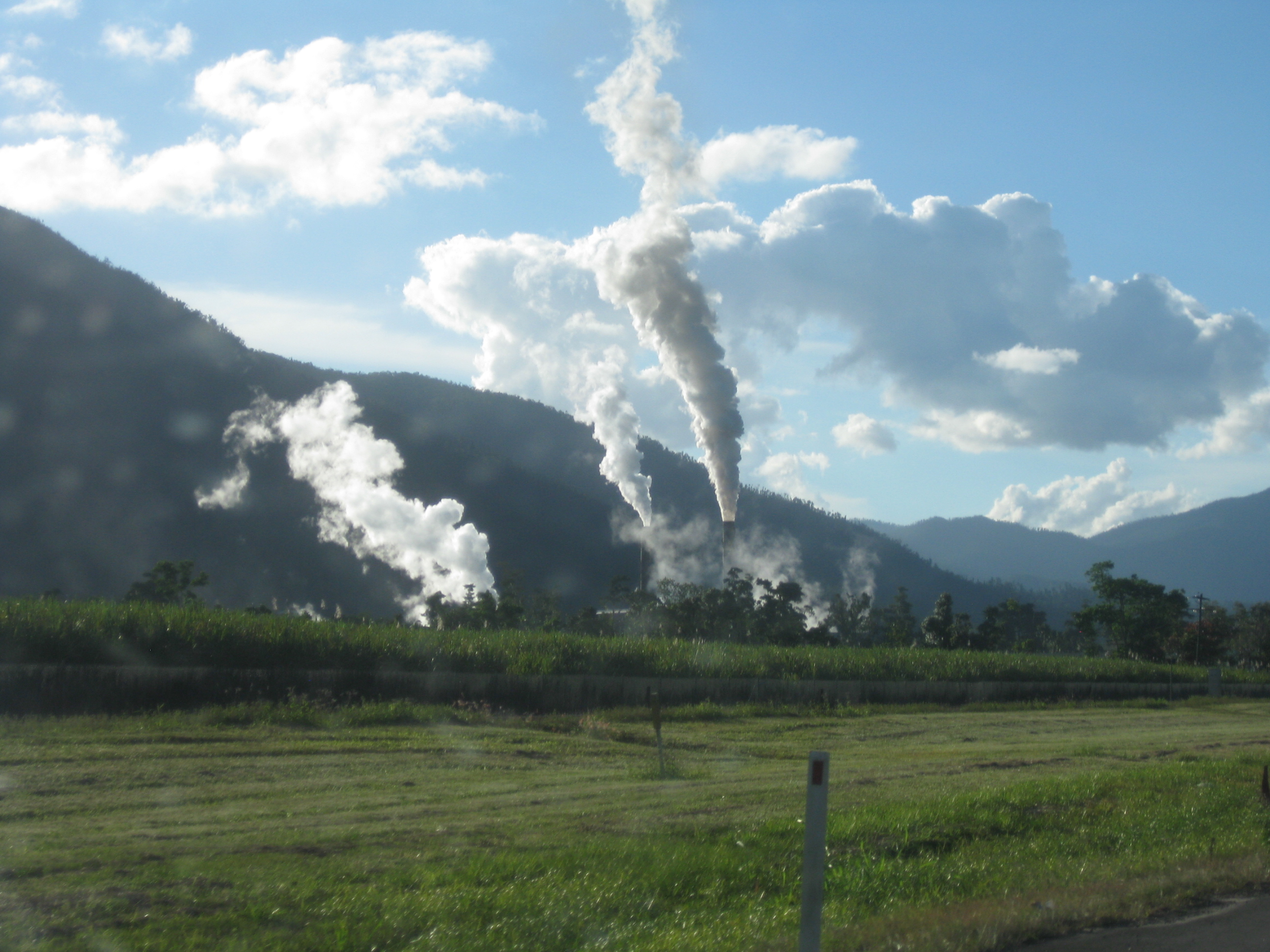
There’s something special about sugar towns, though: green and tropical, with palms and fig trees, the impressive mill manager’s house, and tram lines running along the street to the great mill buildings. It’s a nostalgic pleasure for me when we drive north towards Tully in crushing season and see from a distance the clouds of steam billowing from the chimneys of its busy mill, white against the forest green of the mountains behind.

IMG_5341

I recently drove down to see South Queensland’s only remaining sugar mill, the Rocky Point mill near the small bayside town of Jacob’s Well, halfway between Brisbane and the Gold Coast. I’d never been there before, but it was instantly familiar. Old trees and palms, a magnificent house, and the looming mill with its tram lines and chimneys.

Moreton Central stayed in operation until 2003, when the last of the locos pulled a train of empty bins into the mill yard. The Sunshine Coast street directory no longer shows the cane tramlines as it used to do: North Branch, Maroochy, Petrie Creek. The locos with their familiar, local names – Petrie, Dunethin, Coolum – have gone; and Nambour has lost something picturesque, as well as its long-time economic heart.

A few years ago, Con and I drove back from the far north in rain all the way down the Bruce Highway. Just before dark, rather than face the city peak hour in the wet, we turned off the motorway and checked into a motel in Nambour for the night.

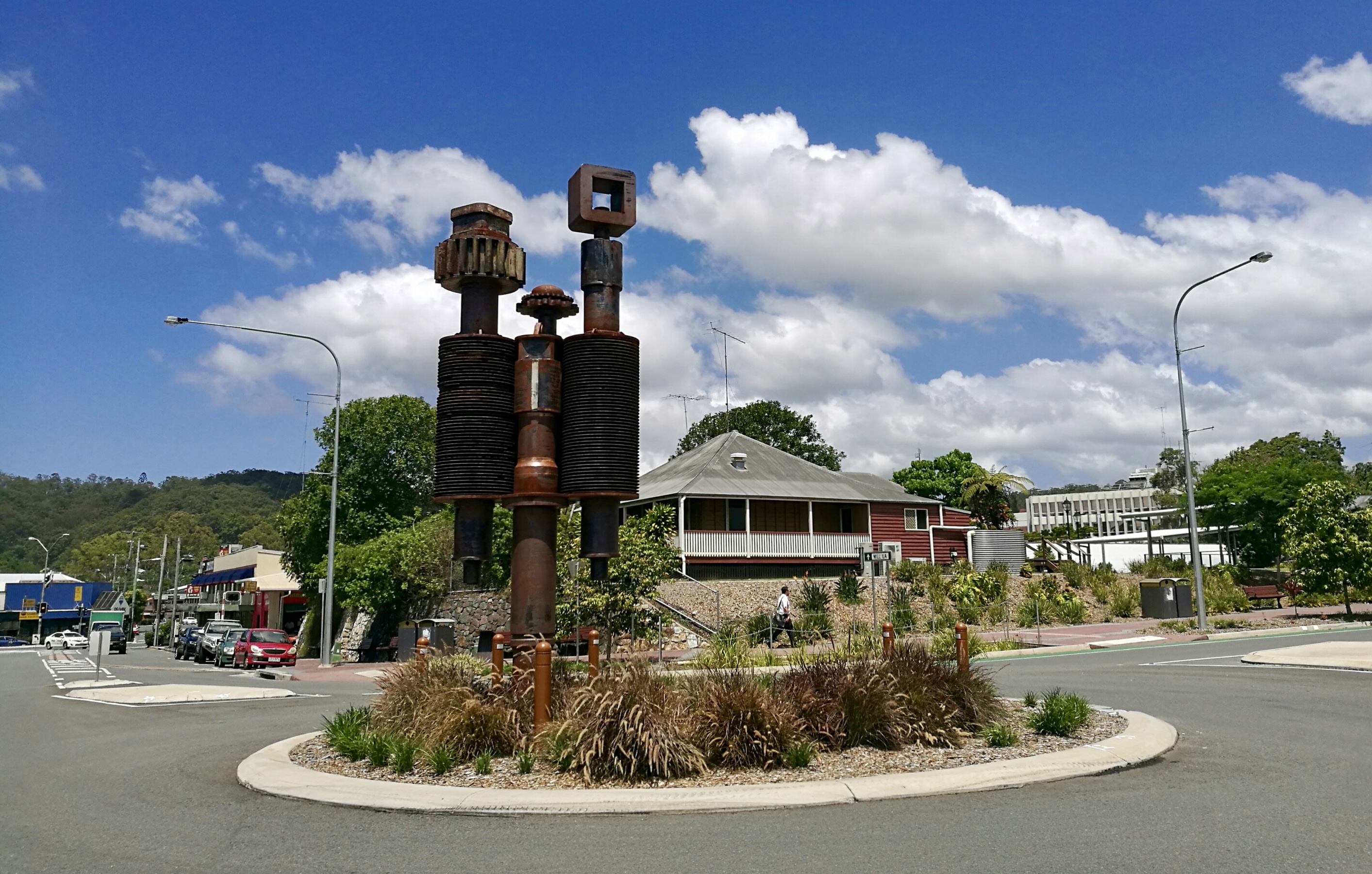
When the rain eased off, I walked up Mill Street, and found that the sugar mill was gone. Demolished. There is a Coles Supermarket on the site now. Only the cane tram tracks and traffic lights remain, down Howard Street, as a reminder. Coles has bought the old mill administration buildings and restored them; and those once-terrifying steel crushers have been welded into an attractive industrial sculpture, standing in the middle of the garden roundabout in Mill Street. Nambour has moved on.

fullsizeoutput_2117

Relay Excitement

On Saturday, the Commonwealth Games Baton Relay is coming to a park near our Brisbane home, just four days before the Opening Ceremony on the Gold Coast. This relay is the longest in history, covering two hundred and thirty thousand kilometres and visiting every Commonwealth nation and territory. That’s quite something.

We went to the 1982 Commonwealth Games, held in Brisbane. It was wonderful. We were all excited.com games brisbane

That was when people first began to talk about Brisbane “coming of age”. They talked about it again in 1988, during Expo. In 2018 we must have really come of age at last, because no one talks about it anymore. (Now we even have an international TV series located in Brisbane, “Harrow”. It’s fun to do what people in New York and London have always been able to do – play “Spot the location”.)

I’ve been reading up on the 2018 Baton Relay. It’s traveling all over Queensland, and most of the way it goes by air: Cooktown one day, Mount Isa the next.

Each Baton bearer carries the torch for two hundred metres. They don’t have to be sports people. The list of criteria includes words like aspire, inspire, contribute and achieve. In each town there is a celebration when the baton arrives. A lovely thing to think about – all those parties. Yesterday Augathella, today Barcaldine, next week up north to Yarrabah and Ingham and Emerald. I hope Ingham has dried out before then.

The first big relay in Australia was the 1956 Olympic Torch Relay to Melbourne. The Relay began in Cairns on the ninth of November, when the flame was flown in from Greece, and it caused excitement all down the east coast, arriving right on time in Melbourne, thirteen days later. The torch bearers endured conditions unthinkable today.

The most testing sections of the Relay were in Queensland, the worst of it during a rainy day and night between Mackay and Rockhampton.

The road trip to Cairns to set up the Relay was an epic in itself, beginning in Melbourne nineteen days earlier, the convoy of army trucks and Holdens manned largely by university students who’d never been to Queensland. I was astonished, when reading about it, that when the convoy headed north from Rockhampton, it took the coastal route via Saint Lawrence, following the train line. Now the main highway, back then this route was a dreadful track of creek crossings, potholes, swamps and cattle grids: wild country to the Melbournites in the convoy.

In the end, the convoy had to be loaded on to a train to make the journey to Sarina and rejoin the Bruce Highway.

In the 1956 Relay, the Torch was carried all the way on foot, continuously, regardless of weather or time of day or night. To qualify, the torch bearers had to be able to run a mile in under seven minutes. Men only. Runners were dropped off at marker pegs a mile apart, to wait, unlit torch in hand, for the previous runner to arrive. When they’d run their section they would pass the torch in to the support truck and be tossed a commemorative medal before the truck disappeared on its way.

From Mackay to Rockhampton, the Relay followed the Bruce Highway, much of it gravel road back then, and wisely avoided the Saint Lawrence road. Bringing the torch through was not easy, all the same. It was dark and raining. Each young runner in his white uniform would wait by his marker for the previous runner to emerge from the gloom, torch in hand, to pass on the flame.bowen ol torch

The torch weighed one point eight kilograms, and it felt very heavy after a mile held at arm’s length. If the runners held it too close to their bodies, sparks blew in their faces.

People came out with hot soup for the runners down that dark, muddy road and cheered them on. Souvenir hunters followed after the support trucks, pulling up the markers, although this was banned. There must still be relay markers in sheds and cupboards all down the coast. Family members clearing out Dad’s or Granddad’s bits and pieces may puzzle over what they could be.

For the 2000 Olympics in Sydney, the Torch Relay was transported by camel, Flying Doctor plane, and underwater on the Great Barrier Reef. It was a far slicker operation than that journey down through Queensland in 1956. Rutted, muddy roads, encounters with snakes and dogs, rainy nights, leeches, mosquitoes: those Melbourne University students went home with enough stories of the wild north to create legends in the south.

This year’s Commonwealth Games Baton Relay is much easier for its Baton bearers. It is a masterpiece of smooth organization, and it has brought pleasure and excitement to people across the world on its journey to Queensland and the Gold Coast. Not so much adventure, though!

Photo “1956 Melbourne Olympic Torch carried through a street in Bowen Qld” – from Picture Queensland, State Library of Queensland: digital image collection

Cherries to North Queensland

I once posted a coconut. I wrote the address on its husk with a black marker, took it to the post office, stuck on the stamps and off it went.

I’d picked up the coconut at Etty Bay, near Innisfail, where cassowaries stroll, rainforest trees shade the beach and coconuts fall on the sand. To me, on my first visit to Far North Queensland, it was like a scene from a tropical fantasy.

I sent the coconut to my younger brother, Mike, in Stanthorpe. No coconuts there.

It’s fascinating to see fruit growing when until then we’ve only seen it in shops. German tourists, touring the Sunshine Coast hinterland, exclaim in wonder at pineapples plants in a field. “So that’s how they grow!” they say in amazement.

As a young man, Con was transferred from Thursday Island, off the northerly tip of Queensland, to Stanthorpe, a half hour’s drive from the New South Wales border: over three thousand kilometres away, into a very different climate. For the first time, he was living in an area producing not bananas, papaws and sugar cane but stone fruit, apples and grapes – all of which lose their leaves in autumn and lie dormant through the winter.

When winter came, he caused loud laughter in the pub when he said, “All the peach trees are dead! What a disaster for the farmers!”

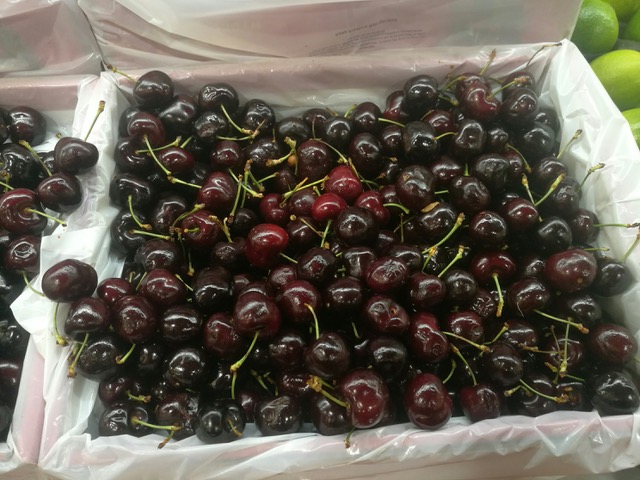
A couple of years ago, we bought a box of cherries to take with us to Far North Queensland at Christmas – expensive, Southern New South Wales cherries, fat and dark, bought at a fancy Brisbane fruit shop.

Fruit cherries 2

“There are cherries in North Queensland shops, you know,” said Con.

I do know that. You can buy almost any fruit anywhere in Australia these days: avocadoes in Kalgoorlie, blueberries in Cairns. But still northerners send cartons of mangoes to family in the south, and south Queenslanders take Granite Belt fruit to relations in the north. It’s a tradition my friend Carol says she could do without, as she drives across Brisbane to collect a box of mangoes sent down on the train by her aunt in Ayr.

“What am I going to do with a whole box of mangoes, anyway? If I want to eat a mango I can buy it at my local fruit shop!”

For this trip to the north, I’d decided to avoid the busy Bruce Highway. We’d drive west to Toowoomba, then head north to Yarraman to join the D’Aguilar Highway. We’d take the Burnett Highway to Ban Ban Springs, then turn east, eventually reaching the Bruce Highway and turning north to spend the night at Gin Gin.

These minor highways are good, sealed roads, with beautiful bush scenery along the way, blue ranges in the distance and very little traffic.

It was a humid day, and by the time we left home we were irritable. “Why can we never, ever get in the car without having to go back for something?” Con grumbled as I headed back inside for my sunglasses, left on the kitchen table.

“Did you check that the iron is turned off?” he said as I got back in the car.

“No, I didn’t. You go and check if you’re so worried.”

It wasn’t until we were driving along the Gatton bypass, just thirty kilometres from Toowoomba, that I remembered something else we’ve forgotten.

“The cherries! Oh, no! We left them at home in the fridge!”

“Bugger it!” said Con. “That’s really annoying!”

He thinks a bit. “Do you want to go back?”

“No. That would be just too silly.”

The cherries would be rotten by the time we got home, in three weeks’ time. We’d planned to give some to Con’s brother and sister-in-law, at Balgal Beach, north of Townsville. The rest were for our son Joe, his partner Izzy and little Danny, our grandson, who live near Innisfail.

Fifteen minutes later we were still heading west, and still thinking about the cherries. They’d haunt us all the way, I knew. I made a suggestion.

“Let’s keep going to Toowoomba, have a coffee, then drive back to Brisbane, collect the cherries and head directly north on the Bruce Highway. We’ll still get to Gin Gin tonight. And while we’re home we can return that overdue library book I forgot.”

That’s what we did.

We were in Toowoomba by ten o’clock, back in Brisbane by midday, and by half past twelve we were on Highway One heading north. The cherries were in the boot, an old towel over them to keep them cool.

Two days later, at Balgal Beach, in a house noisy with the sound of warm tropical rain on the roof, we filled a bowl with their lush, dark sweetness and put it on the kitchen table, where anyone passing could take one.

At Joe and Izzie’s place, passionfruit were hanging heavy on every vine, and roadside stalls were loaded high with watermelons; but the cherries were welcomed with delight, and Danny boy sat in the empty cherry box and grinned, his chin red with cherry juice.

Miles to Go

The Grand View Hotel at Cleveland is a fine pub, Queensland’s oldest licensed hotel. We ran trivia nights, Con and I, at the Grand View.

One evening before the quiz began we came across several blokes in the bar, wearing high visibility gear, enjoying an after-work drink. Finding that we were there to run the trivia, one of them said to me, “So you think you know a lot, do you?”

“I know everything,” I replied. (It’s true. If you’re the one who makes up the questions, you do know all the answers.)

“Oh, really?” he scoffed. “What’s my favourite colour, then?”

“Maroon”, I answered, and he had to concede.

Maroon is the favourite colour for most blokes you’ll meet after work in a Queensland pub.

Con likes maroon, too. Our present car is maroon, and so were the two that went before it. We have covered many kilometres in red cars.

forester wattleWe composed our pub trivia questions ourselves, and they often had a local slant.

“Thenus orientalis is a famous product of Moreton Bay and surrounding waters. What is it?”

Moreton Bay bug. Easy when you know.

“In Longreach the streets are named after trees, and in Barcaldine they’re named after birds. True or false?”

False – it’s the other way around. As the town that pioneered artesian water supply, Barcaldine was proud to call itself the Garden City of the West, and named its streets after trees.

A classic Longreach joke is that a new police officer in town arrested a drunk in Cassowary Street. He couldn’t spell it, so he took him over to Duck Street to charge him.

I enjoyed thinking up questions with a Queensland flavour. Queensland is my home: the Glasshouse Mountains, red dirt and mango sap, hot sand, soldier crabs and mangrove pencils; long, straight roads, rainbow lorikeets, wattle. Floods, droughts, and perfect spring days.

IMG_20180120_180203_resized_20180120_090804411Australians are great travellers. For all of us, journeys lie in the not-too-distant past.

Three branches of my family came here from Britain in the 1860s, when the new state of Queensland was recruiting migrants. They came to Queensland for opportunities denied them at home. And for the climate.

A fourth branch of my family emigrated from Germany in 1838. They were missionaries, come to minister to Aborigines in the Brisbane area.

They all made long sea voyages and they went on travelling once they got here. My great-great-grandfather, within days of arriving in the country, went by river to Ipswich and walked from there, up Cunningham’s Gap, to take up a position in Warwick.

His son, in turn, took his young family, by steamer and goods train, from Brisbane to Barcaldine, where he had been transferred as bank manager.

My father’s travelling began with family car trips in the 1920s and 1930s. A few years later, Dad was on a trip of another kind – up through Malaya as a Prisoner of War, travelling in railway rice wagons, to work on the Thai-Burma railway.

I was born on the Sunshine Coast, but Con and I were married in Stanthorpe, where we were both working in the local state school. Born in Innisfail, until his transfer to Stanthorpe he’d lived in Far North Queensland all his life. As my children themselves have done, I married someone whose hometown was far away. We’d be doing plenty of travelling.

Together we’ve lived in the Darling Downs and the Granite Belt, the Ipswich area, Gulf Country, Cairns region and Townsville. I’ve explored the state by road, rail and air. I’ve taken the Sunlander to Cairns, the Inlander to Mount Isa and the Spirit of the Outback on its twenty-four hour journey from Longreach to Brisbane. I’ve flown over Cape York in a small plane, I’ve done the Gulf circuit with Bush Pilots, bumping over rough station landing strips and dodging cattle to drop off mail and supplies, and I’ve twice been to Mount Isa with the Flying Doctor. It hasn’t always been easy, or pleasant; but it has been magnificent.

Many Australians have been to Paris, New York or Bali, but not nearly as many have been to Cooktown, Burketown or Ravenswood. As well as watching the sun set over Manhattan, sending a pink glow down its canyons of glass, I’ve seen soft evening light fall across the tidal flats of the Gulf of Carpentaria. I’ve flown across the winter darkness of northern Siberia, with the sun low in the southern sky all day; but I’ve also admired the dawn light shining through steam rising from a hot bore drain at Cunnamulla.

And still, I look at a map of Queensland and think about all the roads I haven’t yet been down, all the places I have yet to see. Quilpie, Birdsville, Coen, Baralaba, Lady Elliott Island – the whole state is out there to be explored.

I need to get a move on. I’ve got miles to go yet.

Princess Helen


My cousin Nadine and I are on a family history road trip. She flew in to Brisbane from Adelaide this morning, and we’re heading for Stanthorpe, swapping family stories as we drive.

Just south of Warwick on the New England Highway we pass a road sign pointing to the small town of Killarney.

“Killarney!” says Nadine. “Our cousin Helen – did she ever tell you this? – she was Killarney Show Princess in 1968. And then Queen of the Darling Downs. We’re related to royalty!”

“Yes, she told me. She’s still got the sash. And she’s says she’s still Killarney Show Princess because a tornado wrecked the Show pavilion, and the next year’s ball was cancelled, so she never got to hand over to the next princess!”

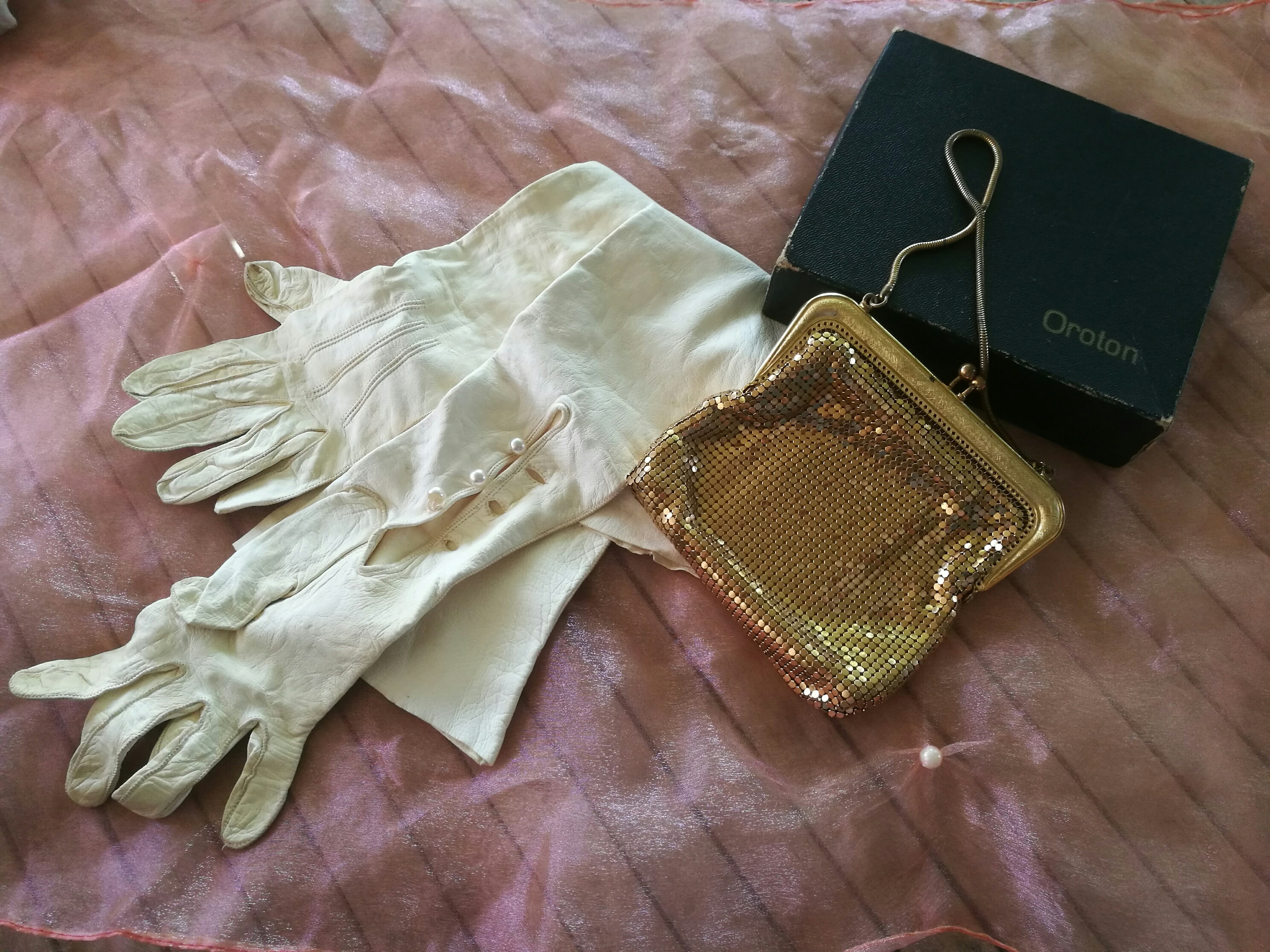
Helen grew up outside Warwick, in Yangan. She is a pretty woman with a dry sense of humour and a great fund of family stories to share. She loved the beautiful gowns she wore to balls all over the Darling Downs, as part of her duties as Princess and Queen. I liked ball gowns, too, and the long kid gloves, stoles, elegant mesh evening bags and corsages that went with them. I even loved the hair-does – teased up and rigid with hairspray.

IMG_20180407_110449_resized_20180407_110906163

We all danced in those days. In Grade Five at Nambour State School, I learned the Gypsy Tap, Pride of Erin and Barn Dance. As a teenager at ballroom dancing classes at the O’Connor Boatshed at North Quay, Brisbane, I practised more sophisticated dances: foxtrot, quickstep, cha-cha. The girls sat along one wall, boys along the other, and when given the word the boys would come across and ask a girl for a dance. The boy had to be brave and risk rejection. The girl took a greater risk: the humiliation of not being asked at all.

Every city and town had annual balls: Catholic, Anglican, Masonic, Highland, Show Ball or Race Ball. There would be a local band, and the dances would be a mix of modern, old time and jive, with covers of The Shadows, The Monkees or Normie Rowe for jiving.

“Did you know that Helen’s husband Keith played in one of the local dance bands?” I asked Nadine. “They’ve both always loved rock music. Helen went to see the Beatles in Brisbane, in 1964.”

“Lucky girl!”

Many of the balls were Debutante Balls. In the mid-‘sixties, when I lived in Jandowae, on the northern Darling Downs, I went to the Bell Anglican Deb Ball. Bell is a small town on the western slopes of the Bunya Mountains, and the ball was held in the public hall, its smooth timber dance floor improved by the application of Pops wax flakes, shaken from a cardboard box. Between dances, kids would go sliding across that slippery floor.

In the Progressive Barn Dance, at Bell and elsewhere, we would change partners as we went around the hall, and there were always a few unavoidable characters: the showy dancer with the tricky steps; the sweaty-palmed man who held his partner too close; the drunks.

The supper room couldn’t cope with everyone at once. While in the first sitting we were enjoying our sandwiches and cream-filled sponge cakes, the second sitting was pounding on the door to hurry us up.

Helen didn’t make her debut. She told me she thought it was out-of-date and silly. I didn’t, either. My friend Carol was a deb in Ayr, North Queensland. “I have no idea why, looking back,” she says. “We trained for weeks. We learned to walk, sit, curtsey. It was a big commitment, especially for the poor blokes we had for partners! We learned all the dances, too – even the Dorothea.”

“The Dorothea? I never heard of that one.”

“We had an arch covered in flowers to walk under, and a special cake to cut…”

Con and I went to balls from Stanthorpe to the Gulf Country, back in the day, but my elegant gowns are gone now. I’ve still got my long, white kid gloves, my stole, and my Glomesh evening bag. They’re quaint and retro now, and my granddaughters use them for dress-ups.

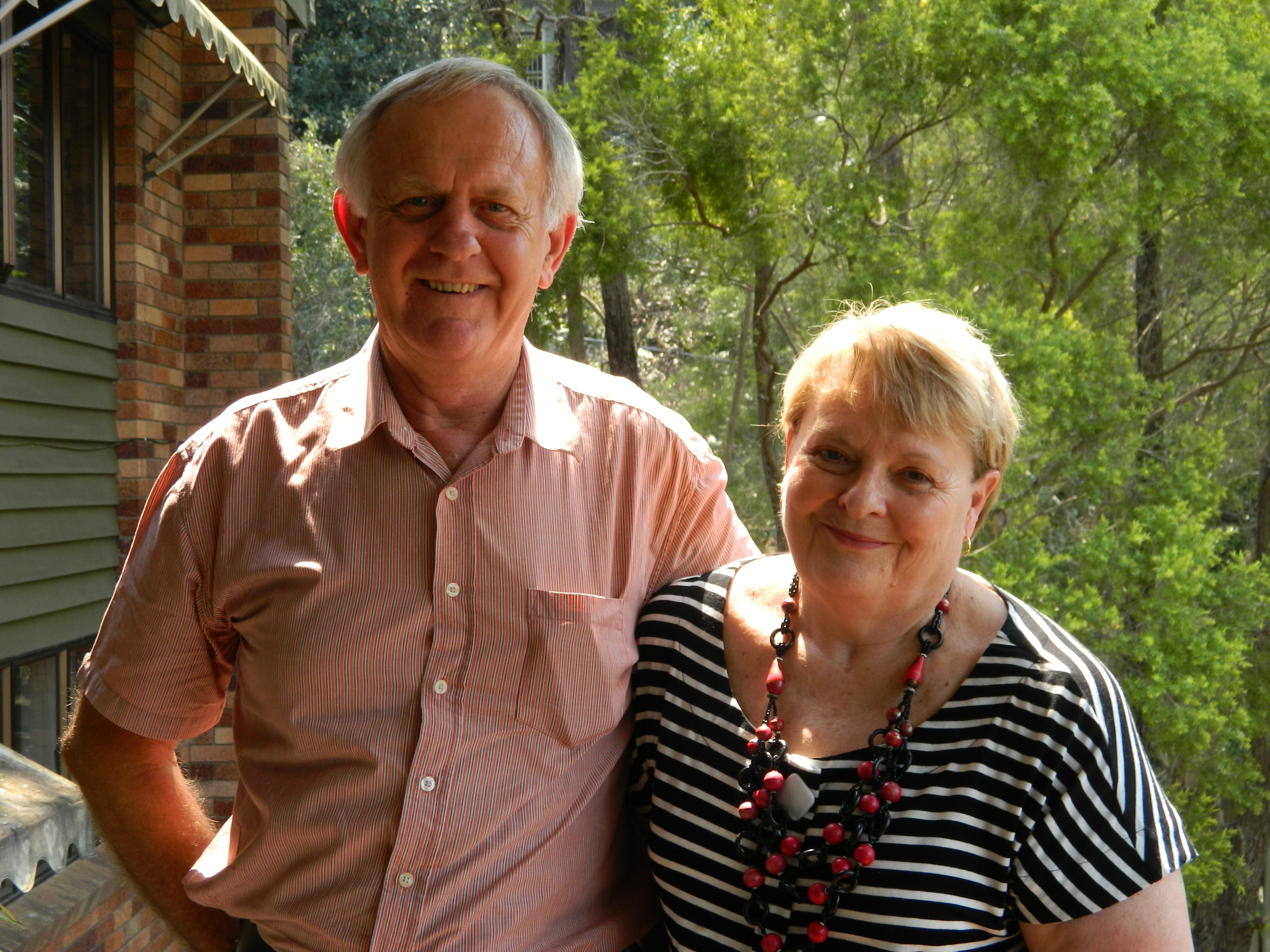
This article was written three years ago. Helen, princess and queen, teacher and nature lover, wife, mother and friend, died recently after a short battle with cancer. I will always miss her. Rest in peace, dear cousin.           

6. Keith and Helen Lees

is a featured content post. Click the Edit link to modify or delete it, or start a new post.

Blog at WordPress.com.

Up ↑