Floods

Floods.

I’ve written many stories about many parts of Queensland on this blog, and so many of them describe floods.

Maryborough, Ipswich, Rockhampton. https://roseobrienwriter.blog/2024/02/06/maryborough/

Townsville, Bundaberg, Ingham, Charleville. https://roseobrienwriter.blog/2021/07/24/road-trip-to-ingham/

The Brisbane, Bremer, Mary, Burdekin and Flinders Rivers. https://roseobrienwriter.blog/2020/12/12/syphoning-petrol/

The Gulf Country, the Horror Stretch and the Cassowary Coast. https://roseobrienwriter.blog/2018/11/08/horror-stretch/

These are places I know well, and I feel for the people who live and work there; especially in the north. People wading through the ruins of their flood-damaged homes; cane, banana and beef farmers coping with the ruination of their hard-won livelihoods.

I remember the cattle farmers of the Flinders River catchment who, during the 2019 floods waited helplessly for the waters to go down as helicopters brought back images of mobs of cattle, including precious breeding herds and cows with calves, dead of cold and hunger, crowded against fences and on small patches of higher ground. It is estimated that 500,000 head of stock died in that flood.

And now floods have happened again – are still happening – in tropical Queensland. The State premier, an Ingham native, holds a press conference describing the community’s sorry situation: highway cut both north and south, houses flooded, no electricity, a breakdown in the water supply, supermarkets empty, and two lives lost. Further north, in and around Cardwell, houses flooded that have never been flooded before.

The Herbert River catchment of 9000 square kilometres has its headwaters in the Great Dividing Range near Herberton, and it collects a lot of tropical rain before it makes its way down to the flat canefields around Ingham. The Cardwell Range is steep and high and close to the town, so the catchment there is not nearly as big. But what is going to happen, when almost two metres of rain falls in three days?

The Burdekin River catchment of over 130,000 square kilometres is the size of England and stretches from north of Charters Towers and Greenvale to south of Alpha. Charters Towers has been flooding all week, and that water is heading for Ayr and Home Hill on the coast.
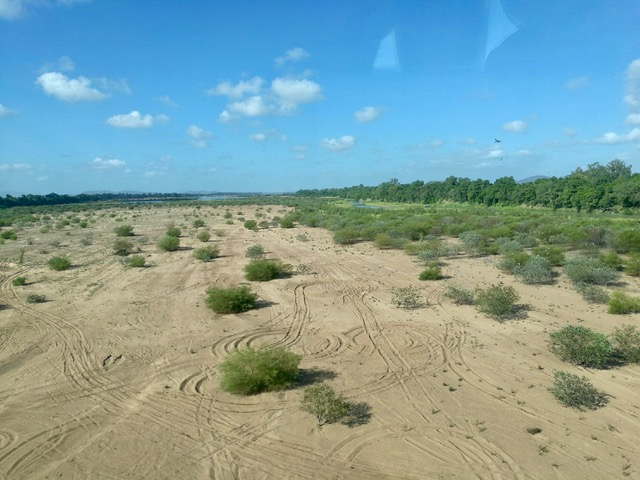
Burdekin River at Home Hill in the dry season, looking upstream from the Bridge
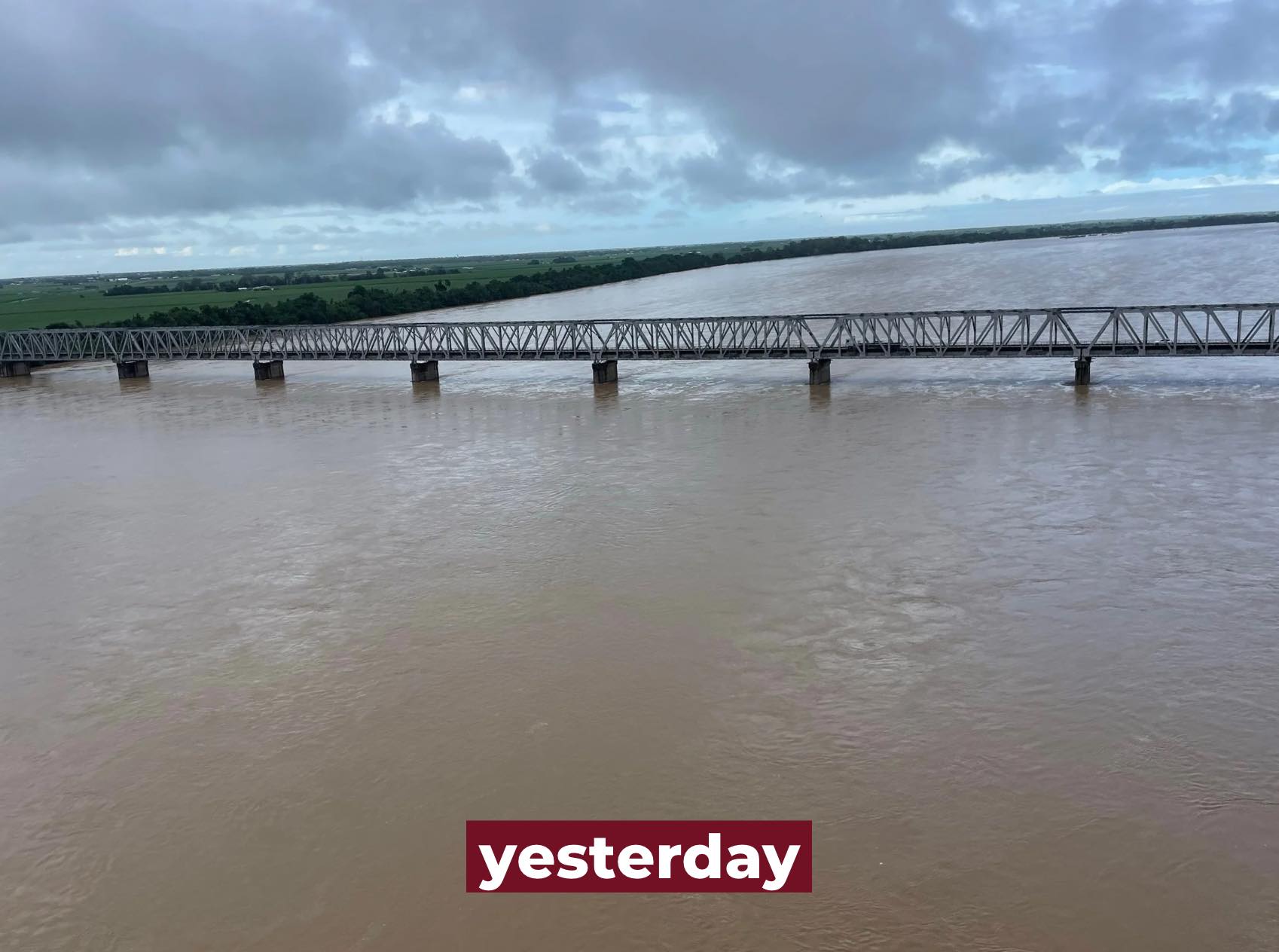
Burdekin River at Home Hill this week Dale Last, Member for Burdekin. Facebook

Sugarcane can be laid low by a flood, and recover, if the water doesn’t lie there too long. On the rich flood plains around Ingham, water has been lying for days, and still it rains.

An agriculturist, an expert in banana growing, told me that in the case of a cyclone, if a farmer lops the plants back they will survive and regrow. How would you go about that? It would take days, and a huge amount of work, and even with excellent modern forecasting, satellites and radar, cyclones are unpredictable. They can veer south or north or move back out to sea.

More heavy rain is forecast across North Queensland. The water will run to the coastal towns and farms and also to the vast plains of the inland, where rivers like the Flinders will break their banks and spread across the land, cutting the few sealed roads and the one railway line that runs east-west across the State.

In Queensland, rich in resources though it is – agriculture and mining in particular – we don’t have many people. The US state of Texas, iconic to Americans for its size, has an area of 697,000 square kilometres, compared to Queensland’s over 1,700,000 square kilometres. However, Texas has a population over five times the size of Queensland’s. That makes a huge difference when it comes to tax base and industry. It seems we don’t have the population, or the votes, to create better, more resilient transport infrastructure.

We also have a more extreme climate than Texas, especially when it comes to floods. Tornados are deadly, but they move quickly across the land. Rain depressions hang around.

Queensland has only one highway and one railway going along the coast, and because of shortage of population and extremes of climate, there are almost no entirely sealed roads west of the ranges linking north and south.

During this month’s major flood event in North Queensland, the one main railway line was soon cut in several places. https://www.railexpress.com.au/rail-bridges-submerged-as-floods-batter-north-queensland/

When the Bruce Highway bridge at Ollera Creek was washed away over the weekend, north of Townsville, Far North Queensland was cut off from the world except by air and sea.
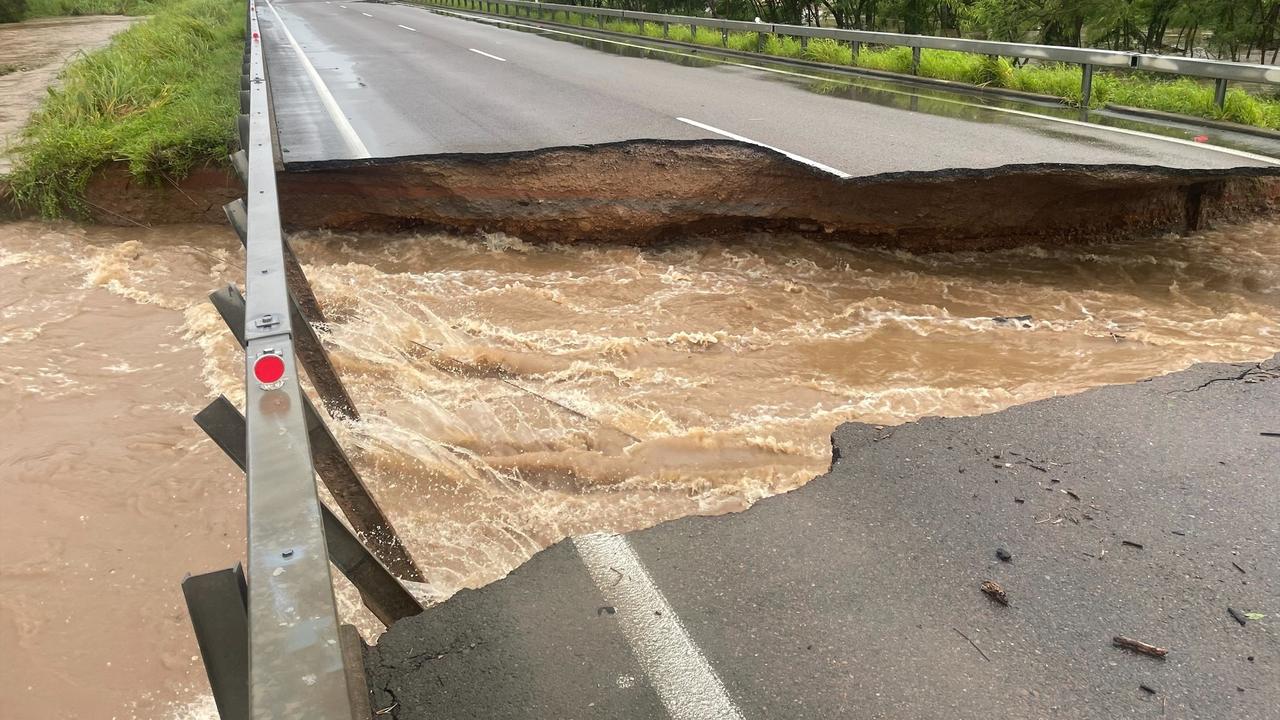
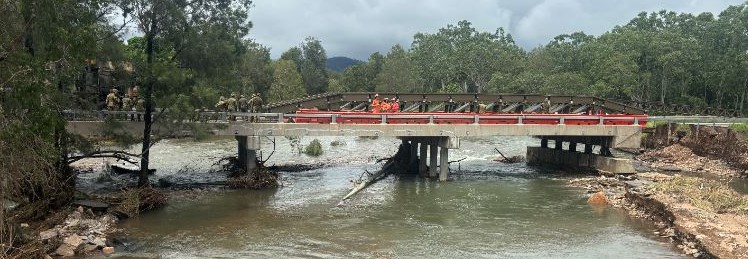
Ellora Creek bridge washed away Townsville Bulletin
Ellora Creek bridge , as repaired by the army for emergency vehicles mypolice.qld.gov.au

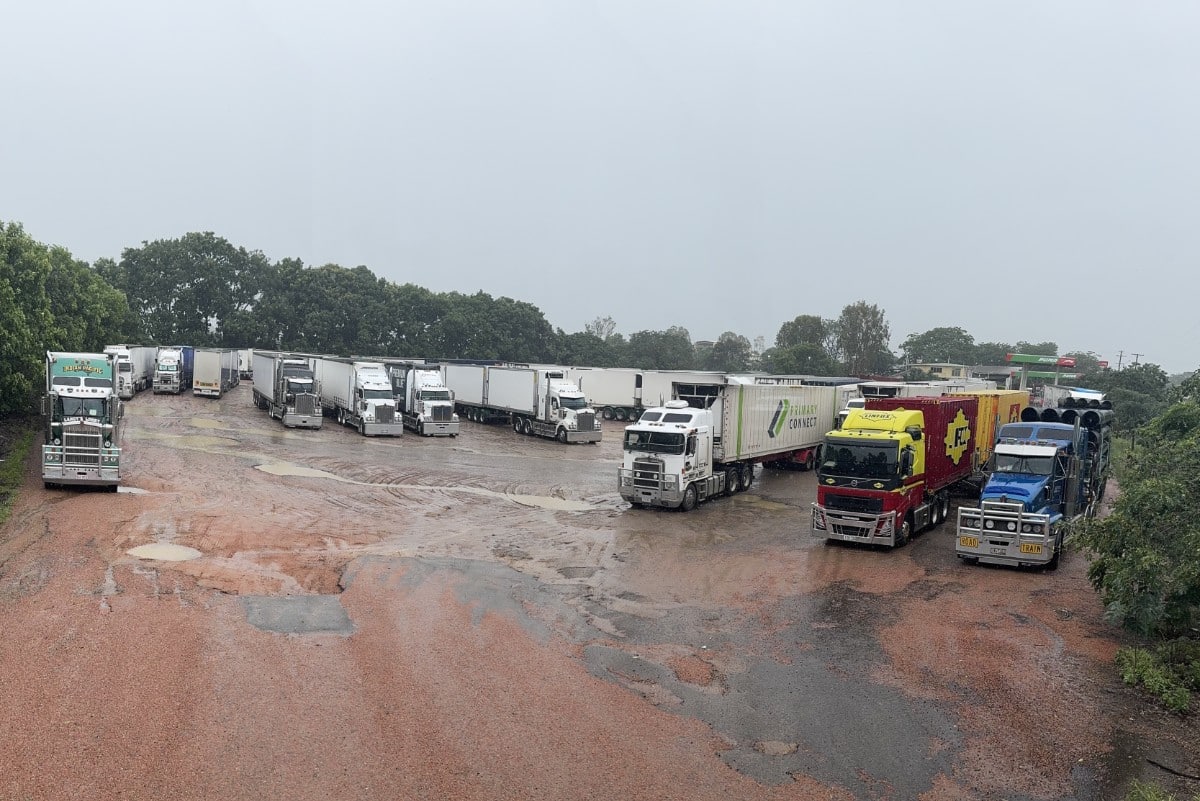
Trucks carrying supplies to the Far North and people trying to return home faced an extra 1200 kilometres’ journey, travelling by western Queensland sealed roads, to reach Cairns. And these roads are under threat of closure at any time. Many are stranded. https://qldtraffic.qld.gov.au/
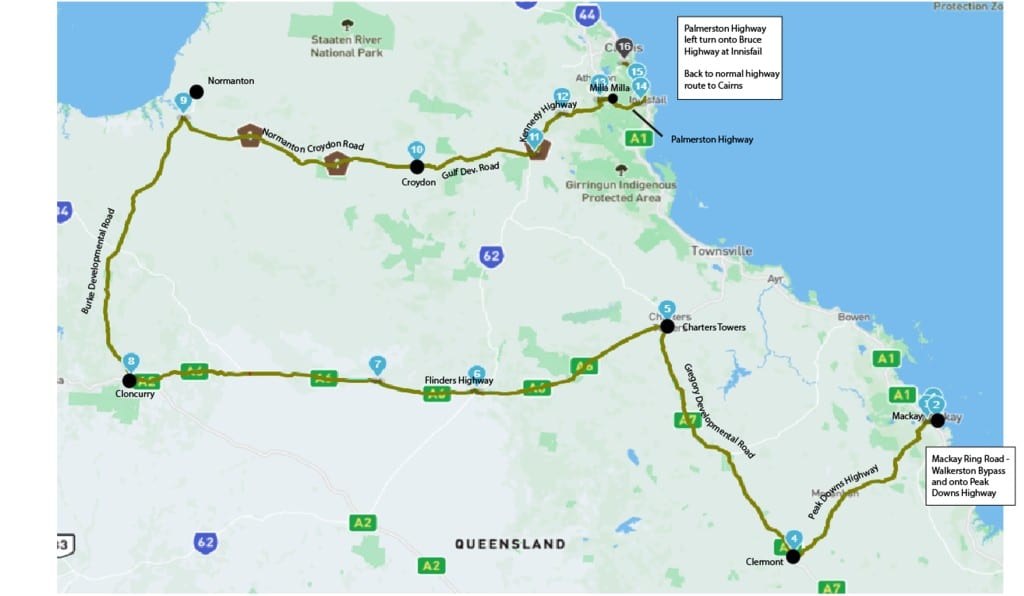
Alternative route to flooded Far North Queensland Transport and Main Roads Department, bigrigs.com.au
Stranded truckies parked up at the Puma Roadhouse in Charters (Towers) Image: Deano Hutch bigrigs.com.au

If the continuing flood rain results in damage to the railway and highway linking Townsville and Mount Isa, as happens all too often, transport and supply of essential goods may be affected for weeks.

For all sorts of reasons, including strategic concerns, the continuing and increasing vulnerability of Queensland’s transport routes is a major threat to our way of life and security.

People who live and work in the north and west of the State feel bitter that regions that produce so much of Queensland’s wealth continue to be so vulnerable to the weather. And as climate change deepens, it will only get worse.

It’s a worry.

In the southern states and Canberra, people have always regarded Queensland with a kind of affection as a weird, distant place, a place of extreme weather, crocodiles, bogans and dodgy politicians. Greater Brisbane makes up half the population of the State, and a lot of Brisbane people seem to be largely ignorant of regional areas. To them, north means Noosa, and west means Toowoomba.

So where is the will to sink vast sums into flood-proofing North Queensland for the future? Bipartisanship in politics would be a start.
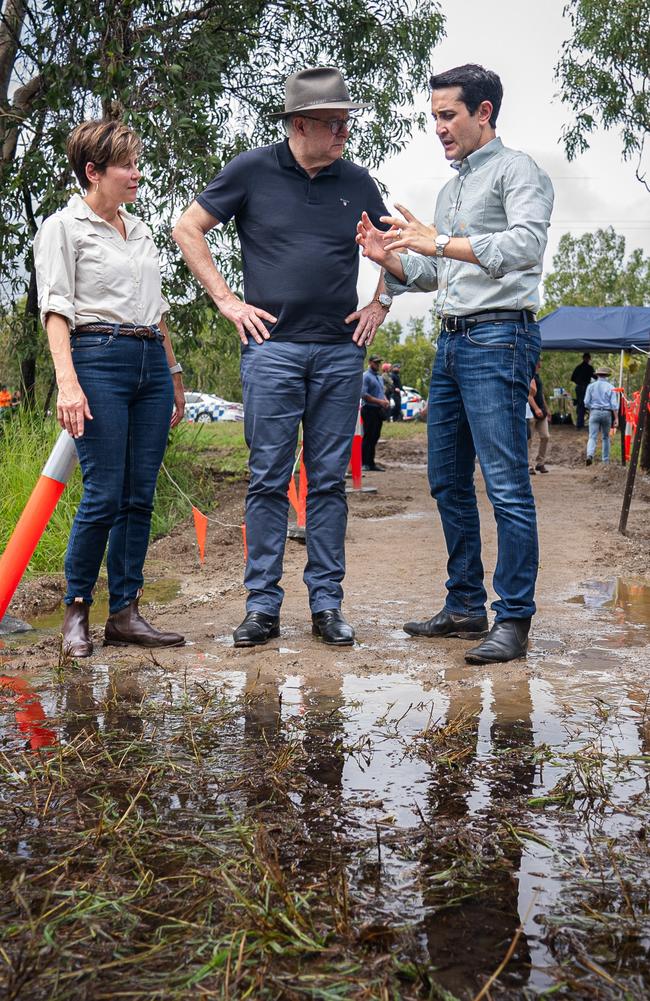
It’s a start. Federal Labor Senator Jenny MacAllister, Labor Prime Minister Anthony Albanese, and LNP Premier of Queensland David Crisafulli, taling about recovery in FNQ theaustralian.com.au

I’m tired of writing about floods.

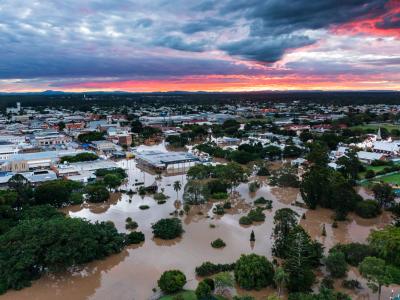
Main picture: Maryborough flooded at Sunset. 2022 Qld Reconstruction Authority

Mackay Crocodiles

“Daily Mercury”, Mackay. 30 July 1913

The search for Mr George Noble, who wandered from his home near The Leap at the beginning of the month, has now been abandoned without the slightest trace of the missing man having been discovered. The missing man might have been taken by alligators, his farm being situated between Reliance and Constant Creeks, the waters of which are infested with these reptiles. Native dogs also frequent the neighbourhood and may have attacked the man once he became helpless through exposure. Mr Noble was a man of 78 years of age and in his declining years had become rather childish. He evidently lost his way through wandering off on a bye-track.

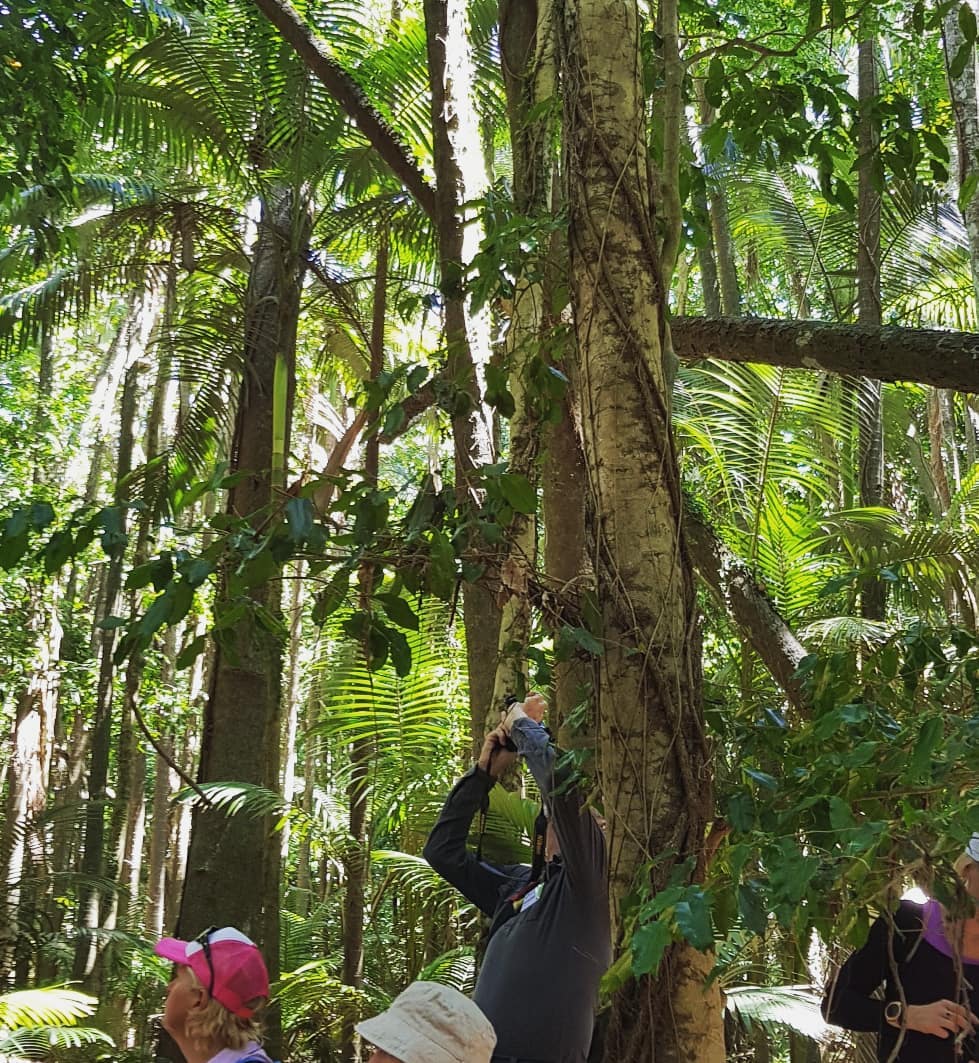
Reliance Creek National Park now protects one of the last patches of scrub along the creek, not far from its estuary between Mackay and Cape Hillsborough. A century ago, although already surrounded by farms and sugarcane fields, this area, dense with vines and palms, would have been a dangerous place to be lost.

mackay reliance creek nat park mackay conservation group Mackay Conservation Group explores Reliance Creek National Park

In 1883, George and Jane Noble had emigrated to Mackay from Newcastle on Tyne, England, with their children. They settled on the farm at The Leap, amongst the cane fields and wilderness north of Mackay. It was thirty years later, in his old age, that George disappeared. The search involved local people, police and a tracker, but nothing was ever found.

Perhaps somewhere out in the Reliance Creek estuary there is a pair of spectacles or set of false teeth lying hidden under the sand, lost by poor old George Noble, his Geordie accent stilled forever, far from the Tyne.

George and Jane Noble were the great-grandparents of my husband Con, and only a vague story of the old man wandering off and disappearing was passed down in the family.

Every year in Northern Australia, people are taken by crocodiles. North Queenslanders have lost access to many of their old favourite swimming holes because of them. Endlessly cynical about governments in the south, they say whenever an appeal for crocodile culling is turned down, “When the first croc appears in the Noosa River, they’ll change their minds!”

Or the beaches of the Gold Coast. Perhaps the Brisbane River, near the Tower of Power, home of state government administration, poised above the river at 1 William Street. A crocodile under the mangrove boardwalk there would cause a stir.

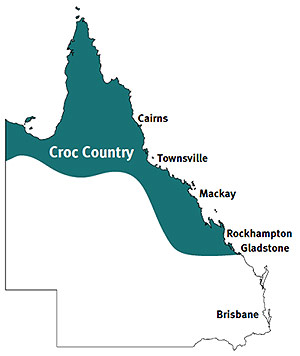
Queensland has a service called “Crocwatch” that people ring to report crocodile sightings. Every year there are many such calls, from Torres Strait to Rockhampton. This year, someone said they saw a crocodile at Tin Can Bay, which is scarily close to south Queensland waters.

mackay croc-country Qld Government’s “Crocwatch” map

This year there have been twenty-five recorded crocodile sightings in the Mackay region, near swimming enclosures along the coast, up the creeks and the Pioneer River, and one in Constant Creek, near where George disappeared.

On trips north to Cairns we’ve often spent a night in Mackay, where the cattle country to the south changes to the land of sugarcane, coconut palms and rainforest. It’s a fine old city, and a good place to break a journey. This is spectacular country, from the beautiful beaches, up the sprawling Pioneer Valley to the rainforest-covered ranges of Finch-Hatton and Eungella. The climate has extremes – from cyclones and floods to the occasional fall of snow on the ranges.

This year, just before reaching Mackay we turned west on the road to Walkerston, then right on to Mackay Eungella Road, and drove up the Pioneer River valley, through picturesque small towns – Marian, Mirani, Pinnacle, Finch Hatton.

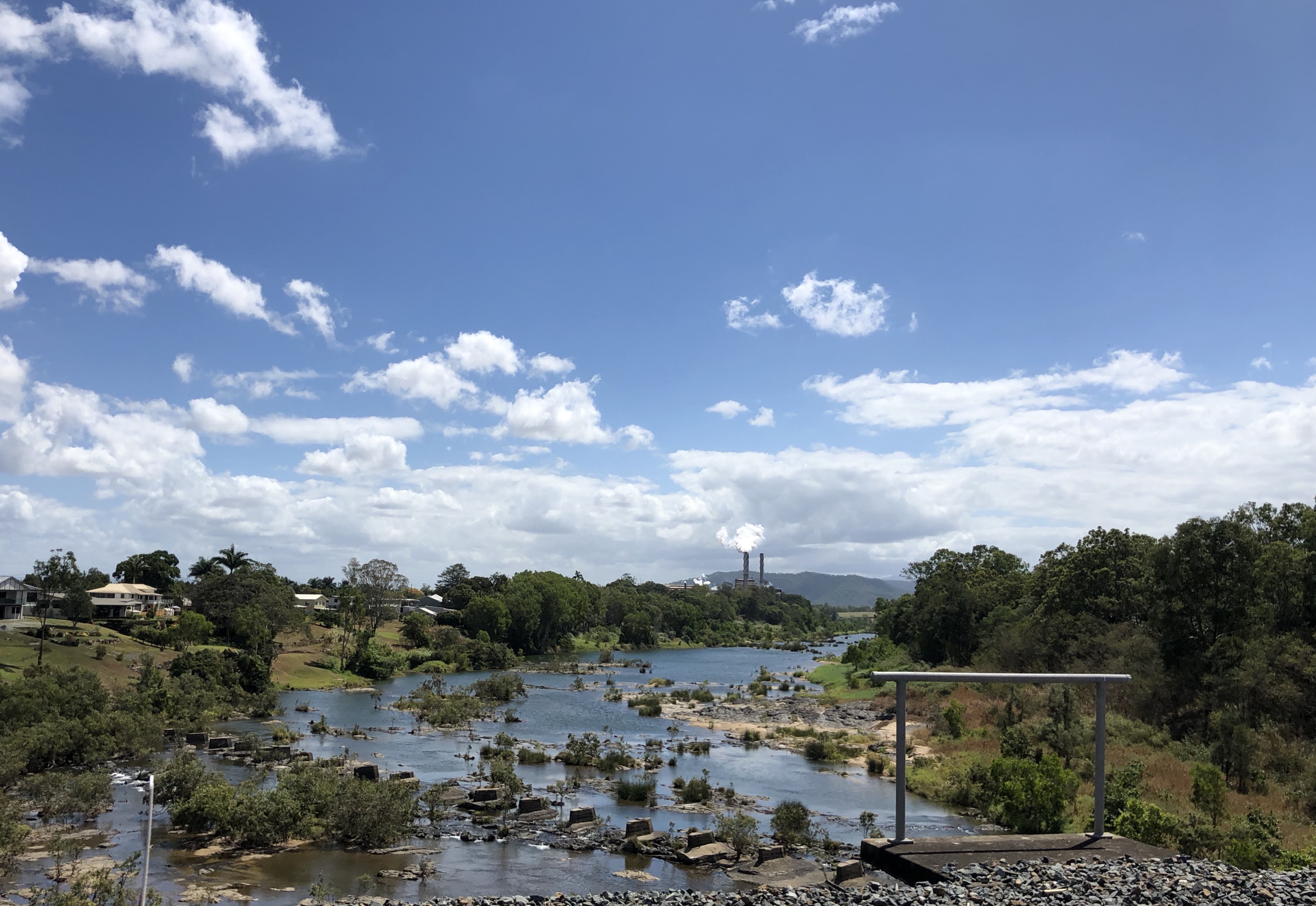
581BB516-EEB8-4002-A387-BF2A77F5ED33_1_201_a The Pioneer River at Marian

Con’s mother Min grew up here. George Noble’s son Bill and his wife Mary became cane farmers in this valley, still one of Queensland’s richest sugarcane areas. Bill farmed at Alexandra, on the Palms Estate, a large area of farms located about ten kilometres south-west of Mackay, somewhere between Walkerston and the river.

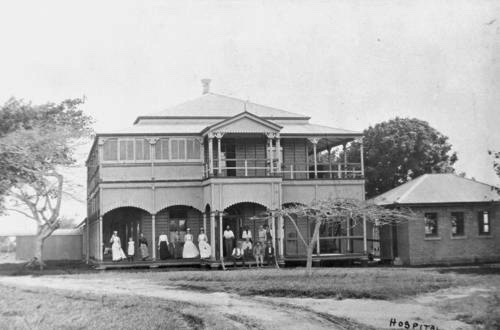
In 1908 it was from this family farm that Bill and Mary drove away in a buggy to Mackay Hospital. Mary was to have an operation for a goitre in her neck. She died under the anaesthetic. She and Bill had six children under nine, and it was hard times for the bereaved family.

F46C1516-64C7-4F34-87DF-B8C1873CFE45_4_5005_c Mackay District Hospital, 1910 (Image: Mackay Regional Council Libraries)

Min was the second-eldest child, and she told us stories about life on the farm.

She spoke of the time her little brother, Jim, lost two fingers in a chaff cutter.

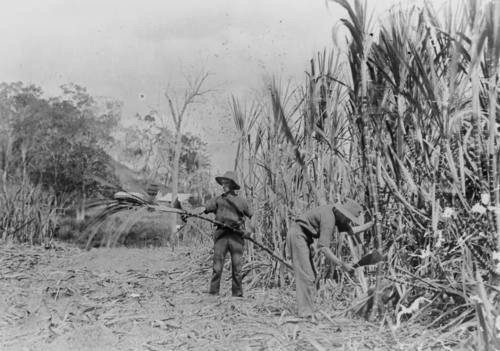
She spoke of city men, desperate for work as the Great Depression started to bite, who came here with soft hands and cut cane with blood running down their arms until their blisters turned into calluses.

9E6749DF-53E1-42A7-B261-B9DD605A9341_4_5005_c Cutting sugar cane (Image: Mackay Regional Council Libraries)

Min spoke of going to dances at nearby Walkerston or Marian. During the Wet, when the roads were cut, to get there they would travel along the cane train tracks on a pumper trolley.

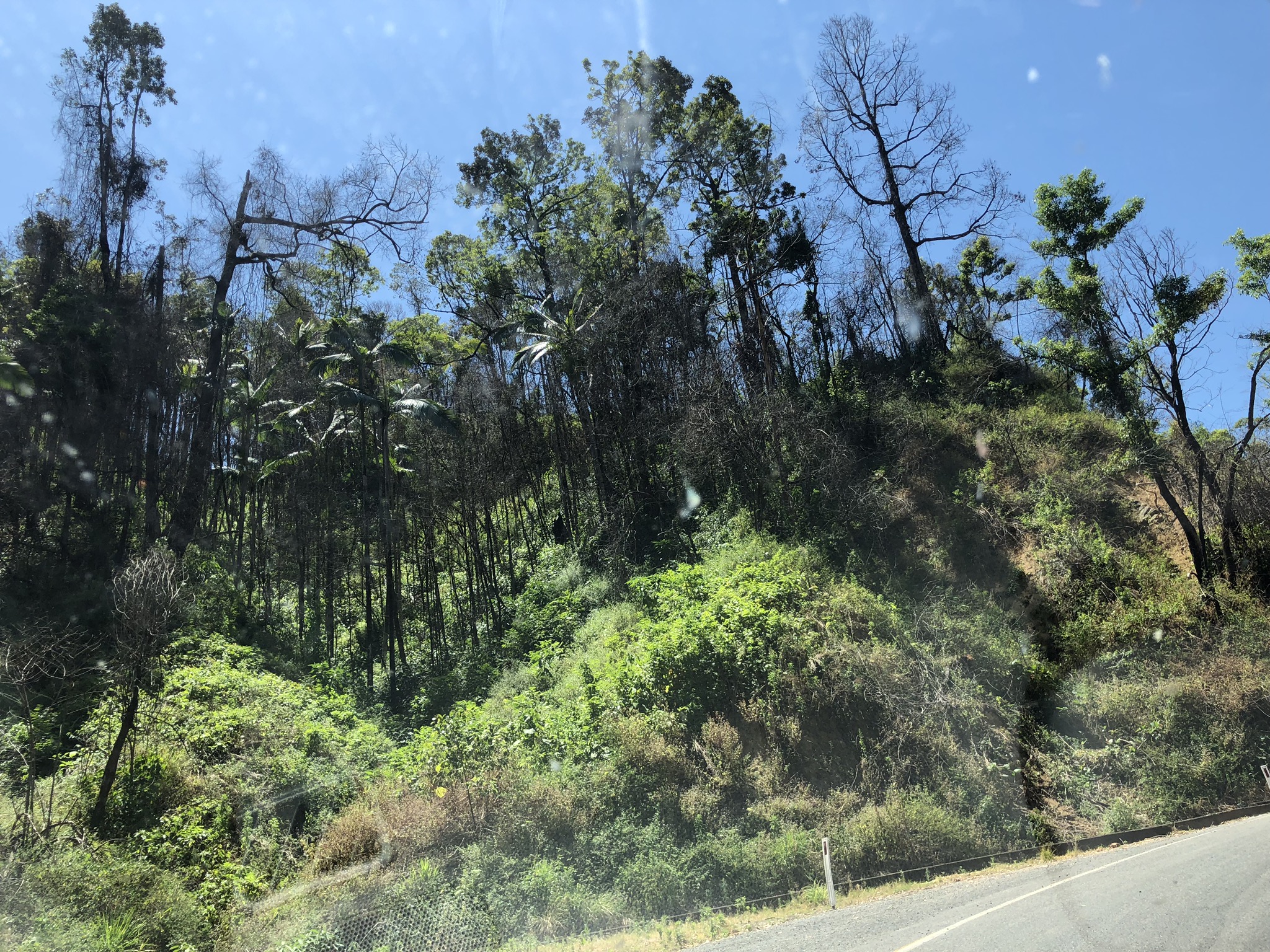
This year it’s dry in the Pioneer Valley, like most of the state. Last December, for the first time, bushfires got into the iconic rainforest on the Eungella range. It was a shock to us all. Rainforest doesn’t burn, we thought.

CFE12488-DC2A-407A-AE05-7FBDFF5E4B4F Eungella Range: fire damage from December 2018

The barman in the Finch Hatton pub, where we enjoyed a beer and toasted sandwiches, looked up at the hillside across the road and said, “It was burning right to the top of that range. Up the Gorge as well. I’ve never seen anything like it.

“It’ll grow back, though. It always does.”

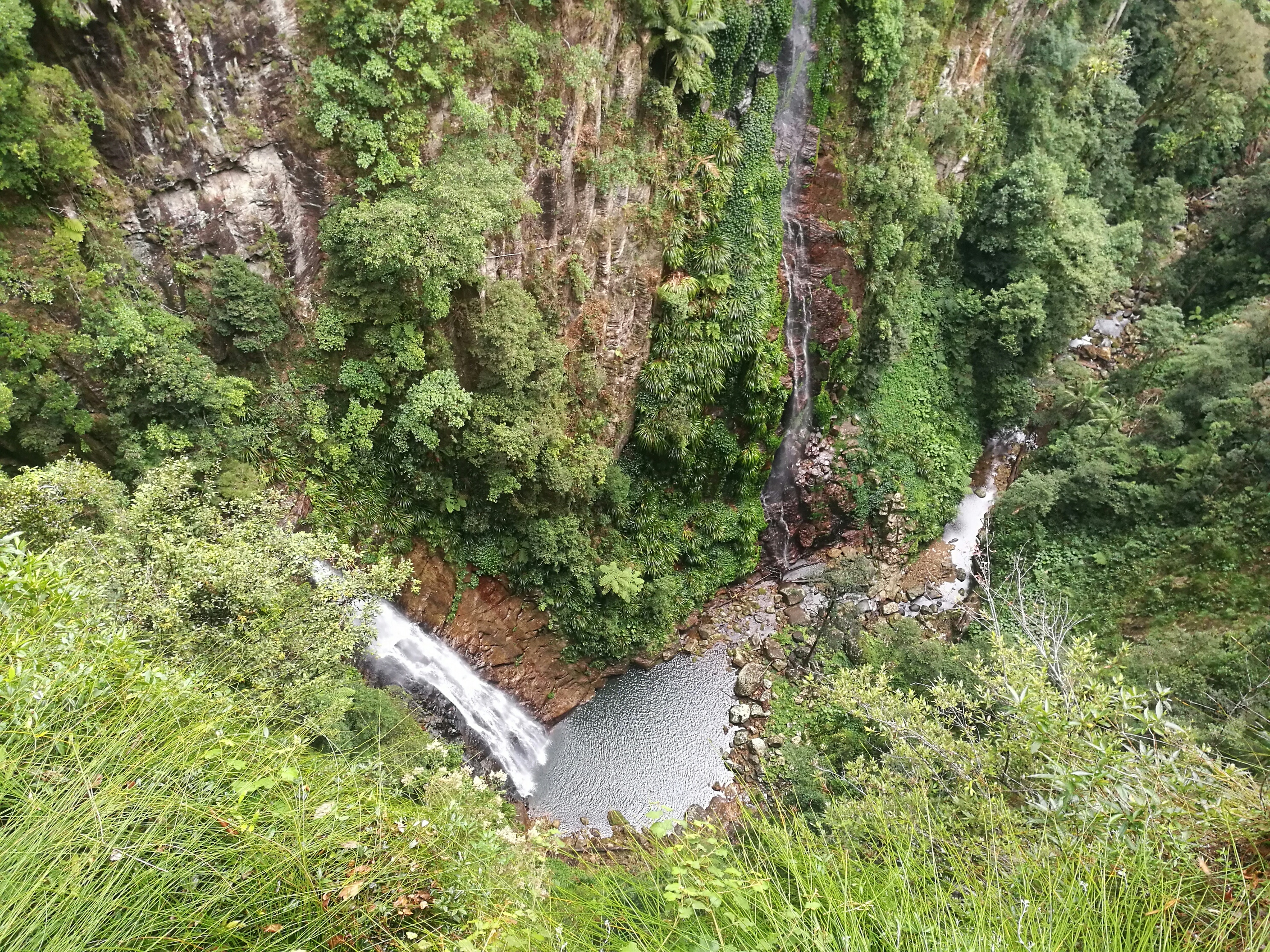
I hope he’s right, but rainforest trees, unlike eucalypts, are not adapted to burning. This September, South-east Queensland’s Binna Burra rainforest also burned, along with its heritage-listed lodge. Perhaps we’ll have to become accustomed to fires in ancient forests.

B7CBC891-E637-45A3-B20B-297C5AE3214C Coomera Falls, Binna Burra, 2018

When you take the winding Mackay Eungella Road up the range, the scars of last year’s fire are still visible, although green is emerging. Over the range and down to Broken River, the forest is untouched, with platypuses in the river and whip birds scratching among the leaf litter; but we’ve had a shocking taste of how things may be in the future.

Crocodile attacks might be the least of worries for the people of Queensland, both north and south.

Mackay, though, is beautiful, in all its faces; and one of the loveliest sights in Queensland is that of kangaroos on the spectacular beaches of Cape Hillsborough, only a few kilometres north of where old George Noble’s specs may still lie hidden in the sand.

mackay cape hills kanga(Queensland.com)
Cape Hillsborough (Image: Queensland.com)

Blog at WordPress.com.

Up ↑