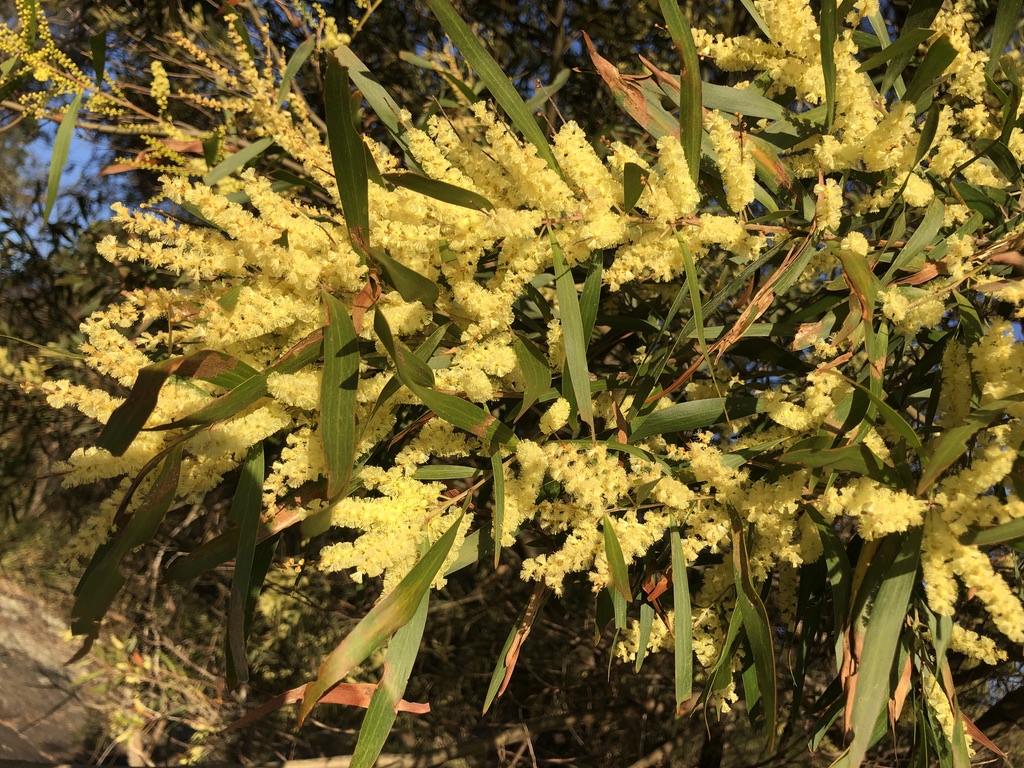
Along Quart Pot Creek, upstream from Heritage Park, the wattle trees are flowering.
The path winds above the creek and under the railway bridge, across sloping granite to the creek and beyond. On the bank near the narrow footbridge, fairy wrens flit among the bushes.
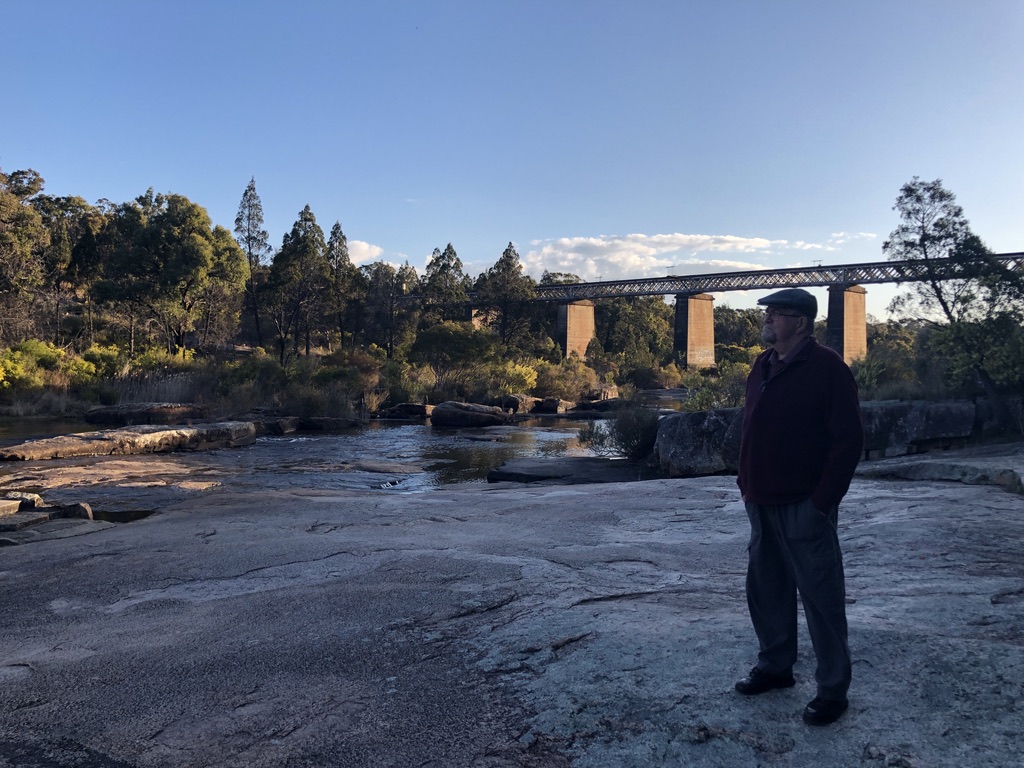
In Stanthorpe this Spring when we visit, the water is cold. Not tempting. Perhaps in summer families come here to lie in the shallow pools and sunbake on the warm granite.
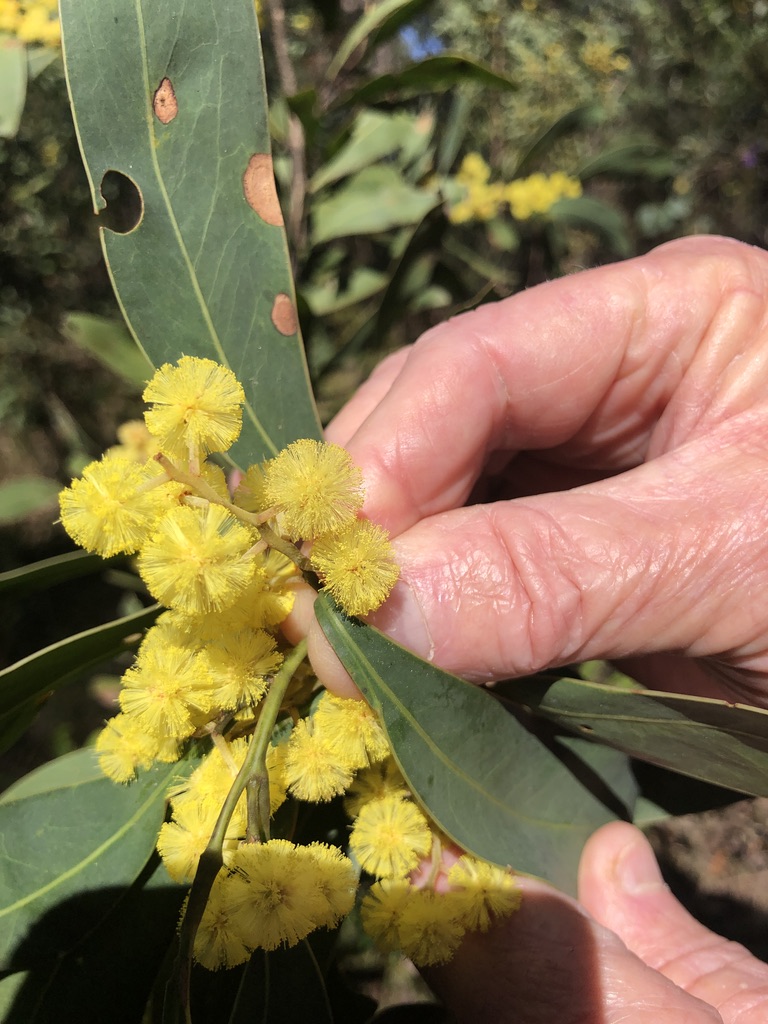
On this short trip out of Brisbane we are counting wattles. Leaving Stanthorpe, we drive over the New South Wales border to Bald Rock and then back home via the Bruxner Highway and Summerland Way, counting many varieties of wattles in bloom along the way. Green and gold everywhere.
In April 2023, I planned a fine road trip. It was the right time: the rivers were full but not flooding. The countryside was green. There was no threat of bushfires.
We would follow the inland rivers, from the Warrego at Cunnamulla, down the Darling to Burke and Menindee, to meet the Murray River near its mouth, at Gawler in South Australia. We would then trace the Murray upstream to where it meets the Darling at Wentworth in Victoria, then further east to Balranald, near where the Murray meets the Murrumbidgee. Following the Murrumbidgee to Wagga Wagga, we would then head north to the Lachlan River at Forbes; join the Newell Highway and cross the Macintyre back into Queensland at Goondiwindi.
We’d meet the Condamine River at Warwick, then drive east to Queen Mary Falls where the river drops forty metres down from the ranges. Past towering Mount Superbus, the tallest mountain in south Queensland and the head of the Condamine catchment.
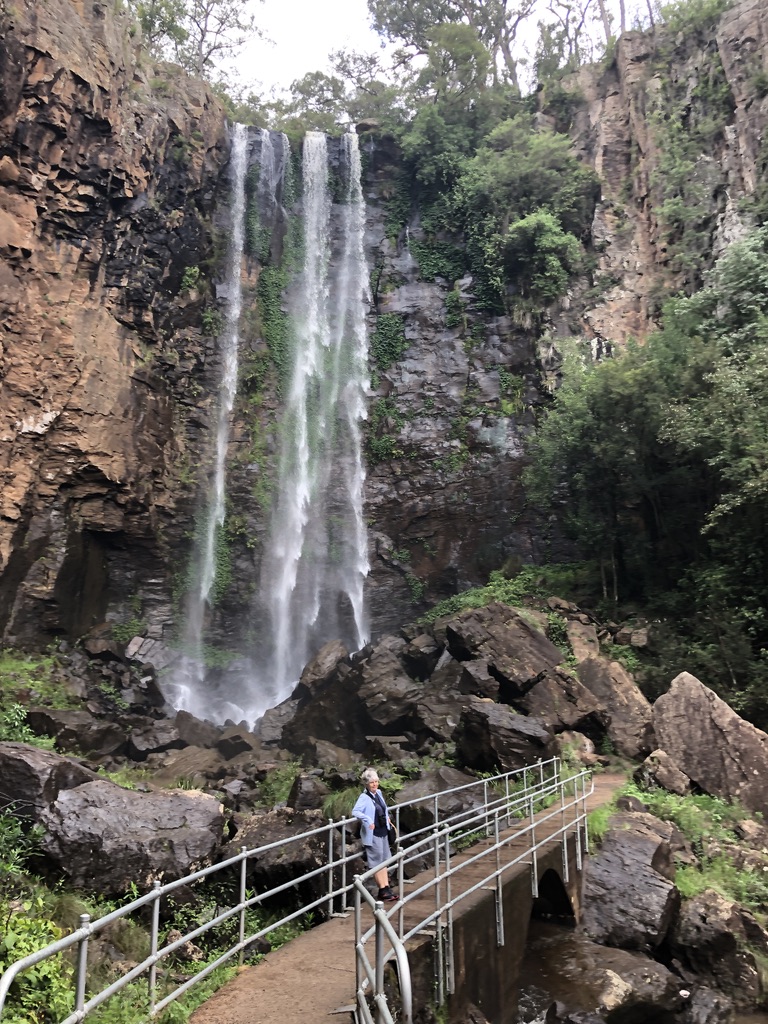
In the right season, with plenty of rain and flow through the rivers, the water that plummets over Queen Mary Falls flows down the Darling and eventually ends up in the Southern Ocean at the mouth of the Murray, at the Coorong in South Australia.
What a neat trip that would have been. But life and illness got in the way, and we cancelled just days before we were due to leave.
That left us in Brisbane; but from Brisbane there are many interesting places to go for short trips. That is what we’ve been doing ever since.
In October last year we took a three-day trip to mainly new territory. A night in Dalby and a walk along Myall Creek in the middle of town, then up the Bunya Highway through Bell and Kingaroy to Murgon.
In Murgon there is a small but well set up Fossil Experience Museum called “55 Million Years Ago”. Local businesses, towns and shires seek for something that will encourage travellers to linger and spend. Federal, state and local governments support them. For places as widely spread as Murgon, Winton, Richmond, Hughenden, Eromanga, and even as far north as Chillagoe, Queensland’s finds of fossils and dinosaur bones attract visitors. Families plan holiday road trips to visit dinosaur sites.
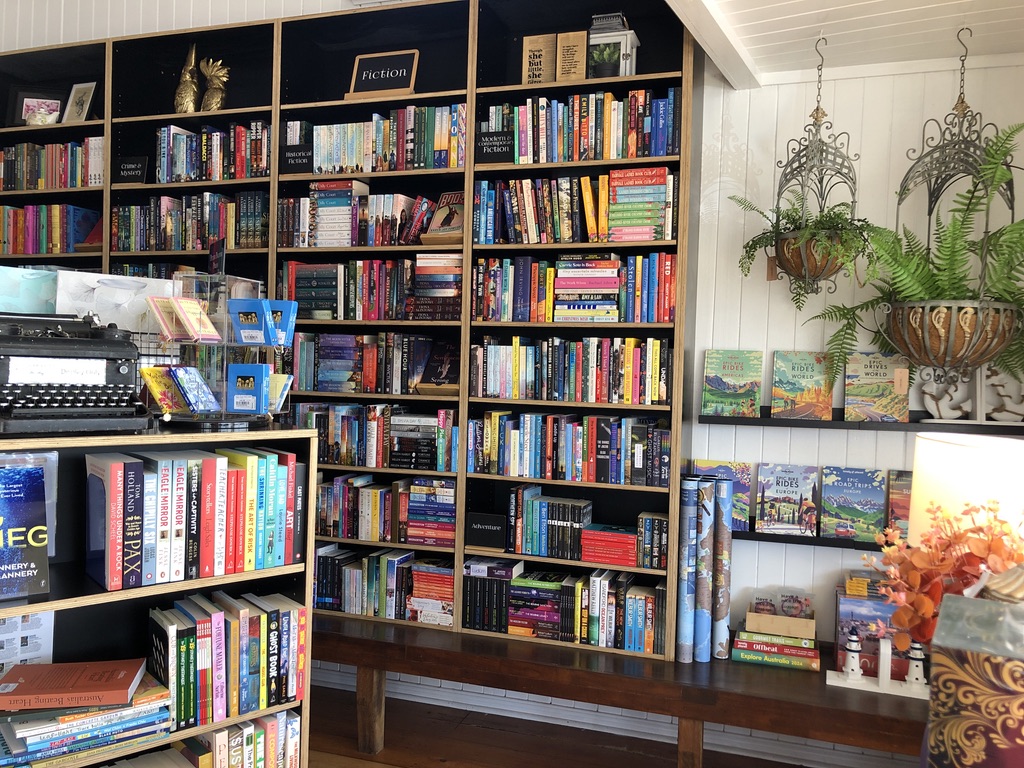
From Murgon we drove through Goomeri, stopping at the elegant Wimberley & Co Bookstore, then turned south to spend the night at Highfields, north of Toowoomba.
Highfields has a wonderful park – the 4.7-hectare Peacehaven Botanic Park. In 2004 local dairy farmer Stan Kuhl donated the land for a public park to promote peace.
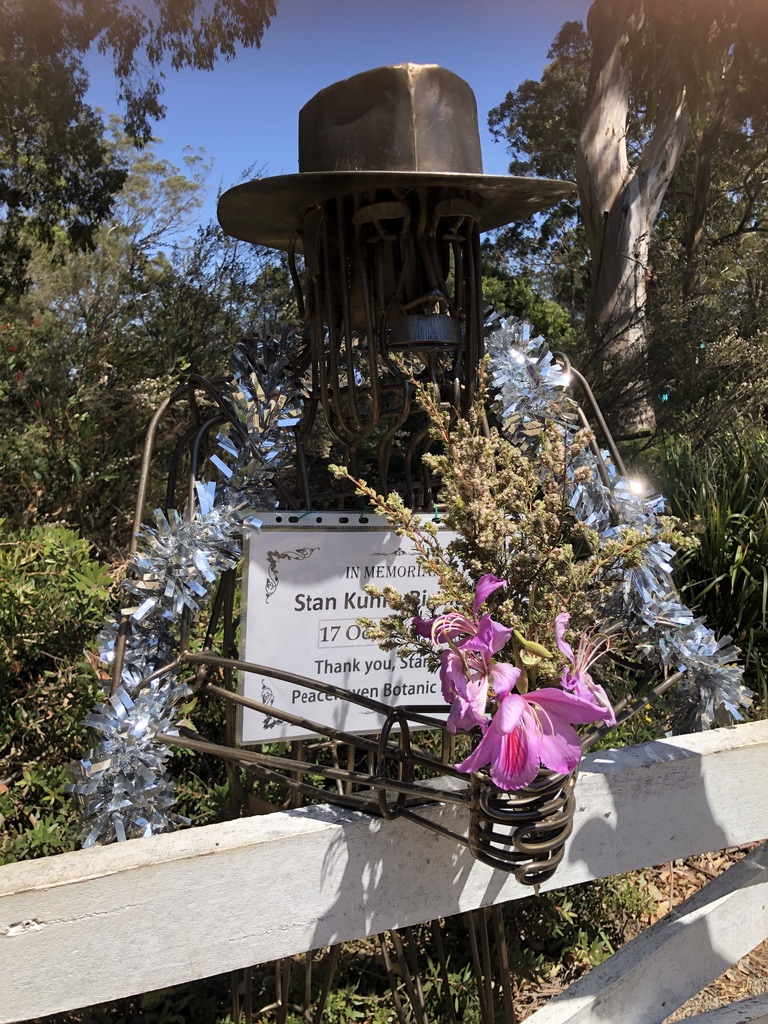
The world is as far from peace as ever; but wandering these paths and plantings, watching parrots in the fine old eucalypts, with the Bunya Mountains in the distance, I appreciated old Stan’s intention.
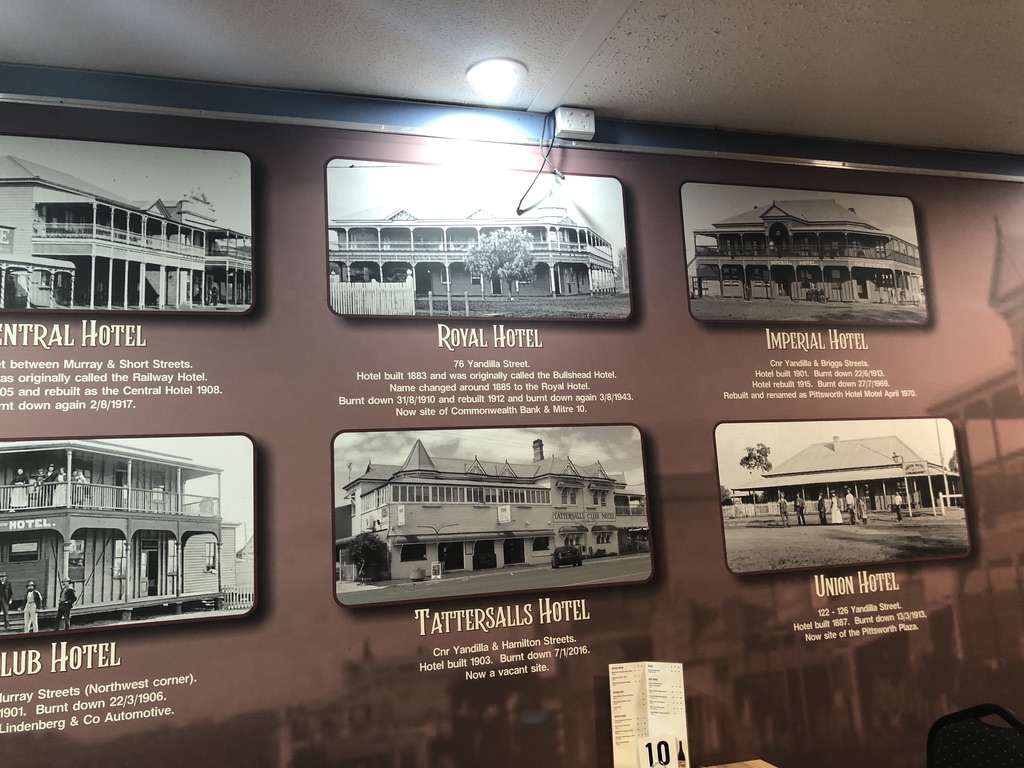
In the heat of February 2024, we took a three-day trip around the Darling Downs and out as far as Goondiwindi. The first night, we stayed in the humble motel behind the Pittsworth Hotel, “Pittsworth’s favourite hotel”. The only hotel in town as far as we can see, but its walls show a collection of photos of the many grand establishments that once existed here, only to succumb to fires, like so many old country hotels.
Country towns celebrate their sports stars, from Rod Laver, the “Rockhampton Rocket”, to Laura Geitz, medal winner and former captain of the Australian netball team, celebrated in a bronze statue in her hometown of Allora.
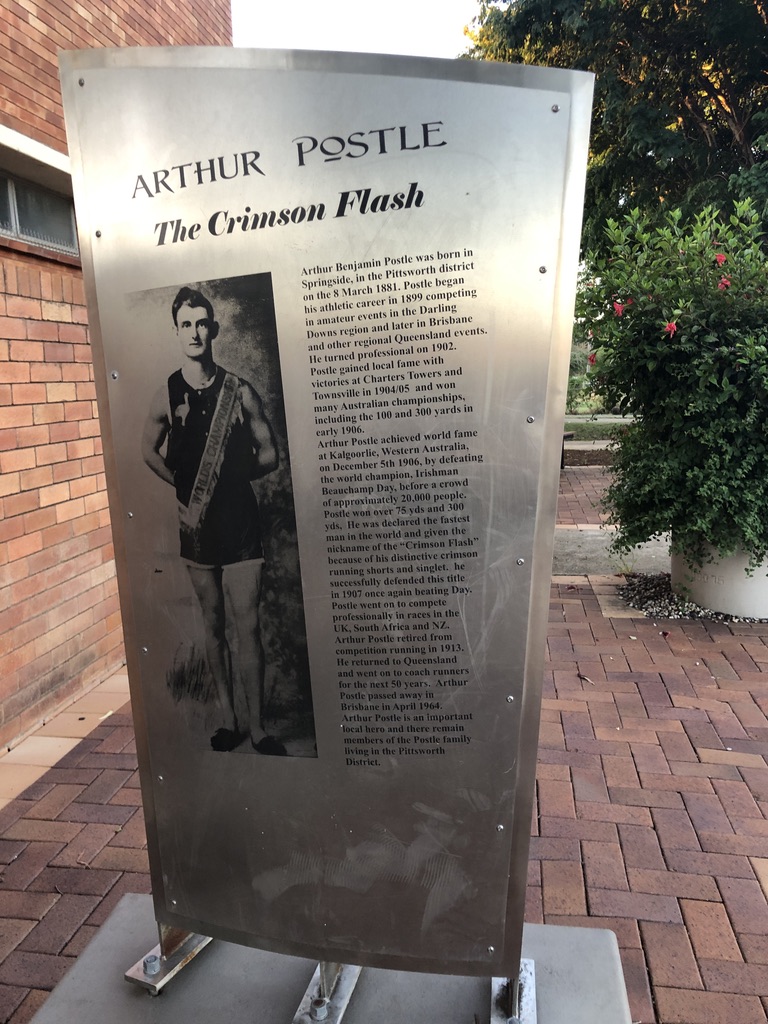
In Pittsworth, there is a memorial to Arthur Postle, the “Crimson Flash” – a local professional sprinter who won many Australian championships in the early twentieth century, even defeating a world champion.
On this trip we were exploring parts of the Darling Downs we hadn’t visited before, so I could look for old churches. My g-g-grandfather, James Matthews, was the Church of England Rector of Warwick between 1875 and 1886. In small farming settlements around the Downs, services in those days were held in inns or private houses; and James earned a name as a church builder. Perhaps he had the naming of them too, because at least one is dedicated to St James, and another to St Matthew.
It was hot in Pratten, a tiny town west of Warwick and north of the Cunningham Highway. St James’s Church is a small wooden building on a hilltop, with a simple bell tower beside it.
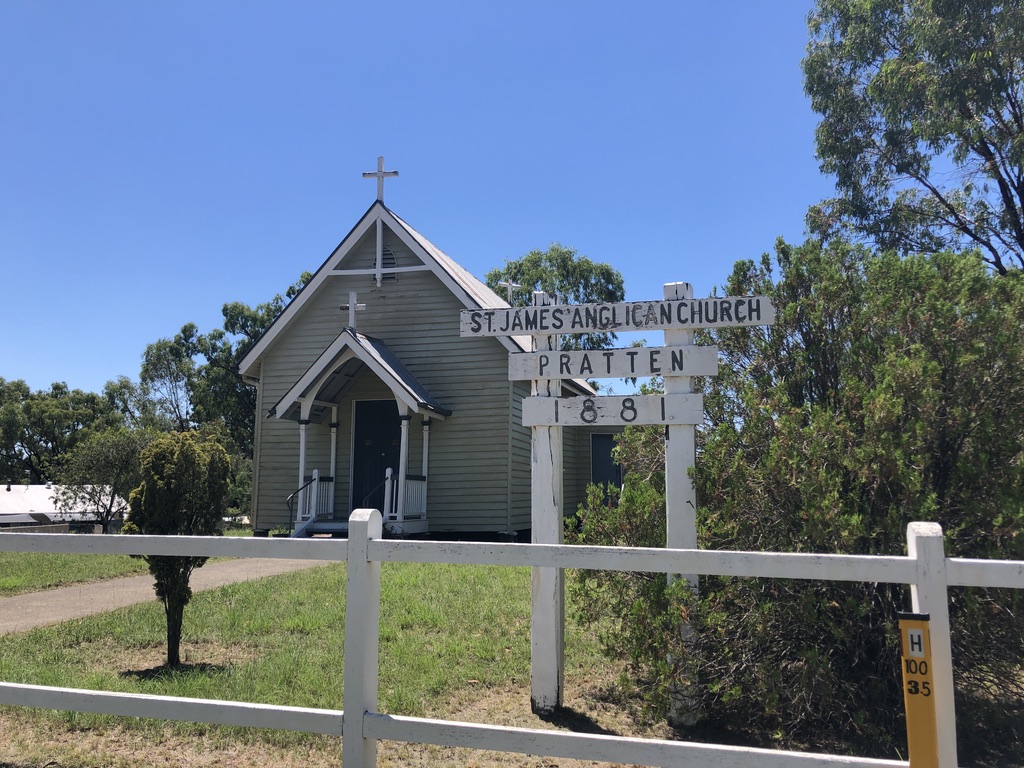
The town lay still and silent under the sun, until Con pulled the rope and the church bell rang out.
Still, nothing moved.
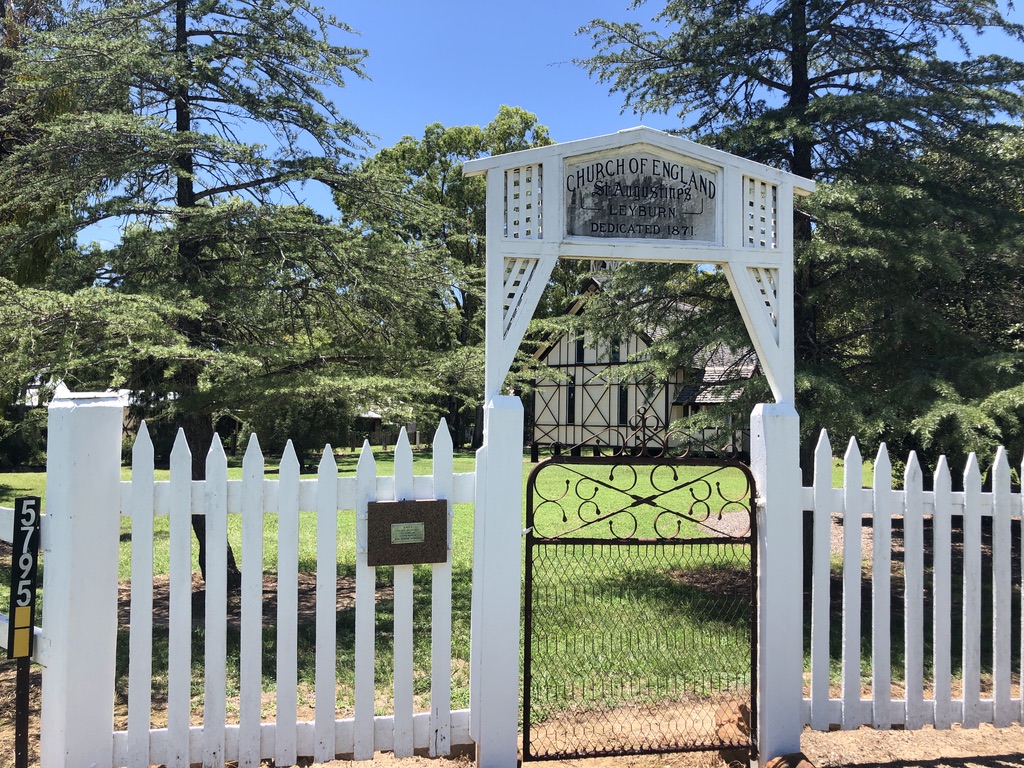
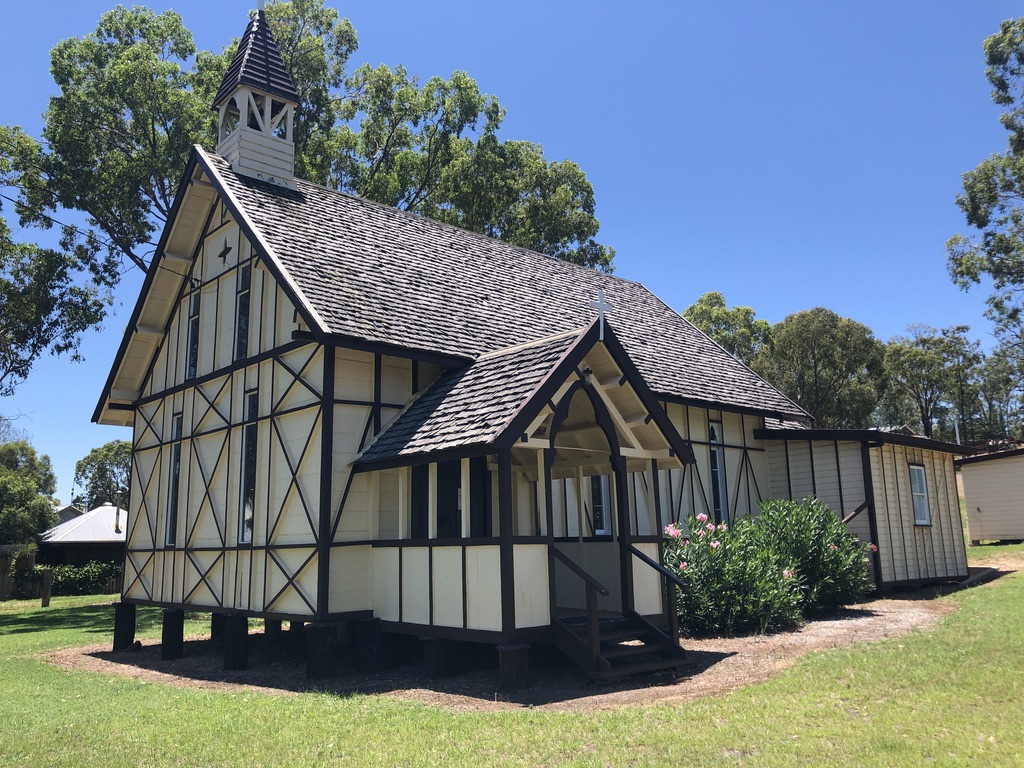
At the nearby town of Leyburn is another church visited by James Matthews. This attractive building was designed by architect Richard Suter, who designed Jimbour House, among many now heritage-listed buildings.
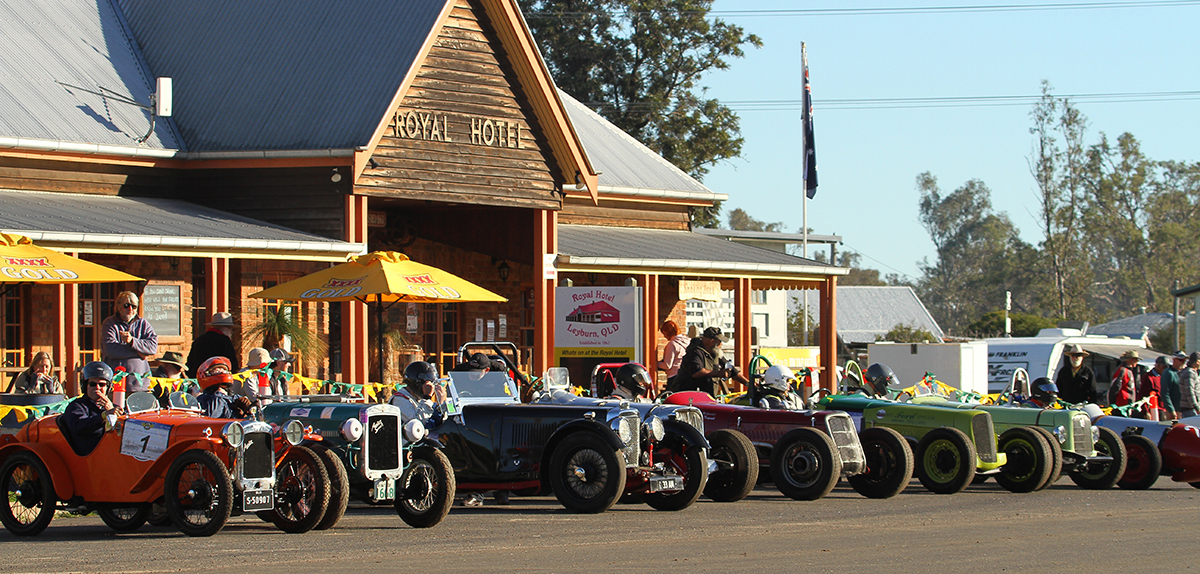
Leyburn has a pleasant pub, the Royal Hotel. Along with the Grand View at Cleveland, it claims to be the oldest continuously licenced hotel in the state. We were relieved to have our lunch in its air-conditioning.
Leyburn is known for motor racing. In 1949, seventy-five years ago this year, the Australian Grand Prix was held at here, attracting 30,000 visitors. The event has been recreated in the last few years as the Historic Leyburn Sprints, the main feature of a heritage festival with a motoring theme. The Sprints are held on a 137km route through the surrounding area, including Pratten. You wouldn’t have been able to hear the church bell ringing when the Sprint was running through town.

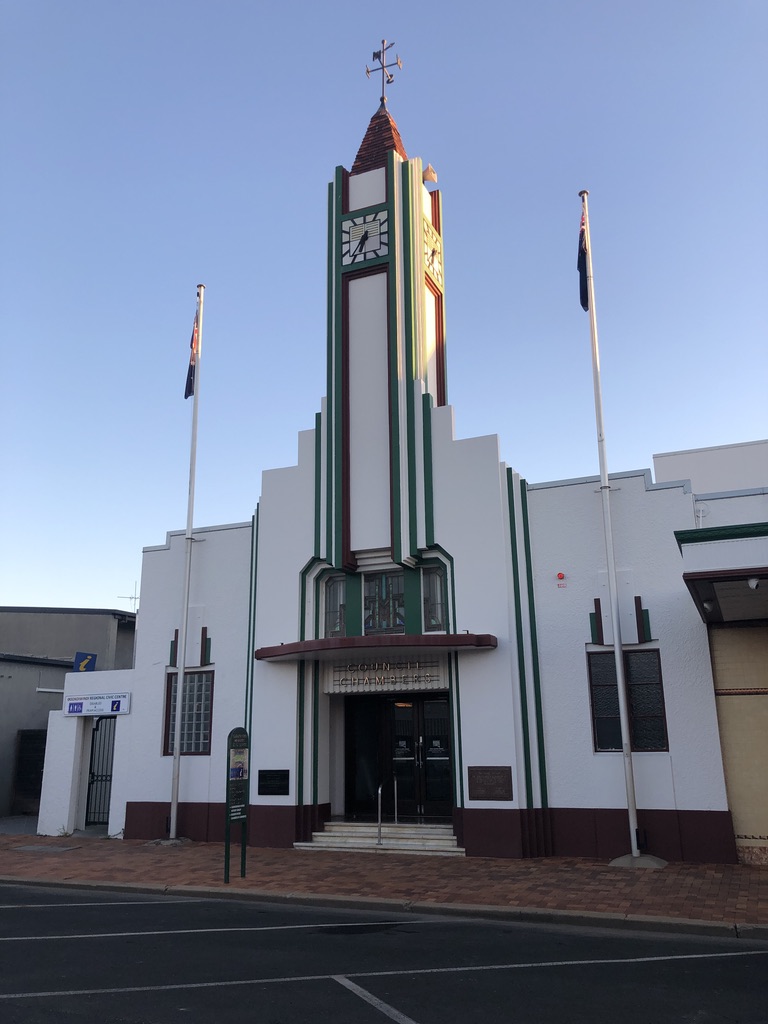
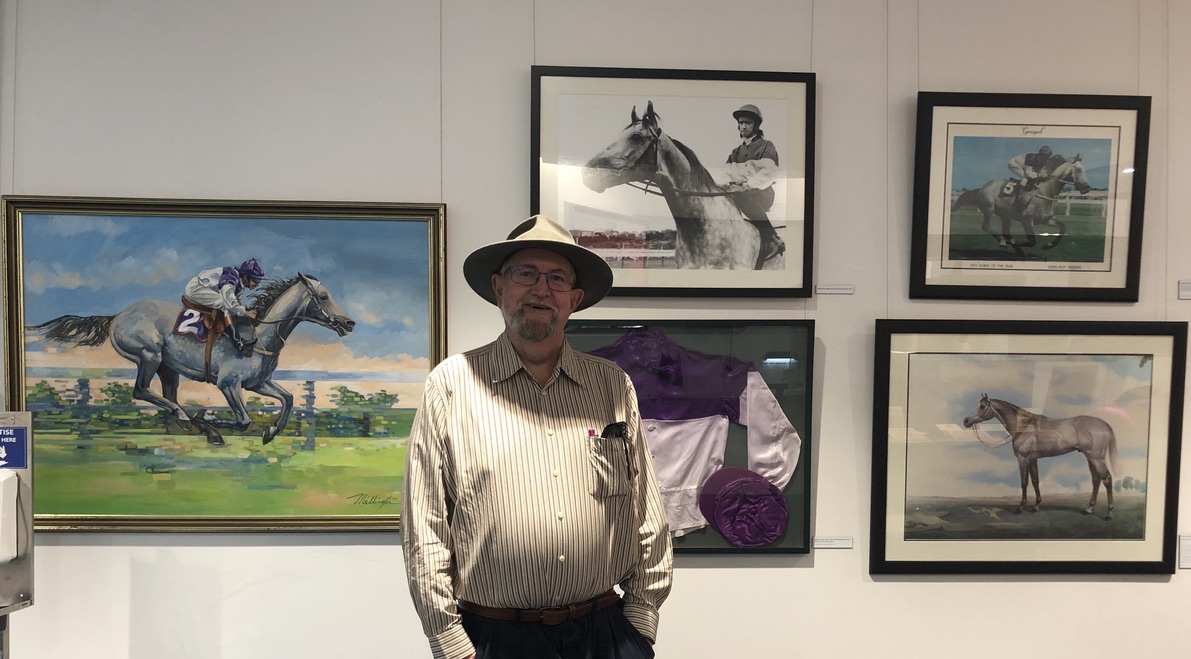
From Leyburn we headed to Goondiwindi to visit the Gunsynd Museum situated in the town’s elegant art deco council chambers. Another regional sporting hero, loved by Con.
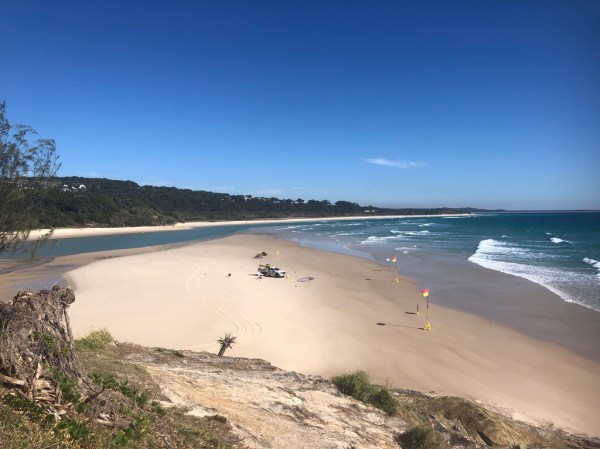
Last May, for my birthday, we spent three nights on Minjerribah North Stradbroke Island. This place is a treasure; and so close to Brisbane. White sand beaches, clear water, gorgeous freshwater lakes and swamps (so fresh that Island water is pumped to the other Bay islands and the mainland); birdlife, headland views, and small town life, as well as a strong Indigenous cultural presence.
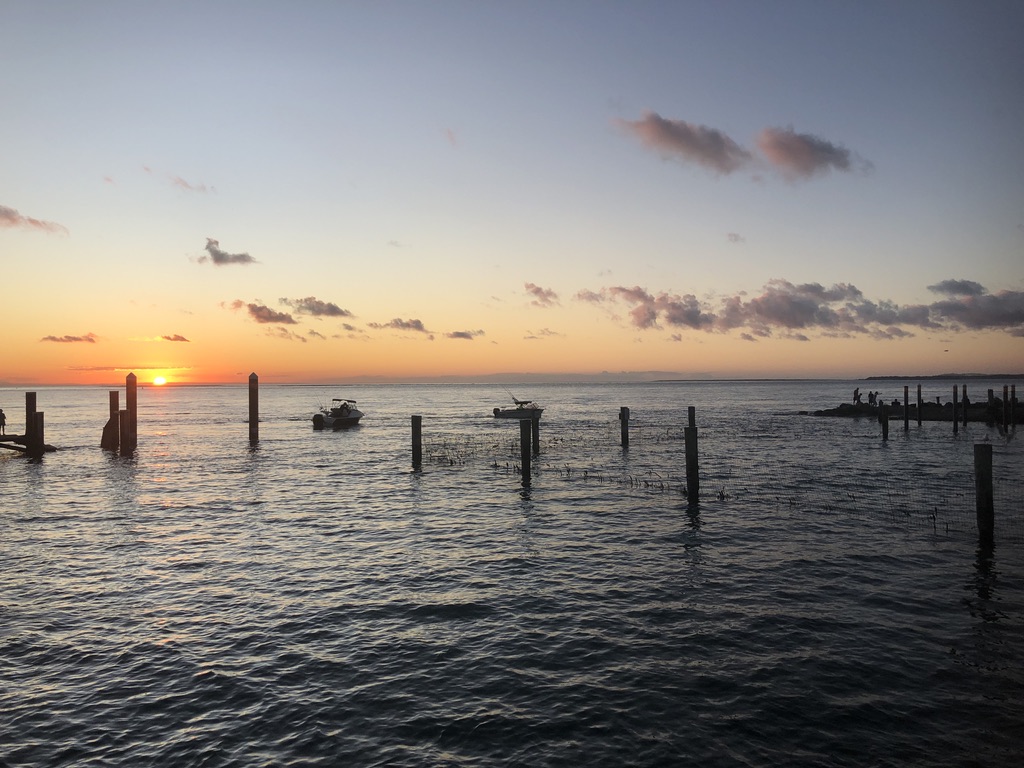
At the Point Lookout Hotel, perched above Cylinder Beach, I ate my birthday dinner accompanied by a beach stone-curlew that wandered among the terrace diners, searching for scraps with its huge, spooky eyes.
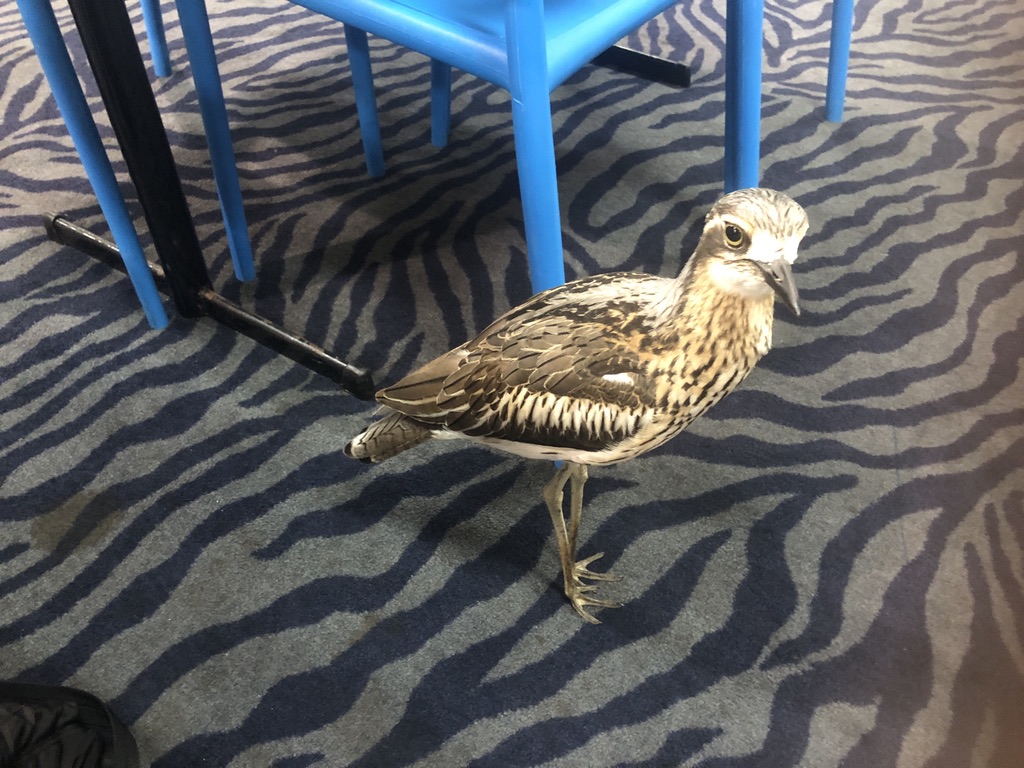
I’ve seen stone-curlews’ motionless forms and heard their haunting night-time cries from the suburbs of Brisbane to the tropics. Con tells me that on his first night at boarding school in Cairns he heard them and thought someone was being murdered.
We’ve made other out of town trips since our big trip was cancelled. Short trips to Grafton, Murwillumbah, Maryborough, Coolum, Toowoomba and Warwick.
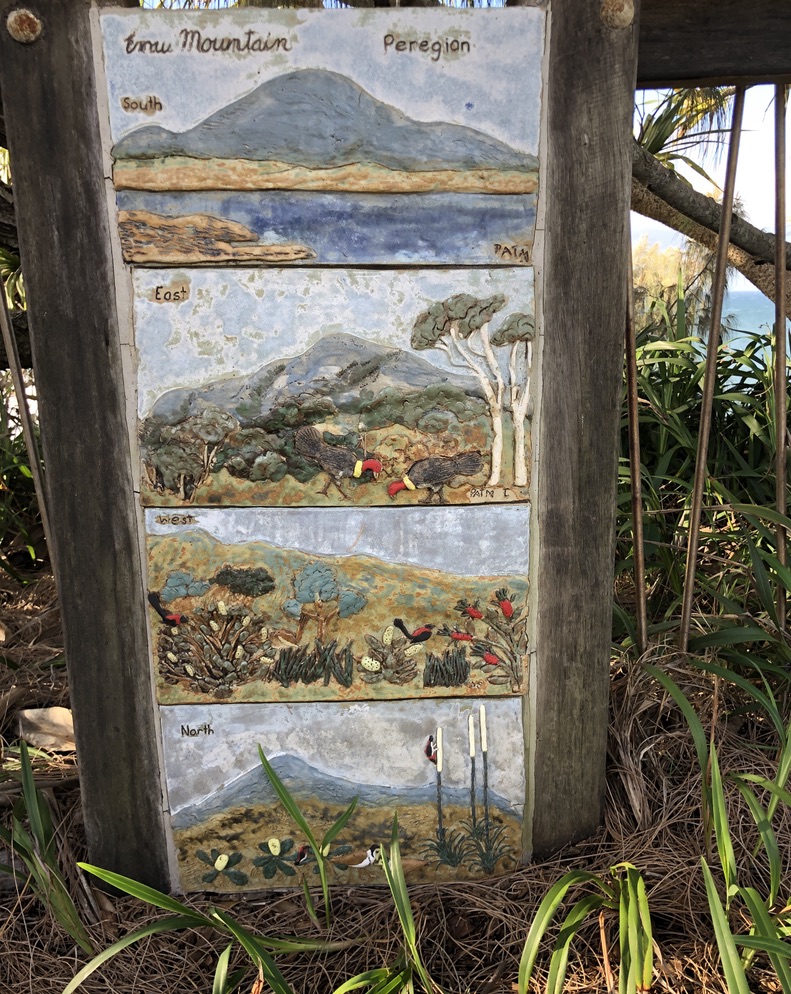
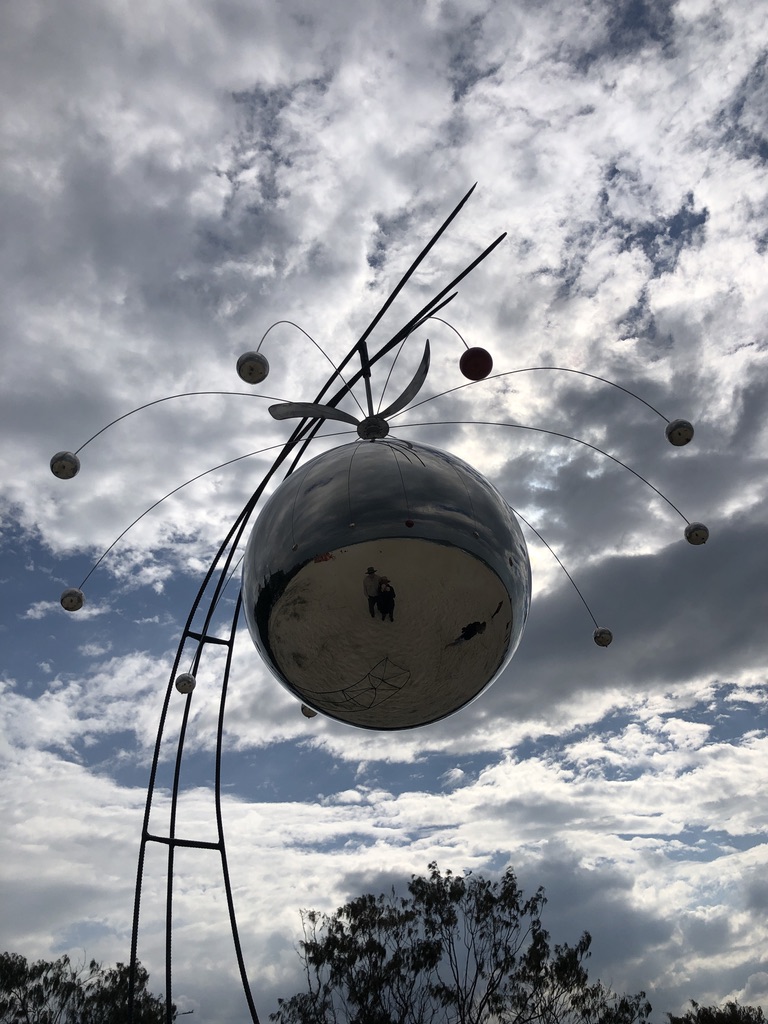
We also went to Currumbin to enjoy the Swell Sculpture Festival.
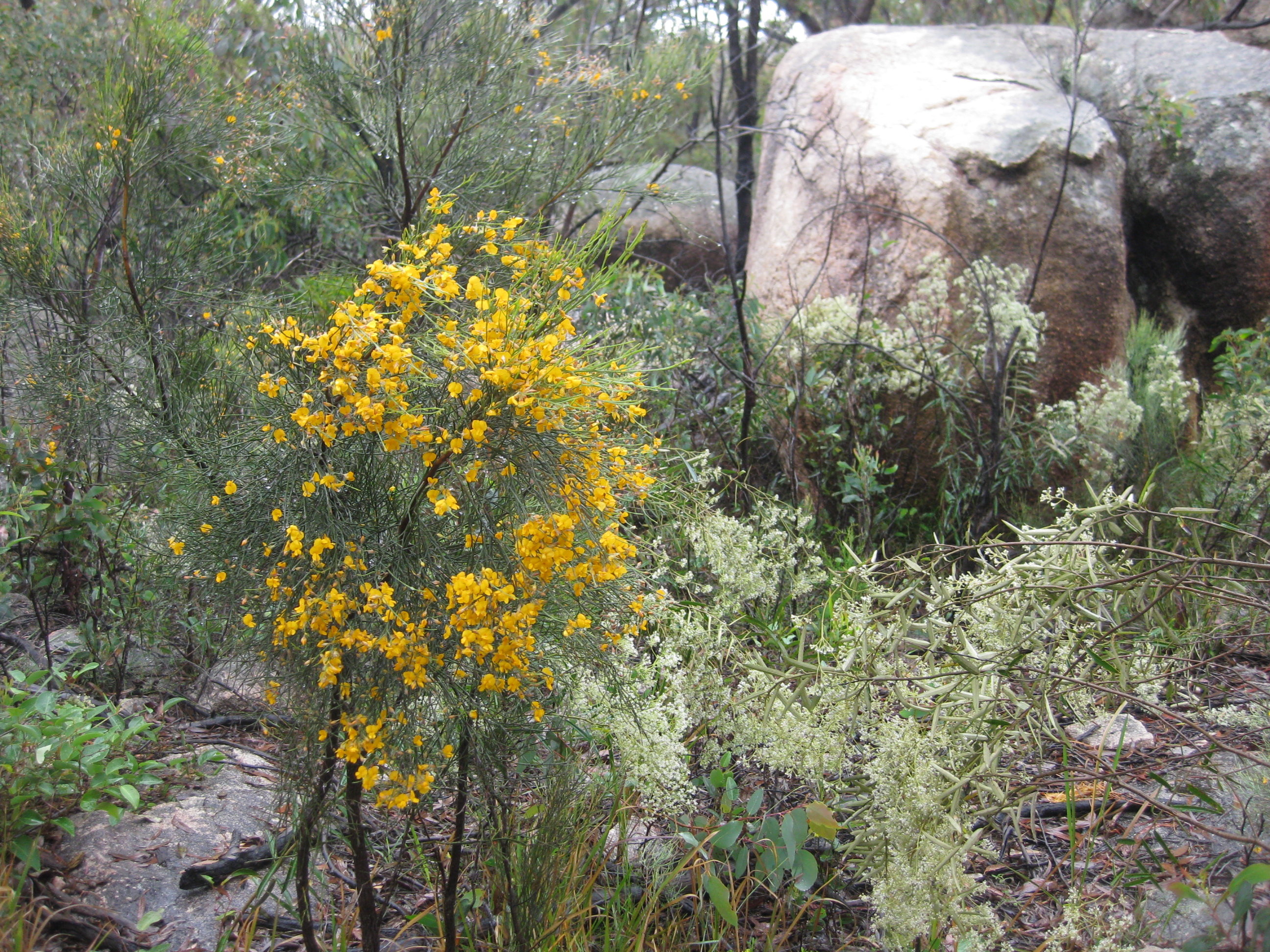
What next? Out to Glenmorgan, to pay a return visit to the Myall Park Botanic Garden? The wattles and wildflowers out there would be beautiful in Spring.
And maybe, next April, we’ll set off on that fine rivers road trip. Unless the rivers are flooding, or the countryside is burning…
Main photo: Cylinder Beach, Minjerribah Stradbroke Island




 Queensland Stories