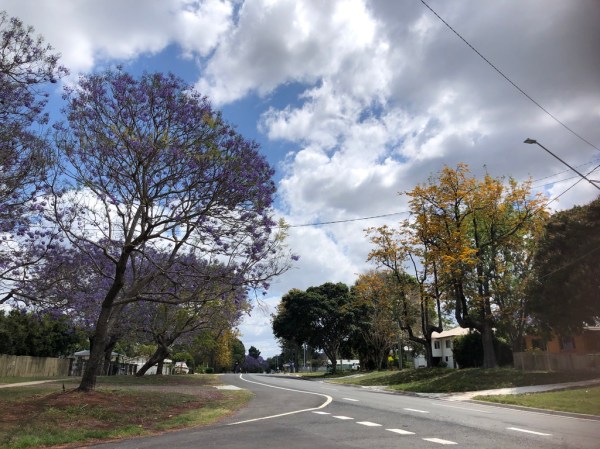
The Royal Mail, Goodna

An elderly man sits on his Brisbane Terrace verandah, looking out at the street. We chat. “I’m losing all my neighbours,” he says.

Across the road is a vacant lot, with crepe myrtle trees. A house stood there once, on that good corner block.

“It was the floods – January 2022. Missus across the road, she’s gone. And the people down the street.”

The government Resilient Homes Program provides funding for people whose houses have been affected by floods; and while submissions can be made to retrofit or raise houses, these vacant lots are the result of the Voluntary Buy Back scheme, through which people have been able to move elsewhere and leave their houses to demolition or removal.

“Did your place get flooded?” I ask.

“It came to three feet below the floorboards,” he answers. “I’m lucky my house is high set. Lots of places around here didn’t survive.

“If the pub goes, there’ll be nothing. And it’s up for sale.”

Along with so many regional pubs in Queensland, I think to myself. They often sit on the market for years.

The pub he’s talking about is the 150-year-old Royal Mail Hotel, a few hundred metres down the road. A traditional two-story timber pub, with verandahs, and a beer garden out the back, this is a much-loved venue.
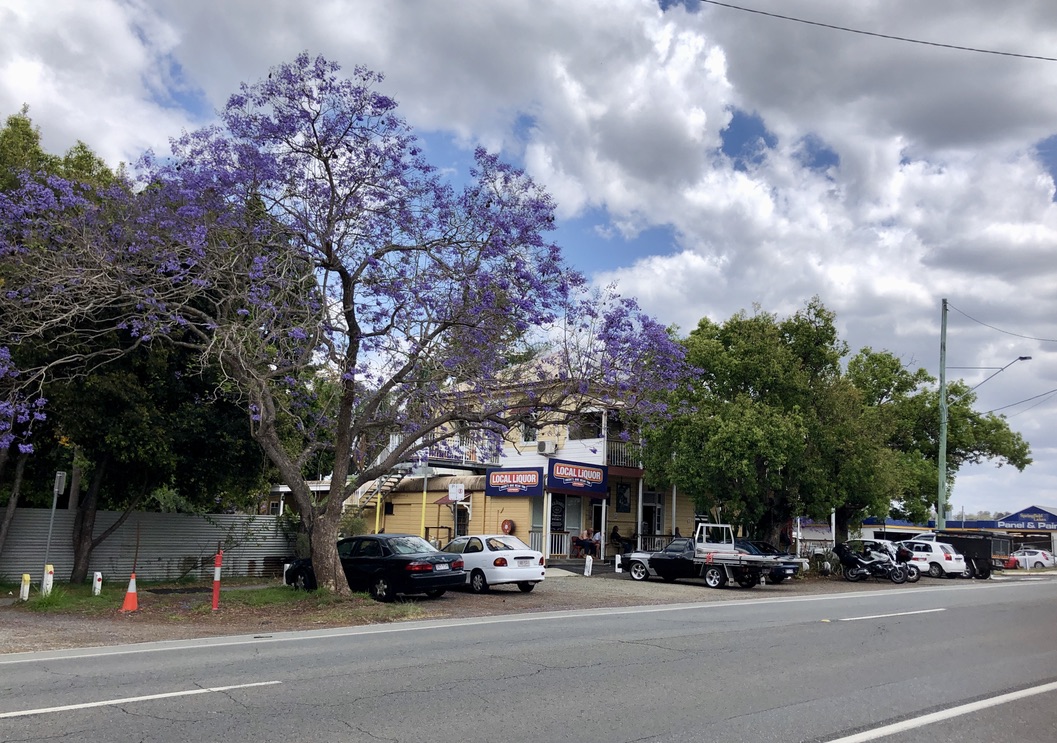
The Royal Mail Hotel, Brisbane Terrace, Goodna

When I told a Brisbane friend, a lover of music and a regular at the Woodford Folk Festival, that we’d been to a pub in Goodna, her eyes lit up. “Was it the Royal Mail?” she asked. “I love that place!”.

Goodna is an eastern suburb of Ipswich, and until 1955 what is now Brisbane Terrace was the main road between Brisbane and Ipswich. Cobb and Co. Coaches used this road, and the Royal Mail was one of their stopping points.

Participants get ready for a fox hunt outside the Royal Mail Hotel in 1892 Photo: couriermail.com.au

Now cut off from passing traffic by the motorway, it still brings people in after work, and publican Andrew Cafe and his family also found another way to attract customers.
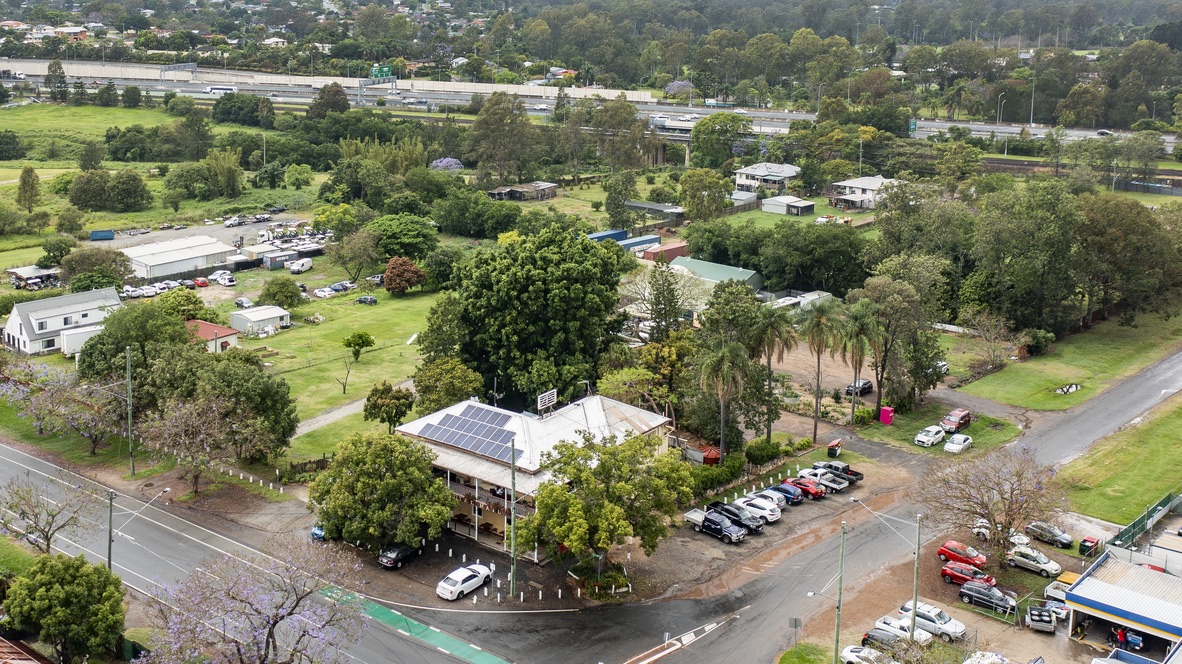
Aerial view of the Royal Mail, with Woogaroo Creek behind and the Ipswich Motorway in the distance Photo: Ray White Commercial

They have brought this old pub to international attention by making it, over the last thirty-five years, a famous Blues venue.
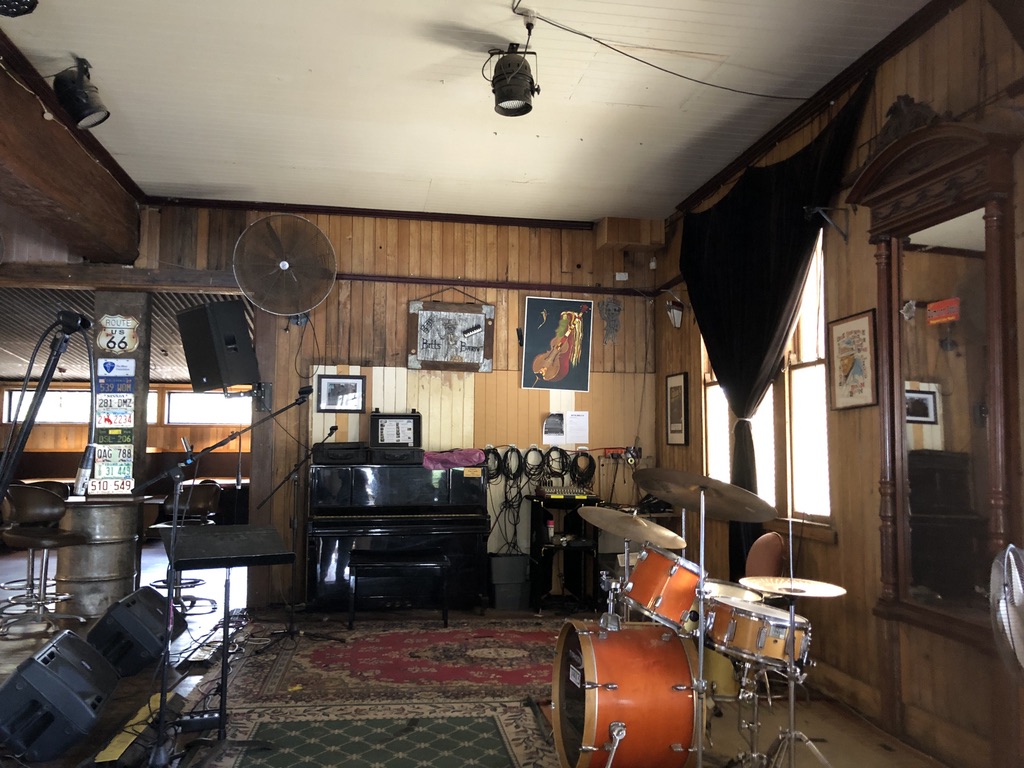
Royal Mail Blues lounge, quiet at Friday lunchtime

This year’s Bathurst 1000 ad was filmed at the Royal Mail, Goodna: https://www.youtube.com/watch?v=cLSJ1TpzKDQ 

According to its website, the Royal Mail Hotel is “the only venue in Australia to be awarded the International Keeping the Blues Alive Award from the Blues Association in Memphis Tennessee.” Every Thursday and Saturday, Blues bands and performers appear here, plus Jam sessions one Sunday a month. When we visit at lunchtime on a Friday, there are a good number of customers: a few tradies, a couple of singles, and several groups of friends having quiet beers. Some motorcycles are parked out the front. The bar and music lounge are atmospheric. A few people sit out in the shady beer garden, yarning.

Friendly group in the beer garden behind the Royal Mail

It’s not always this relaxed, though. It’s difficult to imagine how people can recover from the floods that have been through this suburb, and this old building.
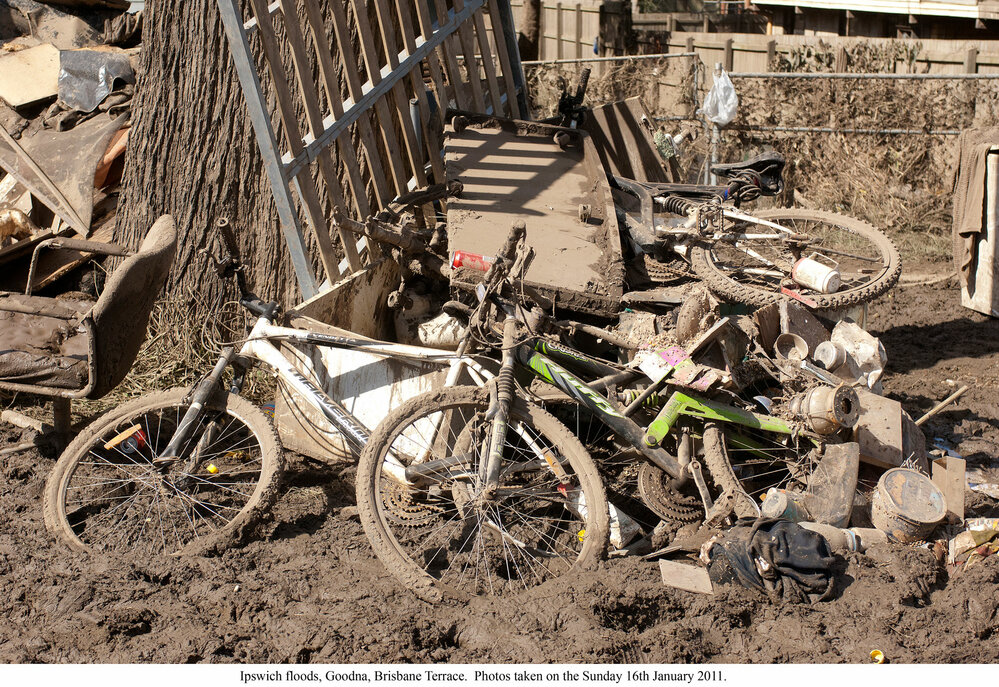
Flood debris, Brisbane Terrace 2011 Photo: ipswich.com.au

https://www.youtube.com/watch?v=iKMLcJFi8sc The Royal Mail flooded in 1974, 2011, and again 2022: https://www.youtube.com/watch?v=0fIPvYQGgfo The water rose to just below the ceiling in the bar. In 2011, publican Andrew says, he used a large oar, up until then a decorative feature in the bar, to push floating shipping containers away from the building, where his family and some flooded-out neighbours had taken refuge.

Andrew Cafe in 2011, after the flood, with that oar Photo: David Nielsen. couriermail.com.au

When the waters went down, many locals and people from further away came to help with the clean-up. The oar is back in the bar today.
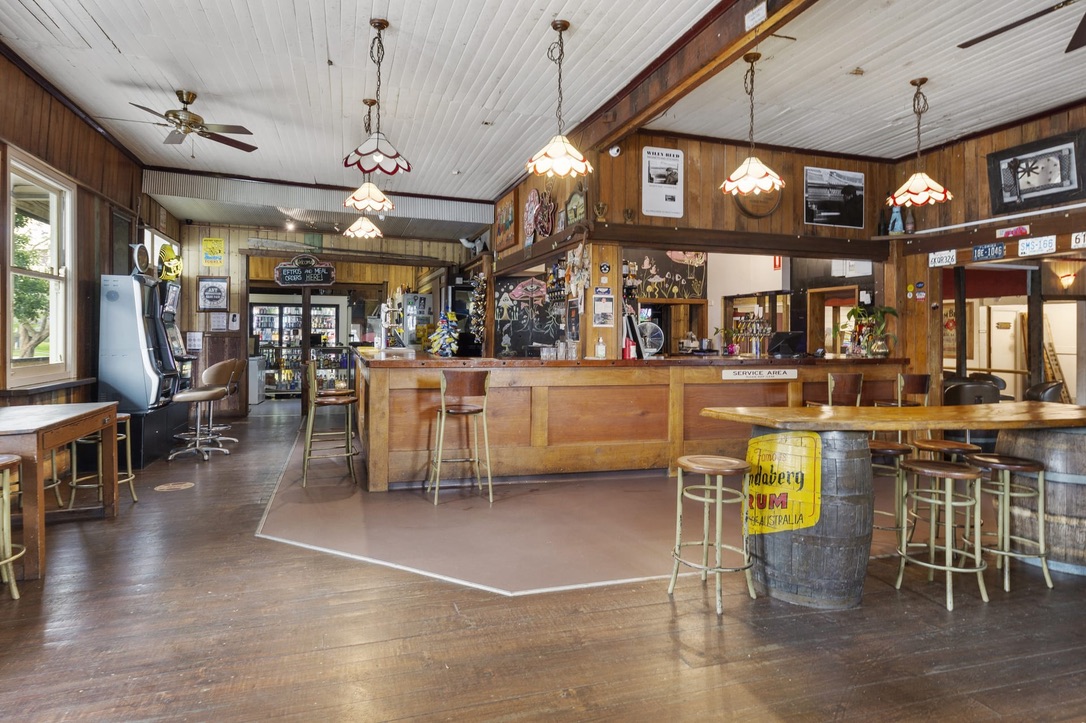
Photo from the hotel’s webpage, with the oar back in place in the bar, above the EFTPOS sign

Brisbane Terrace is a quiet street, although the non-stop roar of the Ipswich Motorway can be heard just a couple of blocks away. Most of the suburb of Goodna lies on the other side of the motorway and the railway line. The street runs through a narrow strip of land, dipping to flood-prone creeks and gullies and following a curve of the Brisbane River and Woogaroo Creek, 100 metres away, which forms the boundary between Brisbane and Ipswich. Along both sides of the road are old silky oaks and jacaranda trees, in gorgeous flower at this time of the year.
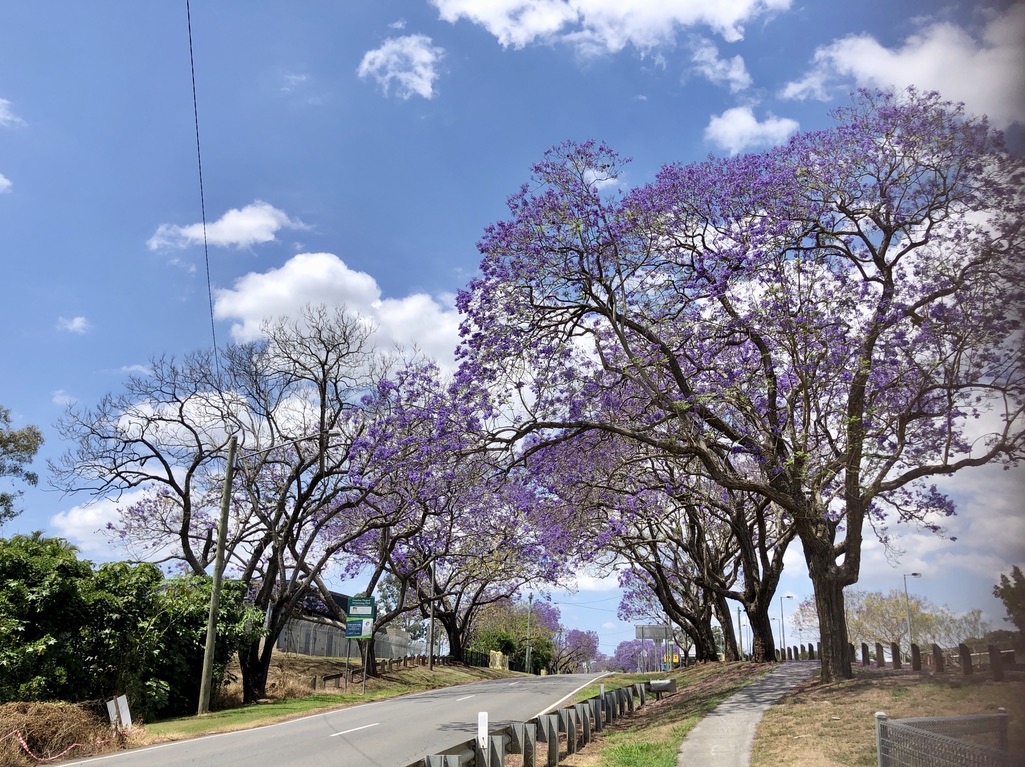
Brisbane Terrace, looking east past Evan Marginson Park

The jacarandas were planted in the 1930s, during the Great Depression.

The University of Queensland has jacaranda purple as its official colour and holds the Bloom Jacaranda Festival every spring. Grafton holds a famous Jacaranda Festival. Herberton in FNQ and Goombungee, north of Toowoomba, hold Jacaranda Festivals.

And Goodna. There have been yearly Jacaranda Festivals held here since the 1960s. Except for flood years. And COVID.

Later this month, from 27 to 29 October, the Club Parkview Jacaranda Festival will be held in sprawling Evan Marginson Park, a few hundred metres up the road from the Royal Mail.

This old suburb has seen hard times but is surviving. There will be more floods in the future, and more houses will disappear. I hope the old Royal Mail keeps going for many years to come. It has become the much-loved centre of the community.

In the women’s toilets at the Royal Mail

The First Jacaranda

At the bottom of George Street, Brisbane, in the curve of the river, there was a convict farm growing maize and vegetables. In time, the New Farm was established as well, and later the Eagle Farm.

In 1855, after the convict era ended, the New South Wales Government established Botanic Gardens on the George Street land, and appointed Walter Hill, trained in London’s Kew Gardens, as Superintendent. In 1859 he was appointed government botanist. For twenty-six years, until he retired and afterwards, Walter Hill worked at introducing, propagating and sharing plants species across Queensland, Australia and the world. He propagated the first macadamia tree in cultivation, which is still standing today in the Brisbane City Botanic Gardens and still producing nuts.

He also experimented with varieties of sugar cane, and helped refine it – the first sugar to be produced in Queensland.

He collected native plants, and especially loved bunya and hoop pines, planting hundreds of them, along with fig trees. His avenue of bunya pines still dominates the riverside walk in the Gardens.

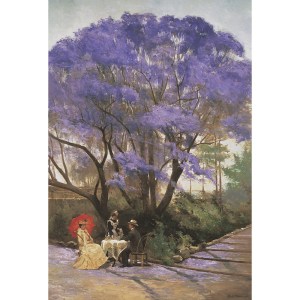
It was Walter Hill who successfully grew, in the Brisbane Botanic Gardens, what is said to be the first jacaranda tree in Australia – later the subject of Queensland Art Gallery’s most loved painting. He sent seeds from this tree, a native plant of Brazil, far and wide and transformed the parks, gardens, and street plantings of Queensland. The tree blew down in a storm in 1980.

botanical jacaranda best03-Original-Thumb-1-1
“Under the Jacaranda”, Godfrey Rivers, 1903 Queensland Art Gallery collection

 Walter Hill travelled Queensland, collecting native plant species and setting aside land in Toowoomba, Maryborough, Rockhampton, Mackay, Bowen, Cardwell, Cairns and other regional towns for agricultural study and botanical gardens. Some of them were never developed, but the ones in Rockhampton, Cairns and Toowoomba have become magnificent, much-loved and much-visited places, popular sites for weddings and functions, and home to fine plant and sculpture collections.

botanic mackay
Main building at Mackay Botanic Garden mackayregionalbotanicgardens.com.au

There’s some wonderful art in botanic gardens. It isn’t always widely known, and it often comes as a surprise.

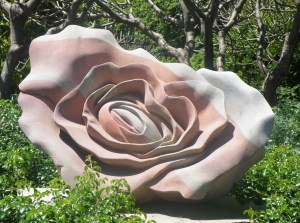
A6F87708-E8ED-44BF-9C0A-7E2BC5BC26E1_1_201_a
Sandstone rose sculpture, Mt Coot-tha Botanic Gardens, Brisbane

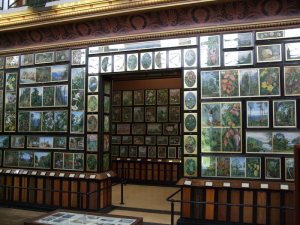
On a visit to Kew Gardens, which could be considered the oldest and greatest of botanic gardens, I was astonished by the colourful paintings of the nineteenth century English botanical artist Marianne North – 833 paintings, the product of thirteen years of world travels and literally covering the walls of a charming, specially designed 1880s building.

botanic marianne north
Marianne North Gallery, Kew Gardens hotenough.com

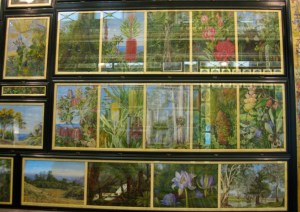
One large group of paintings depicts the plants and forests of tropical Queensland.

1697AC8C-FF97-4DAB-9E66-744BCA5C5874_1_201_a
Marianne North’s Australian and Queensland paintings (obscured by reflections)

The nineteenth century was a time of scientific fascination with plants and animals. From the 1850s onwards, botanists, naturalists and “Acclimatisation Societies” in Australia, New Zealand, and across the British Empire sent huge numbers of plants and animals all over the world to see how they would thrive in different conditions.

Echidnas to London, wombats to Paris; possums to New Zealand.

In New Zealand, when some of the introduced species got out of hand, stoats, ferrets and weasels were introduced to control them.

The delicate balance of nature would never be the same again.

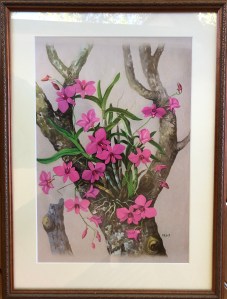
 One of the earliest botanic gardens in Queensland was in Cooktown. It was established in 1878 and revitalised in the late twentieth century, as tourism grew. Now, heritage listed and with interesting plant collections, it holds in its art gallery a collection of Vera Scarth-Johnson’s botanical paintings. I bought a print of the Cooktown orchid, Queensland’s floral emblem.

6E60769A-A39D-4009-A964-269527FCBD1D_1_201_a
Print of Cooktown Orchid by Vera Scarth-Johnson, from the Cooktown Botanic Gardens Gallery

In many parts of Queensland there are now botanic gardens established by local councils, such as those in the Gold Coast and Hervey Bay; all of them supported by groups of keen volunteers.

Others are privately owned and run, such as the Maleny Botanic Gardens. My favourite of these is the Myall Park Botanic Garden, outside Glenmorgan, 380 kilometres west of Brisbane. This garden has been devoted to the collection, propagation and study of plants that thrive in arid and semi-arid conditions – especially the grevillea.

cof
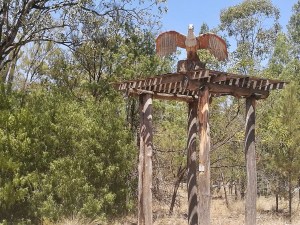
Tank stand sculpture, Myall Park Botanic Garden

We found this treasure by accident, when travelling to Roma via Tara and Meandarra to Surat and the Carnarvon Highway. It was begun in the 1940s, on a sheep station owned by the Gordon family, and spreads over a large area, with paths and information boards, a gallery and interesting shop, and accommodation.

59F4F519-AD8E-48DA-BC2B-D8CBF8F5B9BD
Decorative pavers leading to a bird hide, Myall Park

Different sections are devoted to different species, there is a bird hide, there are sculptures and artwork across the park, and the gallery features the botanical paintings of Dorothy Gordon.

botanic cards gordon
Botanical paintings of Dorothy Gordon

This garden is where the well-known and hardy red-flowering Robyn Gordon grevillea cultivar emerged by chance in the 1960s and was widely planted across Australia and beyond. Touchingly, it is named in memory of one of the Gordon family daughters, who died tragically young.

7034299C-DB0B-49C0-BC2D-D7776D21D7D7
A “Robyn Gordon” grevillea flowering in a park beside a busy Brisbane road

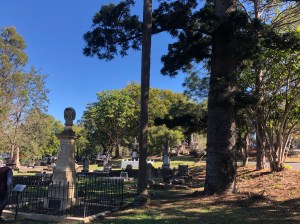
Walter and Jane Hill also had a daughter, Ann, who died young, in 1871. She was their only child; and there is a plant associated with her death, too. Ann was buried in Toowong Cemetery, only the second person to be buried there; and near her grave, to shade it, Walter planted a hoop pine. Today it is enormous.

1660FEF7-B114-48DF-B9F3-EA275482B8A3_1_201_a
Hoop pine and grave of Ann Hill and her parents, Toowong Cemetery

The plant collections of Queensland’s botanic gardens are developed on scientific principles, these days with an emphasis on native species. The plants are interesting, but I love the gardens most for their beauty, and their history.

The art to be found there is a bonus.

DB465642-D725-4343-912D-0761CD567B9D_1_201_a
Grevillea plate from Myall Park Botanic Garden Gift-shop

Blog at WordPress.com.

Up ↑