Want to Buy a Country Pub?

O’Mahony’s Hotel, Warwick

‘There was an Irish tradition that if you were building a hotel, you had to bury under it a hat, a cat and a bottle. Well, when we were renovating we found a hat and a bottle, and there they are.”

Joan pours me a gin and tonic and points to a battered felt hat on a shelf above the bar. Next to it is an old bottle.

“We never found the cat, though. I hope we don’t.

“Along there you can see my father’s walking stick, and the cap he wore when he was racing trotters.”
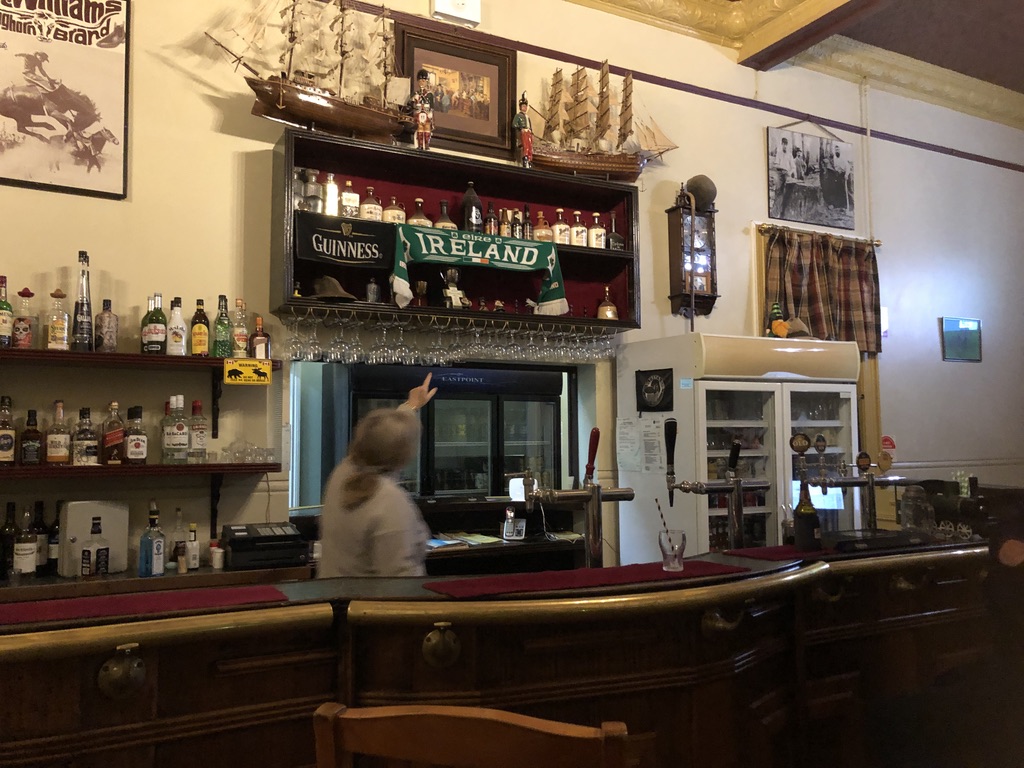
Joan Wallace in the bar of O’Mahony’s

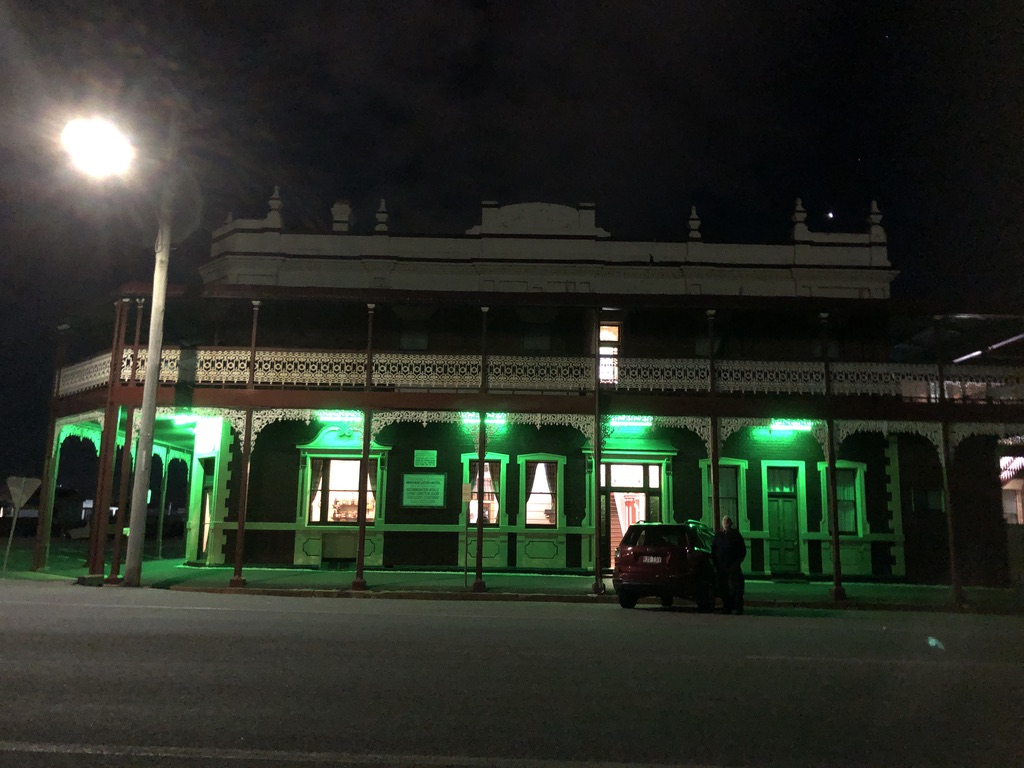
I’d driven years ago past this attractive old Warwick hotel with its red brick and iron lace and been sorry to see it in a rundown condition. Originally the National Hotel, built in 1907 and Heritage Listed, O’Mahony’s is located at the eastern end of Grafton Street, Warwick, opposite the railway station. It had in the past been patronised by train travellers and railway workers, but those days are almost gone.

Joan Wallace is the licensee and current owner of O’Mahony’s, with her brother Kevin. She tells me that they bought it in 2001 and they’ve been renovating it ever since, sourcing material and furnishings from near and far. The handsome timber bar came from the Ship Inn in South Brisbane, and the comfortable-looking lounge suite in the lounge originated in a monastery, she tells me. There are high pressed metal ceilings throughout, chandeliers, and a magnificent cedar staircase.
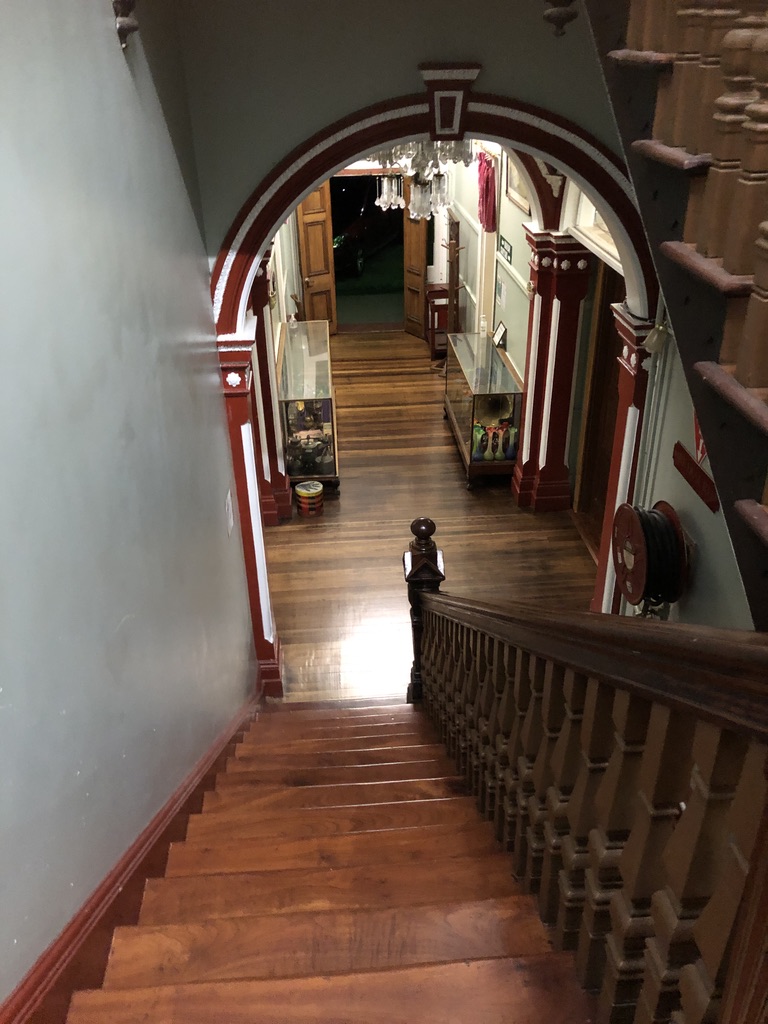
Looking down the main staircase at O’Mahony’s

“We have thirty-four bedrooms, and sometimes we fill them all,” Joan says. “And we’re listed on Airbnb.”

When I was young, living in a large country town, hotels were smelly places to walk past, with a bad reputation. My father, a temperate drinker, didn’t go into public bars except on ANZAC Day. The rest of the year he would buy the occasional bottle of wine or beer at the side door.  Now, after many years living and travelling through rural Queensland, I’ve learned to appreciate country pubs, whether magnificent buildings like O’Mahony’s or small, single-storied structures that have been the social centres of isolated communities for well over a century. They are places for travellers to stay and rest, places for locals to gather and relax and do business. I’ve often thought that for a family, perhaps with two or three generations together, a country pub would be a fine business to run, even providing a home.

When you stay in a country hotel it feels like home. It might be slightly daggy, but you have the run of the place: lounge and verandahs, breakfast room, bar. These old places all have stories; but as they age, and demographics shift, and times change, some of them become neglected and no longer viable.

Then, sometimes, the right people come along, people who are prepared to take them on and keep that tradition of hospitality going in the face of changing times; and not only magnificent places like O’Mahony’s.

Across Queensland there are many humbler hotels in tiny, isolated towns that provide the only meeting place for kilometres around. Road trippers love old country pubs, with their quirky bush décor of bush hats and branding irons and an atmosphere of yarns and larrikins; but they’re tricky businesses to run, what with pandemics and decreasing local populations, with insurance and regulations, transport costs and staff shortages, maintenance of old buildings and the eternal issues involved with dealing with customers and alcohol.

Hotels in tiny towns might sell groceries and fuel, provide campgrounds, run the local Post Office, maintain the local public toilets and run a Centrelink Agency. It sometimes seems as if liquor sales are incidental to everything else that goes on. The Heritage Listed Noccundra Hotel, along a gravel road in the Channel Country , 13 hours’ drive west of Brisbane, is like that.
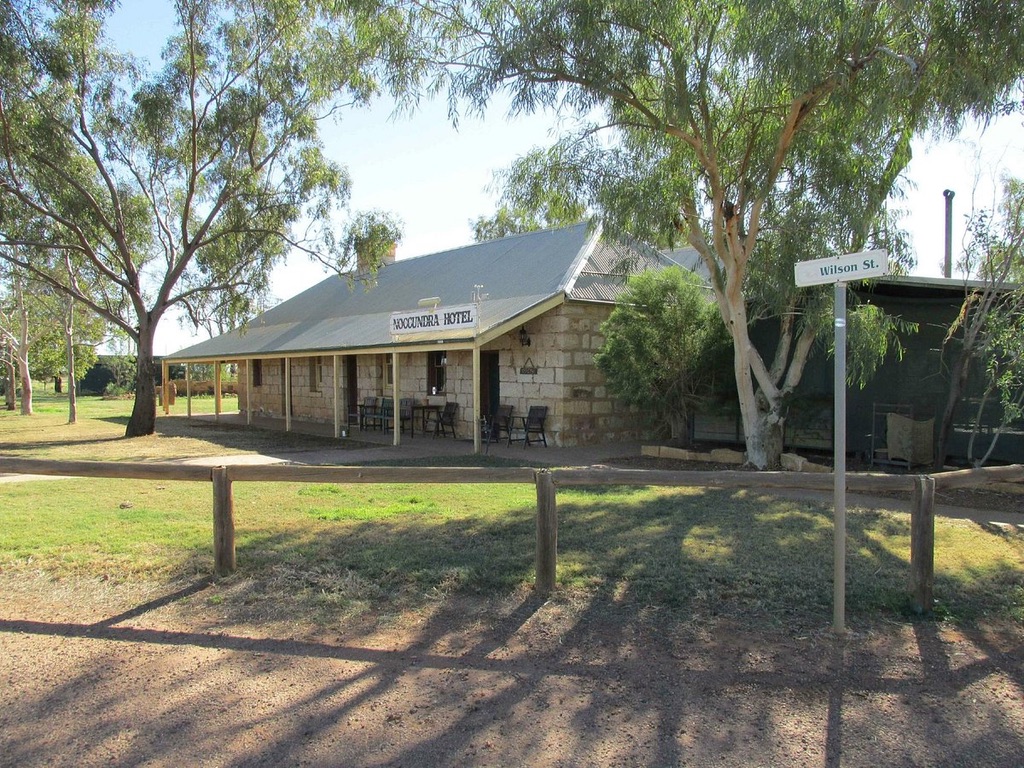
Noccundra Hotel Photo: tripadvisor.com.au

In Hebel, a local rescued the pub for the sake of the community. Hebel is a tiny town in south-western Queensland, on the Castlereagh Highway just north of the NSW border. When it looked as if the Hebel Hotel was going to close, because of drought, floods, farm closures, isolation and COVID, a local businessman farmer named Frank Deshon and his family bought it, along with the General Store, because they knew the community needed it.
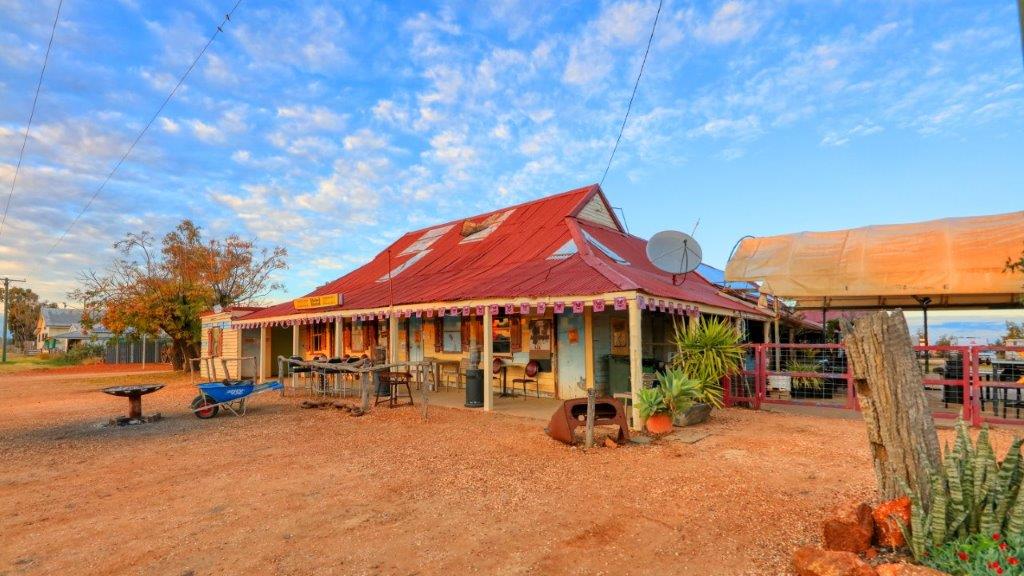
Hebel Hotel Photo: hebelhotel.com.au

Heather Ewart on ABC’s Backroads went there: https://www.youtube.com/watch?v=rb5p3wtKPC4

It’s not only locals who come to the rescue of dying bush hotels. Take the Quamby Pub.  Around fifty kilometres north of Cloncurry on the long and lonely road to Normanton, there’s not much happening in Quamby, except once a year for the rodeo. The small town died as roads improved and the local cattle and mining industries changed.

Ten years ago the old hotel was abandoned to the white ants, but in 2021 it was spotted by travelling Gold Coast friends. It was for sale, and they bought it, and rebuilt it for present day customers.

The photos on the Quamby Pub Facebook page document the arduous restoration process they went through, with the help of friends, locals, and even passing travellers. https://www.facebook.com/quambypub

Now the Quamby Pub is open once more, with food and drink, a big new covered deck out the back, camp sites, and even a pool.
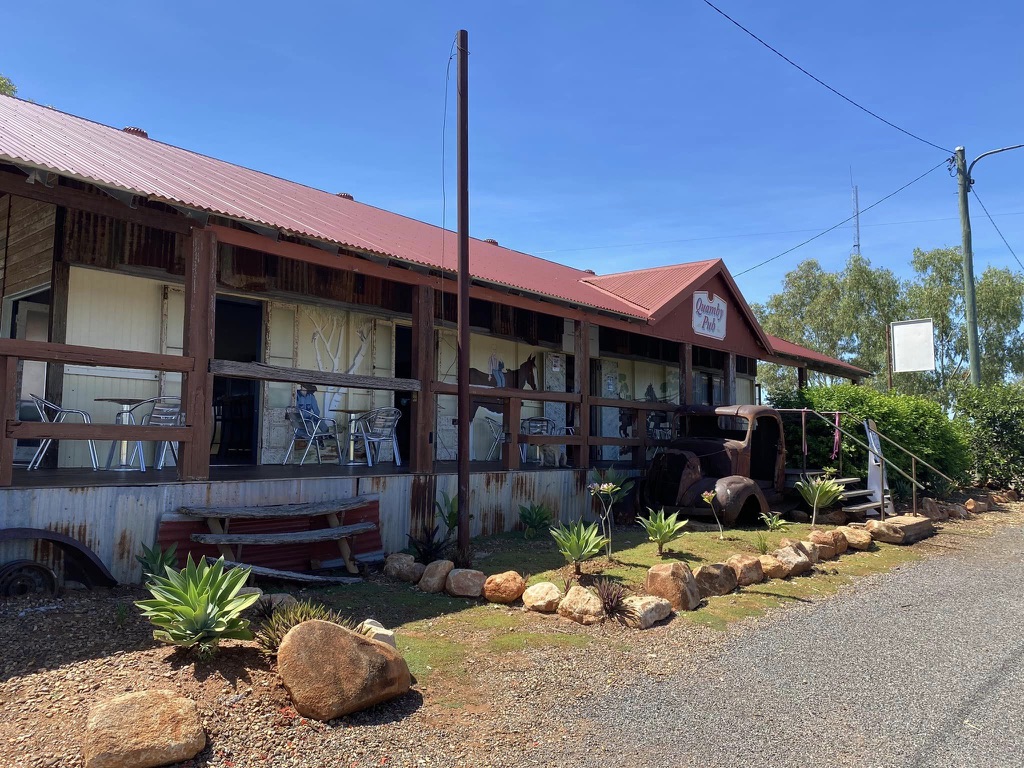
Judging by the response of locals and travellers it’s hard to imagine that the Quamby Pub will be closing down again. https://www.abc.net.au/news/2023-04-19/historic-quamby-pub-restored-by-gold-coast-tourists/102235284

Now, after all their devoted work, Joan and Kevin Wallace’s fine old Warwick hotel is on the market too. O’Mahony’s is up for auction, Joan tells me, and because of its iconic status locally, the sale has been the subject of news reports:  https://www.facebook.com/watch/?v=1635605283142106

The auction will take place on 19 July, 2023: just a couple of weeks from now. Want to buy a pub?
Innisfail

The air feels different here in the Wet Tropics. The sun is hotter, it’s more humid, and in the wet season mould grows on everything.

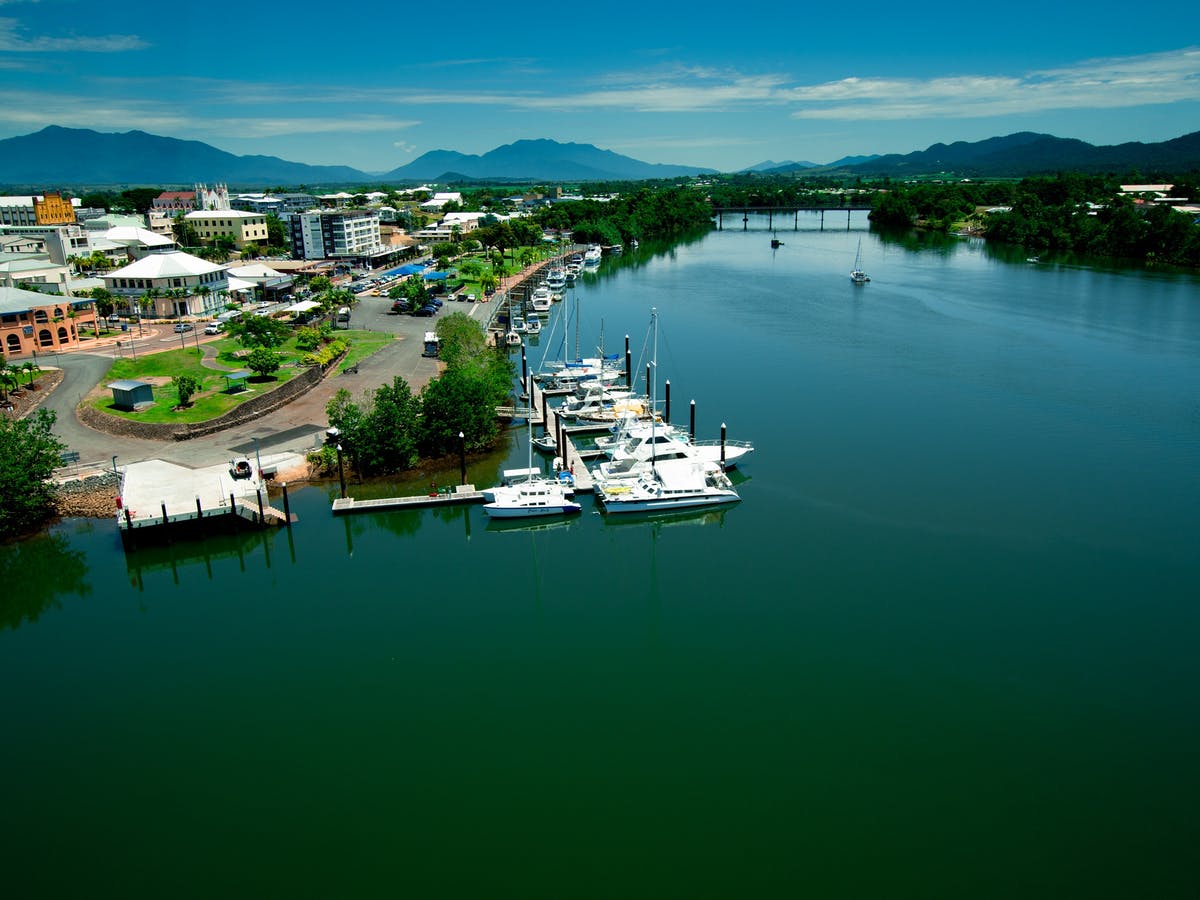
The hilly town of Innisfail, ninety kilometres south of Cairns, is situated at the junction of two beautiful rivers: the North Johnstone and the South Johnstone. No one swims in them. This is the home of the Johnstone River crocodile, otherwise known as the freshwater crocodile or freshie, which doesn’t eat people; but the saltie, or saltwater crocodile, does eat people – and it also inhabits these rivers.

innisfail riverfront Innisfail waterfront at the junction of the North and South Johnstone Rivers queensland.com

The first time I visited Innisfail, I came up from Brisbane on a Greyhound bus. Con and I were engaged, and we were travelling north together so I could meet his family. It took us over thirty hours to get here.

With roads much improved now – motorways, passing lanes, highway redirection – you can (in theory) drive here in eighteen hours, but the bus still detours to drop off and pick up passengers at tourist spots – Noosa, Hervey Bay, Proserpine, Mission Beach – so it still takes a long time. The train takes about twenty-four hours, and if you pay the rather enormous cost of a railbed you can sleep for eight hours of that. We usually drive, stopping for one or two nights on the way, perhaps at Rockhampton and Ayr, or at Sarina, south of Mackay.

Con grew up in Innisfail but left long ago. We’ve been back many times to visit, and each time he gives me a guided tour of his special places. Including pubs.

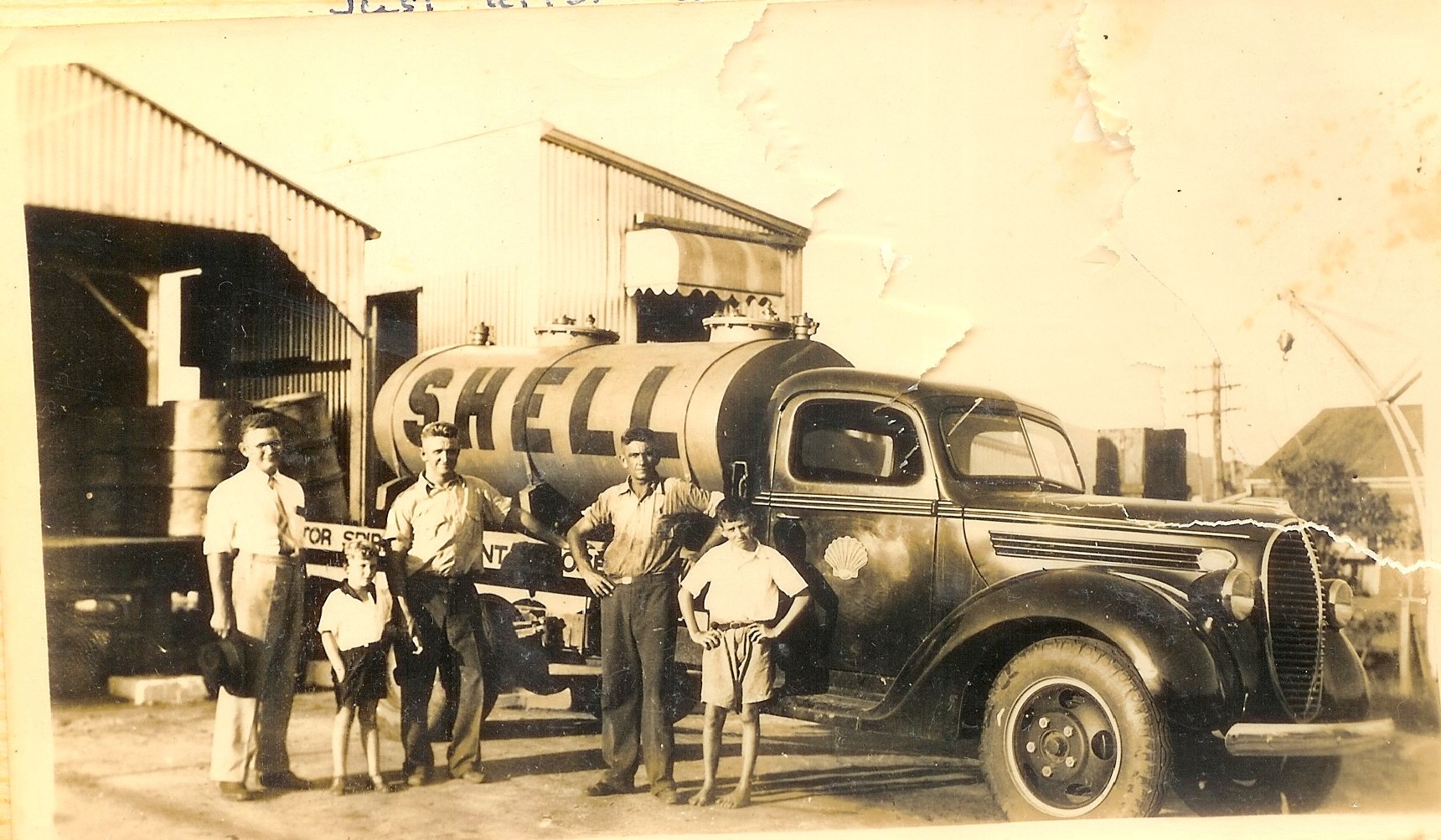
“Dad’s Shell fuel depot was over there, near the Goondi Hill Hotel.

5 - con, jim and colin. innisfail 1940 Con Snr (centre) at his Shell fuel depot, Innisfail 1940

“There were lots of hotels back then. As well as the Goondi, there were the Commonwealth, Innisfail, Crown, White Horse (we called that the Blonde Donk), Grand Central (that’s an arcade now), Riverview, Exchange (that’s near the canecutter statue), Federal, Imperial and Queens hotels. It was a lively town.”

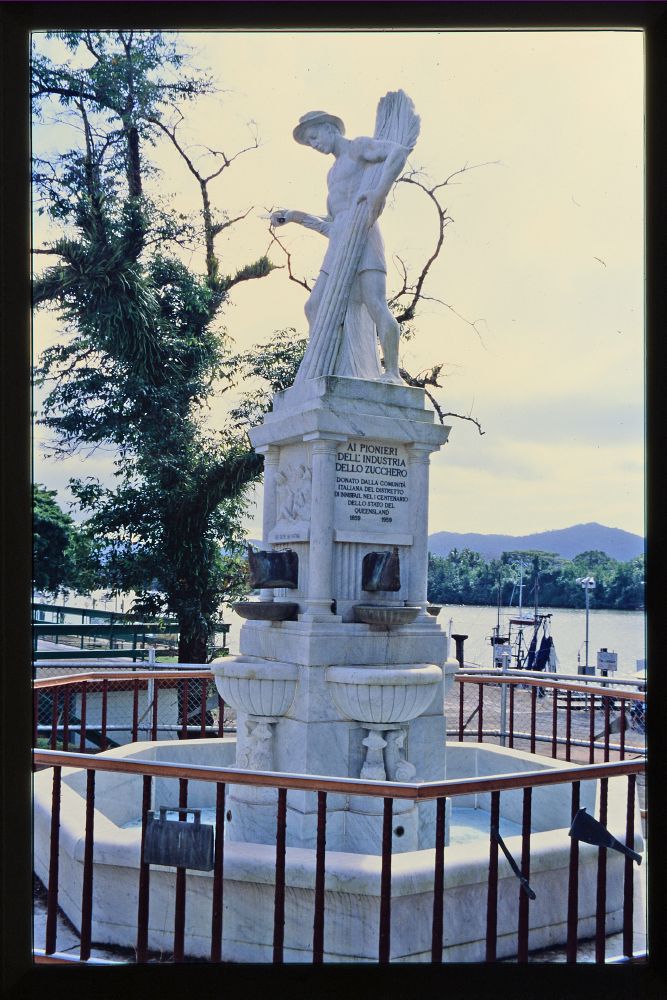
The white marble Canecutters Memorial was erected beside the river in 1959 by Innisfail’s Italian community, to celebrate Queensland’s centenary.

innisfail Canecutters_Memorial,_1999 Canecutters Memorial      en.wikipedia.org

Many of Innisfail’s hotels are gone now, either closed down, or blown down by a cyclone. 

We drive twenty-four kilometres to Paronella Park, where Con went to dances as a young man. “It had a mirror ball in the ballroom. It was great!”

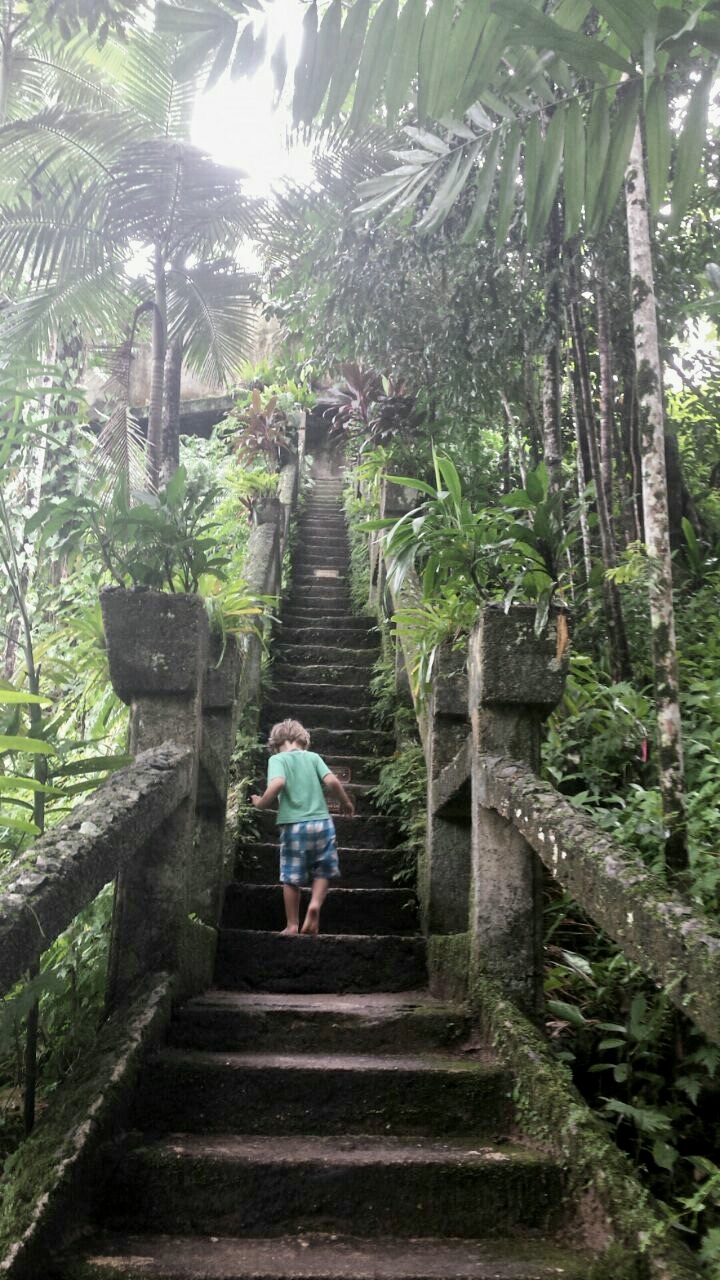
He took me there on that first visit, borrowing his mum’s little Datsun. Built by Spanish immigrant Jose Paronella, the Park, with its fantastic castle, walkways, staircases and bridges gently rotting away in the rainforest beside Mena Creek’s waterfall, was first opened in 1925 as pleasure gardens. It even had its own hydroelectric system, using the force of the nearby falls.

Damaged by floods and cyclones, picturesque Paronella Park has been listed with the National Trust, and it has now been developed for modern tourism, its hydro system restored. Chosen as the setting for a recent feature movie, “Celeste”, it’s unique and authentic, a FNQ treasure. Nowadays we go there with our grandchildren.

1E2910EC-1434-4A5D-A16E-4C8D9928AD86_1_201_a Climbing the stairs at Paronella Park

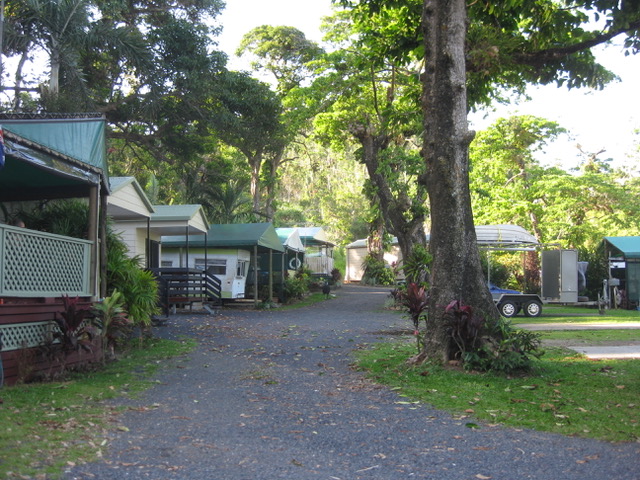
We drive out to Etty Bay, sixteen kilometres from Innisfail, one of Australia’s prettiest beaches, where rainforest and coconut palms shade the coral sand, and cassowaries wander.

Sometimes we spend a night in the caravan park and eat a fish and chips dinner at the kiosk.

Innisfail etty A cassowary wanders through the Etty Bay Caravan Park

Con is sentimental about Etty Bay.

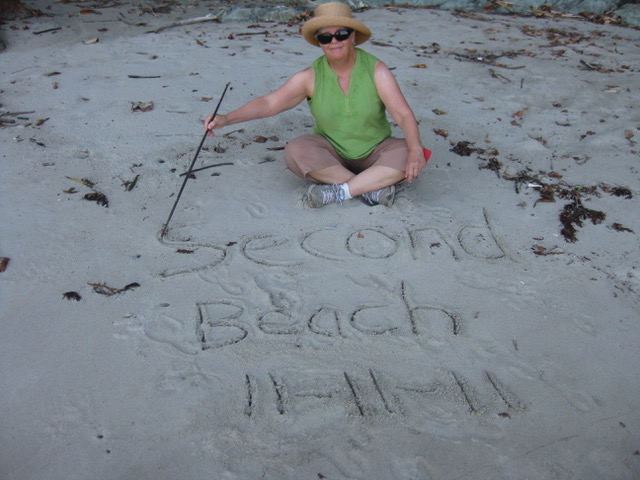
“There’s another little beach up here,” he says, climbing over the oyster shell strewn rocks at the northern end of the beach. “We used to call it Second Beach.

“And look – here’s another beach! It’s tiny, but it’s a beach all right! We called it Third Beach!!

Innisfail etty 2 Celebrating Second Beach

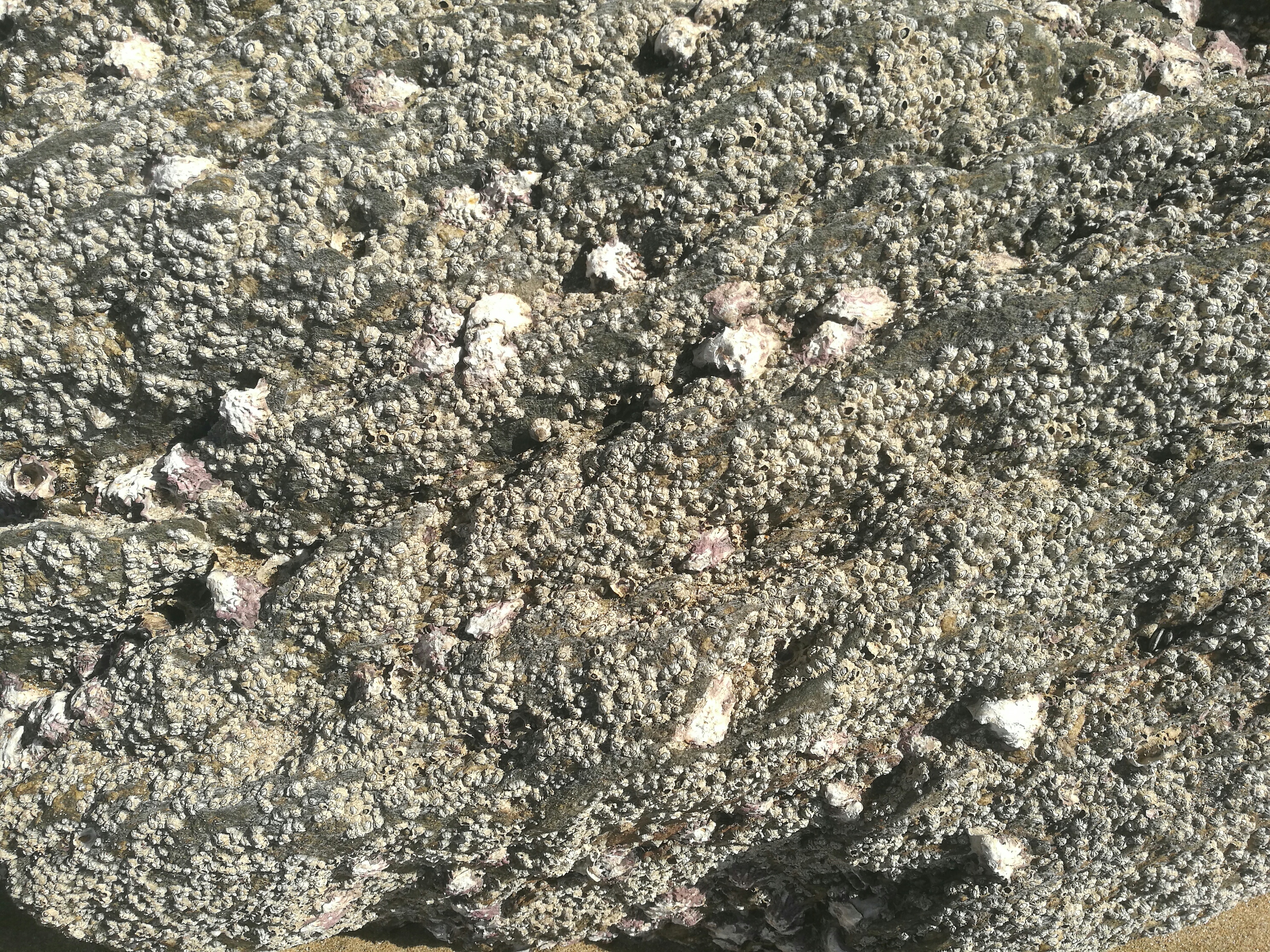
“We opened the oysters with a screwdriver. They were small, but they were the best oysters I ever ate!”

DE282A87-50C6-472B-94CE-DCE25BE549D3 Etty Bay oysters

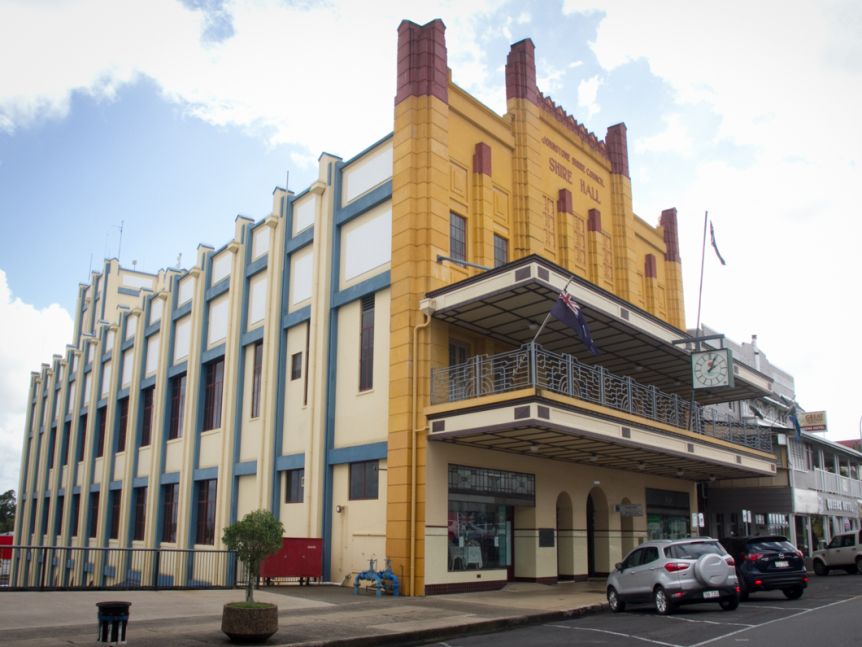
Innisfail is a pretty town. The Johnstone Shire Hall, built in the 1930s on the side of a hill, has a top-floor ball room and concert hall. Con takes me up the steep stairs to take a look. People are setting up for a concert, and the double door at the back of the stage is open.

There is a lift platform outside the door, suspended far above the ground, for winching equipment, pianos and sound systems up to the stage. “Workplace Health and Safety was never much of a consideration when I was in shows here,” Con tells me.

innisfail shire hall abc.net Johnstone Shire Hall abc.net.au

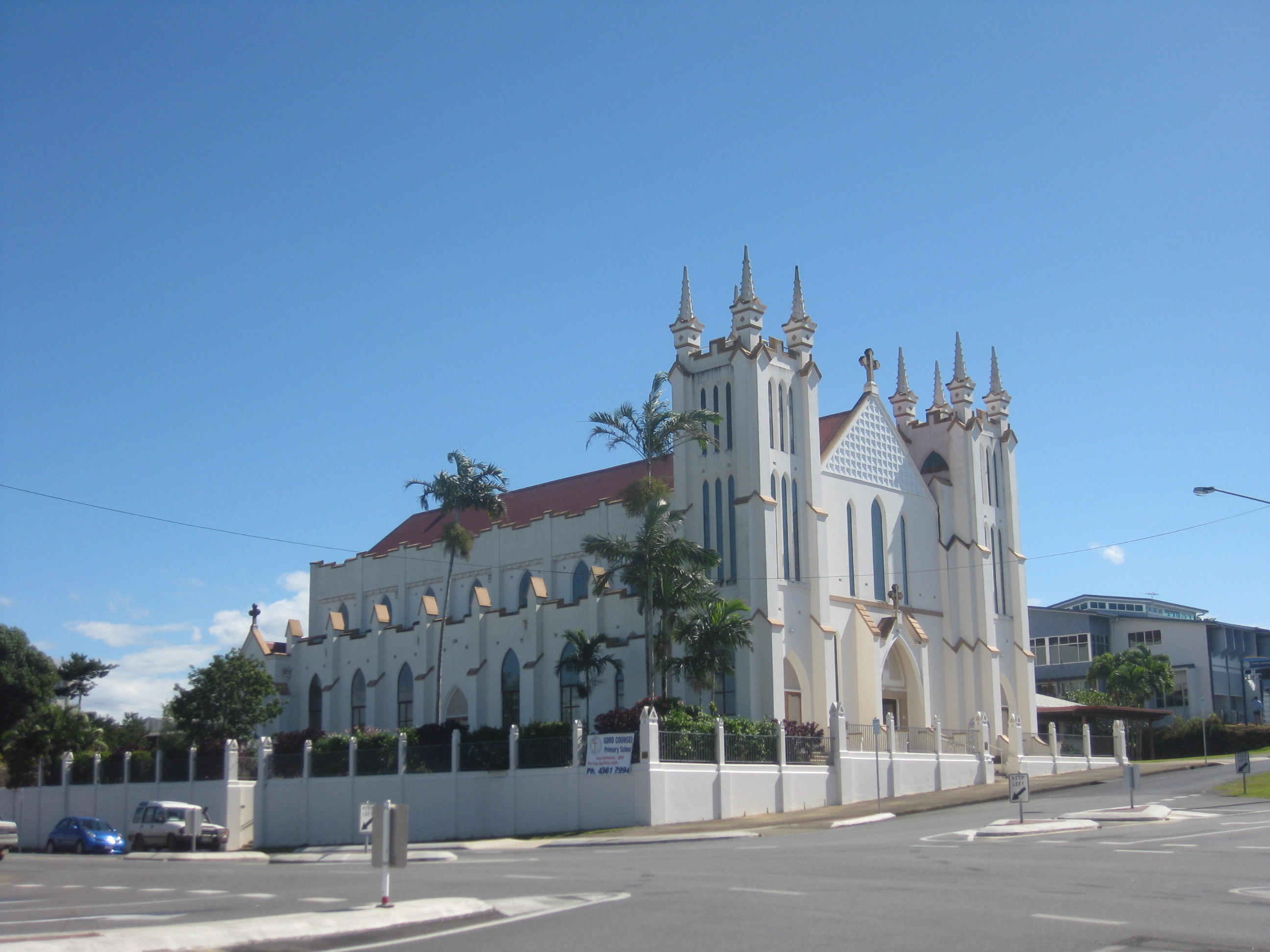
We visit Con’s old school, and the Catholic church, a spectacular building at the top of the town, dressed with Italian marble, with an altar constructed by Irish Trappist monks. Innisfail is an old name for Ireland, and lots of Irish migrated to this green countryside. Italians came, too, to cut cane and take up farming. Innisfail has the lively and well-stocked  Oliveri’s Italian delicatessen, where old families meet up on a Sunday morning for coffee and chat.

743EE5A9-1777-4AB4-9AA1-FC11FBB23C95 Mother of Good Council Catholic Church, Innisfail

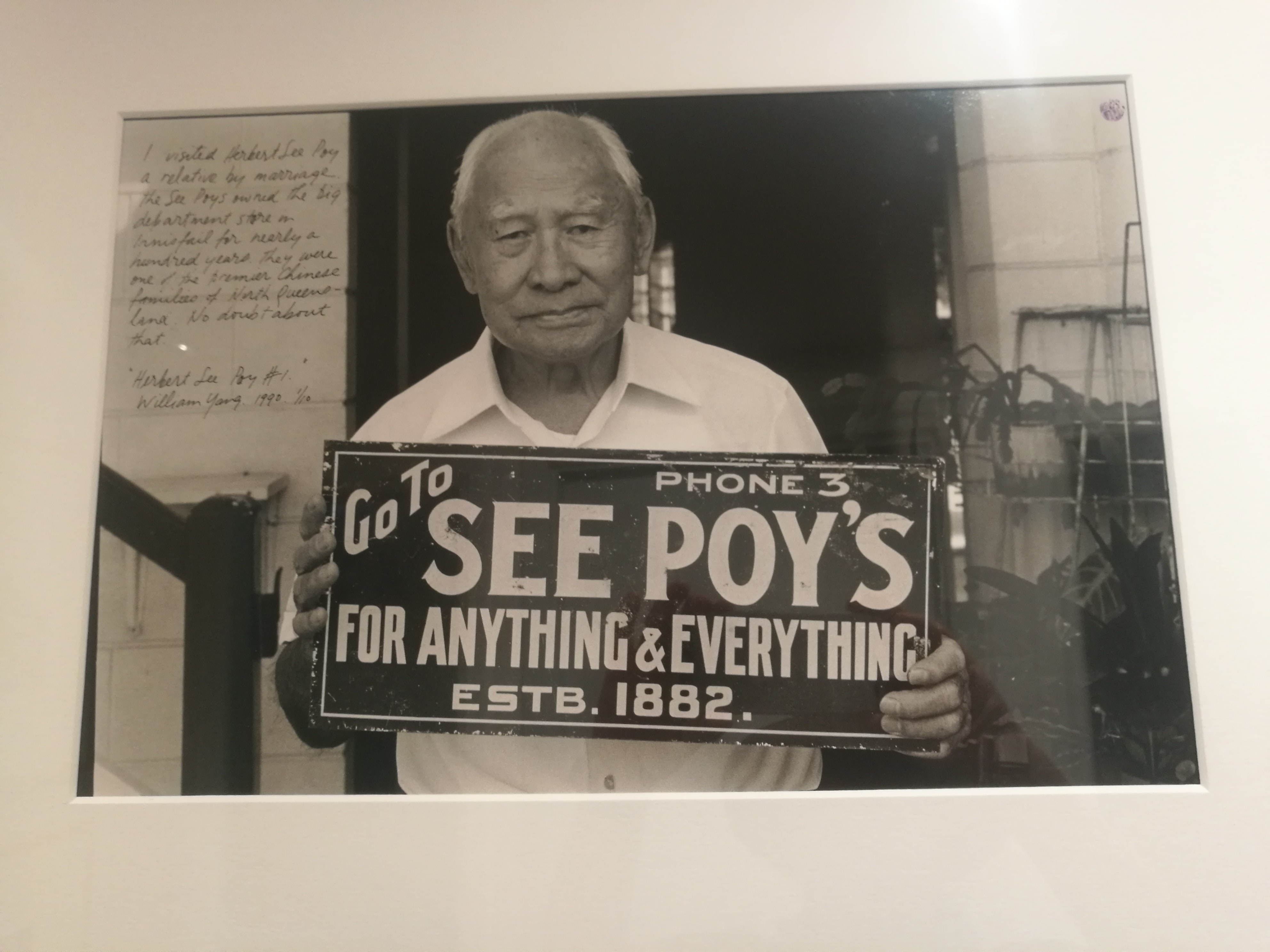
Chinese immigrants came here, too, working in the cane and the bananas, and going into business. The Innisfail Temple, also known as the Joss House, is still the spiritual home of the Chinese community here. Taam Sze Pui (Tom See Poy) came from southern China in the 1880s and set up one of North Queensland’s largest and most successful department stores, See Poy and Sons. Tom See Poy named his sons after North Queensland rivers – Johnstone, Gilbert and Herbert.

Con tells me about the time he worked in Men’s Wear at See Poy’s one Christmas holidays, as well as singing carols in the shop and changing into a Santa Claus suit to ask children what they wanted for Christmas.

cof Mr Tom See Poy

The fine old department store is gone. Now Woolworths, Coles and Bunnings supply the town. Roadside stalls sell fresh, seasonal produce along the highway, and in March, the Innisfail Feast of the Senses Festival celebrates the local tropical fruit.

In regional areas like this, improved roads and large operators have undermined some local businesses. It’s easy to drive to Cairns for clothes and household goods, or a show or movie. Both of Innisfail’s two movie theatres are gone. Mechanical harvesters cut the cane; and backpackers pick the fruit.

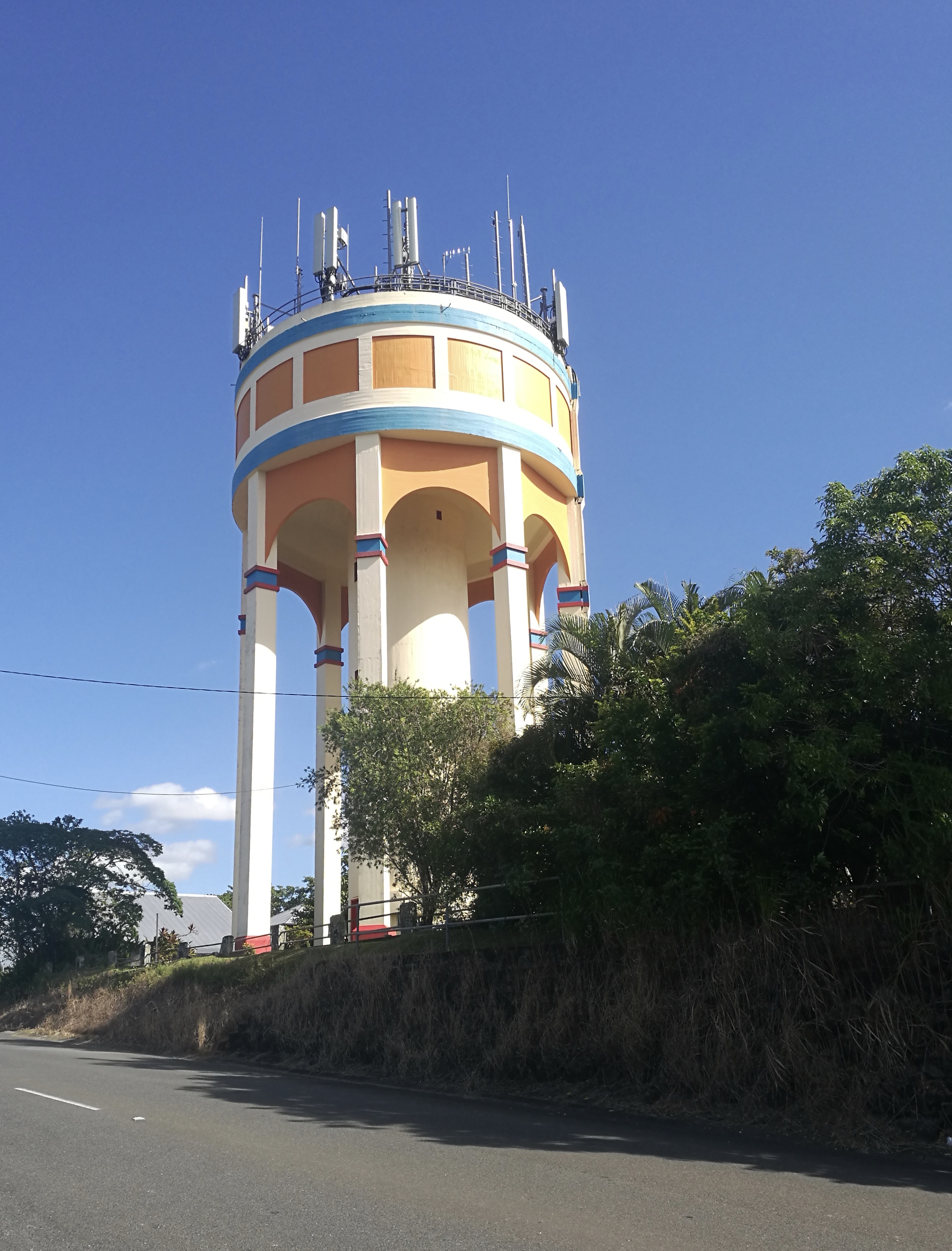
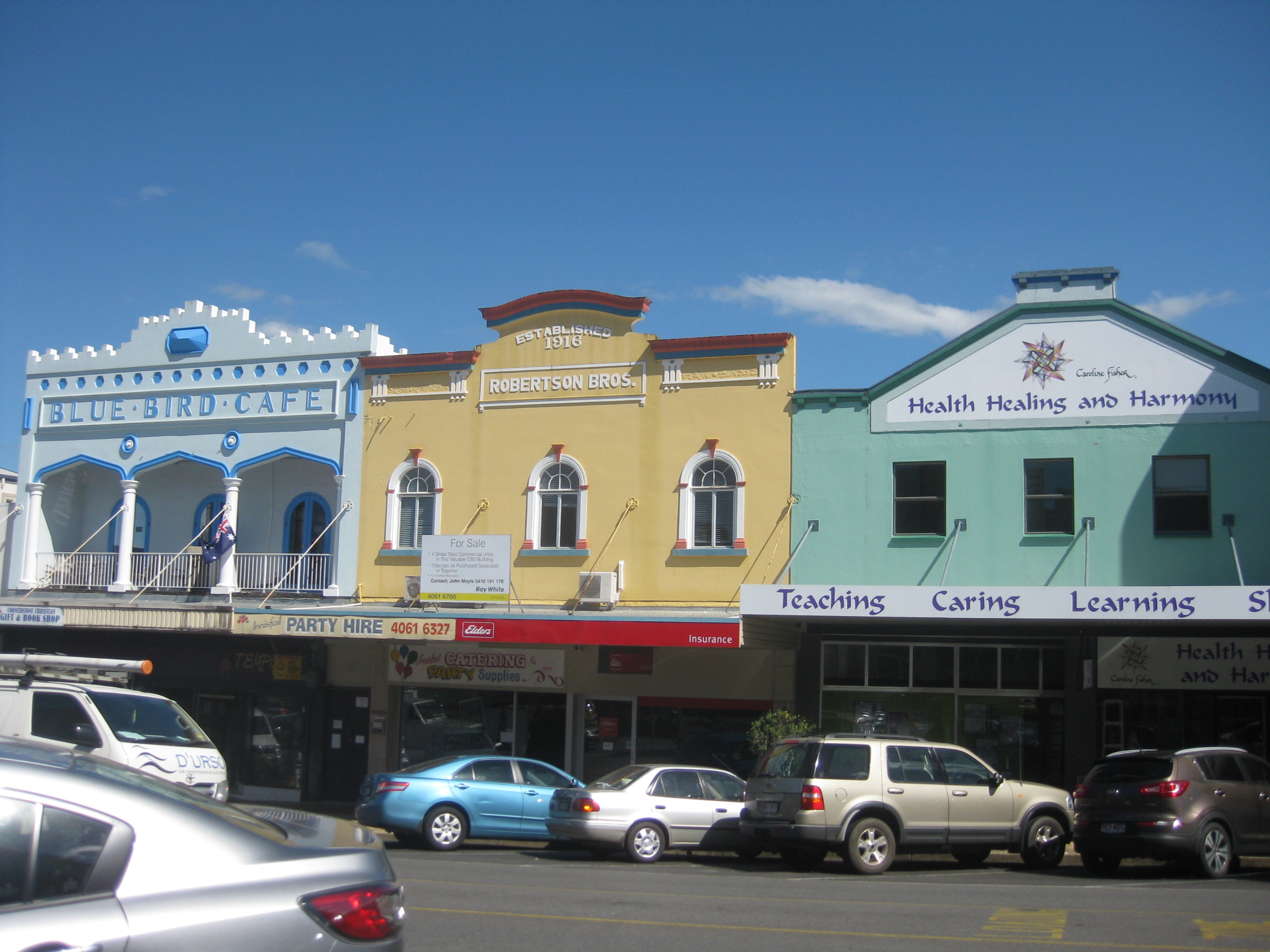
Ironically, though, disasters have brought money into Innisfail. Since Cyclone Larry in 2006 and Cyclone Yasi in 2011, there are new, shiny roofs, new parkland and a walkway along the river. The old art deco buildings in the centre of town and the water tower on the hill have been painted in bright colours.

cof Innisfail water tower

The bridge where the rivers join has been rebuilt in art deco style. There is now a Tropical Art Deco Festival in Innisfail. Who knew that these old buildings, always taken for granted, had such potential for charm?

1DD08937-1287-49AC-9DB4-92FA41CF288B Rankin Street shop fronts

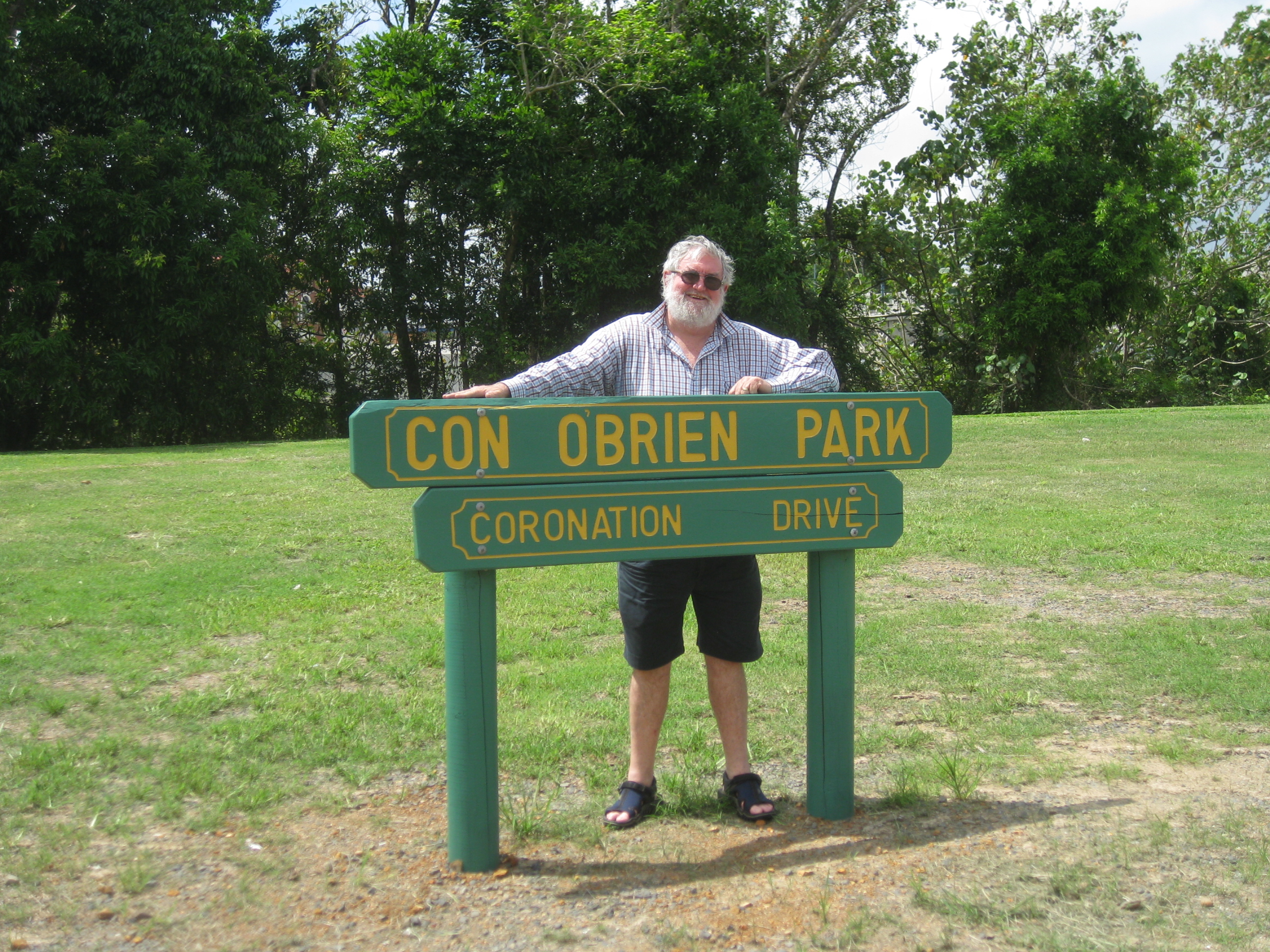
We drive down Coronation Avenue, beside the river, where Con’s family lived. All is green and lush, and the air is so humid it’s like being in a cloud – only hot. At the end of the street is Con O’Brien Park, named after his father, old Con. I take his photo with the sign; then we get back in the car and head south, before the rain begins.

D0607A5E-3CF2-4FA9-8C44-7D8D7661138B Enter a caption

Gympie

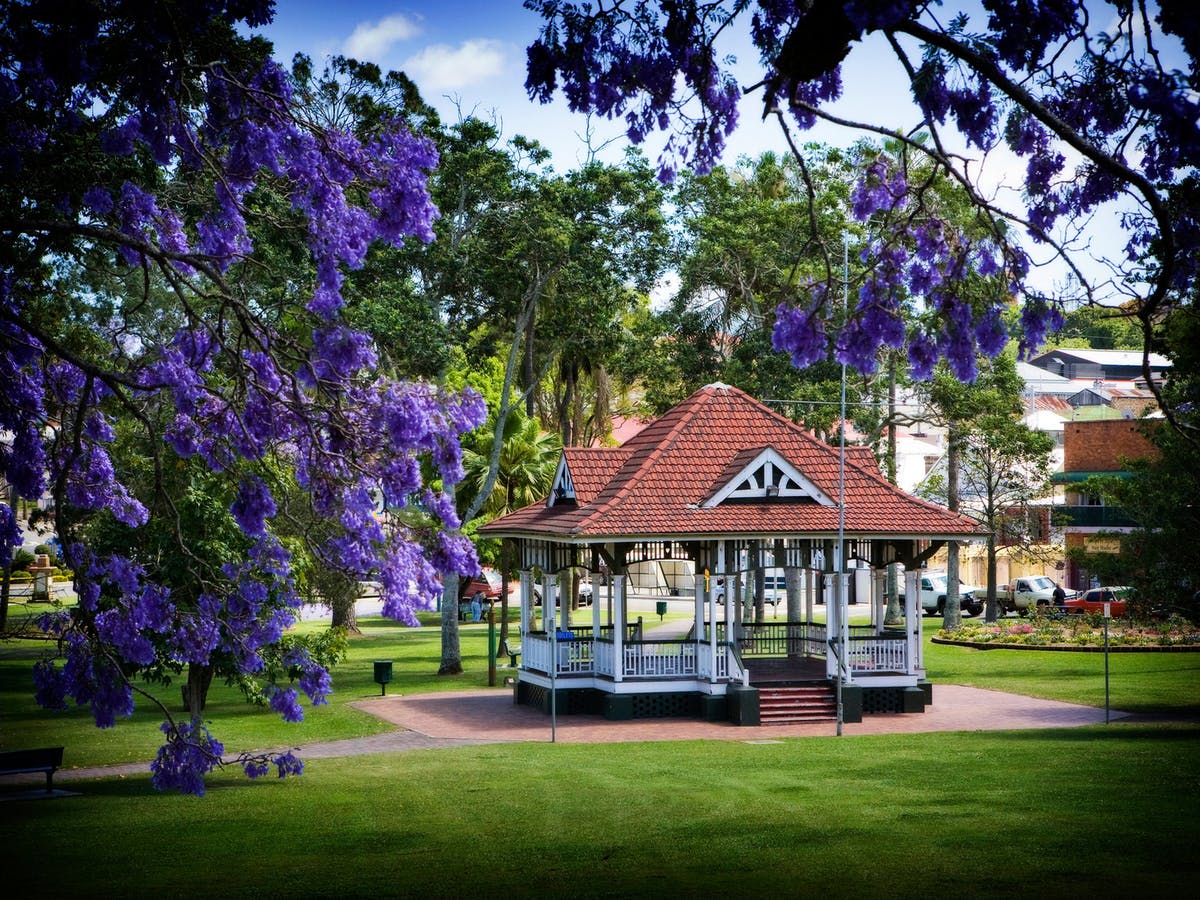
gympie gazebo
Gympie park. queensland.com

Big Ben, Eiffel Tower, Tower Bridge, the Great Pyramid of Giza: between Nambour and Gympie, nestled in a wide bend of the road and standing out of the long grass, there was once a group of these metre-high “Famous Sights”. As we passed on the highway I would look out for them, huddled there incongruously in the paddock.

Someone’s hopes and energies went into casting the concrete, welding the steel, painting the details. Like other would-be tourist attractions along the highways – a life-sized dinosaur at Palmwoods, concrete teepees near Slacks Creek, a Big Pineapple beside a Gympie service station – the Famous Sights are long gone now.

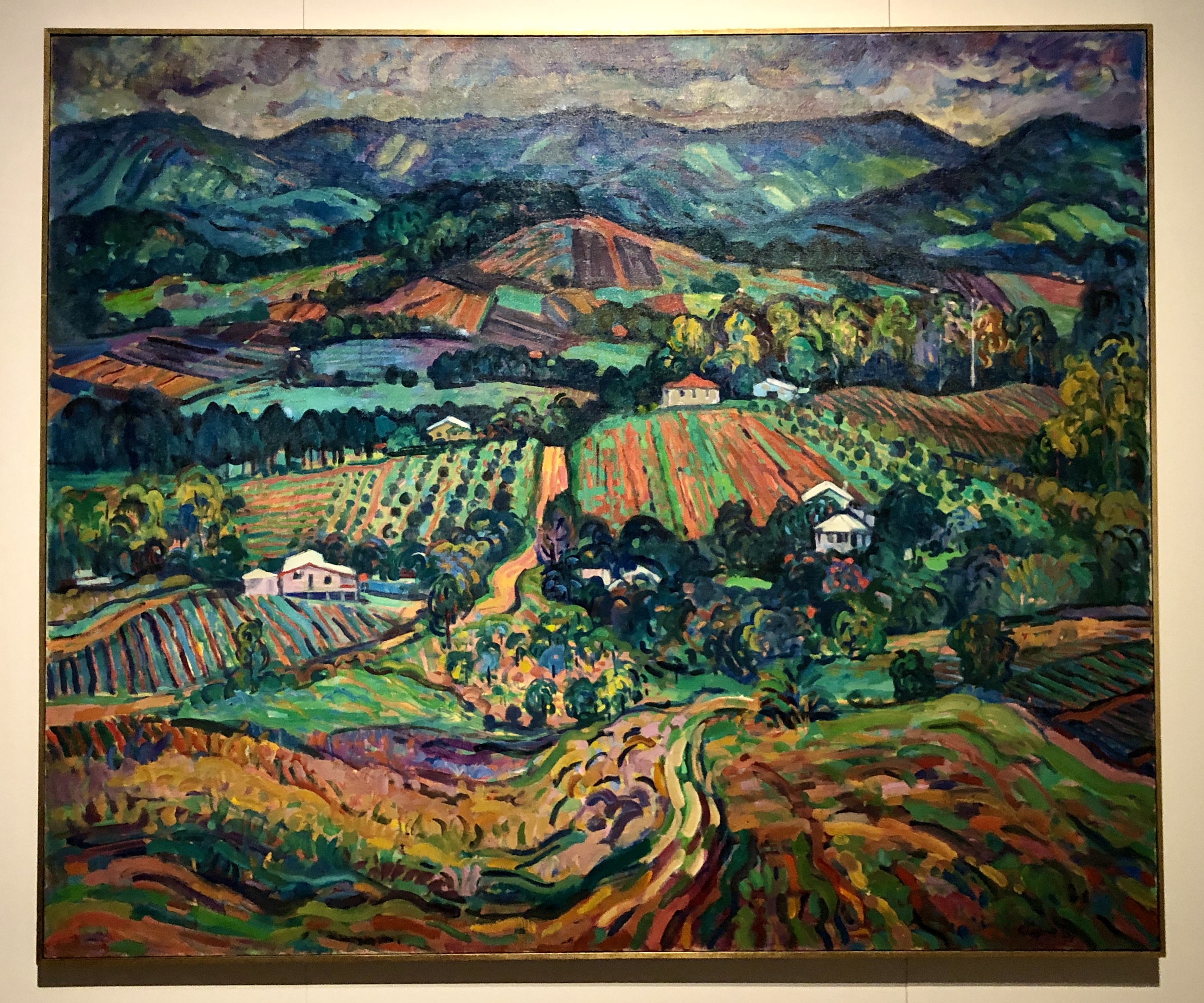
Instead of winding up and over the way it used to, with traffic backed up behind slow caravans and farm trucks on the steep curves and blind corners, the modern highway to Gympie cuts through these beautiful, productive green hills north of Nambour, typical of southern Queensland’s coastal hinterland.

560D7779-6387-4FDE-8A5A-028E24B92393_1_201_a
“Nambour Country”, John Rigby Caboolture Art Gallery

The Famous Sights are bypassed; or maybe the new motorway was built over the top of them. Perhaps a bulldozer crushed them under its tracks – an apocalyptic sight worthy of a movie.


“It’s easier to get to Gympie these days,” Con says. “Not like when we came in the Galloping Ghost.”

In the late 1960s, when we were engaged, Con and I drove to Gympie for a weekend Apex Conference at which he was to make a speech. We went in Con’s car, the Galloping Ghost, a 1956 Austen A90, the first car he’d ever owned.

We’d arranged to stay with Con’s elderly Uncle Jack. Jack ushered me to his sister’s bedroom, where I was to sleep. Holy pictures adorned the walls and the old-fashioned dresser.

After the Saturday evening event, it seemed tame to just go back to Uncle Jack’s place.

“Let’s go down to Rainbow Beach,” said Con. “It’s only an hour’s drive.”

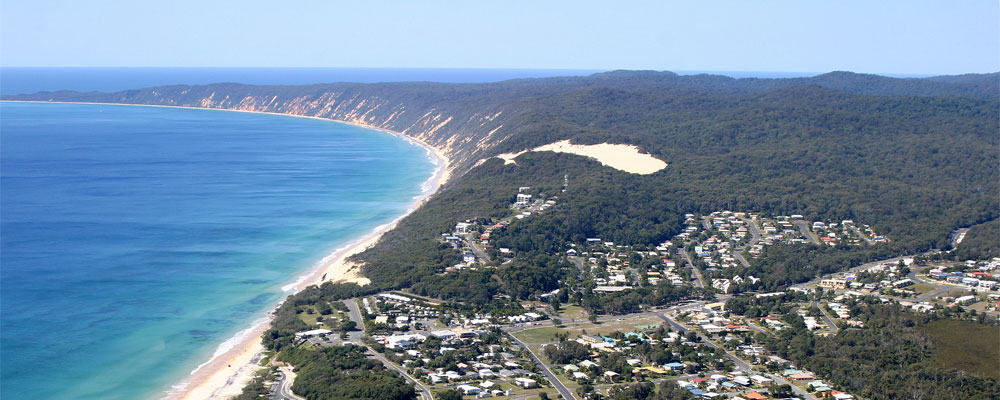
gympie rainbow beach
Rainbow Beach. Surf Club towards the bottom left. gympie.qld.com.au

We parked in the dark near the surf club, looking out over the sea, and went for a walk on the beach in the moonlight. There was some cuddling, then Con started the Ghost to drive back to Gympie.

That’s when we discovered that we had parked in sand, blown up into the club’s carpark. We were bogged to the axles, with no way of extricating ourselves. We spent the night in the car, and at daybreak Con, still wearing his suit, pounded on the door of the surf club. Two sleepy lifesavers came out, grumbling, and pushed us out of the sand.

Uncle Jack looked at us with silent disapproval when we sheepishly got back to his place, still in our party clothes.

Gympie, with its history and its heritage buildings, reminds me of other gold-mining towns I’ve visited. Although not as grand as Ballarat and Bendigo, it has charm; and it is promoted as “the town that saved Queensland”. Until gold was discovered here in 1867, Queensland, with its long distances, small population and agricultural economy, was broke. Gympie gold made all the difference. Railways were built to open up the inland, and impressive government offices arose in Brisbane, including the massive Treasury Building, now the Treasury Casino.

OLYMPUS DIGITAL CAMERA
At the Gympie Gold Mining and Historical Museum

People who live and work in modern Gympie don’t have it easy. Unemployment rates are high, and every summer, it seems, the Mary River floods the lower parts of town, and business people have to hose mud out of their premises.

A few years ago, we revisited Gympie to go to the races. The O’Brien Cup, in fact. There are lots of Irish in Gympie. Irish communities everywhere, even fifth and sixth generation Australians like these, love horseracing, and they love to celebrate their Irish background.

gympie irish craic

The night before the races we drove two hours from Brisbane after work, checked into a motel, and then wondered where to go for dinner. That’s a common issue for travellers in country towns. And there is a common solution.

“The R.S.L. Club has a Courtesy Bus,” said the motel manager. “I’ll give them a ring. What time would you like to be picked up?”

Locals know where to find good places to eat, but clubs are easier for a tired newcomer, with guaranteed cheap food and cold drinks, and no need to book ahead; and these days it’s not just Fisherman’s Basket or Roast of the Day, eaten to the sound of the pokies.

And there’s always a Courtesy Bus.

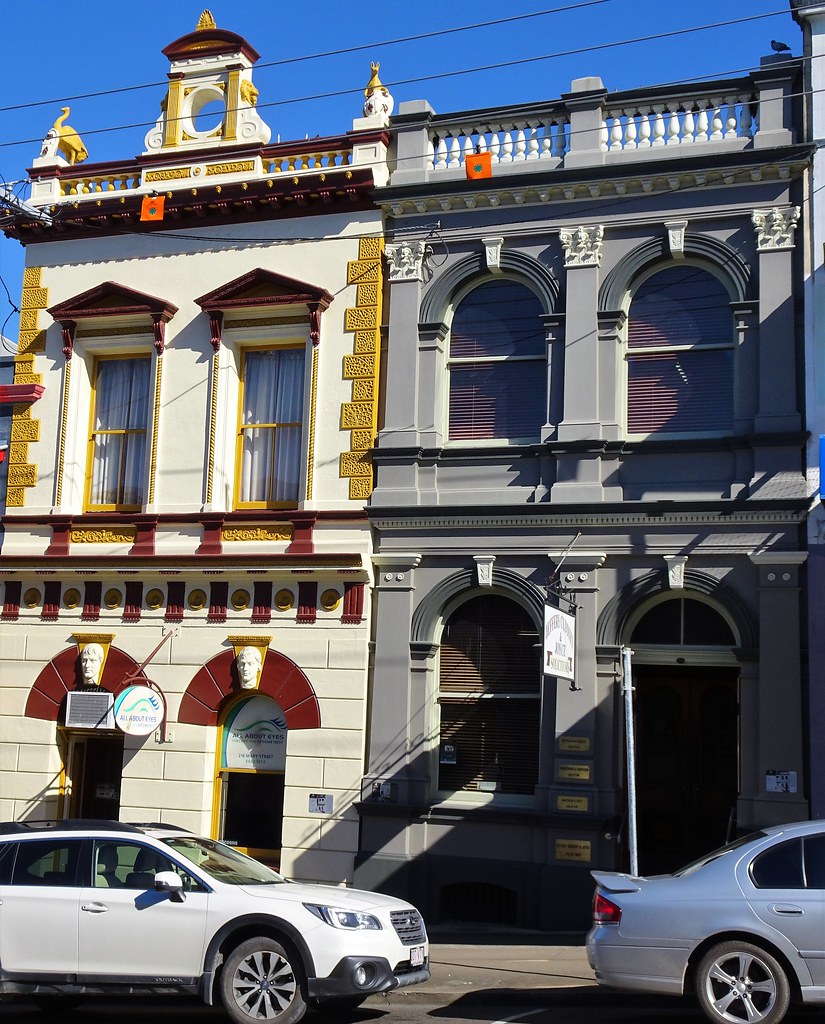
That evening in Gympie, the R.S.L. bus picked us up from the motel and delivered us soberly to the Club, in Mary Street, with its old pub buildings and Federation-era facades. An elegant 1880s building has on one corner of its roof the figure of a kangaroo holding the Australian coat of arms, and on the other, an emu.

gympie kangaroo building
Gympie buildings. flickr.com


We had a typical club dinner and listened to a duo playing old songs, then went out to catch the bus home.

This ride was more interesting. Everyone was cheerful and relaxed, and there was singing, laughter and craic all through the dark suburbs of Gympie, people dropped off at their front doors, yells of “Ta mate!” as they left the bus. Irish all the way.

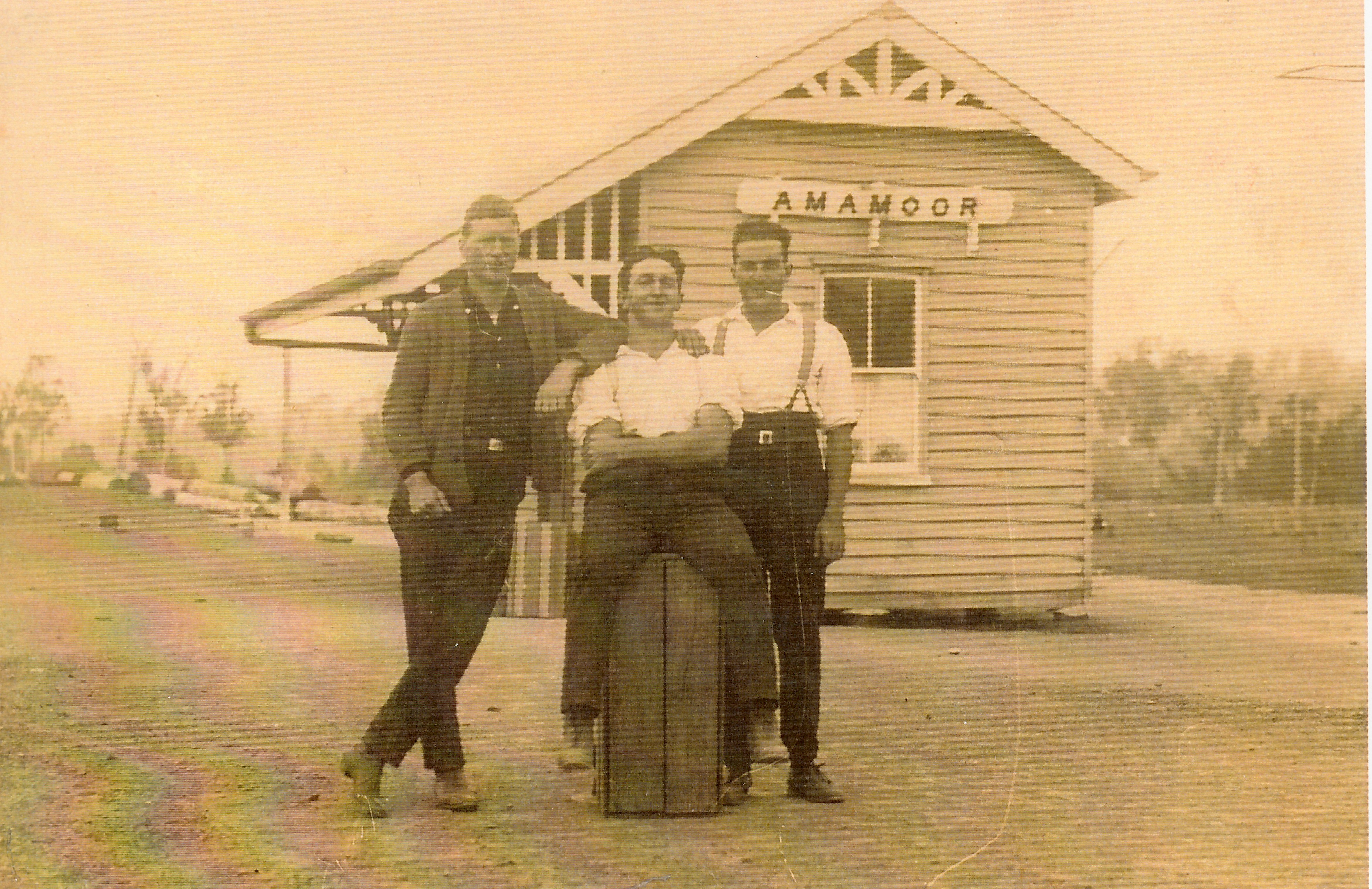
As a young man, Con’s father came to Gympie in the 1920s, cutting timber. An old photo shows him grinning at the camera, arms folded, sitting on an upturned packing crate on a railway station platform. In the background logs are stacked ready for the mill, and beyond is the scrub.

14FF3385-3938-4268-81E2-3FE0042298FB
Old Con at Amamoor Station, 1920s

He and his two friends are wearing work boots, long pants and braces, crisp white shirts with the sleeves rolled up, their hair slicked down. They’re probably waiting for the train to town – to Gympie. The sign on the station building says “Amamoor”.

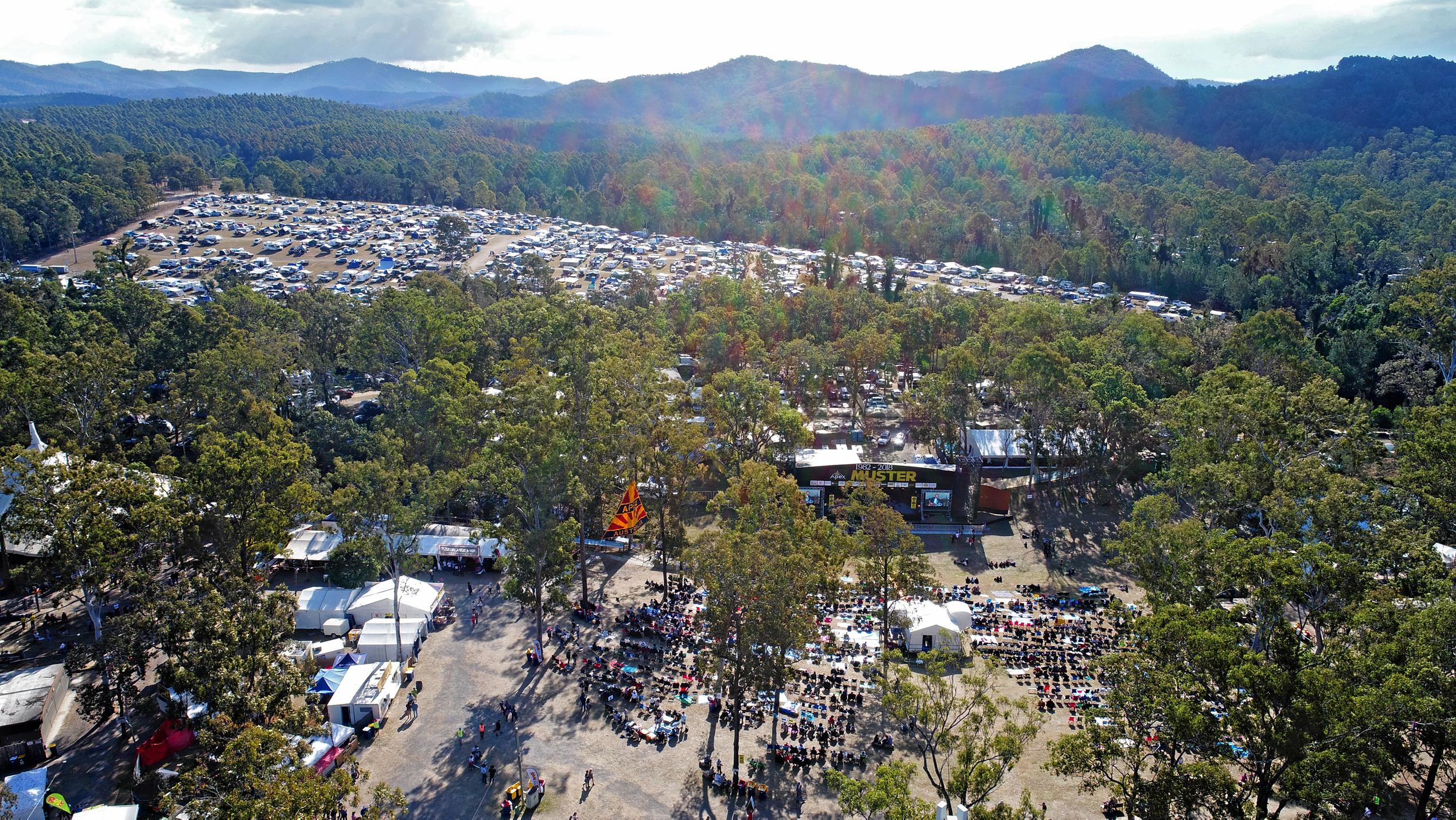
Nowadays Amamoor, twenty kilometres south of Gympie, is famous as the home of the Gympie Music Muster, one of Australia’s biggest Country Music festivals, held on the banks of Amamoor Creek, surrounded by the hills that produced the timber that Con’s dad helped to fell.

Gympie Music Muster 2018 Drone.
Drone footage of the Gympie Music Muster. gympietimes.com.au

A couple of years ago we turned off the Bruce Highway to search for the site of the photo. The tall timbers have disappeared; but the small station building seems unchanged after nearly a century, and the sign still says “Amamoor”.

For many of us travelling up the Bruce, Gympie is just a place to get through with the minimum of hold-up, and usually all we see is the busy highway. But like every town along the way, there’s more to it than service stations and speed zones.

If you should drive down to Rainbow Beach in the dark, though, be careful where you park.

Blog at WordPress.com.

Up ↑