Floods

Floods.

I’ve written many stories about many parts of Queensland on this blog, and so many of them describe floods.

Maryborough, Ipswich, Rockhampton. https://roseobrienwriter.blog/2024/02/06/maryborough/

Townsville, Bundaberg, Ingham, Charleville. https://roseobrienwriter.blog/2021/07/24/road-trip-to-ingham/

The Brisbane, Bremer, Mary, Burdekin and Flinders Rivers. https://roseobrienwriter.blog/2020/12/12/syphoning-petrol/

The Gulf Country, the Horror Stretch and the Cassowary Coast. https://roseobrienwriter.blog/2018/11/08/horror-stretch/

These are places I know well, and I feel for the people who live and work there; especially in the north. People wading through the ruins of their flood-damaged homes; cane, banana and beef farmers coping with the ruination of their hard-won livelihoods.

I remember the cattle farmers of the Flinders River catchment who, during the 2019 floods waited helplessly for the waters to go down as helicopters brought back images of mobs of cattle, including precious breeding herds and cows with calves, dead of cold and hunger, crowded against fences and on small patches of higher ground. It is estimated that 500,000 head of stock died in that flood.

And now floods have happened again – are still happening – in tropical Queensland. The State premier, an Ingham native, holds a press conference describing the community’s sorry situation: highway cut both north and south, houses flooded, no electricity, a breakdown in the water supply, supermarkets empty, and two lives lost. Further north, in and around Cardwell, houses flooded that have never been flooded before.

The Herbert River catchment of 9000 square kilometres has its headwaters in the Great Dividing Range near Herberton, and it collects a lot of tropical rain before it makes its way down to the flat canefields around Ingham. The Cardwell Range is steep and high and close to the town, so the catchment there is not nearly as big. But what is going to happen, when almost two metres of rain falls in three days?

The Burdekin River catchment of over 130,000 square kilometres is the size of England and stretches from north of Charters Towers and Greenvale to south of Alpha. Charters Towers has been flooding all week, and that water is heading for Ayr and Home Hill on the coast.
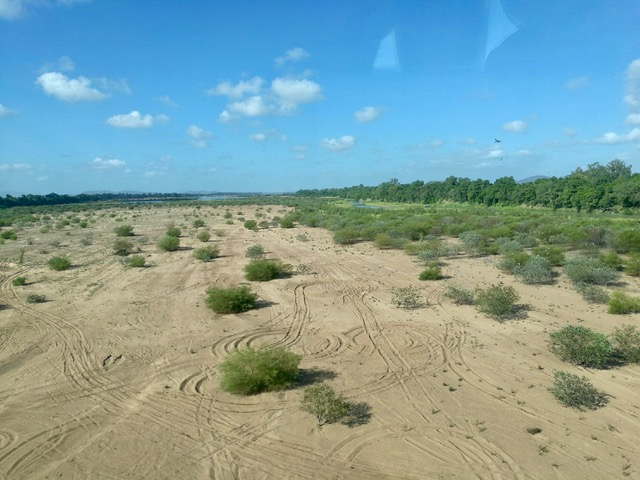
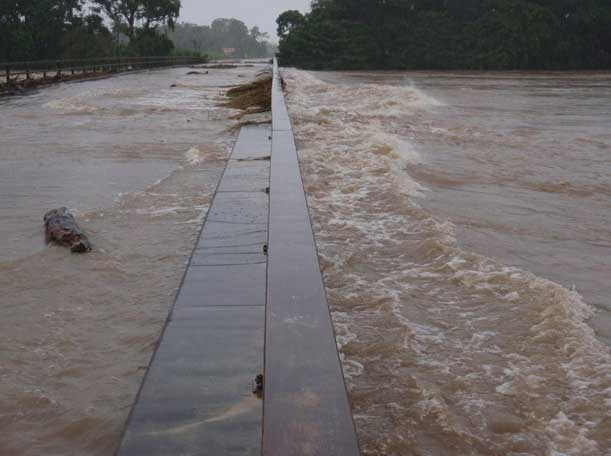
Burdekin River at Home Hill in the dry season, looking upstream from the Bridge
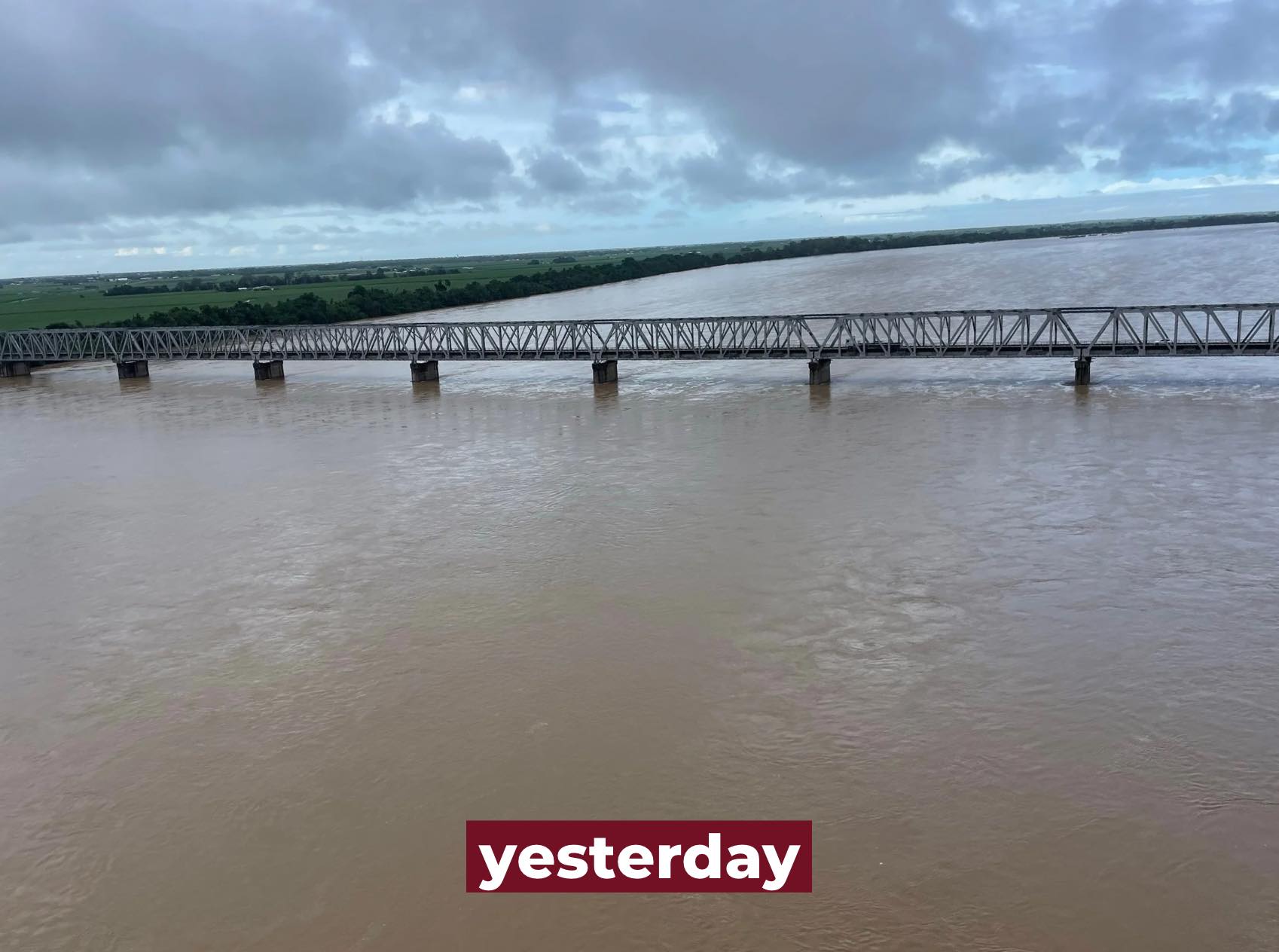
Burdekin River at Home Hill this week Dale Last, Member for Burdekin. Facebook

Sugarcane can be laid low by a flood, and recover, if the water doesn’t lie there too long. On the rich flood plains around Ingham, water has been lying for days, and still it rains.

An agriculturist, an expert in banana growing, told me that in the case of a cyclone, if a farmer lops the plants back they will survive and regrow. How would you go about that? It would take days, and a huge amount of work, and even with excellent modern forecasting, satellites and radar, cyclones are unpredictable. They can veer south or north or move back out to sea.

More heavy rain is forecast across North Queensland. The water will run to the coastal towns and farms and also to the vast plains of the inland, where rivers like the Flinders will break their banks and spread across the land, cutting the few sealed roads and the one railway line that runs east-west across the State.

In Queensland, rich in resources though it is – agriculture and mining in particular – we don’t have many people. The US state of Texas, iconic to Americans for its size, has an area of 697,000 square kilometres, compared to Queensland’s over 1,700,000 square kilometres. However, Texas has a population over five times the size of Queensland’s. That makes a huge difference when it comes to tax base and industry. It seems we don’t have the population, or the votes, to create better, more resilient transport infrastructure.

We also have a more extreme climate than Texas, especially when it comes to floods. Tornados are deadly, but they move quickly across the land. Rain depressions hang around.

Queensland has only one highway and one railway going along the coast, and because of shortage of population and extremes of climate, there are almost no entirely sealed roads west of the ranges linking north and south.

During this month’s major flood event in North Queensland, the one main railway line was soon cut in several places. https://www.railexpress.com.au/rail-bridges-submerged-as-floods-batter-north-queensland/

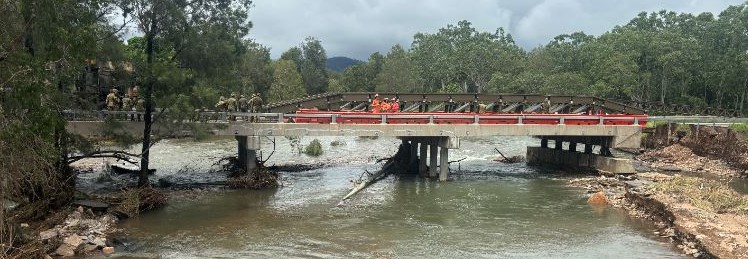
When the Bruce Highway bridge at Ollera Creek was washed away over the weekend, north of Townsville, Far North Queensland was cut off from the world except by air and sea.
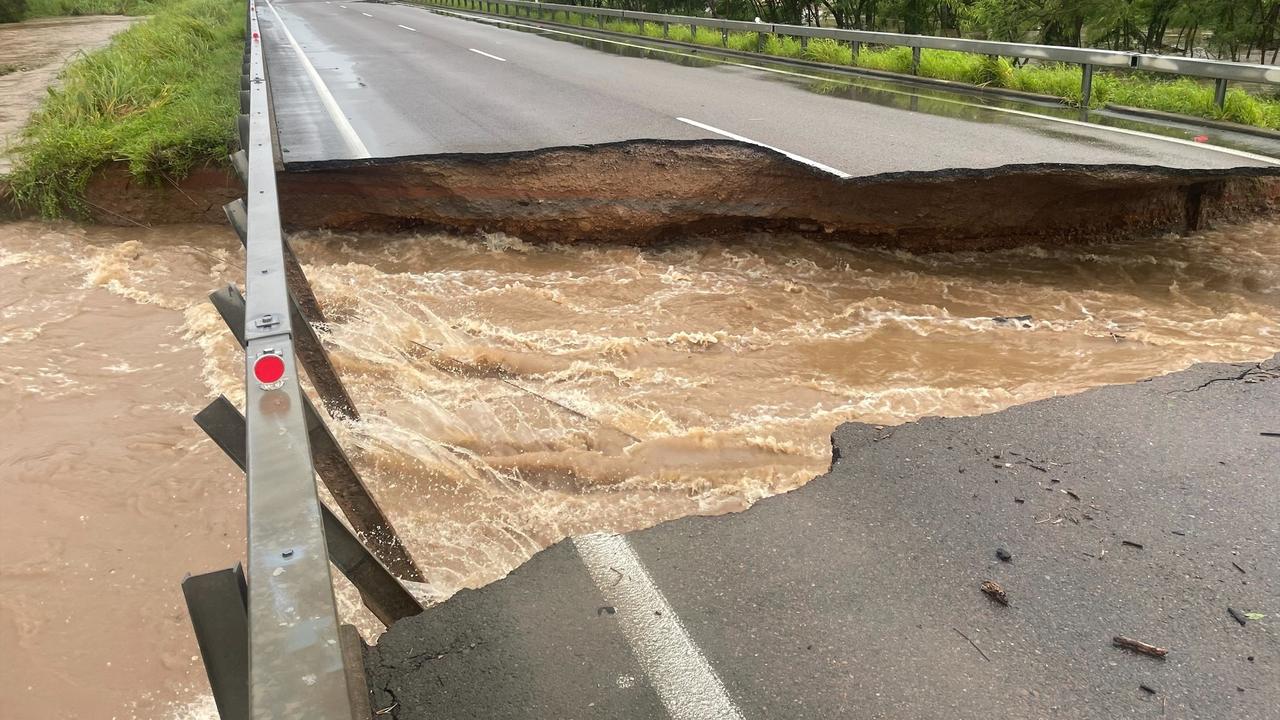
Ellora Creek bridge washed away Townsville Bulletin
Ellora Creek bridge , as repaired by the army for emergency vehicles mypolice.qld.gov.au

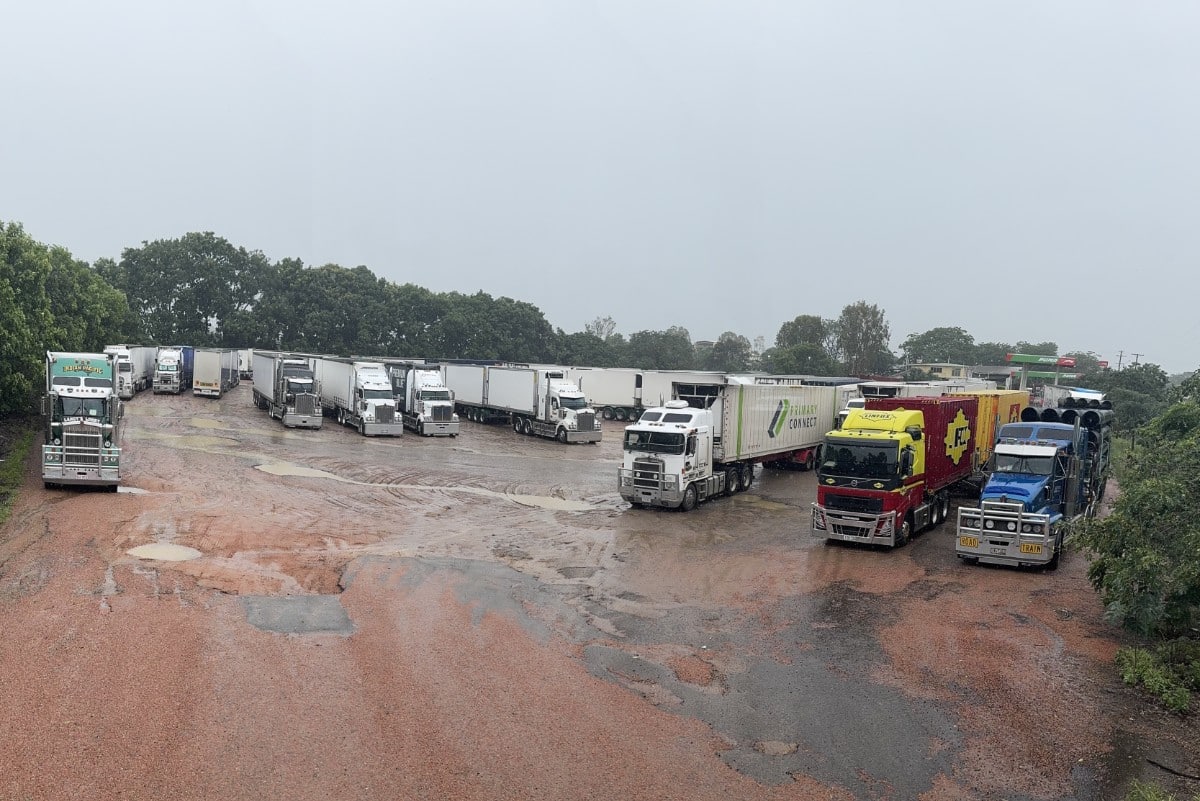
Trucks carrying supplies to the Far North and people trying to return home faced an extra 1200 kilometres’ journey, travelling by western Queensland sealed roads, to reach Cairns. And these roads are under threat of closure at any time. Many are stranded. https://qldtraffic.qld.gov.au/
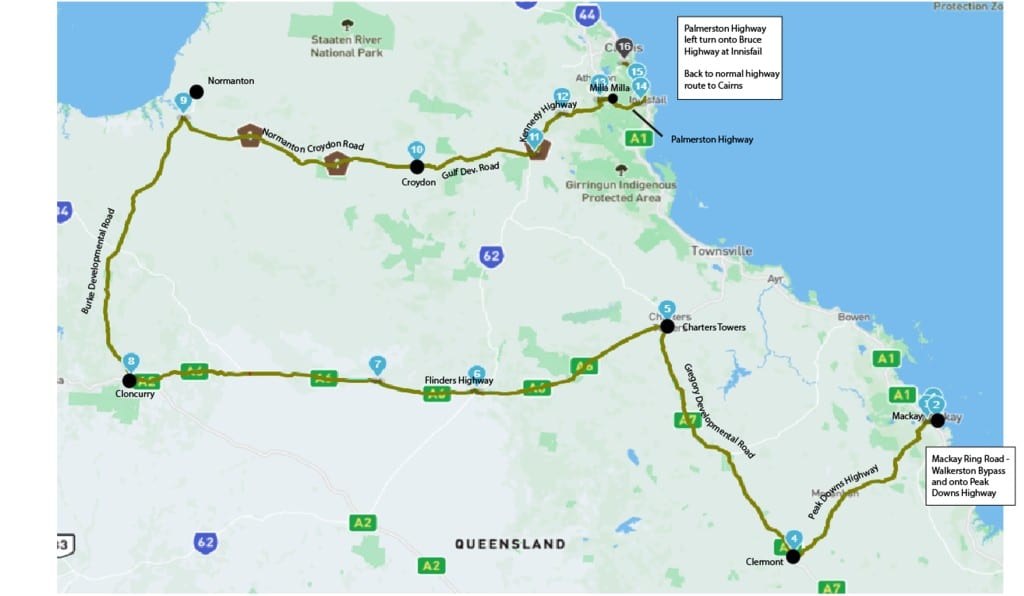
Alternative route to flooded Far North Queensland Transport and Main Roads Department, bigrigs.com.au
Stranded truckies parked up at the Puma Roadhouse in Charters (Towers) Image: Deano Hutch bigrigs.com.au

If the continuing flood rain results in damage to the railway and highway linking Townsville and Mount Isa, as happens all too often, transport and supply of essential goods may be affected for weeks.

For all sorts of reasons, including strategic concerns, the continuing and increasing vulnerability of Queensland’s transport routes is a major threat to our way of life and security.

People who live and work in the north and west of the State feel bitter that regions that produce so much of Queensland’s wealth continue to be so vulnerable to the weather. And as climate change deepens, it will only get worse.

It’s a worry.

In the southern states and Canberra, people have always regarded Queensland with a kind of affection as a weird, distant place, a place of extreme weather, crocodiles, bogans and dodgy politicians. Greater Brisbane makes up half the population of the State, and a lot of Brisbane people seem to be largely ignorant of regional areas. To them, north means Noosa, and west means Toowoomba.

So where is the will to sink vast sums into flood-proofing North Queensland for the future? Bipartisanship in politics would be a start.
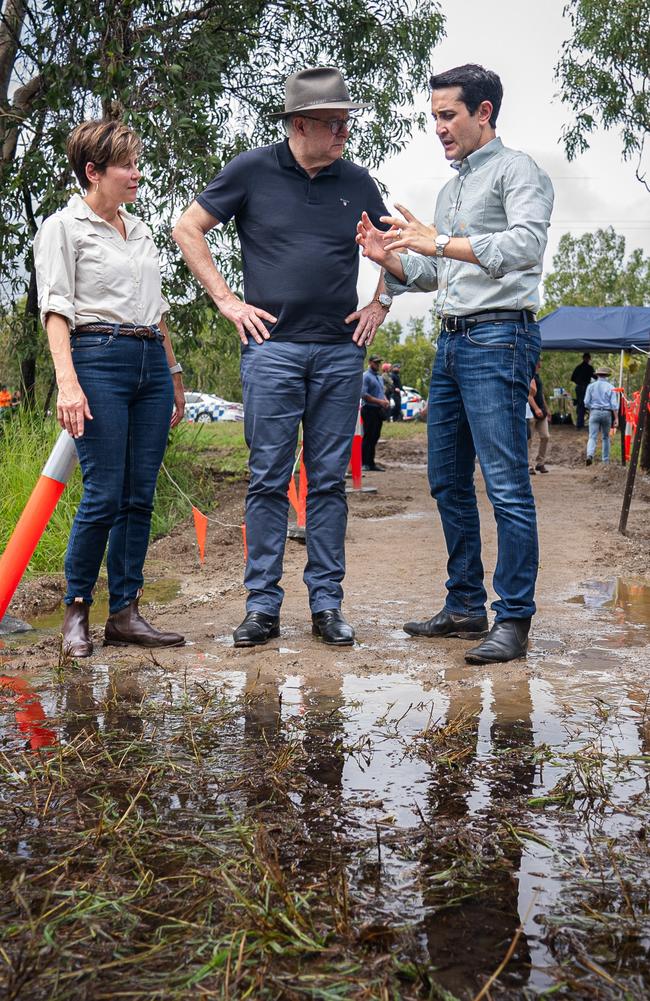
It’s a start. Federal Labor Senator Jenny MacAllister, Labor Prime Minister Anthony Albanese, and LNP Premier of Queensland David Crisafulli, taling about recovery in FNQ theaustralian.com.au

I’m tired of writing about floods.

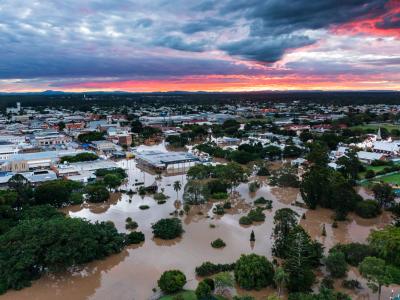
Main picture: Maryborough flooded at Sunset. 2022 Qld Reconstruction Authority

Road Trip to Ingham

Wet season, Ingham, 2021. The Herbert River overflowed repeatedly, spreading across the flat country around the town, flooding houses and cane fields. Opened in January, a Facebook page, “Ingham floods 2021”, gained 3.7 thousand members and in April was still posting updates on floods.

Herbert River flooding the highway north of Ingham, 2009 versatel.ebc.net.au

This was nothing new. Ingham, 112 kilometres north of Townsville and one of North Queensland’s most prosperous towns, has been flooded in seven of the last ten years. The Herbert River catchment runs off the southern Atherton Tablelands and its tributaries pick up water from 9,000 square kilometres of high rainfall country.

Ingham is where luxuriant tropical scenery begins, north of the drier country around Townsville: sugar cane, green hills, creeks. It’s always green here, on the edge of the Wet Tropics.

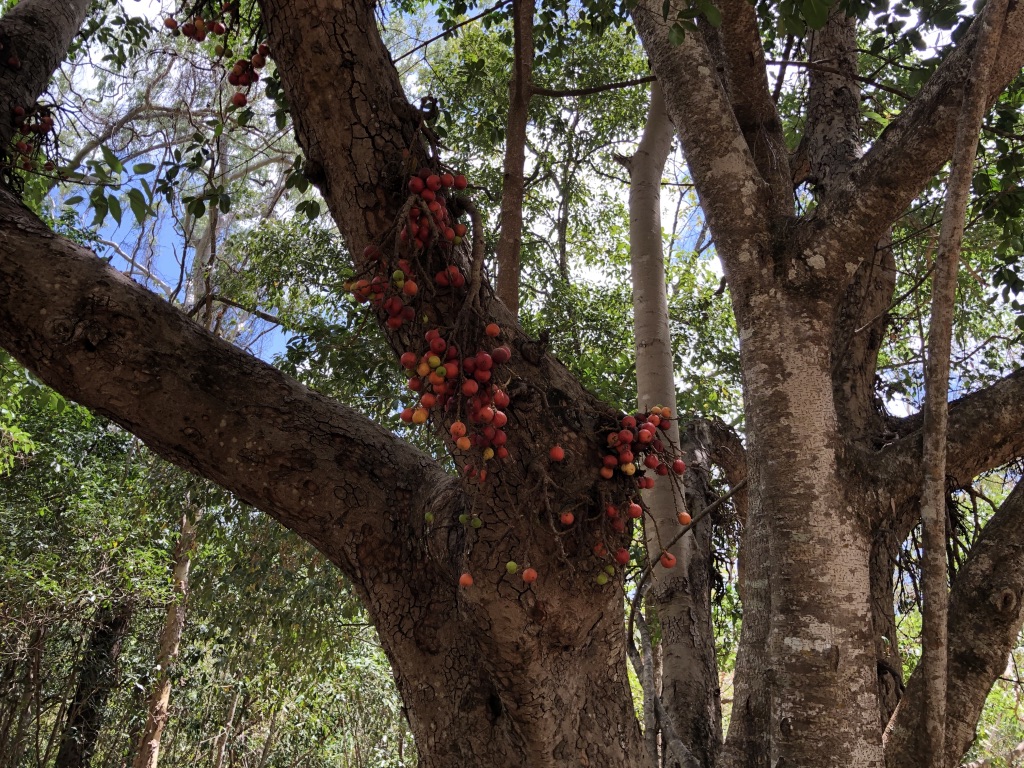
Rainforest fruits, Jourama, Paluma Range National Park

“Did I tell you about my first visit to Ingham?” I ask Con as I clean the windscreen. He is filling up with fuel at the service station on Ingham’s main street, the one we’ve been stopping at for years on our journeys north.

“Don’t think so,” he says over the sound of the pump.

“I was sixteen, on a camping road trip from South Queensland with my family, and we stopped here for the night so Dad could visit an old army mate. Dad had old army mates all over the state. We got to Ingham in the middle of a downpour. The river was flooding. The caravan park was awash.”

Con goes to pay for the fuel, and I finish cleaning the back windscreen.

“Anyway,” I continue as we pull out into the traffic, “Dad’s army mate invited us to spend the night. It was great. A big, comfortable house, dry beds and tropical fruit for breakfast: that’s what Ingham means to me. It was such a relief to get out of the wet.”

For Con, growing up in Innisfail, torrential rain was part of life.

“Floods were fun for us kids,” he says. “Floods meant swimming in your own backyard and not having to wear shoes to school.”

We’re on the Bruce Highway, passing through cane fields on the flat country north of Ingham, and as we cross the Herbert River, Con tells me a story of driving to Ingham when he was young. I like his dramatic stories of growing up in FNQ.

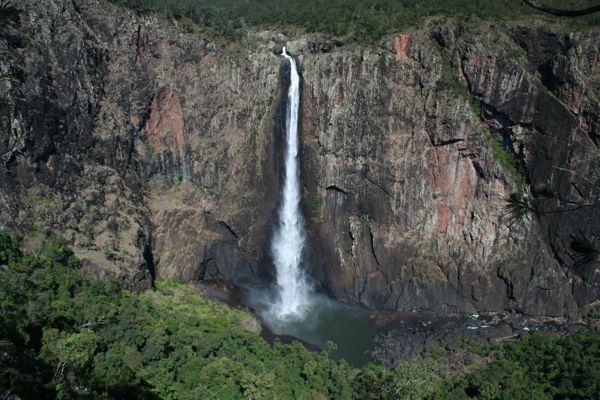
Wallaman Falls, Ingham wettropics.gov.au

“Mum, Jim and I drove through here at Easter the year I turned fourteen, in Jim’s 1939 Ford, heading south from Innisfail to Townsville. My brother Jim was driving trucks when he was seventeen, delivering fuel to cane farmers around Innisfail on narrow, unsealed roads and through flooded creeks, so the fact that it was pouring rain when we set off didn’t worry us. We were Innisfailites – we had webbed feet.

“There was a minor concern, though: the car had a slow leaking radiator. Every few miles, we would have to refill it with water; but there were plenty of creeks along the way. At Moresby, only eight miles south of Innisfail, we stopped for the first time and I was sent over to the river with a bucket to bring back water for the radiator. Jim poured it in while the engine was running then screwed down the cap. We set out again. 

 “The rain kept up, and I kept scouting for water. The road was mainly bitumen, a bit patchy, and the car was high enough off the ground to manage the washouts and the water running across it.

 “Just out of Cardwell, on a stretch of road awash with sand and water, we met a tiny Triumph sports car. The driver was travelling alone, and he asked us what conditions were like further up the road. He didn’t like what we told him – torrential rain and creeks running across the roads – but he pointed the little car’s nose to the north and kept going.

“We filled the radiator again at the bottom of the Cardwell Range and made it to the top, and then Jim checked the temperature gauge. We needed water again, and soon.

 “On the way down the other side, we prayed for a creek. We came to one, all right – ten metres below the road, with scrub-covered cliffs leading down to it. No chance of getting water there. Going downhill was easier on the engine, though; and at the bottom of the range, we found another creek, and I did my job with the bucket again.

 “There were no more hills between there and Townsville, so we thought our troubles were over. But north of Ingham, and with still over 120 kilometres to travel, we came out on to the Herbert River flood plain. There were road works. It was chaos. 

“The bitumen had disappeared, leaving churned-up mud. Cars were buried up to their axles on the sides of the road, and farmers were trying to pull them out with tractors.”

“You know, people complain about the state of the Bruce Highway, and it’s true you can never drive the length of it, 1700 kilometres from Brisbane to Cairns, without being held up by road works. But what a lot of improvements we’ve seen over the years! I’ll always stick up for the Bruce.”

Con continues his story.

“I looked at Jim. He clenched his hands around the steering wheel and set the car on the safest course he could find through that madness of mud, bogs, cars and tractors, until we were once again on bitumen, and Ingham was only a few miles ahead.

“We made it through to Townsville a couple of hours later. They hadn’t had the heavy rain we’d come through, thank God. Townsville is a dry old dump.”

Country towns can have such disdain for one another. But of course, so can big cities. Sydney and Melbourne, for instance.

 “At a garage in Hermit Park, Jim bought a can of Radiator Cement. It plugged up the holes, and on the way home a few days later we didn’t need to fill it once. The sun shone, and the muddy stretch north of Ingham had hardened. The old Ford charged over the Range, and at Cardwell we bought fish and chips, as we always did, and ate them sitting in the car on the oceanfront. By mid-afternoon, in bright sunshine, we were home in Innisfail.

“The next day on my way to school I saw the Triumph sports car driving down Rankin Street. He’d made it through. A gutsy effort. But so was ours.”

“Good story! Let’s stop in Cardwell for fish and chips.”

We’ve had lots of good Ingham experiences. Our Lizzie and Russ lived there for a time in the late 1990s, and we stayed with them in their typical North Queensland house.

Russ and Lizzie’s house in Ingham

Lizzie took me down to Lucinda, the nearby sugar port famous for its jetty, 5.76kms long. Near the beach is a large sign describing some of the creatures that can kill you if you go swimming there.

Sign by the water at Lucinda

We went by boat across to rugged, mysterious Hinchinbrook Island for a walk along the beach and swim in Mulligan’s Falls.

Descendants of the migrants that flocked to the cane fields in the twentieth century have given Ingham its distinctive Italian culture. Every year, the Australian Italian Festival is held here. Lou’s Italian Deli in the main street of Ingham is a wonder to behold.

Just south of town is the TYTO Wetlands, with paths and walkways for birdwatching and the impressive Information Centre and Regional Art Gallery.

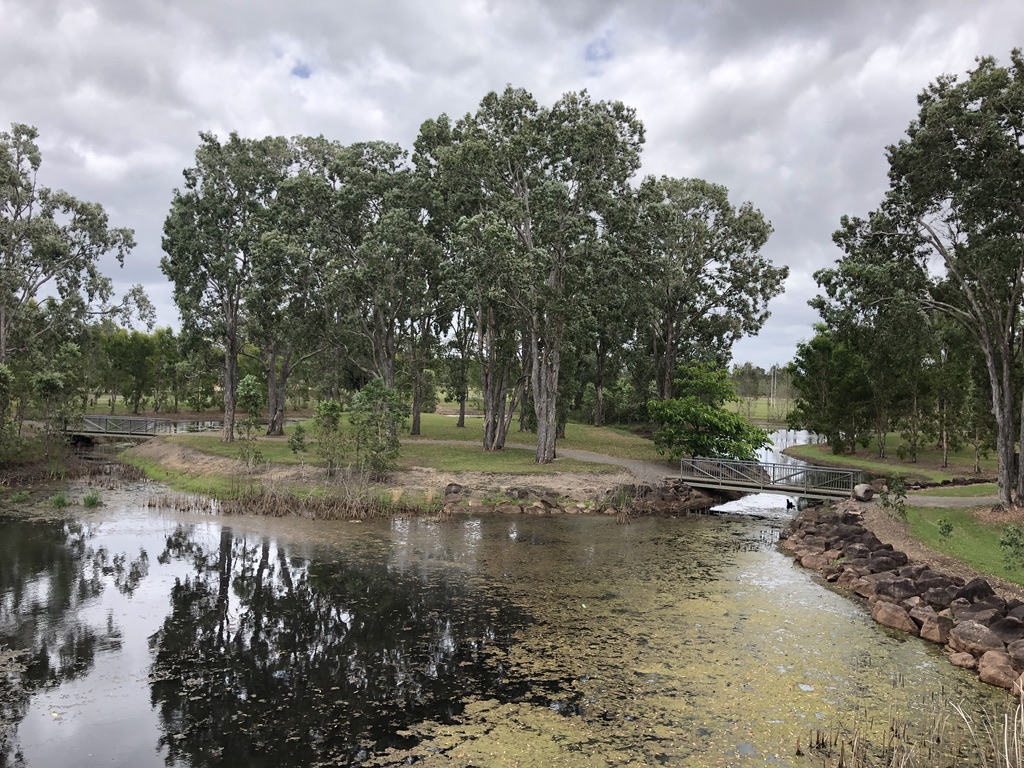
TYTO Wetlands, Ingham

Spectacular to see, in this richest of all sugar cane areas, is the vast Victoria Mill, with its kilometres of cane trains and lines of cane bins, its huge old rain trees and tall, steaming chimneys.

With Joe and Isabel, two years ago, we drove further south to visit Jourama, part of the lush and spectacular Paluma Range National Park, and swam with turtles and eels in beautiful Waterview Creek.

Swimming at Waterview Creek

Instead of just stopping for petrol and hurrying on, I’d like to get to know Ingham better; to visit Wallaman Falls, Australia’s tallest single-drop waterfall, and maybe have a beer at Lees Hotel, which claims to be the original “Pub With No Beer”.

We’ll visit in the Dry Season, though, when the weather up here is perfect.

I don’t have webbed feet.

Ingham floods 2018 nine.com.au

Blog at WordPress.com.

Up ↑