

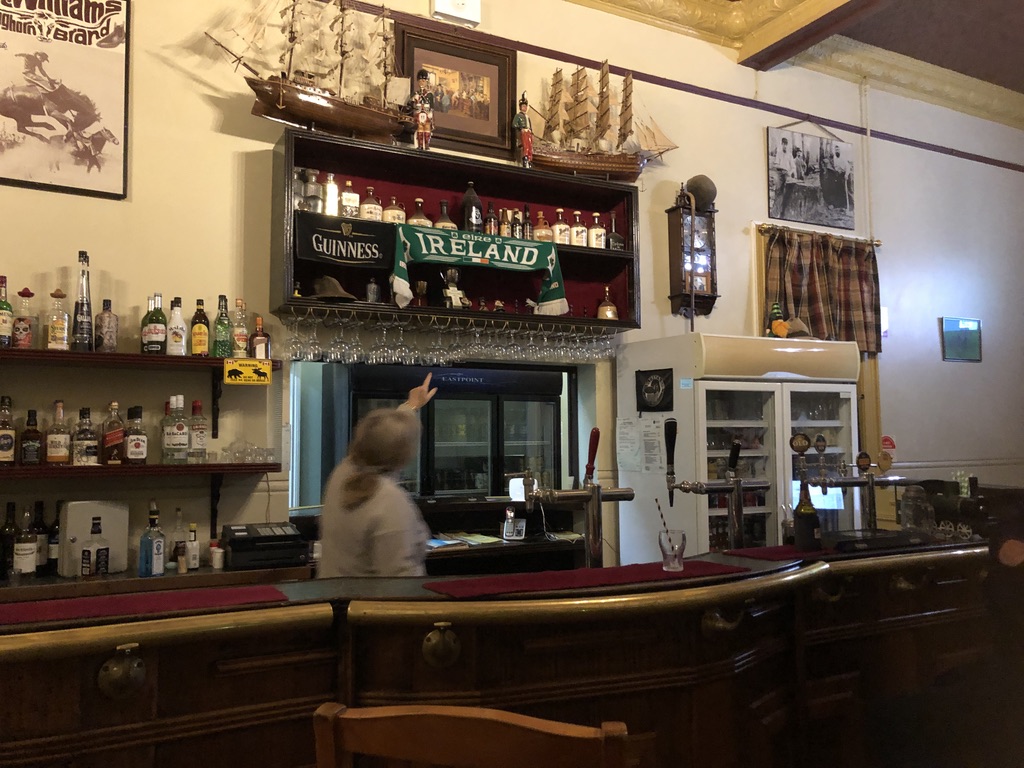
‘There was an Irish tradition that if you were building a hotel, you had to bury under it a hat, a cat and a bottle. Well, when we were renovating we found a hat and a bottle, and there they are.”
Joan pours me a gin and tonic and points to a battered felt hat on a shelf above the bar. Next to it is an old bottle.
“We never found the cat, though. I hope we don’t.
“Along there you can see my father’s walking stick, and the cap he wore when he was racing trotters.”
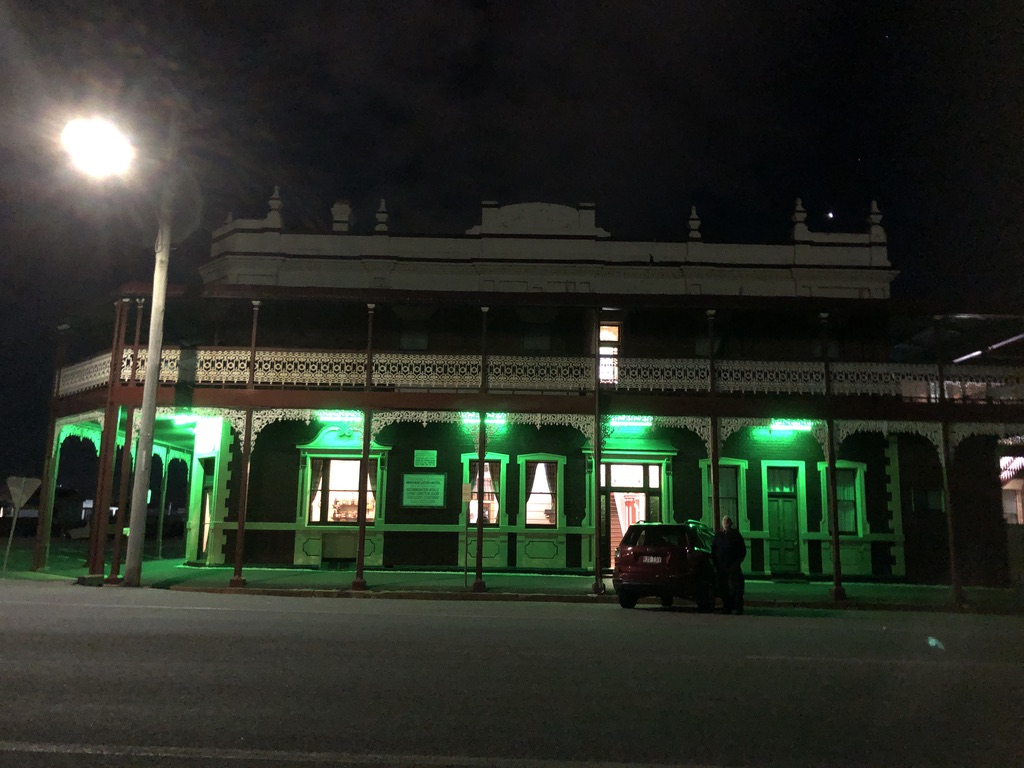
I’d driven years ago past this attractive old Warwick hotel with its red brick and iron lace and been sorry to see it in a rundown condition. Originally the National Hotel, built in 1907 and Heritage Listed, O’Mahony’s is located at the eastern end of Grafton Street, Warwick, opposite the railway station. It had in the past been patronised by train travellers and railway workers, but those days are almost gone.
Joan Wallace is the licensee and current owner of O’Mahony’s, with her brother Kevin. She tells me that they bought it in 2001 and they’ve been renovating it ever since, sourcing material and furnishings from near and far. The handsome timber bar came from the Ship Inn in South Brisbane, and the comfortable-looking lounge suite in the lounge originated in a monastery, she tells me. There are high pressed metal ceilings throughout, chandeliers, and a magnificent cedar staircase.
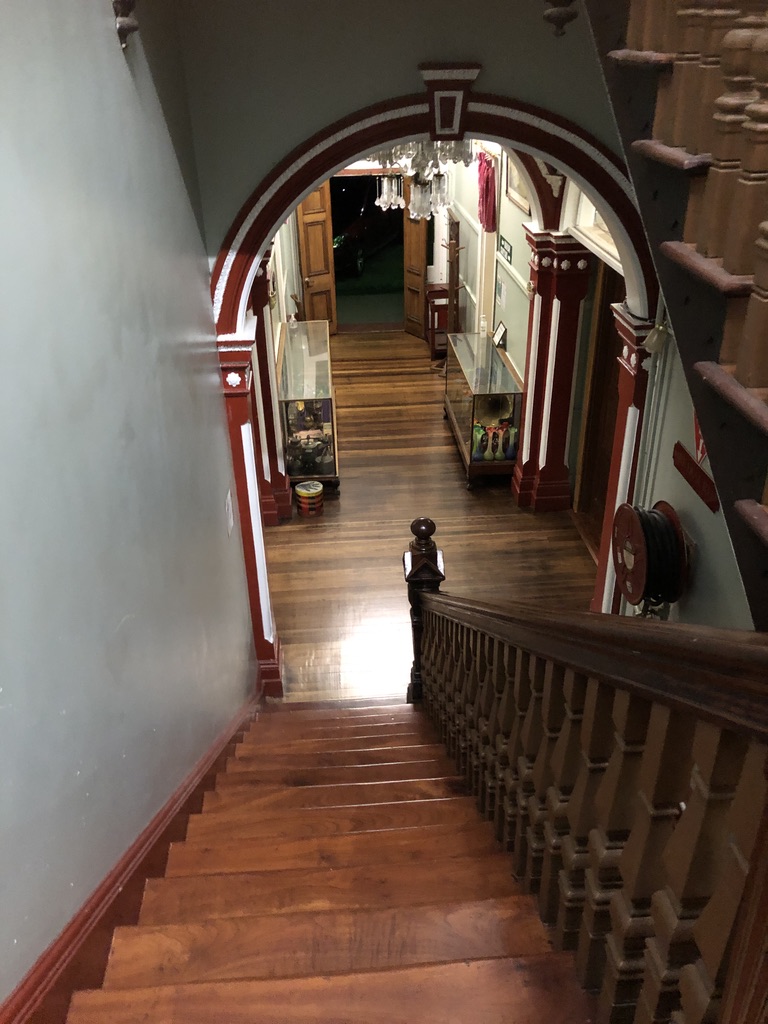
“We have thirty-four bedrooms, and sometimes we fill them all,” Joan says. “And we’re listed on Airbnb.”
When I was young, living in a large country town, hotels were smelly places to walk past, with a bad reputation. My father, a temperate drinker, didn’t go into public bars except on ANZAC Day. The rest of the year he would buy the occasional bottle of wine or beer at the side door. Now, after many years living and travelling through rural Queensland, I’ve learned to appreciate country pubs, whether magnificent buildings like O’Mahony’s or small, single-storied structures that have been the social centres of isolated communities for well over a century. They are places for travellers to stay and rest, places for locals to gather and relax and do business. I’ve often thought that for a family, perhaps with two or three generations together, a country pub would be a fine business to run, even providing a home.
When you stay in a country hotel it feels like home. It might be slightly daggy, but you have the run of the place: lounge and verandahs, breakfast room, bar. These old places all have stories; but as they age, and demographics shift, and times change, some of them become neglected and no longer viable.
Then, sometimes, the right people come along, people who are prepared to take them on and keep that tradition of hospitality going in the face of changing times; and not only magnificent places like O’Mahony’s.
Across Queensland there are many humbler hotels in tiny, isolated towns that provide the only meeting place for kilometres around. Road trippers love old country pubs, with their quirky bush décor of bush hats and branding irons and an atmosphere of yarns and larrikins; but they’re tricky businesses to run, what with pandemics and decreasing local populations, with insurance and regulations, transport costs and staff shortages, maintenance of old buildings and the eternal issues involved with dealing with customers and alcohol.
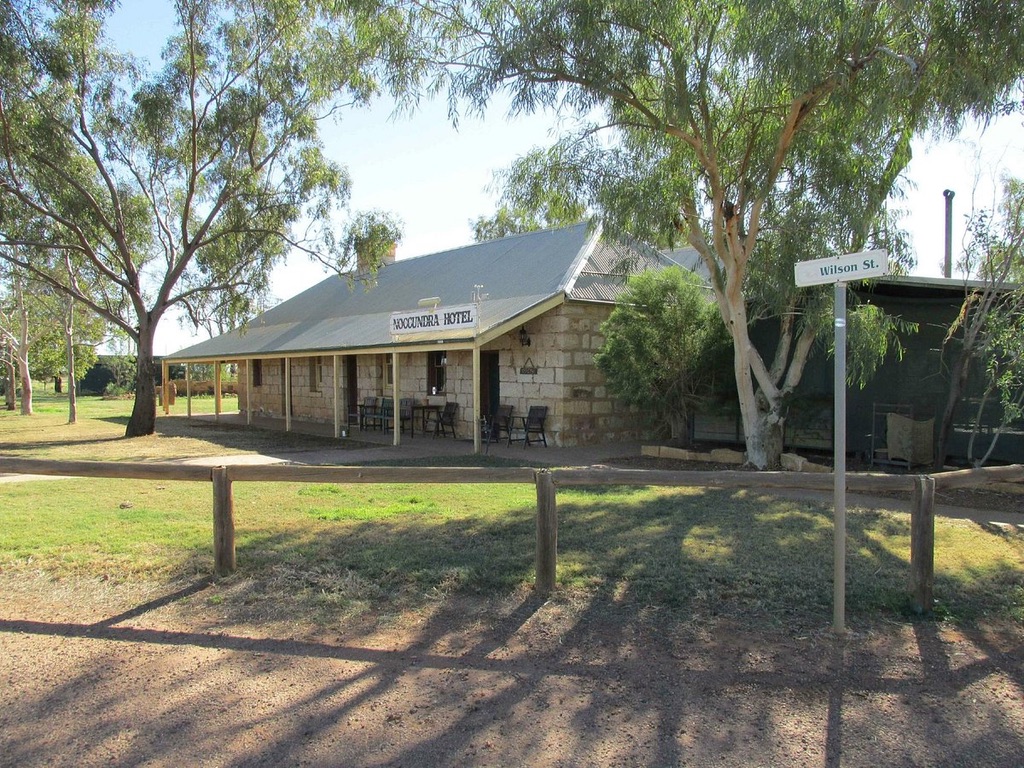
Hotels in tiny towns might sell groceries and fuel, provide campgrounds, run the local Post Office, maintain the local public toilets and run a Centrelink Agency. It sometimes seems as if liquor sales are incidental to everything else that goes on. The Heritage Listed Noccundra Hotel, along a gravel road in the Channel Country , 13 hours’ drive west of Brisbane, is like that.
In Hebel, a local rescued the pub for the sake of the community. Hebel is a tiny town in south-western Queensland, on the Castlereagh Highway just north of the NSW border. When it looked as if the Hebel Hotel was going to close, because of drought, floods, farm closures, isolation and COVID, a local businessman farmer named Frank Deshon and his family bought it, along with the General Store, because they knew the community needed it.
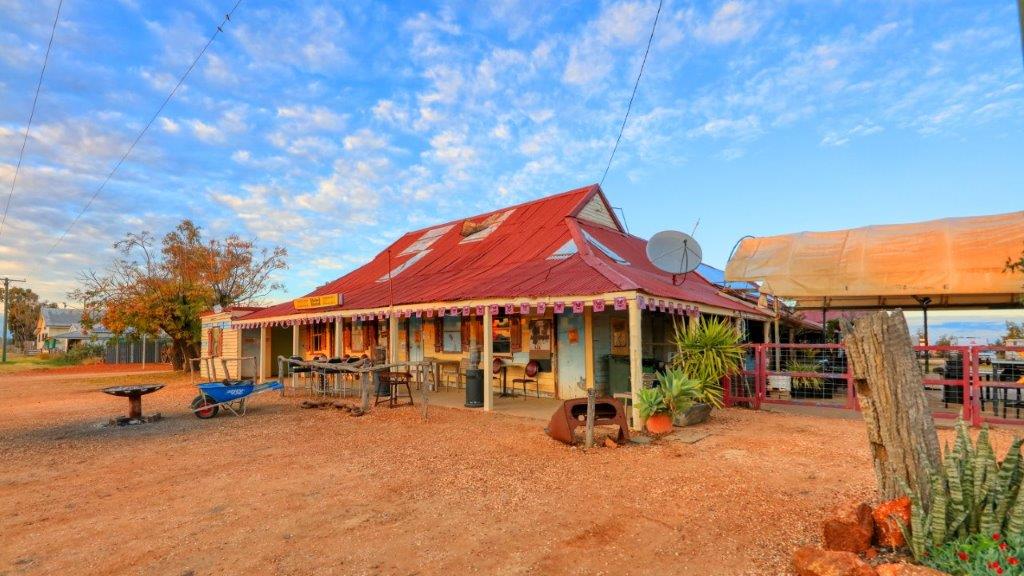
Heather Ewart on ABC’s Backroads went there: https://www.youtube.com/watch?v=rb5p3wtKPC4
It’s not only locals who come to the rescue of dying bush hotels. Take the Quamby Pub. Around fifty kilometres north of Cloncurry on the long and lonely road to Normanton, there’s not much happening in Quamby, except once a year for the rodeo. The small town died as roads improved and the local cattle and mining industries changed.
Ten years ago the old hotel was abandoned to the white ants, but in 2021 it was spotted by travelling Gold Coast friends. It was for sale, and they bought it, and rebuilt it for present day customers.

The photos on the Quamby Pub Facebook page document the arduous restoration process they went through, with the help of friends, locals, and even passing travellers. https://www.facebook.com/quambypub

Now the Quamby Pub is open once more, with food and drink, a big new covered deck out the back, camp sites, and even a pool.
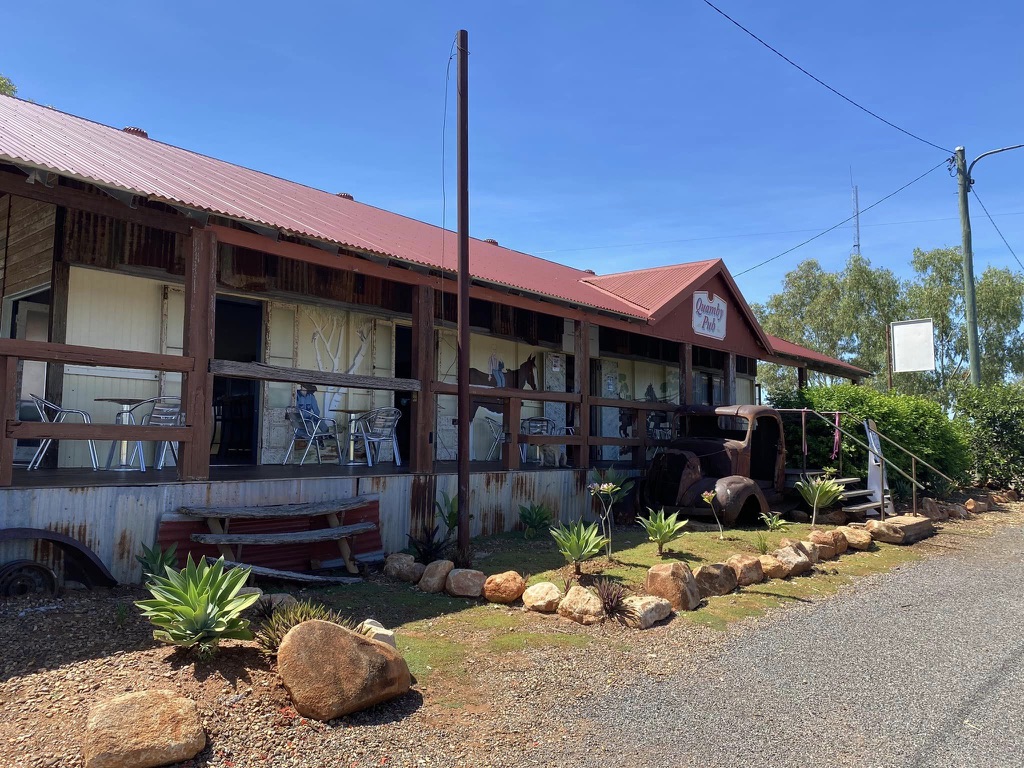
Judging by the response of locals and travellers it’s hard to imagine that the Quamby Pub will be closing down again. https://www.abc.net.au/news/2023-04-19/historic-quamby-pub-restored-by-gold-coast-tourists/102235284
Now, after all their devoted work, Joan and Kevin Wallace’s fine old Warwick hotel is on the market too. O’Mahony’s is up for auction, Joan tells me, and because of its iconic status locally, the sale has been the subject of news reports: https://www.facebook.com/watch/?v=1635605283142106
The auction will take place on 19 July, 2023: just a couple of weeks from now. Want to buy a pub?



 Queensland Stories