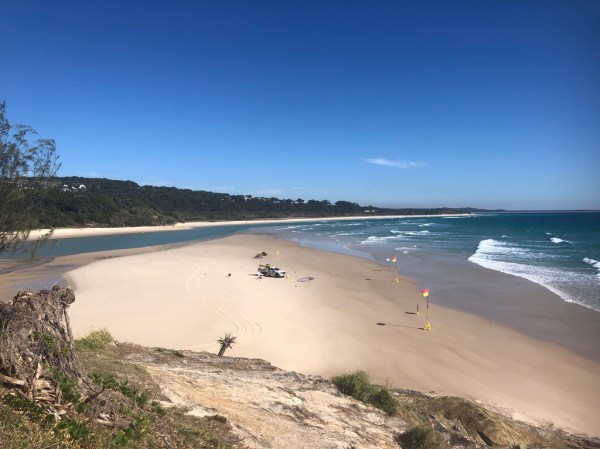
Out of Brisbane

Along Quart Pot Creek, upstream from Heritage Park, the wattle trees are flowering.
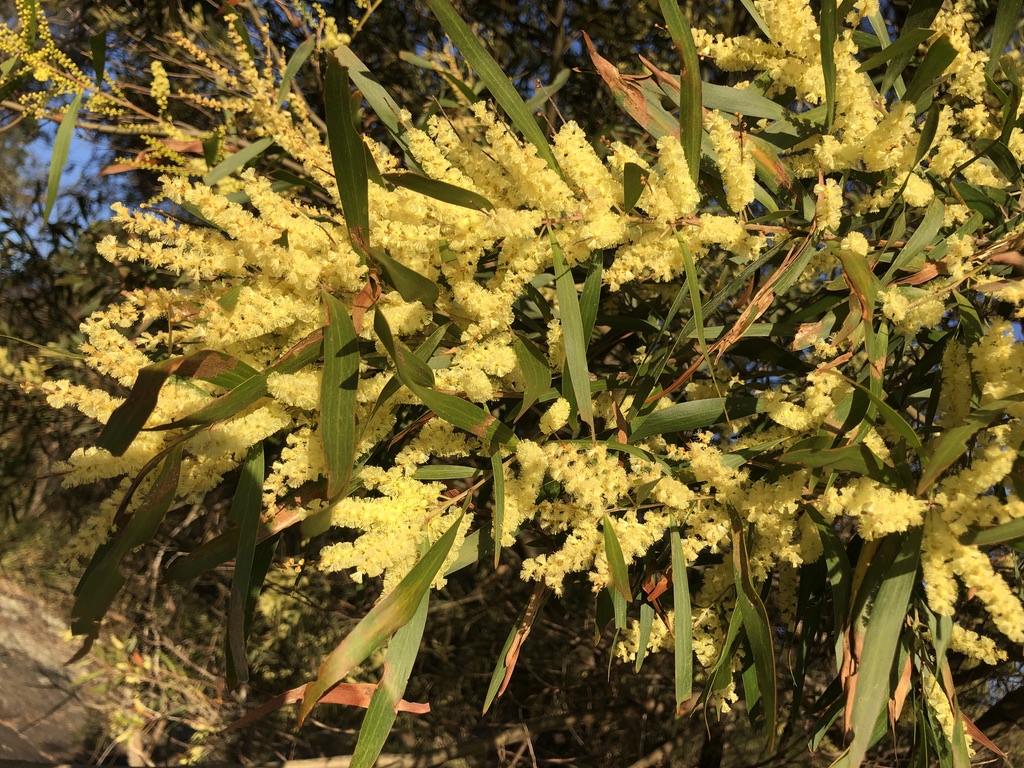
Stanthorpe wattle

The path winds above the creek and under the railway bridge, across sloping granite to the creek and beyond. On the bank near the narrow footbridge, fairy wrens flit among the bushes.
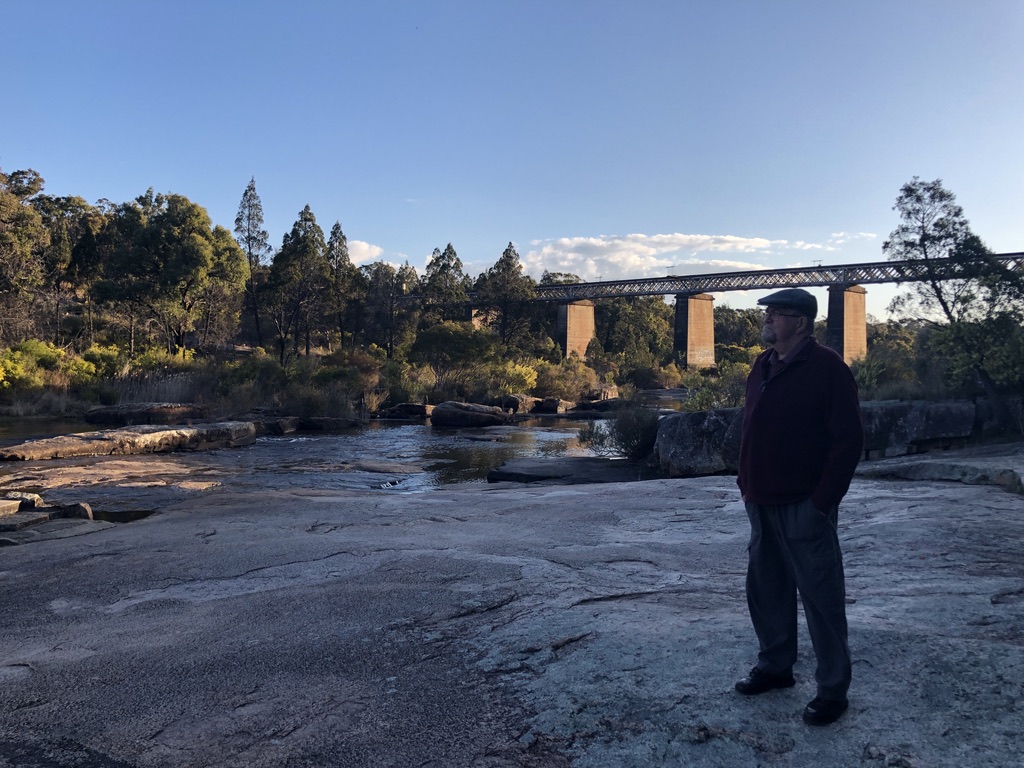
Along Quart Pot Creek

In Stanthorpe this Spring when we visit, the water is cold. Not tempting. Perhaps in summer families come here to lie in the shallow pools and sunbake on the warm granite.

On this short trip out of Brisbane we are counting wattles. Leaving Stanthorpe, we drive over the New South Wales border to Bald Rock and then back home via the Bruxner Highway and Summerland Way, counting many varieties of wattles in bloom along the way. Green and gold everywhere.
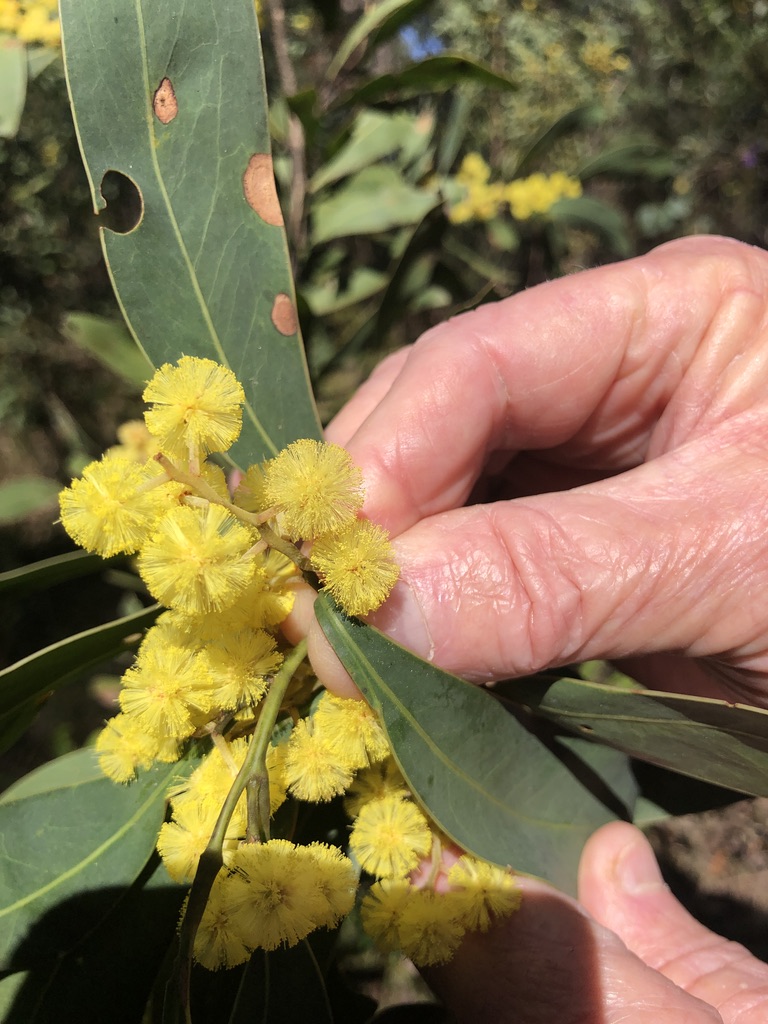
Bald Rock wattle

In April 2023, I planned a fine road trip. It was the right time: the rivers were full but not flooding. The countryside was green. There was no threat of bushfires.

We would follow the inland rivers, from the Warrego at Cunnamulla, down the Darling to Burke and Menindee, to meet the Murray River near its mouth, at Gawler in South Australia. We would then trace the Murray upstream to where it meets the Darling at Wentworth in Victoria, then further east to Balranald, near where the Murray meets the Murrumbidgee. Following the Murrumbidgee to Wagga Wagga, we would then head north to the Lachlan River at Forbes; join the Newell Highway and cross the Macintyre back into Queensland at Goondiwindi.

We’d meet the Condamine River at Warwick, then drive east to Queen Mary Falls where the river drops forty metres down from the ranges. Past towering Mount Superbus, the tallest mountain in south Queensland and the head of the Condamine catchment.
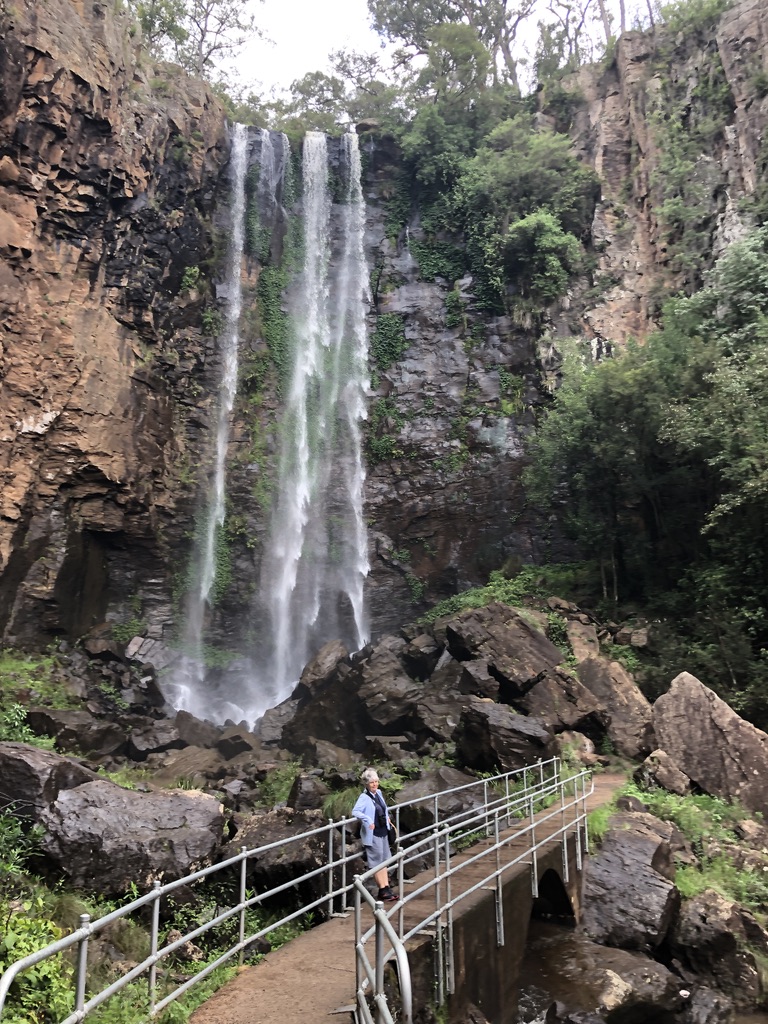
At Queen Mary Falls

In the right season, with plenty of rain and flow through the rivers, the water that plummets over Queen Mary Falls flows down the Darling and eventually ends up in the Southern Ocean at the mouth of the Murray, at the Coorong in South Australia.

What a neat trip that would have been. But life and illness got in the way, and we cancelled just days before we were due to leave.

That left us in Brisbane; but from Brisbane there are many interesting places to go for short trips. That is what we’ve been doing ever since.

In October last year we took a three-day trip to mainly new territory. A night in Dalby and a walk along Myall Creek in the middle of town, then up the Bunya Highway through Bell and Kingaroy to Murgon.

In Murgon there is a small but well set up Fossil Experience Museum called “55 Million Years Ago”. Local businesses, towns and shires seek for something that will encourage travellers to linger and spend. Federal, state and local governments support them. For places as widely spread as Murgon, Winton, Richmond, Hughenden, Eromanga, and even as far north as Chillagoe, Queensland’s finds of fossils and dinosaur bones attract visitors. Families plan holiday road trips to visit dinosaur sites.

From Murgon we drove through Goomeri, stopping at the elegant Wimberley & Co Bookstore, then turned south to spend the night at Highfields, north of Toowoomba.
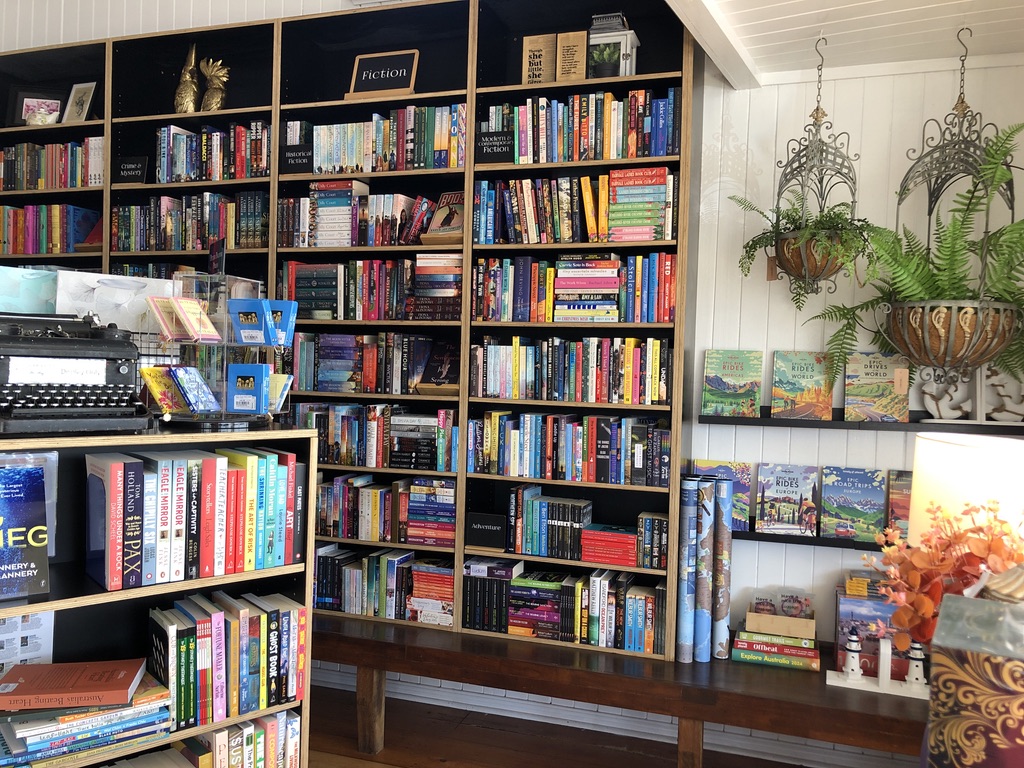
Wimberley & Co Bookstore, Goomeri

Highfields has a wonderful park – the 4.7-hectare Peacehaven Botanic Park. In 2004 local dairy farmer Stan Kuhl donated the land for a public park to promote peace.
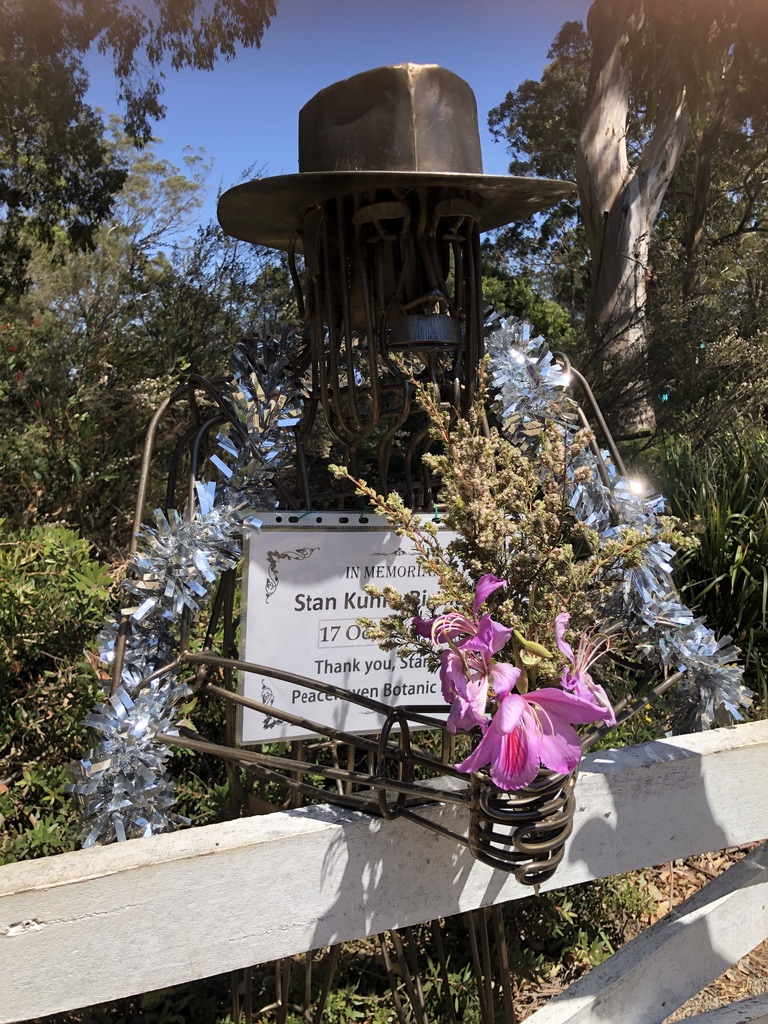
Memorial to Stan Kuhl

The world is as far from peace as ever; but wandering these paths and plantings, watching parrots in the fine old eucalypts, with the Bunya Mountains in the distance, I appreciated old Stan’s intention.

In the heat of February 2024, we took a three-day trip around the Darling Downs and out as far as Goondiwindi. The first night, we stayed in the humble motel behind the Pittsworth Hotel, “Pittsworth’s favourite hotel”. The only hotel in town as far as we can see, but its walls show a collection of photos of the many grand establishments that once existed here, only to succumb to fires, like so many old country hotels.
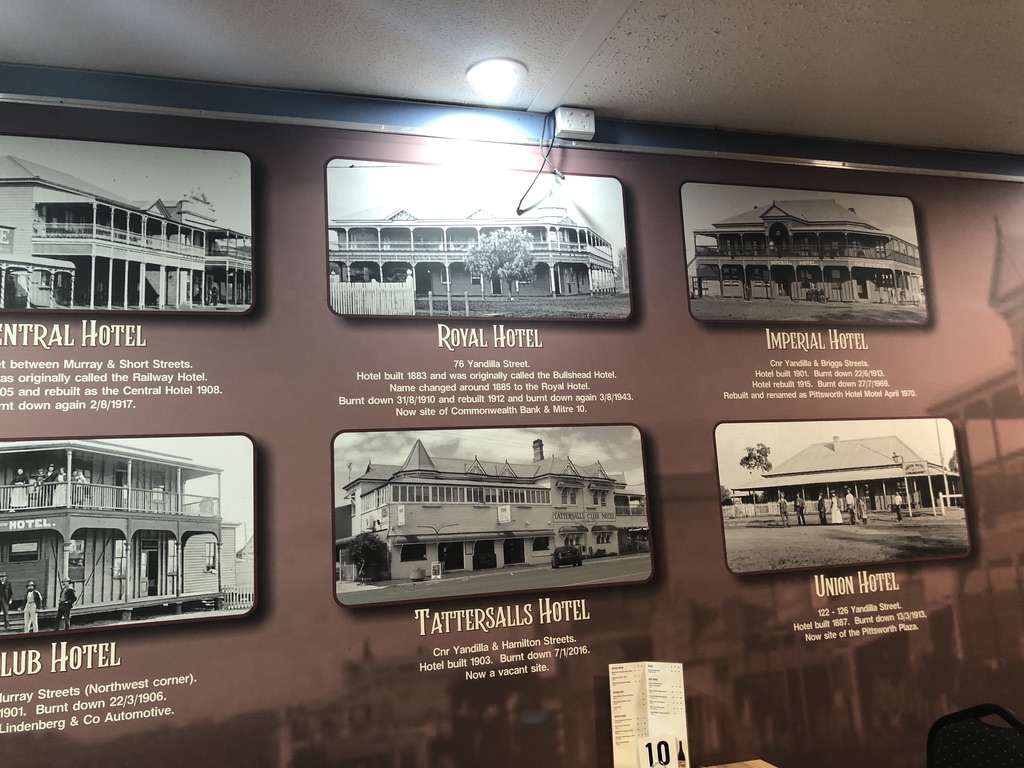
In the Pittsworth Hotel

Country towns celebrate their sports stars, from Rod Laver, the “Rockhampton Rocket”, to Laura Geitz, medal winner and former captain of the Australian netball team, celebrated in a bronze statue in her hometown of Allora.

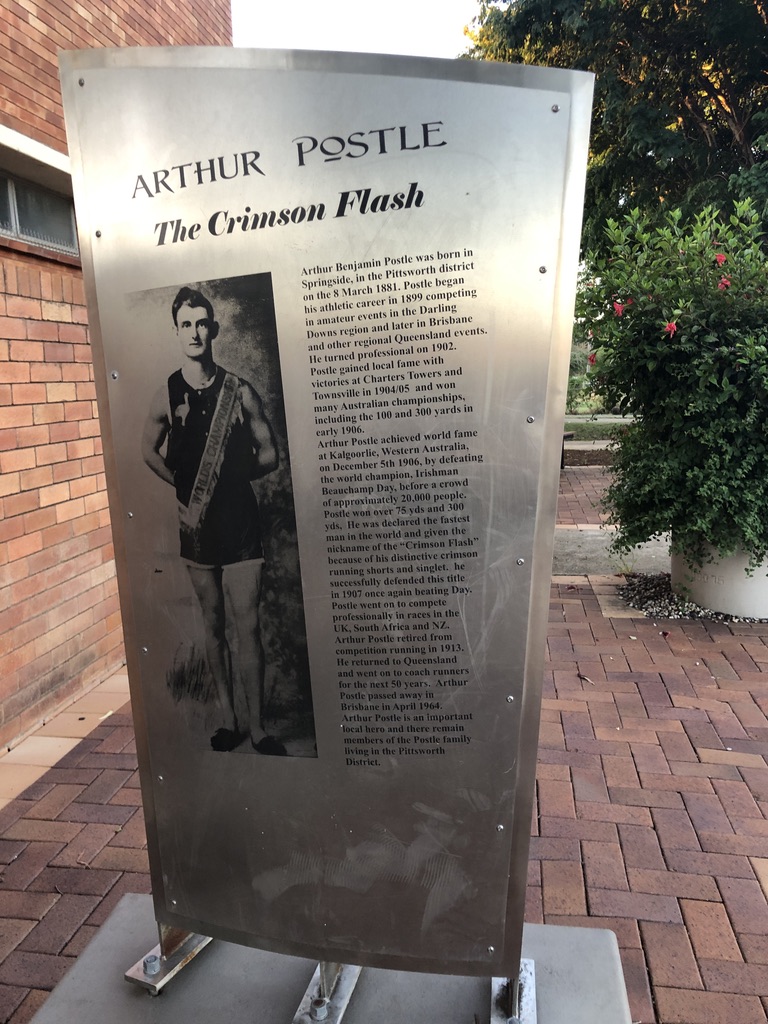
In Pittsworth, there is a memorial to Arthur Postle, the “Crimson Flash” – a local professional sprinter who won many Australian championships in the early twentieth century, even defeating a world champion.
On this trip we were exploring parts of the Darling Downs we hadn’t visited before, so I could look for old churches. My g-g-grandfather, James Matthews, was the Church of England Rector of Warwick between 1875 and 1886. In small farming settlements around the Downs, services in those days were held in inns or private houses; and James earned a name as a church builder. Perhaps he had the naming of them too, because at least one is dedicated to St James, and another to St Matthew.

It was hot in Pratten, a tiny town west of Warwick and north of the Cunningham Highway. St James’s Church is a small wooden building on a hilltop, with a simple bell tower beside it.
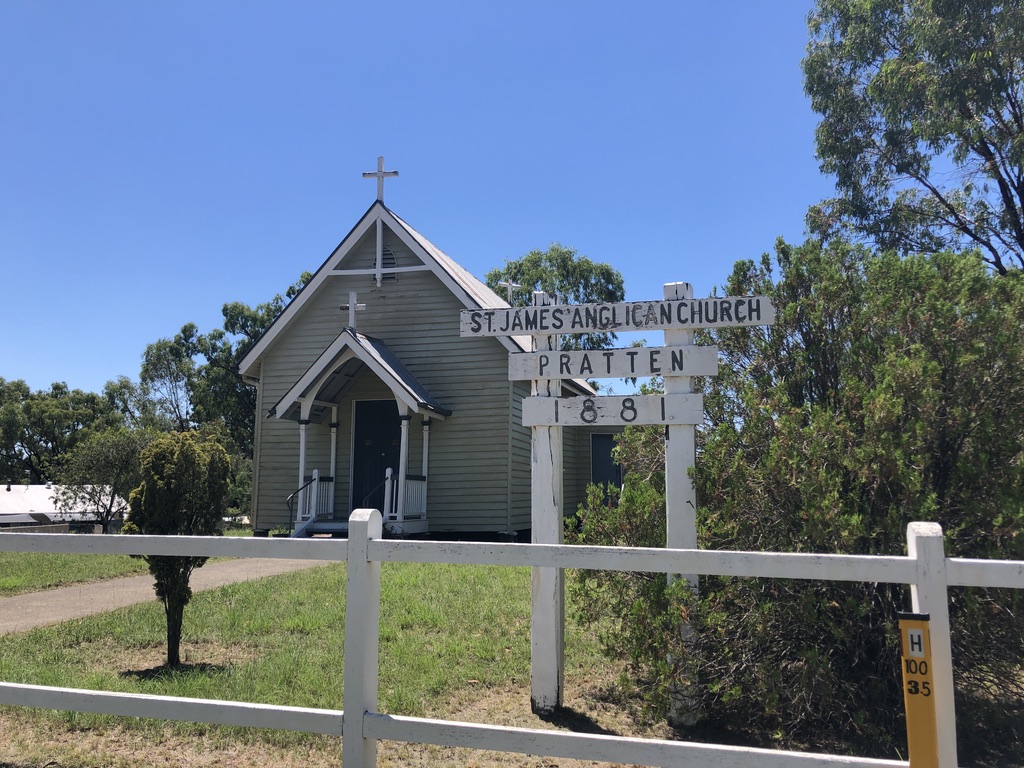
The town lay still and silent under the sun, until Con pulled the rope and the church bell rang out.

Still, nothing moved.

At the nearby town of Leyburn is another church visited by James Matthews. This attractive building was designed by architect Richard Suter, who designed Jimbour House, among many now heritage-listed buildings.
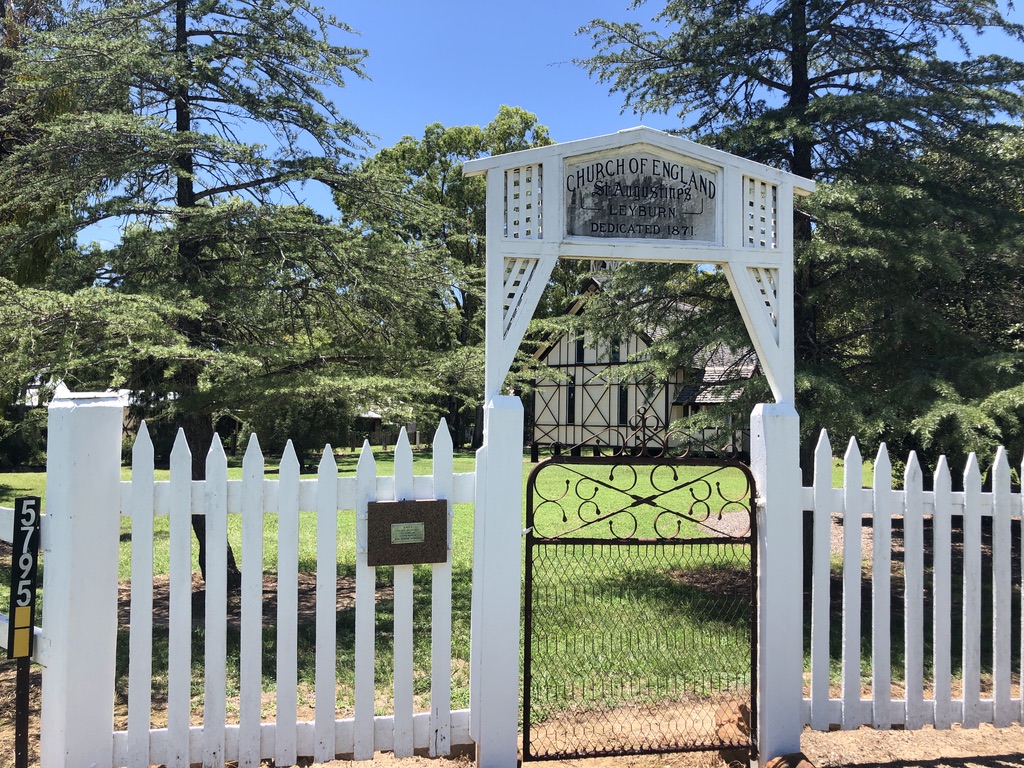
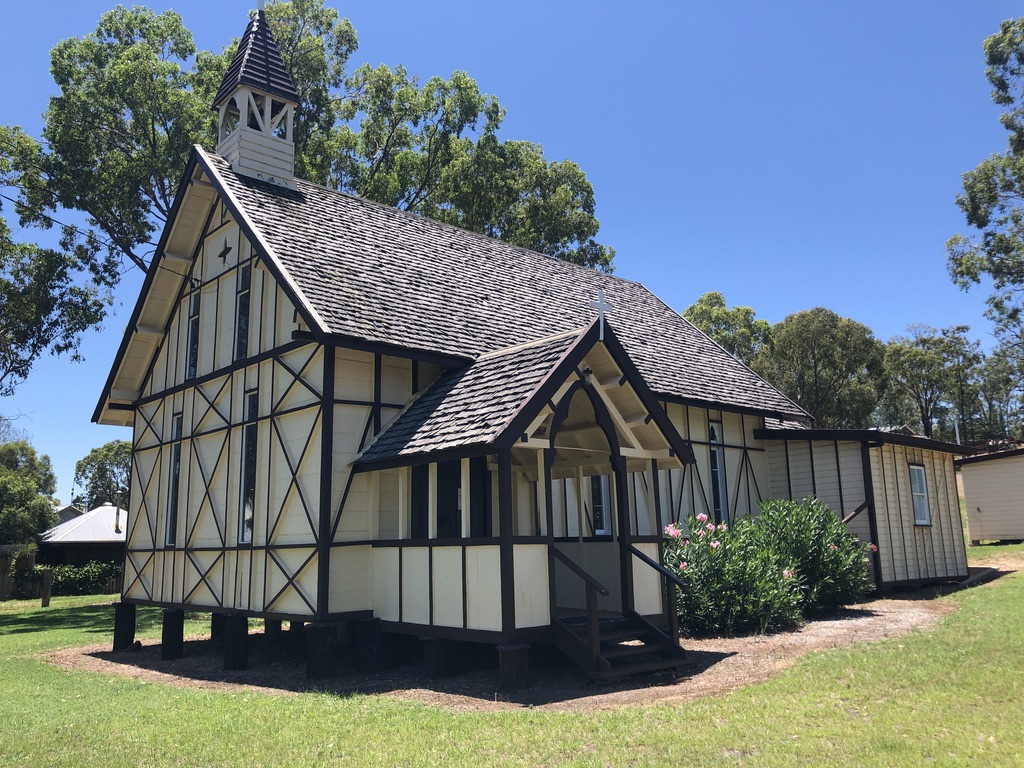
St Augustine’s Church, Leyburn

Leyburn has a pleasant pub, the Royal Hotel.  Along with the Grand View at Cleveland, it claims to be the oldest continuously licenced hotel in the state.  We were relieved to have our lunch in its air-conditioning.

Leyburn is known for motor racing. In 1949, seventy-five years ago this year, the Australian Grand Prix was held at here, attracting 30,000 visitors. The event has been recreated in the last few years as the Historic Leyburn Sprints, the main feature of a heritage festival with a motoring theme. The Sprints are held on a 137km route through the surrounding area, including Pratten. You wouldn’t have been able to hear the church bell ringing when the Sprint was running through town.

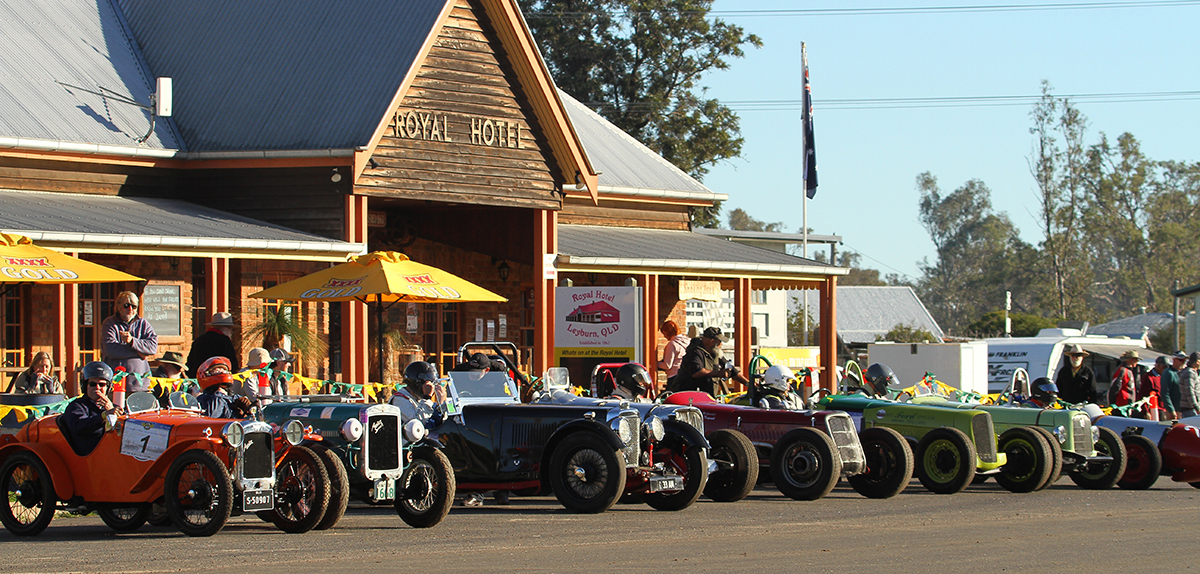
Royal Hotel, Leyburn, during the Historic Sprints festival

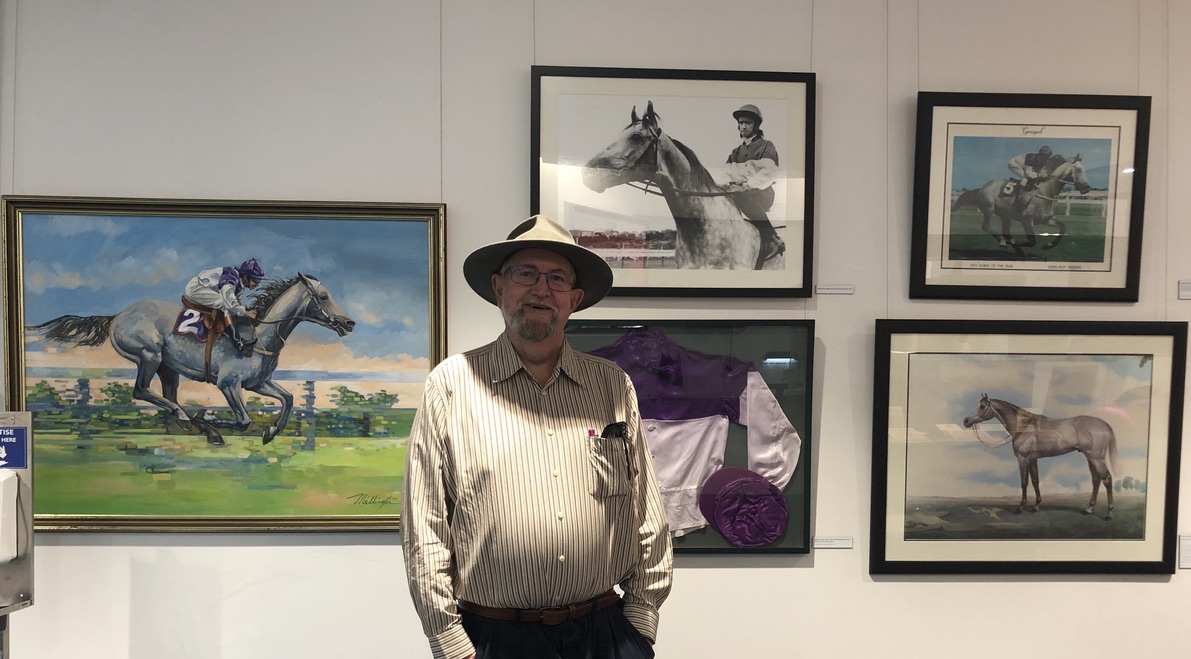
From Leyburn we headed to Goondiwindi to visit the Gunsynd Museum situated in the town’s elegant art deco council chambers. Another regional sporting hero, loved by Con.
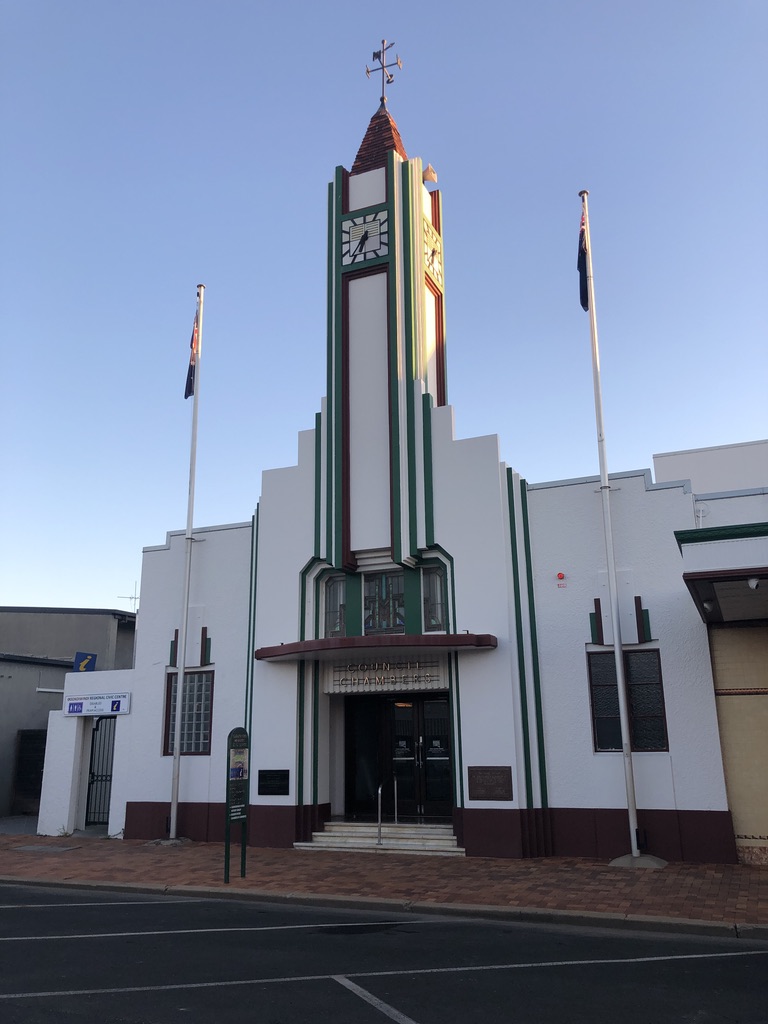
Goondiwindi Council Chambers
In the Gunsynd Museum

Last May, for my birthday, we spent three nights on Minjerribah North Stradbroke Island. This place is a treasure; and so close to Brisbane. White sand beaches, clear water, gorgeous freshwater lakes and swamps (so fresh that Island water is pumped to the other Bay islands and the mainland); birdlife, headland views, and small town life, as well as a strong Indigenous cultural presence.
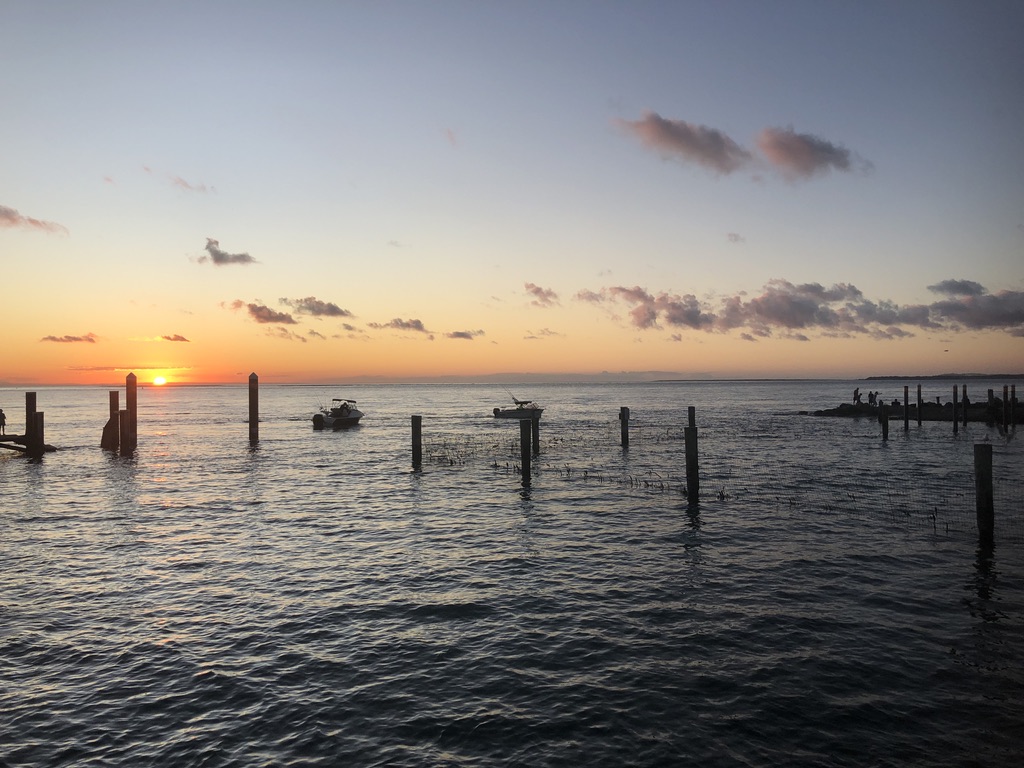
Sunset at Amity Point, Stradbroke Island

At the Point Lookout Hotel, perched above Cylinder Beach, I ate my birthday dinner accompanied by a beach stone-curlew that wandered among the terrace diners, searching for scraps with its huge, spooky eyes.
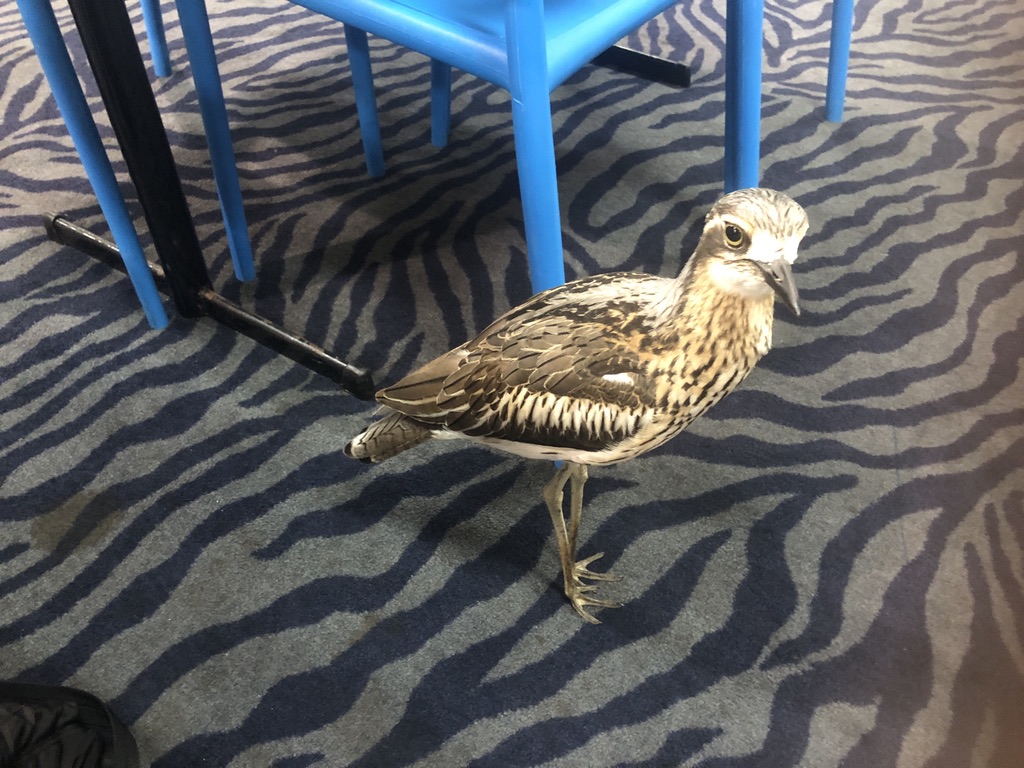
Straddie curlew

I’ve seen stone-curlews’ motionless forms and heard their haunting night-time cries from the suburbs of Brisbane to the tropics. Con tells me that on his first night at boarding school in Cairns he heard them and thought someone was being murdered.

We’ve made other out of town trips since our big trip was cancelled. Short trips to Grafton, Murwillumbah, Maryborough, Coolum, Toowoomba and Warwick.
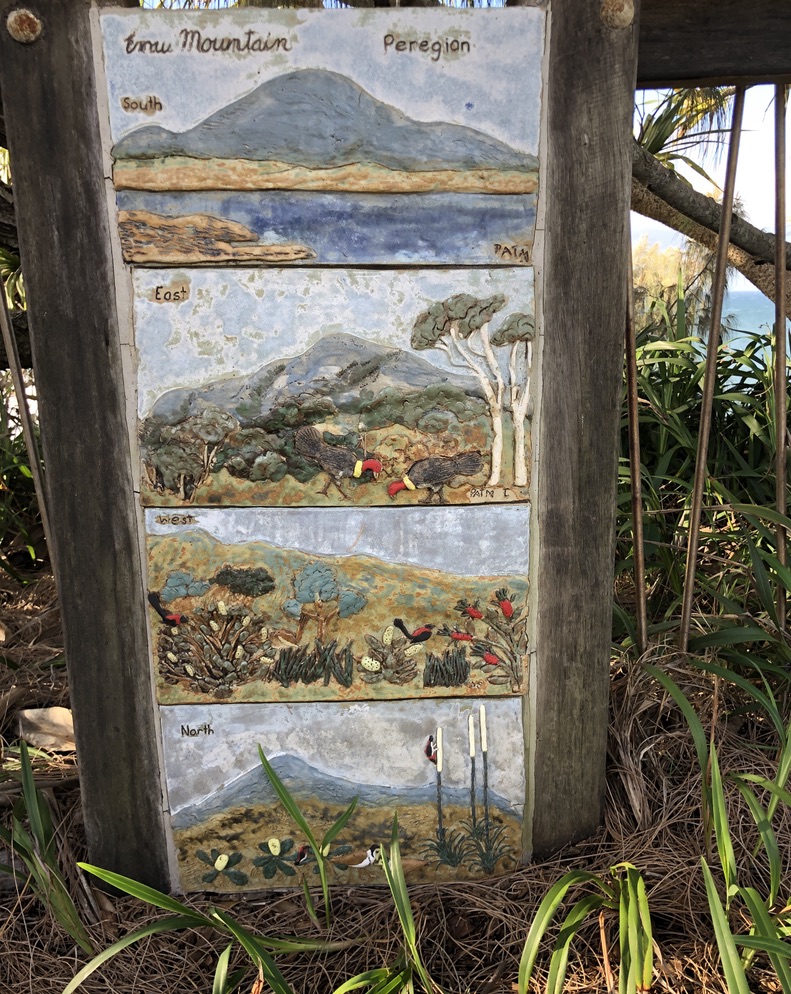
Attractive ceramic art work at Coolum

We also went to Currumbin to enjoy the Swell Sculpture Festival.
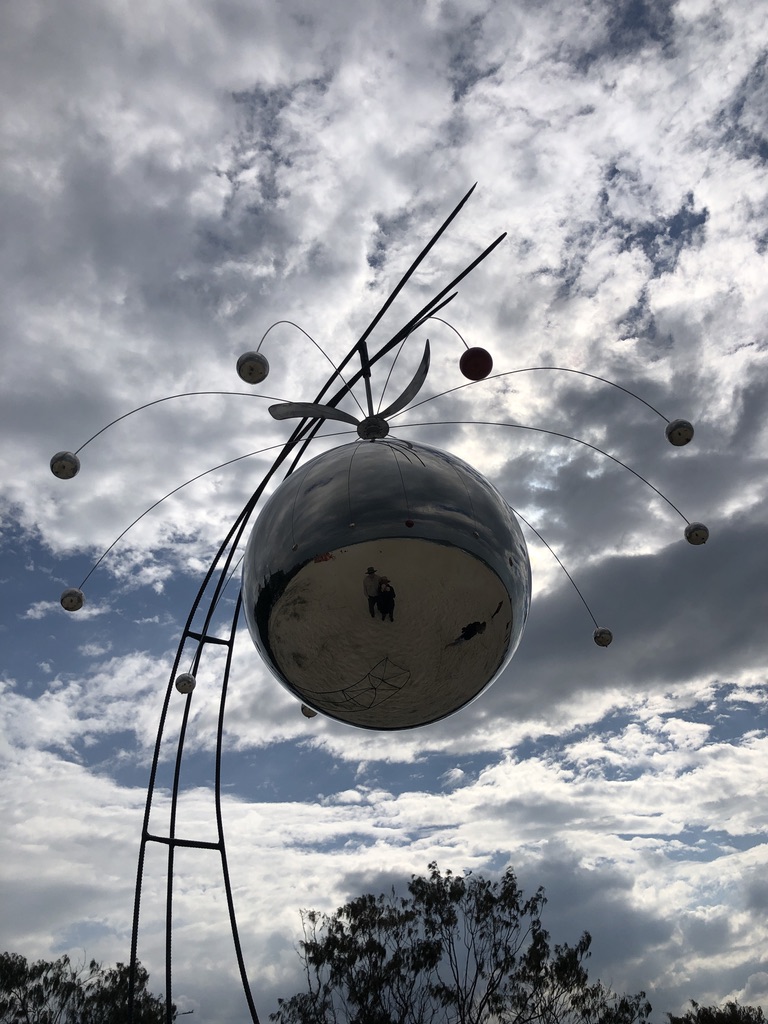
Us reflected, at Currumbin Swell

What next? Out to Glenmorgan, to pay a return visit to the Myall Park Botanic Garden? The wattles and wildflowers out there would be beautiful in Spring.

And maybe, next April, we’ll set off on that fine rivers road trip. Unless the rivers are flooding, or the countryside is burning…

Main photo: Cylinder Beach, Minjerribah Stradbroke Island
Bell

Bell, located on the Bunya Highway in the western foothills of the Bunya Mountains, 35kms north-east of Dalby, was rich dairy country when I was young, and trains carried away wheat, timber and cream.  

When I visited here as a teenager, for the Bell Ball or church functions, the people were welcoming and the cream-filled sponge cakes were wonderful.

The Ball was held in the Memorial Hall. We danced gypsy taps and progressive barn dances to the music of local Darling Downs bands, with Pops wax flakes sprinkled on the floor to keep it fast, kids sliding on it between dances, and men outside around the cars passing bottles between them. And delicious suppers.

The Bell Memorial Hall, today – just as I remember it

My father was the rector at St Paul’s Anglican Church, Jandowae, north of Dalby. Each Sunday, Dad would conduct a service at St Paul’s, then jump in the car and drive to a church at one of the other small towns in the parish, often on dirt roads, speeding to get there on time. Bell was one of these towns, along with Warra, Kaimkillenbun (The Bun), and Cooranga North.

I was away at boarding school, but my younger brothers often went with Dad on these trips, to serve as altar boys. According to them, Bell put on the best morning teas.

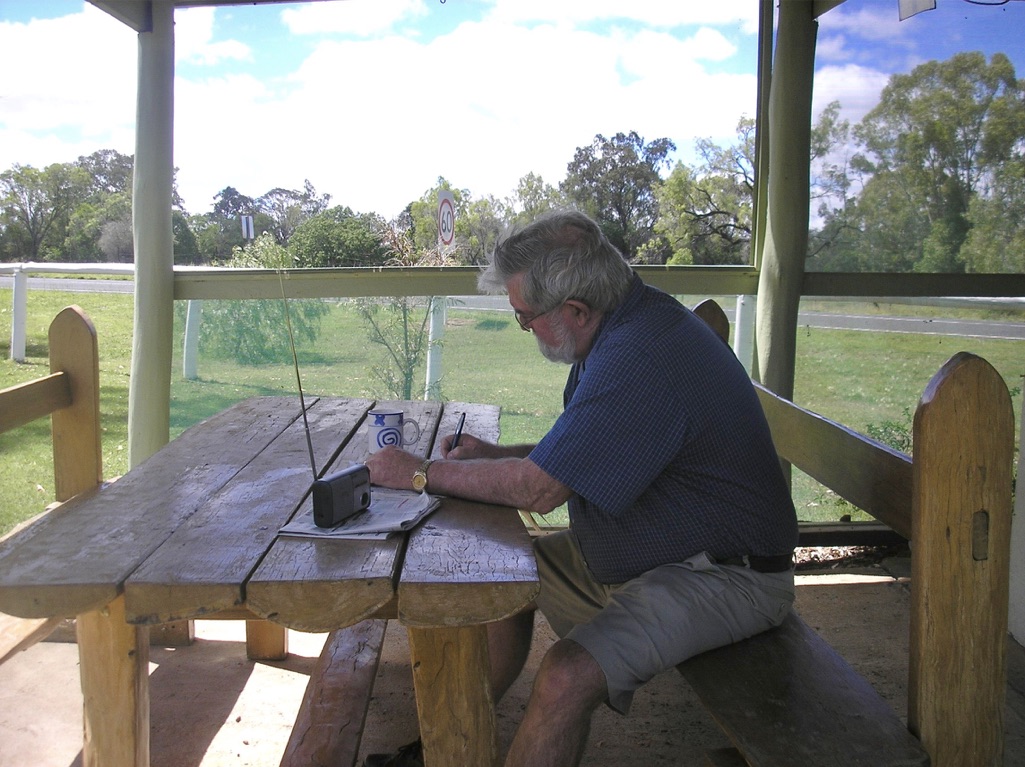
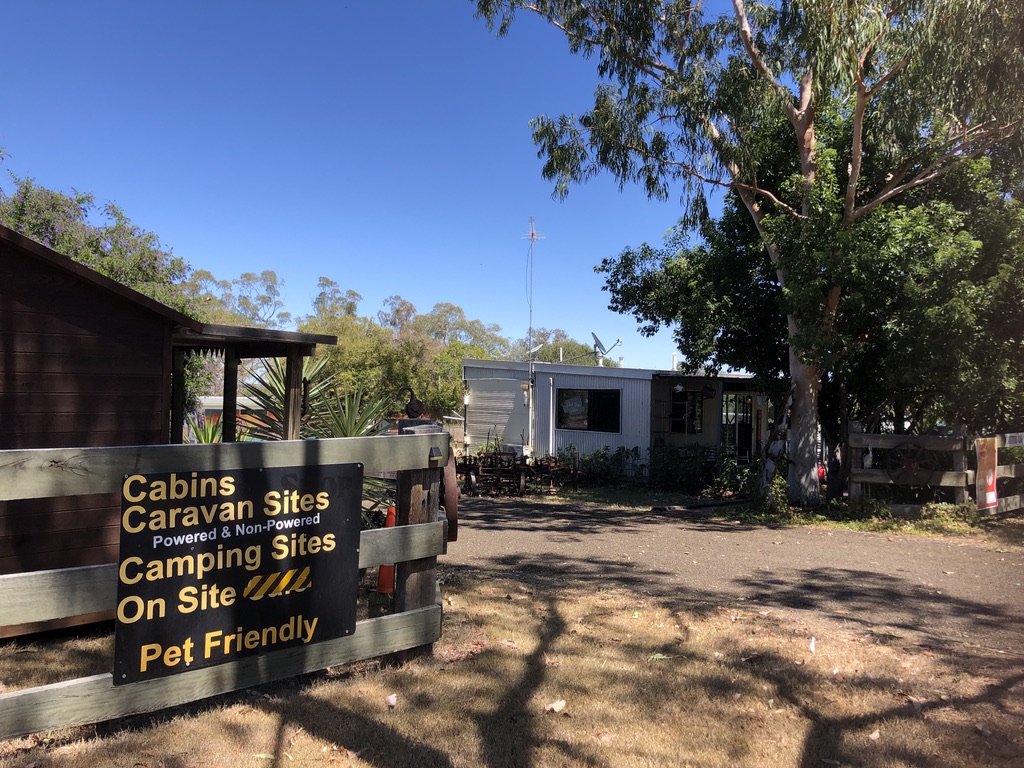
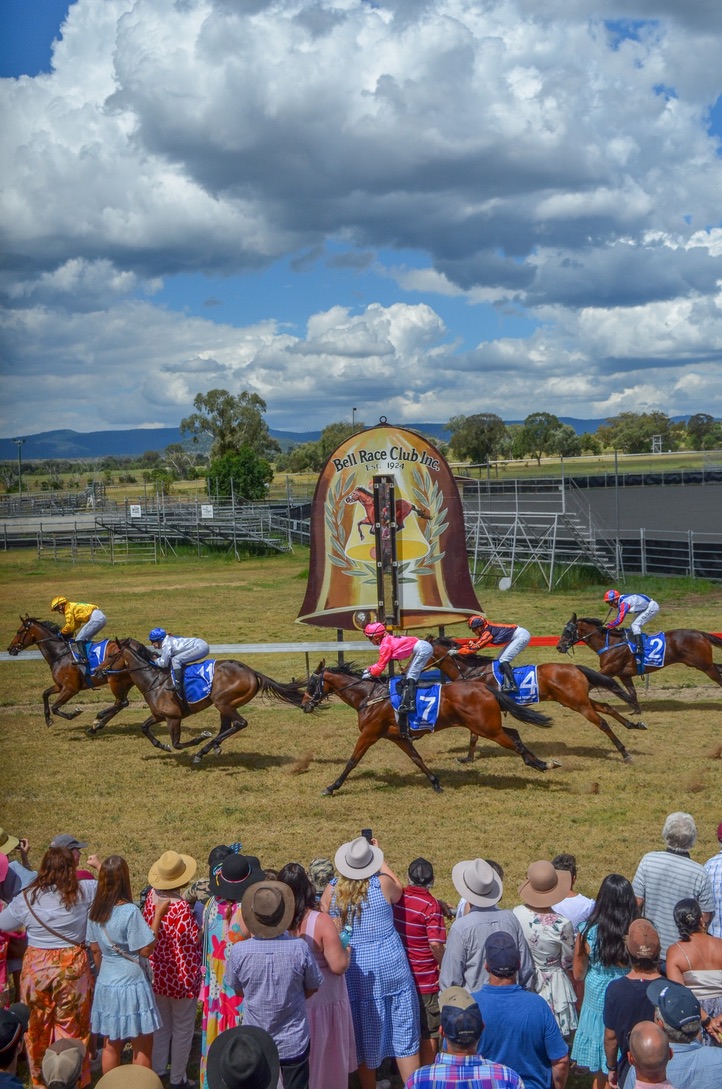
Around twenty years ago, I went back to Bell for the races. Con and I spent two nights in a cabin in the small caravan park. Con sat under a picnic shed with his newspaper and his little radio, getting the scratchings for the day, while I wandered around talking to people.

Getting the scratchings, Bell Caravan Park

I spoke to a woman, a permanent resident, living in a caravan. In the shade behind it was an assortment of mismatched chairs, with empty coffee tins for ashtrays.

“That’s my beer garden,” she told me. “It’s for the old blokes who live in the other caravans. There’s nowhere for them to get together for a yarn, so they come here.

“I’m the only one with a car, too, so when they need to go to Dalby to the doctor or the bank, I drive them in.”

A young mother with two small kids was living in one of the basic cabins. I would see them as they walked to the amenities block. There was a newish sedan parked beside the cabin, and I wondered what her story was, and if she was hiding from someone.

That little caravan park had stories to tell.

And the Tea Room at the races did nice cakes and scones.

Last month, heading for a road trip through the South Burnett, we again stopped at Bell.

The Bell Tourist Park is still there, but it had no cabins available.

Bell Tourist Park today

It’s still almost the only visitor accommodation in this town of about 500 population, apart from traditional pub rooms at the popular and cutely named Bellview Hotel, looking over the old railway line.

At the Bell Bunya Community Centre we ate scones with jam and cream, then drove up the hill to look for the old Anglican Church.

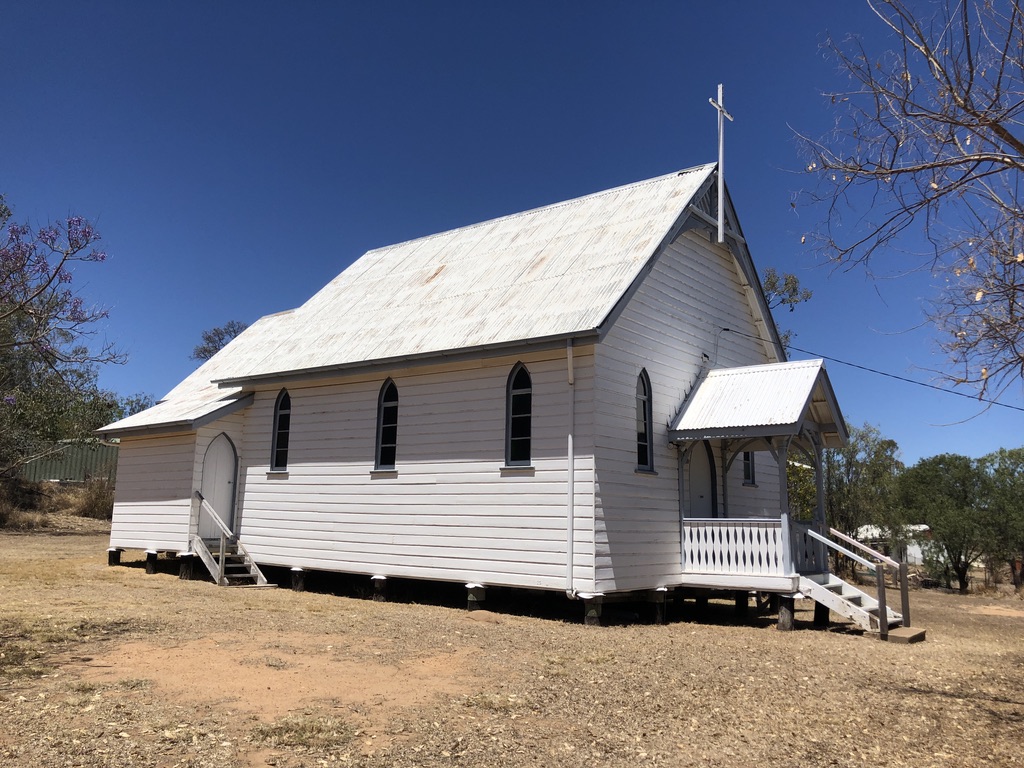
The small, wooden St Matthew’s Anglican Church and its quaint hall are tucked at the end of a curving driveway on the hill, almost out of sight of the town below. It was closed when we visited.

St Matthew’s Church, Bell

Congregations in traditional churches everywhere are shrinking. Sometimes small country churches like this are sold and renovated as homes, and people are sad about it.

 In another country town where a church was sold and converted into a house, a local woman told me, “I couldn’t bear to live there. I’d never be able to forget all the coffins I’ve seen coming down the aisle.”

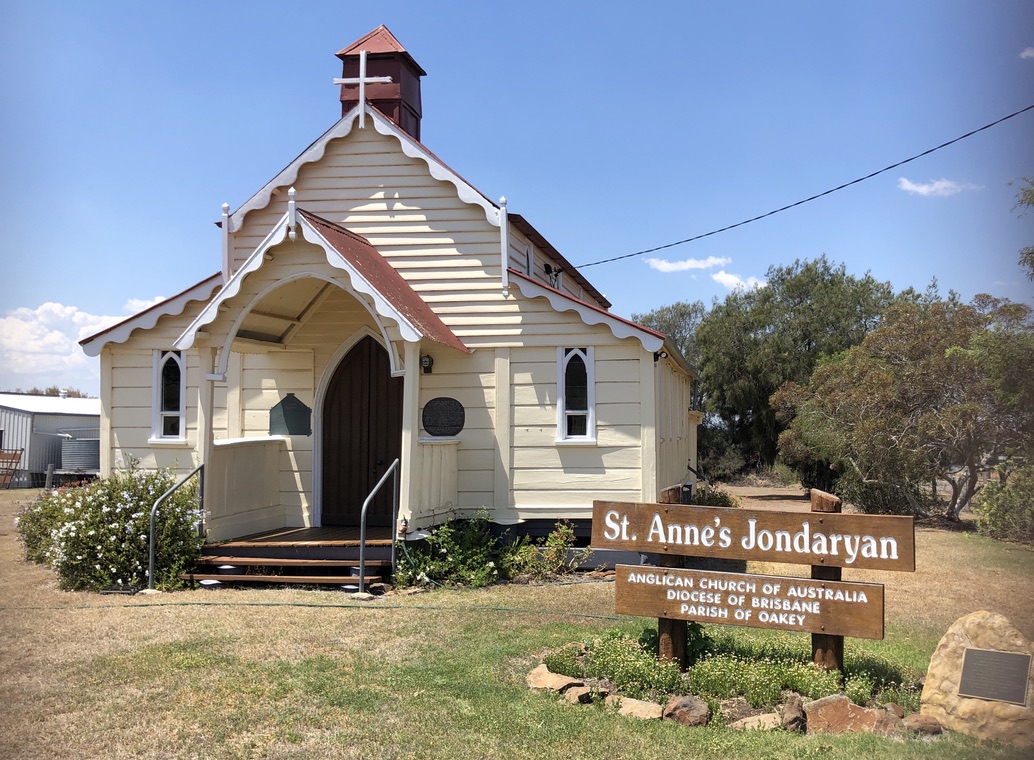
Country town churches are usually small, plain weatherboard buildings, but almost all of them have some fine detailing in their windows or their towers, and some are surprising and beautiful. The previous day, I’d visited tiny St Anne’s Anglican Church at Jondaryan, north of Toowoomba. Heritage Listed, it was constructed in 1859 of timber slab. It’s the oldest surviving church on the Darling Downs, originally built as the private chapel for Jondaryan Station. With its quaint windows and frilly timber facia boards, it’s charming.

St Mary’s Church, Jondaryan

St John’s Lutheran Church at Kalbar, in the Scenic Rim, is another one I like, with its fine, multi-sectioned tower.

St John’s Church, Kalbar

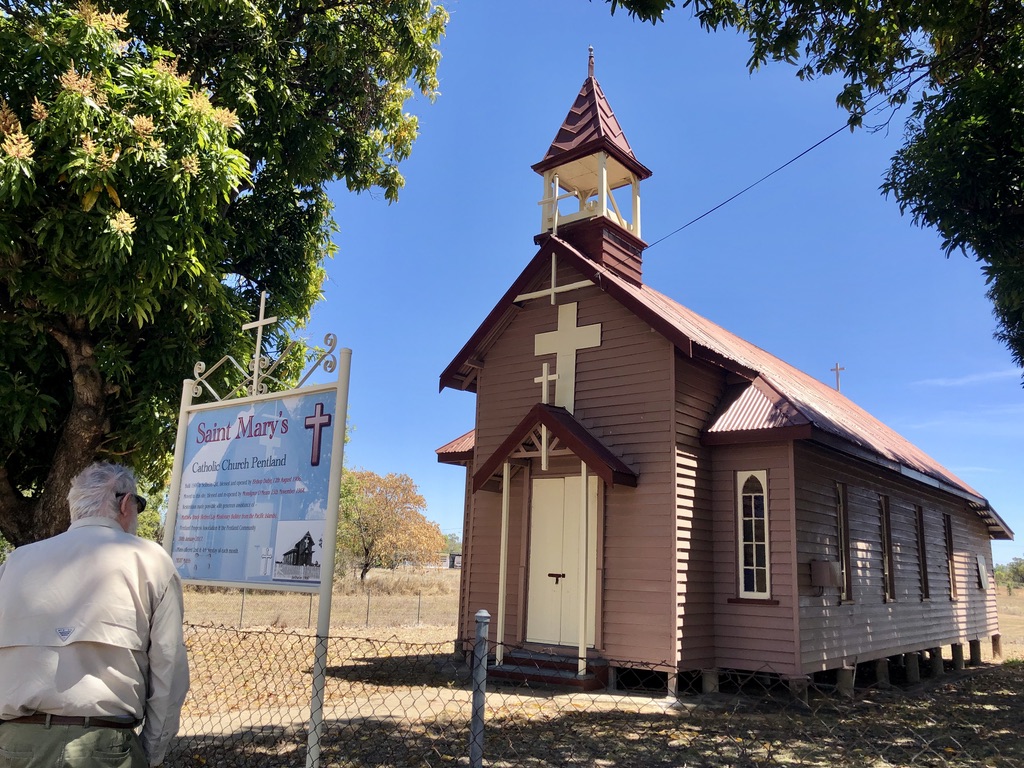
Another is the lovingly restored St Mary’s Catholic Church, nestling among shady mango trees at the old railway town of Pentland, on the Flinders Highway west of Charters Towers.

Con admiring St Mary’s Church at Pentland

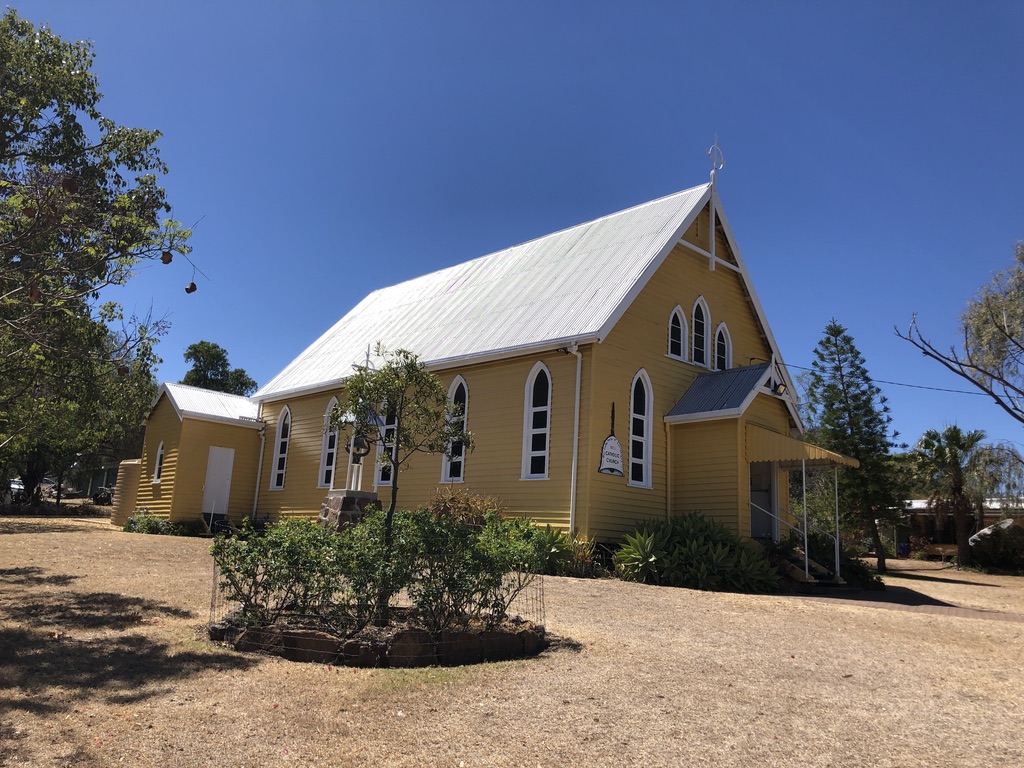
At Bell, Our Lady Help of Christians Catholic Church faces the Bunya Highway running through town. We went there to see the Bell Biblical Garden.

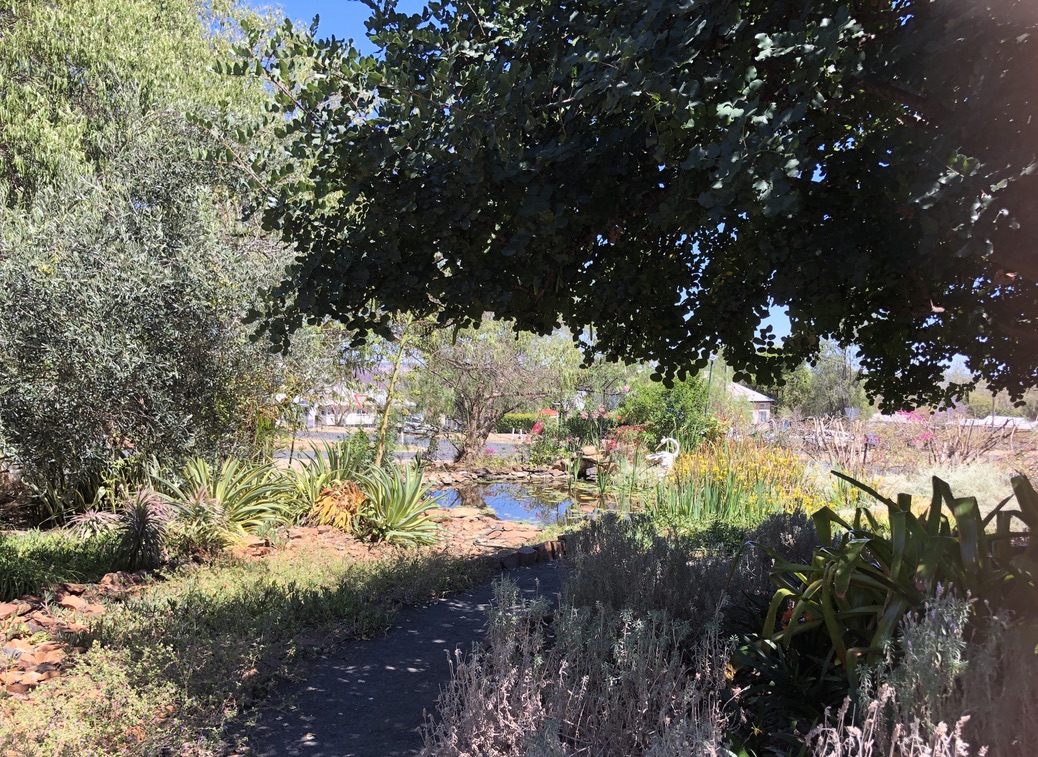
It was a hot day, and the countryside was brown with drought; but the garden was remarkably lush and beautiful.

Pond in the Bell Biblical Garden

Walking through the garden, we met a woman watering.

This was Megg Cullen: artist, gardener and Catholic parishioner. https://www.bellbiblicalgarden.org/about-the-artist/

Opened in 2012, this garden is the work of many, but Megg is at the heart of it.

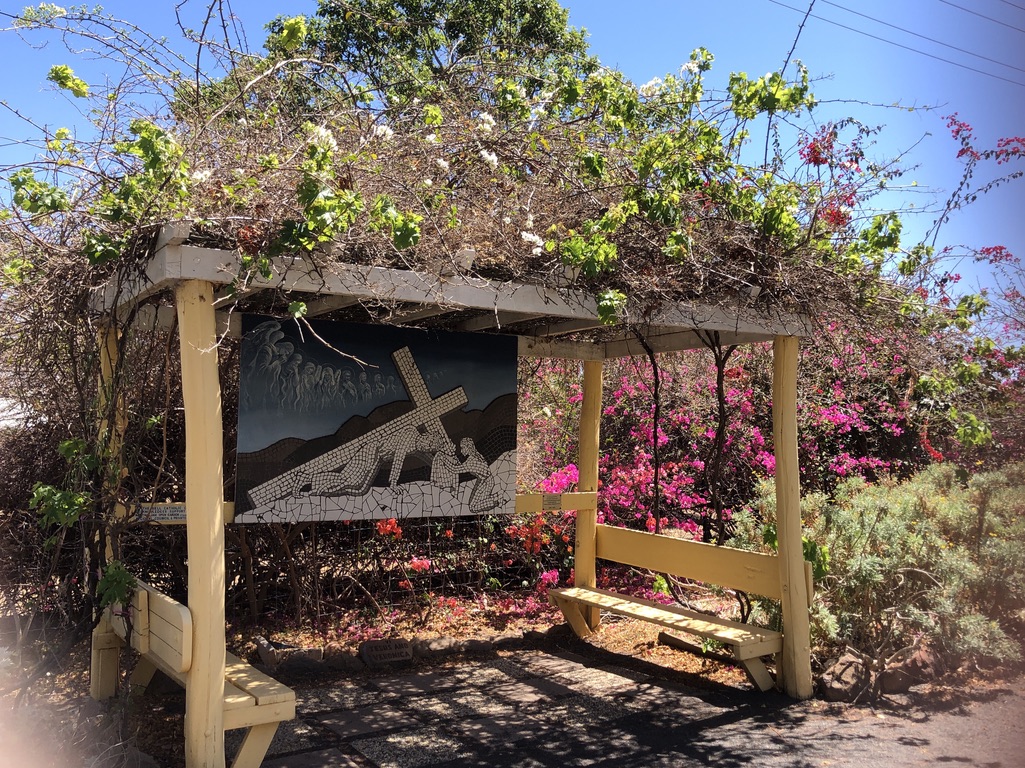
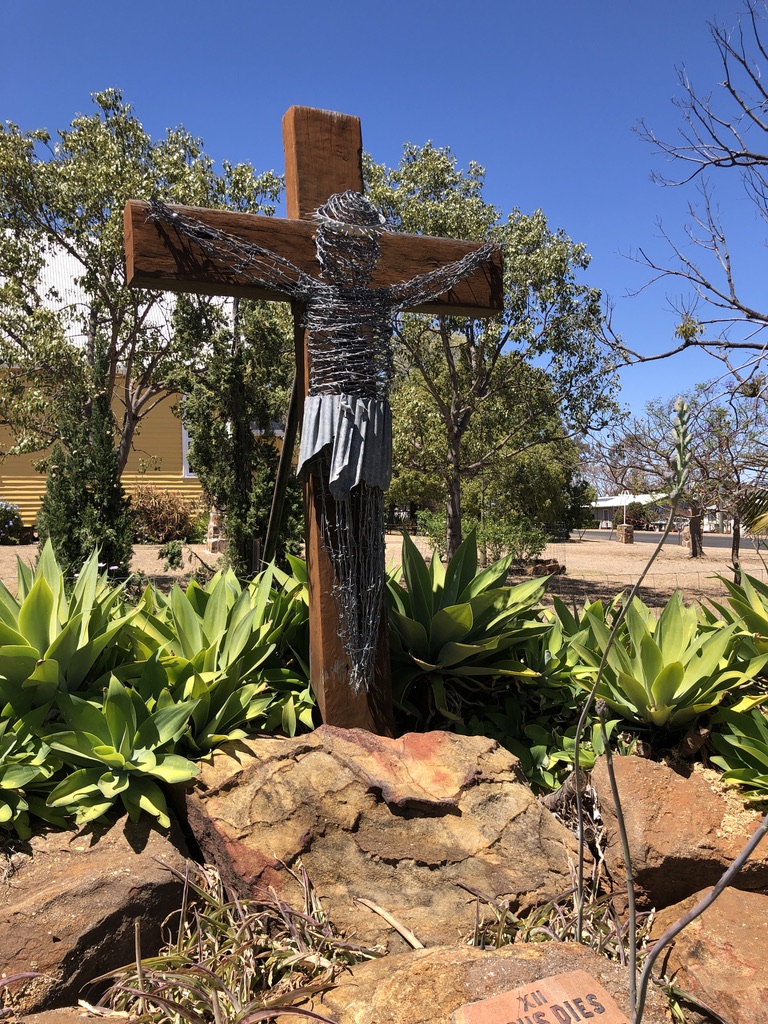
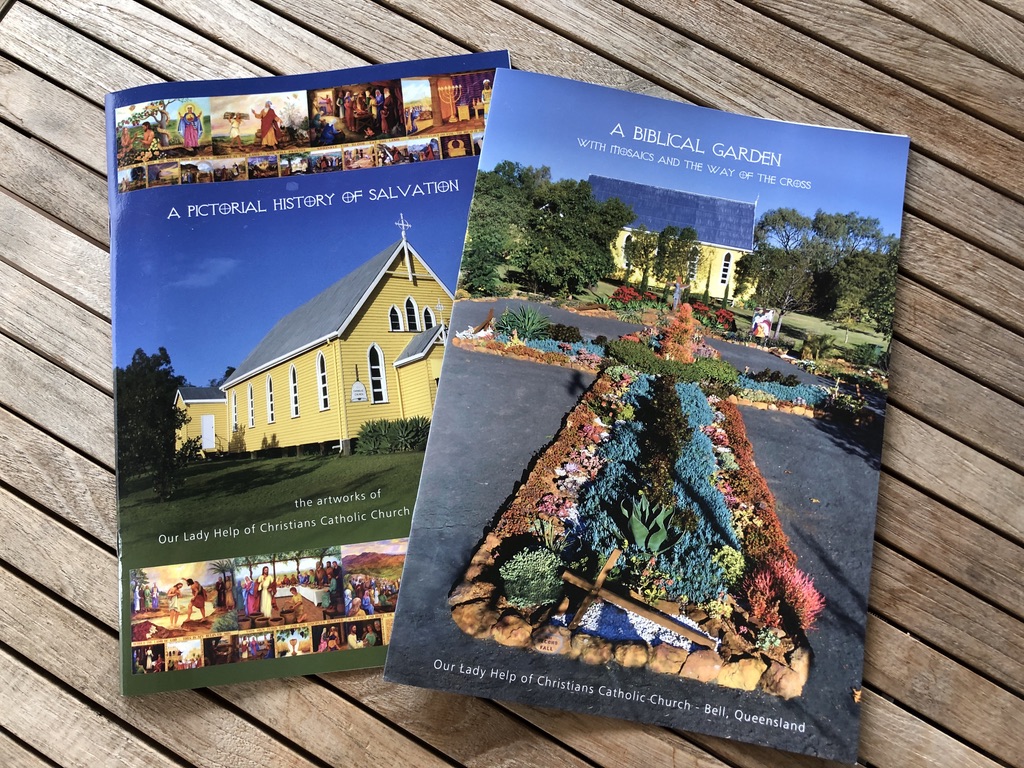
On once vacant land there are now trees, flowers and a pond.  A winding path follows the traditional Stations of the Cross, with accompanying mosaic artwork and carvings, resting places, and an impressive crucifix of barbed wire and corrugated iron.

“We had over forty people walking the Stations last Good Friday,” said Megg.

The garden contains as many as possible of the plants mentioned in the bible: olive trees, plane, almond, bay and fig trees, date palms, roses and hyssop and rue and many others. These are interspersed with hardy flowering plants such as bougainvillea and geraniums, as well as bottle trees and cacti.

“Have you seen inside the church?” Megg asked.  

“Isn’t it locked?”

“No,” she said. “It’s always open. Churches shouldn’t be locked up.”

Our Lady Help of Christians Church, Bell

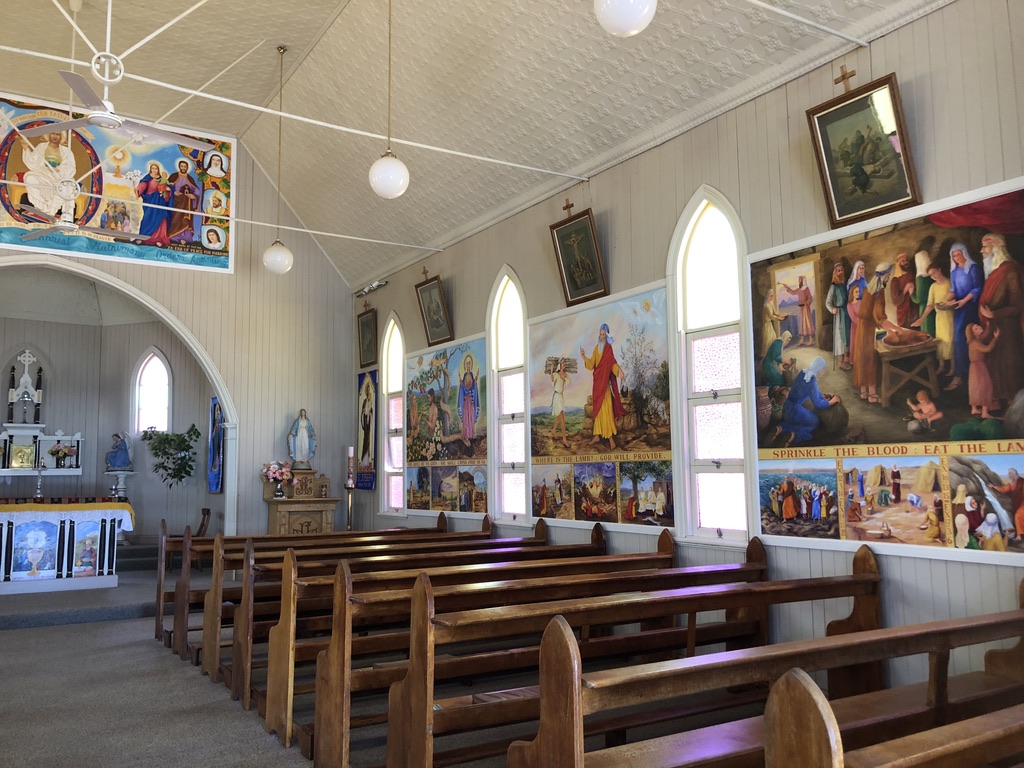
Painted yellow, with little stencilled bells in blue running up either side of its steps, this is an attractive building, and inside, it’s alight with paintings. In bright colours they illustrate Bible stories, from Adam and Eve onwards, with an emphasis on people, happiness, and hope.  Megg Cullen was the artist.

The paintings inside the Catholic Church, Bell

In 2022 Megg was interviewed for a series on local artists of the Western Downs: https://www.youtube.com/watch?v=XIyUxohTSh8

Even in the attractive booklets we later bought in the church, Megg’s name is hardly mentioned; but one person can have a big effect in a small town.

I love this place, with its garden, its artworks and its stories.

Bell has two large concrete grain silos, and the community has pushed for a few years for them to be painted. That may never happen, but it would be a great way of bringing more tourism to the town. People love to shop and drink coffee, and the Bell Bunya Community Centre, the Bellview Hotel, and the chic Pips’n’Cherries Café are among the businesses ready and willing to welcome them.

Popular local spot, the Bellview Hotel

This will always be rich beef and grain country, and the Country people with their elastic sided boots and Akubra hats come to town to catch up at the pub and the cafe, and to support the annual Bell Races, the show and rodeo.

Most people driving the Bunya Highway, for work or visits to Dalby or the Bunya Mountains, slow down through this small town and speed on their way. It’s worth stopping for a closer look, and a cream scone or two.

Blog at WordPress.com.

Up ↑